All You Need to Know About Solar Pool Heaters


Swimming is certainly one of the most beneficial cardiovascular exercises, according to doctors and physical therapists. It is low-impact yet increases stamina, strengthens muscles, and builds cardiovascular fitness. It is also a fantastic form of exercise for everyone – young and old, and in-between.
The best way to take advantage of these health benefits is by keeping the water pleasantly warm through pool heating. If you properly heat your swimming pool, it’s possible for everyone to use it for exercise, and you extend the hours the pool can be used. In fact, pool heating can also extend the season for enjoying your pool. A heated pool eliminates the possibility of young kids and elderly swimmers from suffering from chilling. It also enhances the therapeutic benefits of swimming and relaxation.
But, of course, heating your pool can mean significant electricity or fuel costs. A highly cost-effective and environment-friendly option would be installing a solar water heater for your pool. It is cost-competitive and incurs significantly lower annual costs. It is also considered a viable choice for most climates. So, if you’re thinking of tapping into this technology for your swimming pool heating needs, keep reading.
How do solar pool heaters work?
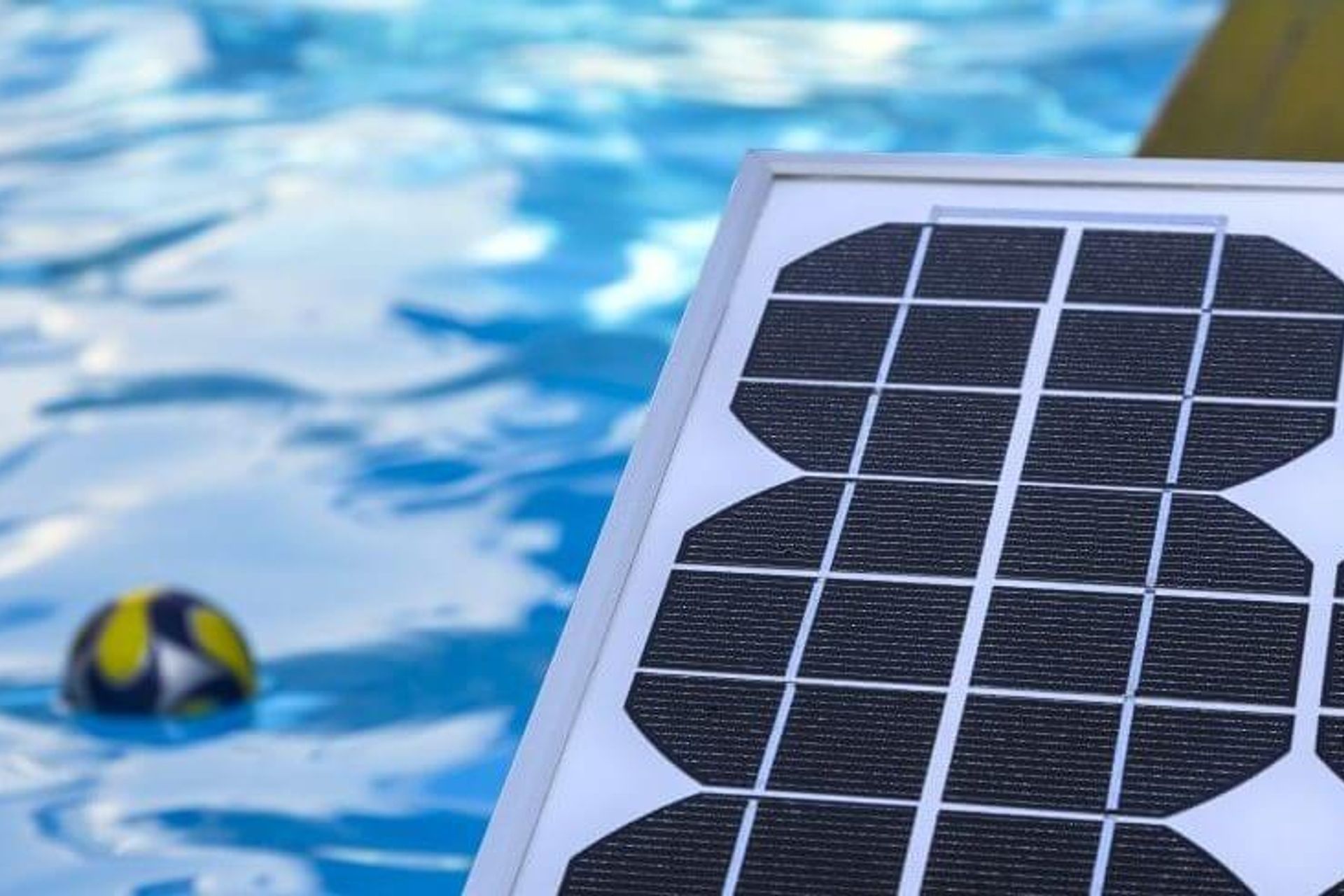
Solar pool heating systems usually comprise a solar collector, filter, pump, and a flow control valve.
Solar collector systems
The collector is the device where pool water to be heated by the sun is circulated. Solar collectors come in a variety of materials, and the type you choose depends on the use you intend it for.
An unglazed collector system, for example, is great for when you plan on using your pool when temperatures are above freezing. This type of solar collector doesn’t have a glass covering or glazing. It is usually made of heavy-duty plastic or rubber that has been treated with a UV light inhibitor to protect and extend the life of the panels.
The simple design and inexpensive parts of an unglazed collector system mean it is generally more affordable than glazed collectors. Unglazed systems also work well for indoor pools in cold climates. The system need only be designed to drain back to the swimming pool when it is not in use.
Glazed collector systems, on the other hand, comprise copper tubing on an aluminium plate. The plate is covered with iron-tempered glass – which is the reason why they are more expensive than the unglazed variety.
However, the main advantage with glazed collector systems (with heat exchangers and transfer fluids) is that during colder weather, they can capture solar heat more efficiently than unglazed types.
This also means that glazed collector systems are useful the whole year-round in most climates. They can also be utilised for heating domestic hot water as well as your pool.
Whichever type you choose, both glazed and unglazed collector systems require freeze protection so they can be used during the cold season.
There are two main types of solar collectors available in Australia:
Panel collectors
These are semi-rigid solar panels typically made from polypropylene. Unlike the more flexible strip or ribbon system, panel collector systems are generally more durable. In fact, under ideal conditions, the best solar pool heating panel collectors can last anywhere between 20 and 30 years while retaining 80 per cent of their production capacity. They come highly recommended for steep roofs, and since they are not only glued to the roof, they are also suitable for houses in locations that are prone to strong winds. They are also cockatoo-proof. Moreover, some advanced panel controllers utilising copper, aluminium, or vacuum-sealed glass contained within the panels can greatly accelerate solar-water heat exchange, making them even more energy-efficient.
Ribbon or strip collectors
Also referred to as soft collectors, strip collectors can be made of plastic or PVC nitrite, or rubber. They are very flexible so they can be easily installed even on oddly-shaped surfaces. They consist of a series of tubes bonded to the roof with a strong adhesive. They are positioned horizontally, thereby allowing pool water to run through them while being heated by the sun and even with heat coming from the roof. Solar strip collectors are also fairly durable, with some manufacturers offering 10-year warranties.
Pumps, valves, and filters
To ensure that all debris is removed from the water, the pool pump circulates water through the filter. It then passes through a diverter or flow control valve that sends the water through the solar collectors where it is heated. The heated water then passes through the chlorination system and then goes back into the pool as warm water.
Some solar pool heaters have sensors aside from a manual or automatic valve that diverts water through the solar collectors. This happens when the collector temperature is several degrees higher than the pool temperature. But if the collector temperature is the same as that of the water in the pool, filtered water bypasses the collectors and is returned to the pool.
Solar heating system costs
Solar heating system costs
Where to put a solar heater for your pool
One of the first key considerations regarding solar heating for pools is identifying the best place for its setup. You need to ensure there is sufficient space for it and that the location you choose has maximum sun exposure for the best part of the year. Ideally, the spot you choose should be adjacent to the pump.
Of course, when it comes to solar collectors, the usual and most obvious choice would be the rooftop. When setting up the collectors, they should be positioned in such a way that they receive solar energy all day long. During the summer, for example, tilting the collectors to a 10 to 15-degree angle is considered optimal.
Wherever you decide to put them, the most important thing to consider is ensuring they are strategically placed. This way, they can absorb the greatest amount of heat from the sun daily. Aside from the rooftop, solar collectors can also be installed on the ground, fixed to your fencing, etc. Always consider maximum sun exposure, and make sure the structure the collectors are attached to or set on is sturdy enough to hold the collectors and the water that’s being heated.
Another good thing about solar collectors like solar panels is that you can use them to cool the water during hot and humid, or balmy days. By keeping the solar panels active at night, you can use the temperature they absorb to cool your pool the next day when it’s hot.
Before installing your solar water heating system, be sure to check local building codes and regulations regarding it. If you will be working with a contractor, this is something they would already be familiar with, so they can take care of the necessary documentation for you.