Coastal Calm: A Refined eHaus Build Framed in Pacific White

The owners of this home wanted a design that took full advantage of its spectacular location, perched high on a hill overlooking nearby Foxton Beach and the Manawatū River mouth, and, in addition, they loved the overall concept of the tiny home movement.
They were also very interested in the principles of sustainability in house design. To accommodate this, they chose to build a home with eHaus Manawatū.
Anna Wilson, owner of eHaus Manawatū, says that her company aims to design and build Manawatū and Horowhenua's most sustainable homes. “Sustainability is at the core of everything we do; it's not just an add-on,” she says. “This ensures our homes perform significantly better than those built to the minimum building code, and they consume less energy and reduce carbon output. We believe that our homes should have a big impact on the way we live, but little impact on the land. So we create healthy, comfy, high-performing homes that don't cost the earth.
While this home is not a tiny home, it has been designed with a small footprint – around 150 square metres – and it sets out to fully utilise every inch of space.
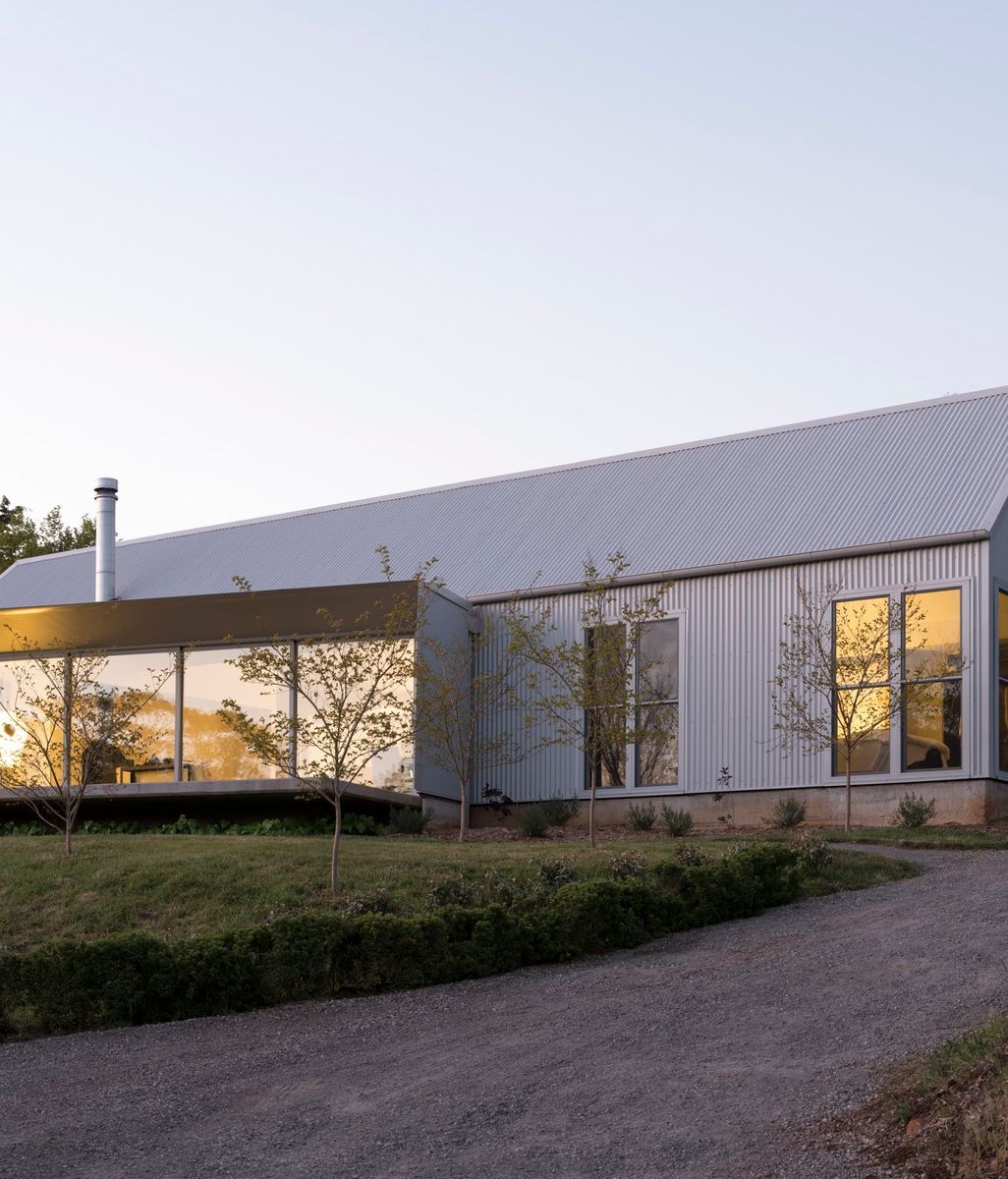
From the outside, the gable design creates a strong visual impact for a home, which otherwise is very clean and simple in appearance.
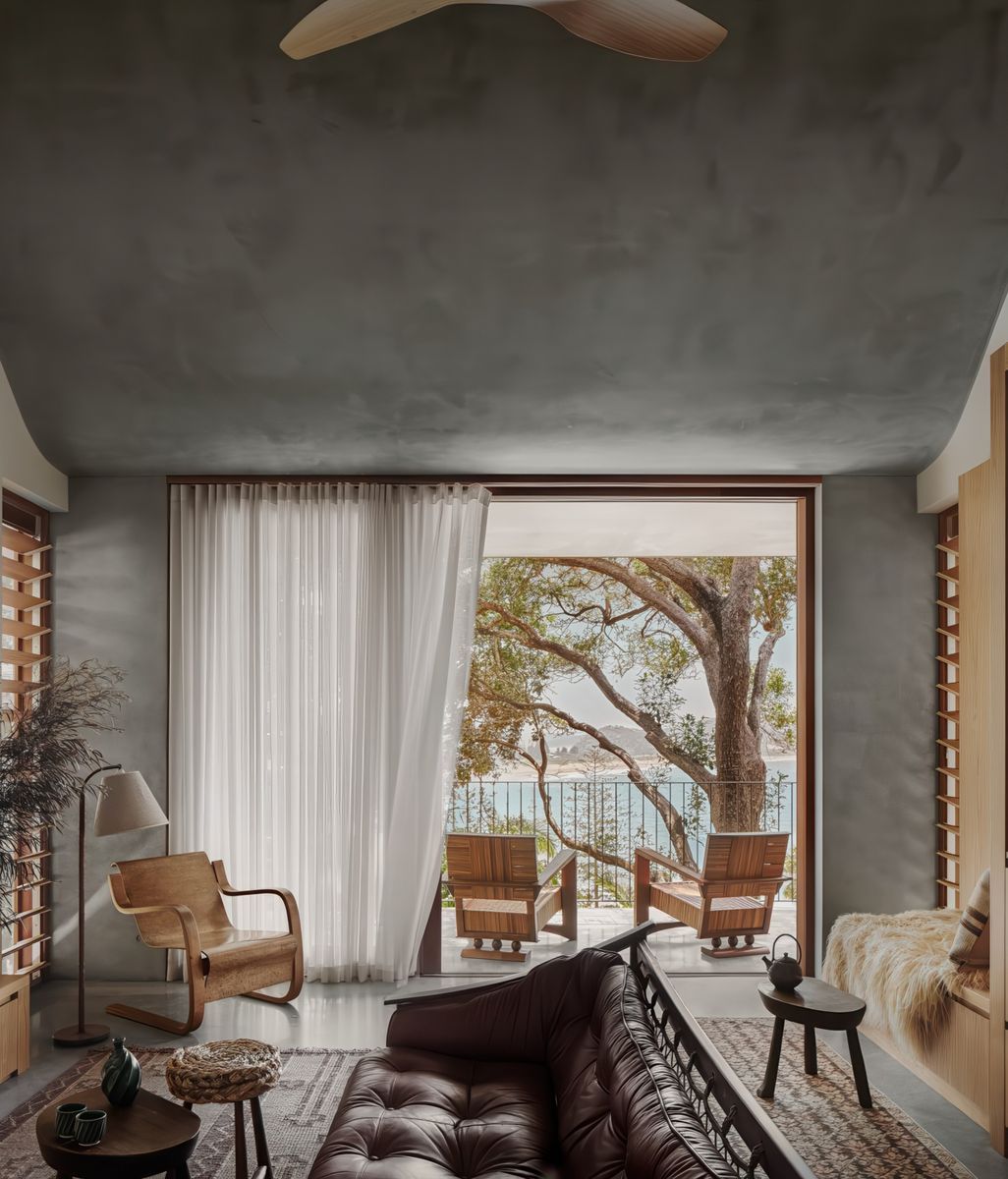
Internally, the high-pitched roof enables the house to incorporate a mezzanine level, and it also features many clever and functional storage ideas, from its study nook to a staircase that can be pulled out when required or put away, then converted into a bench seat and storage unit. Its combination of white-washed plywood ceilings and polished concrete floors creates a minimalist backdrop ideal for modern living. Aesthetic cues were drawn from Scandinavian and Japanese architecture, such as the custom Shoji door, negative detailing, and a mezzanine floor – while practical elements, such as window placement and built-in seating, were factored into the design to maximise efficiency and comfort.
To create a sharp exterior look, Palmerston North Roofing Services has applied the same product for both the cladding and the roofing – ColorCote MagnaFlow in the colour Pacific White.
Initially, the owners were considering a black roof colour. Through the design process, however, eHaus provided information that showed a white roof is better for the environment, acting like a polar ice cap and reflecting rather than absorbing the sun’s rays, so the decision was made to go with the Pacific White colour.
“This colour was chosen to minimise heat stress on the building (LVR) by reflecting rather than absorbing the sun's heat, which supports the performance of the home, keeping it cooler in the summer. Pacific White was also chosen to complement the vertical cedar features and was aligned with the clients' Japanese/Scandinavian design cues,” says Anna.
Additionally, the client wanted the main cladding to be an easy-wash product that wouldn’t require labour-intensive maintenance such as re-staining, and MagnaFlow fits this brief.
In addition to the product's low maintenance and durability, the owners wanted a roof and cladding that did not have the appearance of standard corrugate.


MagnaFlow is specially formulated for demanding coastal environments where anti-corrosive protection is essential. With ColorCote’s alloy technology, which combines zinc and aluminium with magnesium, the magnesium enables the zinc to flow and self-heal the cut edges that would otherwise expose the steel substrate to atmospheric conditions, ensuring a much longer life for a roof at a modest additional cost.
“Our experience of building in extreme coastal conditions influenced our roofing and cladding choice, and previously the product has performed well for us,” says Anna.
The challenge with this project for the RT7 profile of the cladding was creating unique flashing details to combat sand ingress and cavity drainage, while hiding the vermin strip.
To ensure sustainability throughout the house, eHaus partnered with suppliers whose products align with its eco values. From low-carbon concrete that saves tonnes of carbon emissions to pure wool carpets made from all-natural fibres, eHaus is committed to investing in sustainable production, products and practices.
“We work with suppliers who are committed to resource minimalisation, who use recycled materials in their products and packaging, and who are dedicated to minimising their carbon footprint. We are guided by our eco-values of reduced carbon footprint, non-toxic, resource minimalisation, recyclable materials, low maintenance, and using products with recyclable/recycled packaging when selecting materials and suppliers,” says Anna.