12 Kitchen Styles for Auckland Homes | Superior Renovations

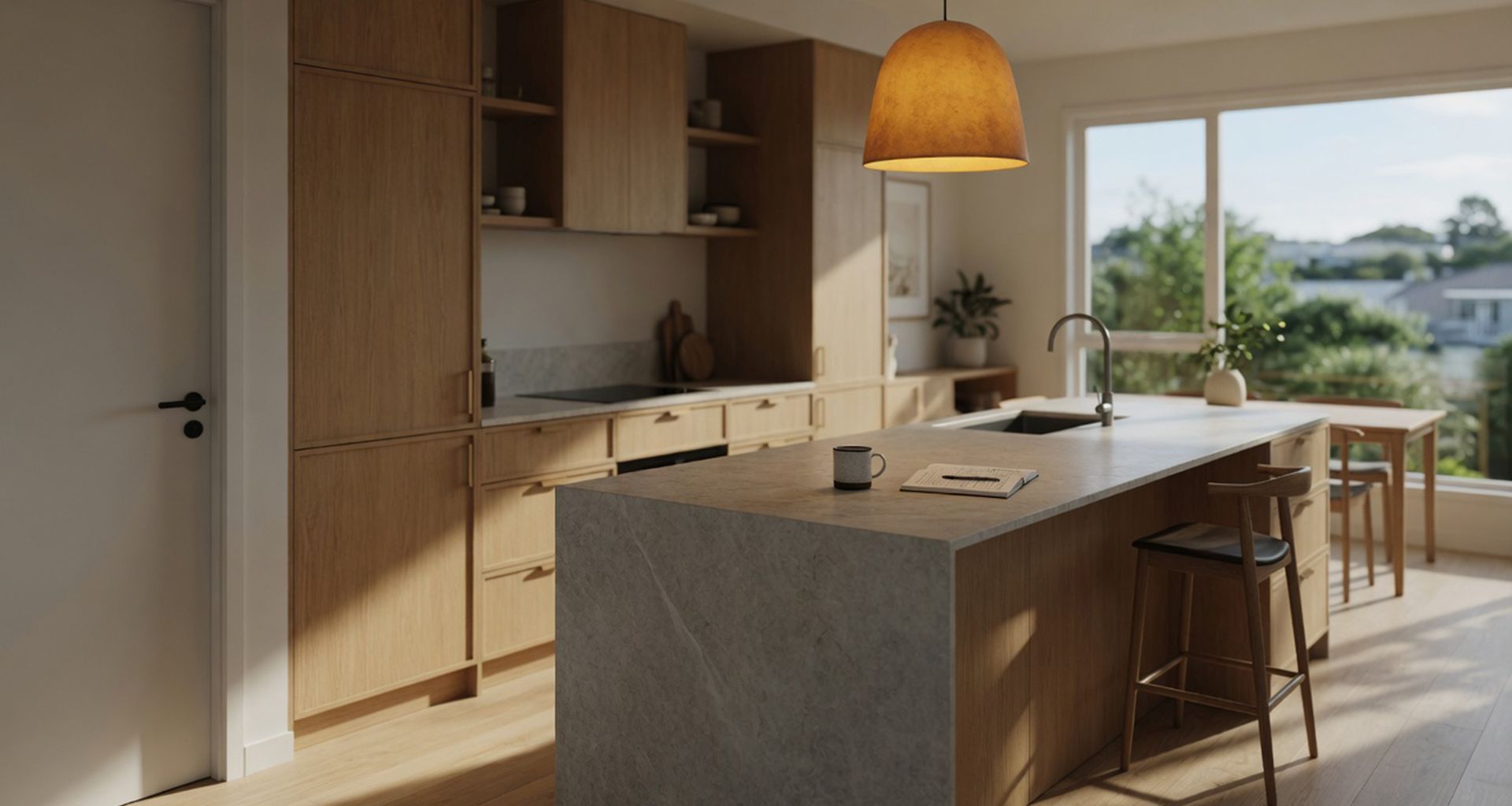
The best kitchen style for your home is the one that works with your house's era, light and how it opens to the outdoors — a shaker kitchen sits right in a Grey Lynn villa, while a handleless minimalist run belongs in a Flat Bush new-build. Below are 12 kitchen styles, each shown as a design render and matched to the Auckland homes it fits.
Most kitchen style guides show you a wall of pretty pictures and leave you to guess which one would actually work in your place. That's the gap we kept running into with clients. Someone falls for an industrial look on Pinterest, then we're standing in their 1920s bungalow in Mt Eden explaining why raw steel and exposed brick will fight the villa's bones every step of the way.
So we did it differently. We're Superior Renovations, and after more than a thousand Auckland kitchens we've learned that picking a kitchen style isn't about taste alone — it's about the house you're putting it in. The renders you'll see through this guide are our own design-team concepts, built to show each of the 12 kitchen styles in the kind of Auckland home where it genuinely belongs.
Sound familiar — scrolling for hours and still not sure? Let's sort it.
Why Auckland Homes Change the Style Rules
Kitchen design in New Zealand isn't a copy-paste of what trends overseas. Three things shift the maths here, and they matter more than any trend list.
First, the light. Auckland's low winter sun and hard summer glare do strange things to colour. A soft greige that reads warm in a London showroom can turn cold and flat in a south-facing Grey Lynn villa. We specify tones against the room's actual aspect, not a swatch under shop lights.
Second, indoor-outdoor flow. Nearly every Auckland kitchen we design opens onto a deck or courtyard. The kitchen has to hold its own as the hub of summer entertaining — bi-fold windows, a servery bench, a run that faces the outdoor space. That pushes some styles forward and rules others out.
Third, the housing stock itself. Auckland is a patchwork: pre-1940 villas and bungalows through the central suburbs, leaky-era plaster homes from the late '90s, 1970s brick-and-tile across the south and west, and a wave of new builds in Hobsonville Point, Flat Bush and Millwater. Each carries its own ceiling heights, window rhythms and proportions. A style that flatters one will wrestle with another.
💡 Quick tip: Before you fall for a style, stand in your kitchen at 8am and again at 4pm. Watch where the light lands. That single hour of observation will steer your colour and finish choices better than any showroom visit.
With that groundwork down, here are the 12 styles — grouped loosely from the most contemporary through to the most classic — and the Auckland home each one was made for.
The Contemporary End: Modern, Minimalist, Scandi and Japandi
1. Modern / Contemporary — for the new build
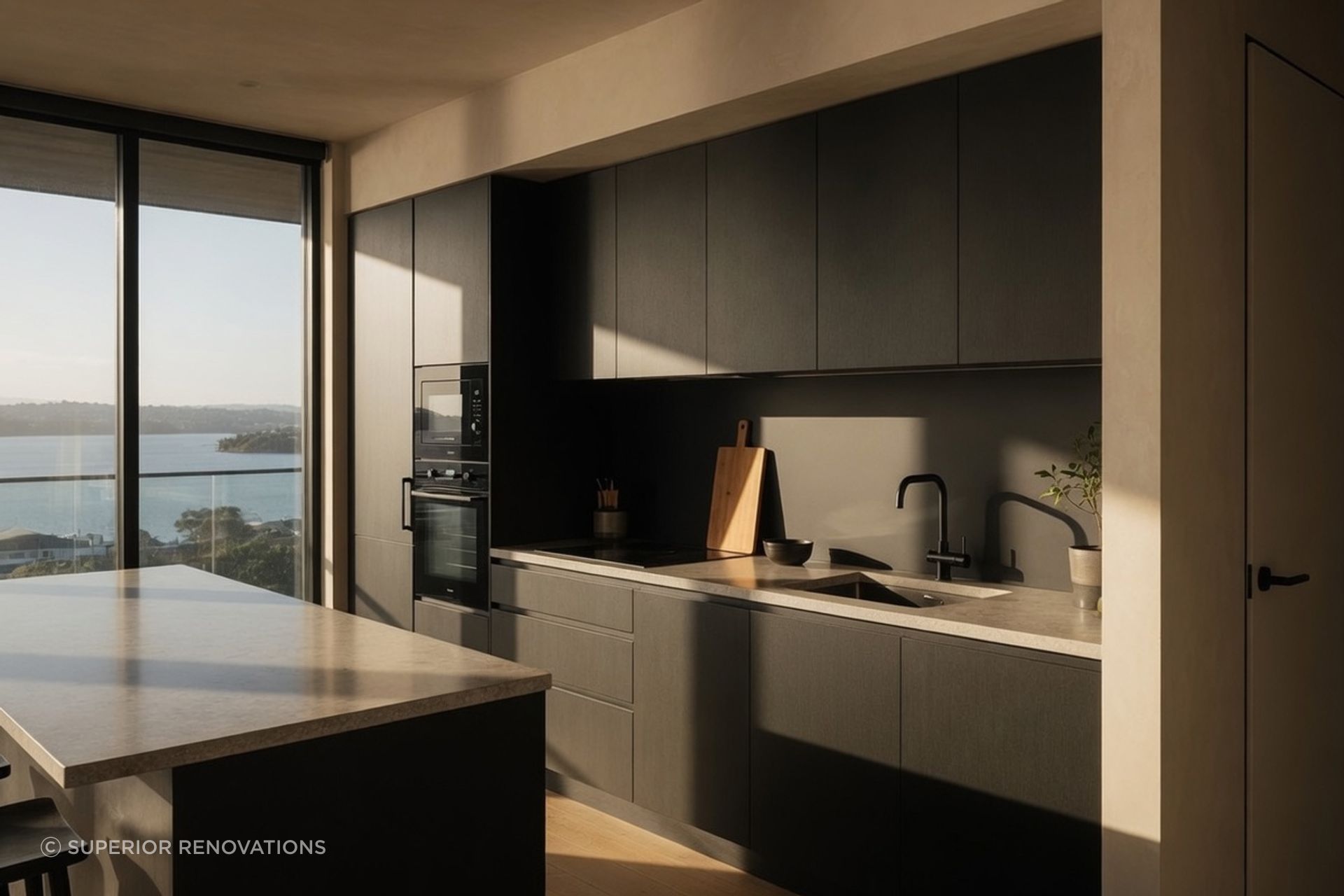
Flat-panel cabinetry, an engineered-stone benchtop, integrated appliances and not much ornament. Modern kitchens are built around clean lines and quality materials doing the talking — no crown moulds, no fuss. They sit best in the open-plan new builds going up around Hobsonville Point and Flat Bush, where high ceilings and big glazing give the look room to breathe. Drop the same kitchen into a low-ceilinged villa and it can feel cold. In a new build, it sings.
2. Minimalist / Handleless — for the modern apartment
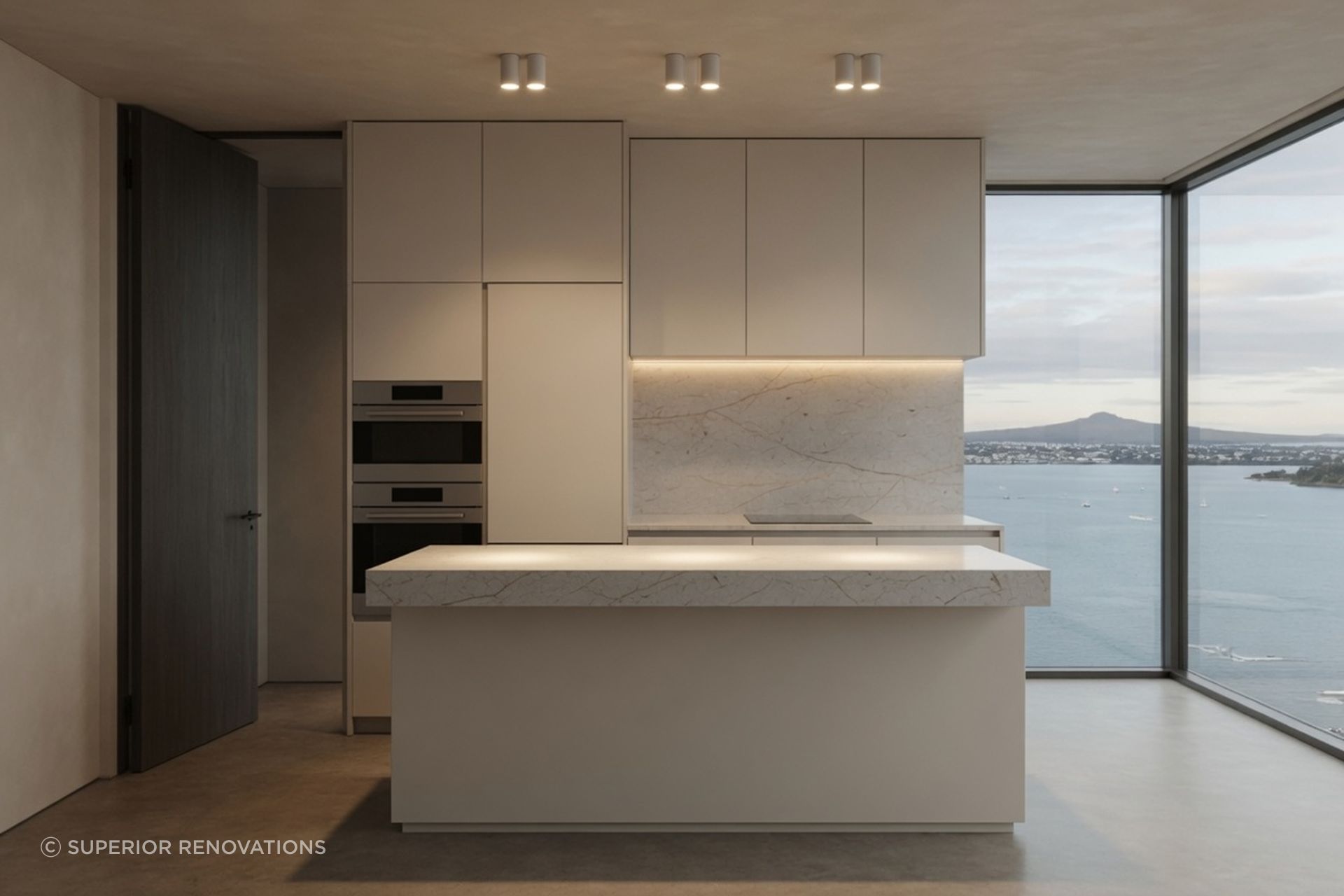
Take modern and strip it back further. Push-to-open or J-pull cabinetry, no visible hardware, a seamless benchtop, everything integrated so the kitchen almost disappears into the wall. Minimalist kitchens trade decoration for discipline, which makes them ideal where space is tight and clutter shows. Apartments and compact townhouses on the city fringe are the natural home — the pared-back look actually makes a small footprint feel calmer and larger.
3. Scandi — for the compact home
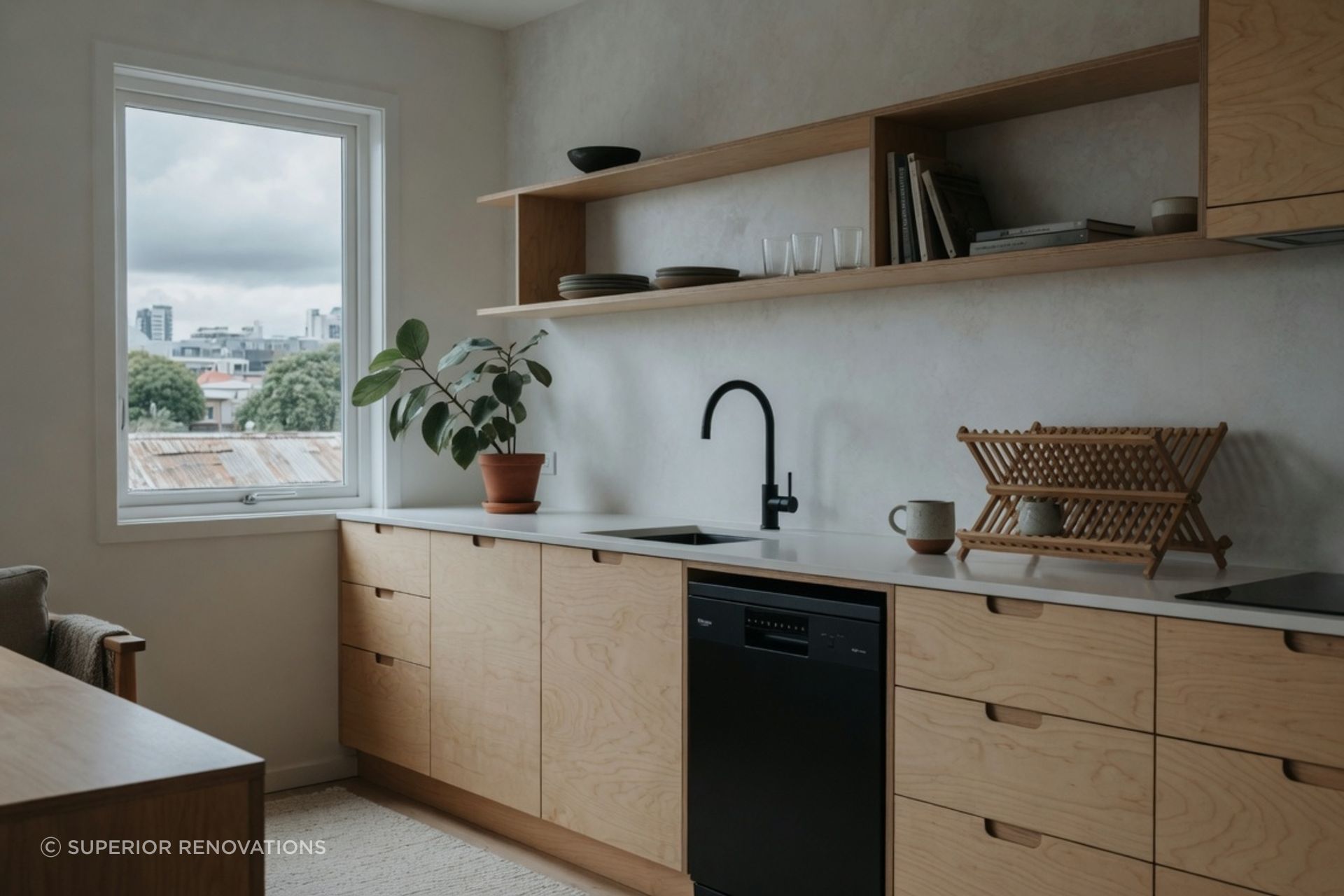
Pale timber, white surfaces, matte black tapware and a bit of open shelving. Scandi has been quietly popular here for a decade because it does something Auckland homes need: it makes the most of natural light and keeps small spaces feeling warm rather than clinical. Birch ply or light oak fronts bounce the light around, and the honest, functional feel suits a first home or a smaller central-suburb do-up down to the ground.
4. Japandi — for the architectural renovation
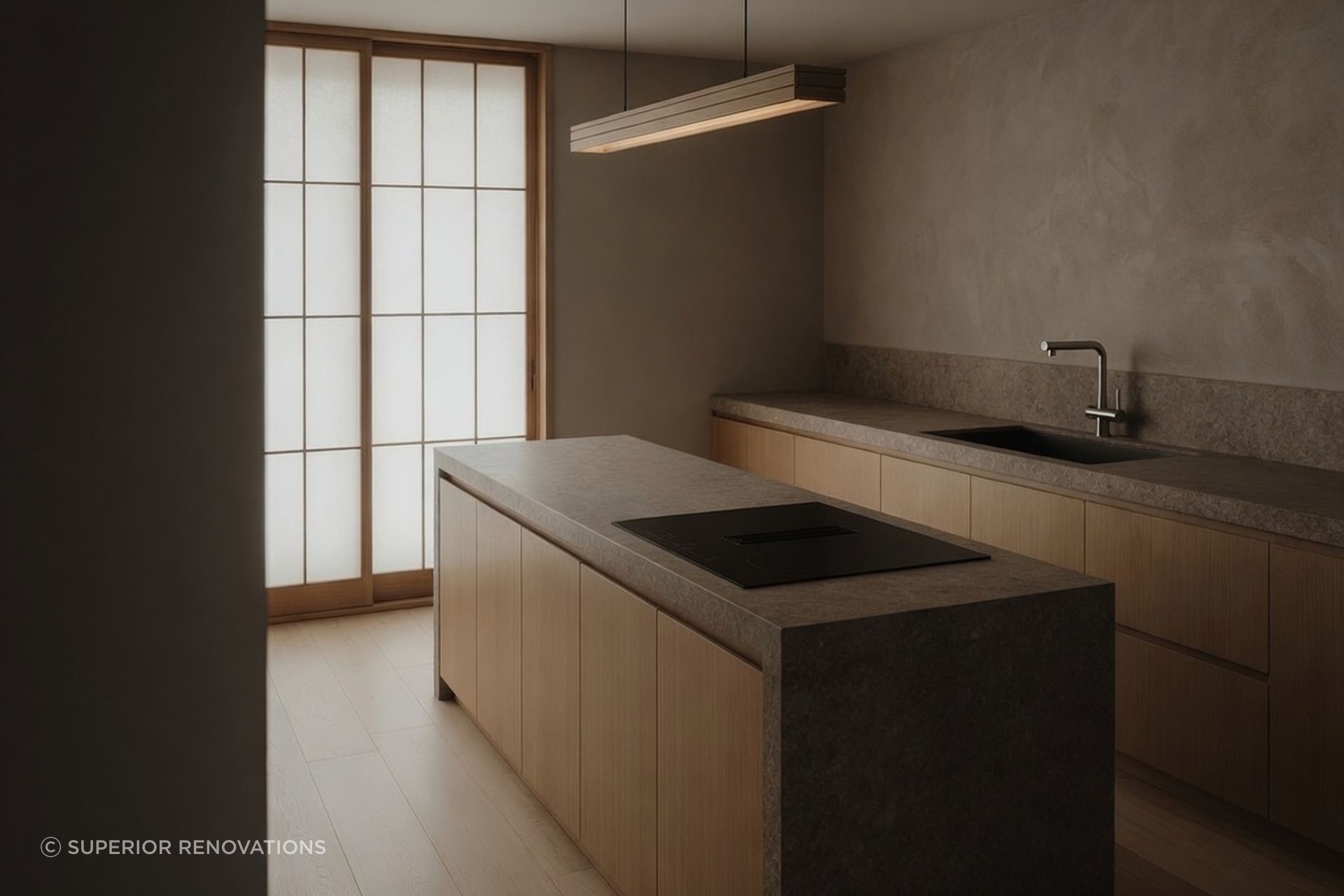
Japandi is where Scandinavian warmth meets Japanese restraint — low-slung oak, stone, deep single basins, and a calm that comes from leaving things out rather than adding them in. It rewards a home with good proportion and considered light, which is why it lands best in architectural renovations and design-led new builds where the whole house shares that quiet language. It's not a bolt-on look; it works when the bones agree with it.
💡 Quick tip: The contemporary styles all lean on flat, uninterrupted surfaces — which means your cabinetry and benchtop finish quality is doing nearly all the work. This is exactly where custom, locally made cabinetry earns its keep over flat-pack.
The Character End: Shaker, Classic, French and Country
5. Shaker — for the bungalow or villa
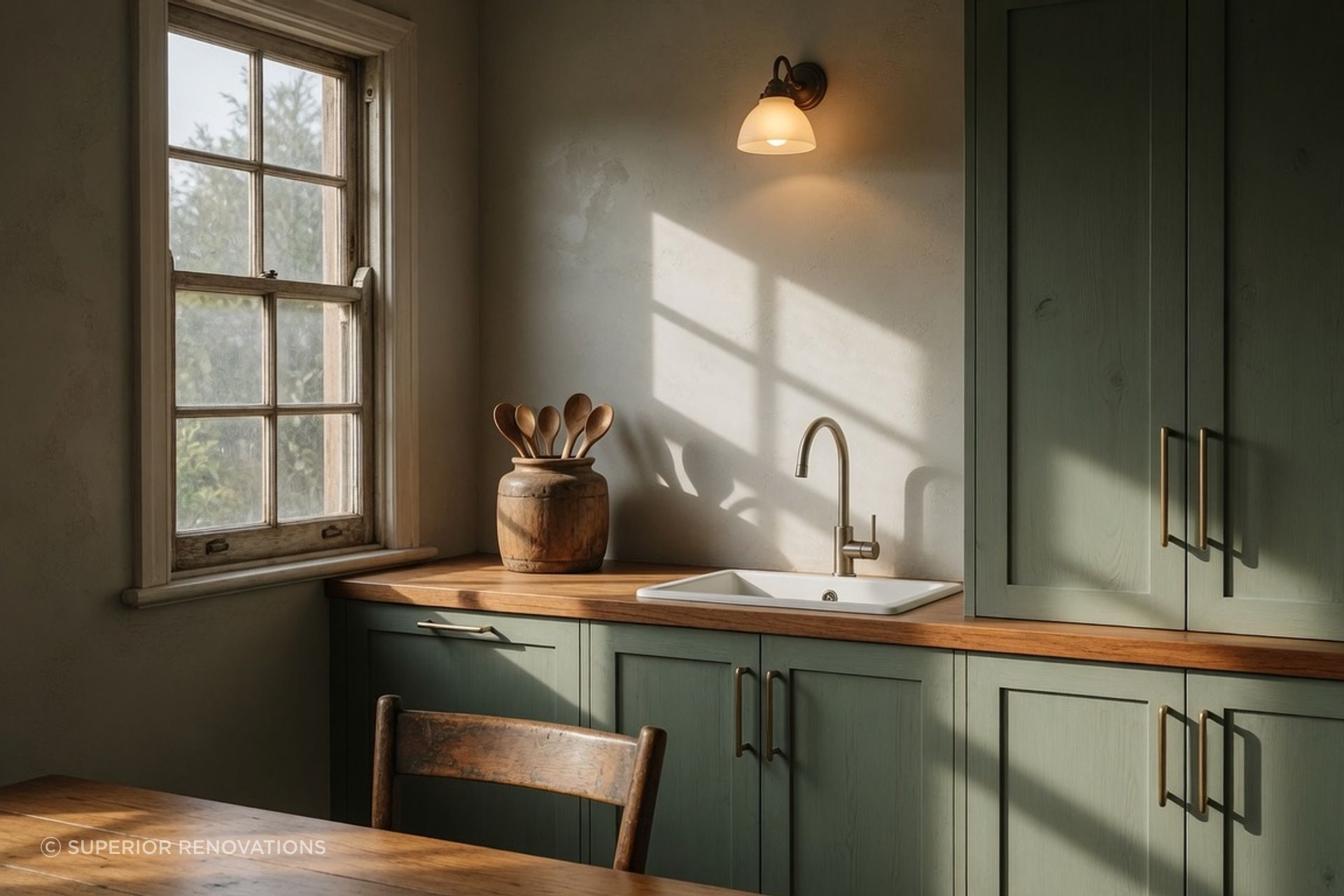
The shaker door — a simple recessed panel — is probably the most versatile front there is. It bridges old and new better than any other style, which is why it's our most-requested look for character homes. Painted in a soft sage or a classic off-white, with a timber benchtop and a butler sink, it suits the bungalows and villas of Mt Eden and Grey Lynn without pretending to be from another century. Modern enough to feel current, traditional enough to respect the house.
"People think shaker is the 'safe' choice, but it's actually the smart one in a character home. The flat frame catches the light the way the original joinery in a villa does, so the new kitchen feels like it grew there rather than being dropped in. Get the paint colour right for the room's aspect and it'll still look right in fifteen years." — Alison Yu, Designer, Superior Renovations
6. Classic / Traditional — for the pre-1940 villa
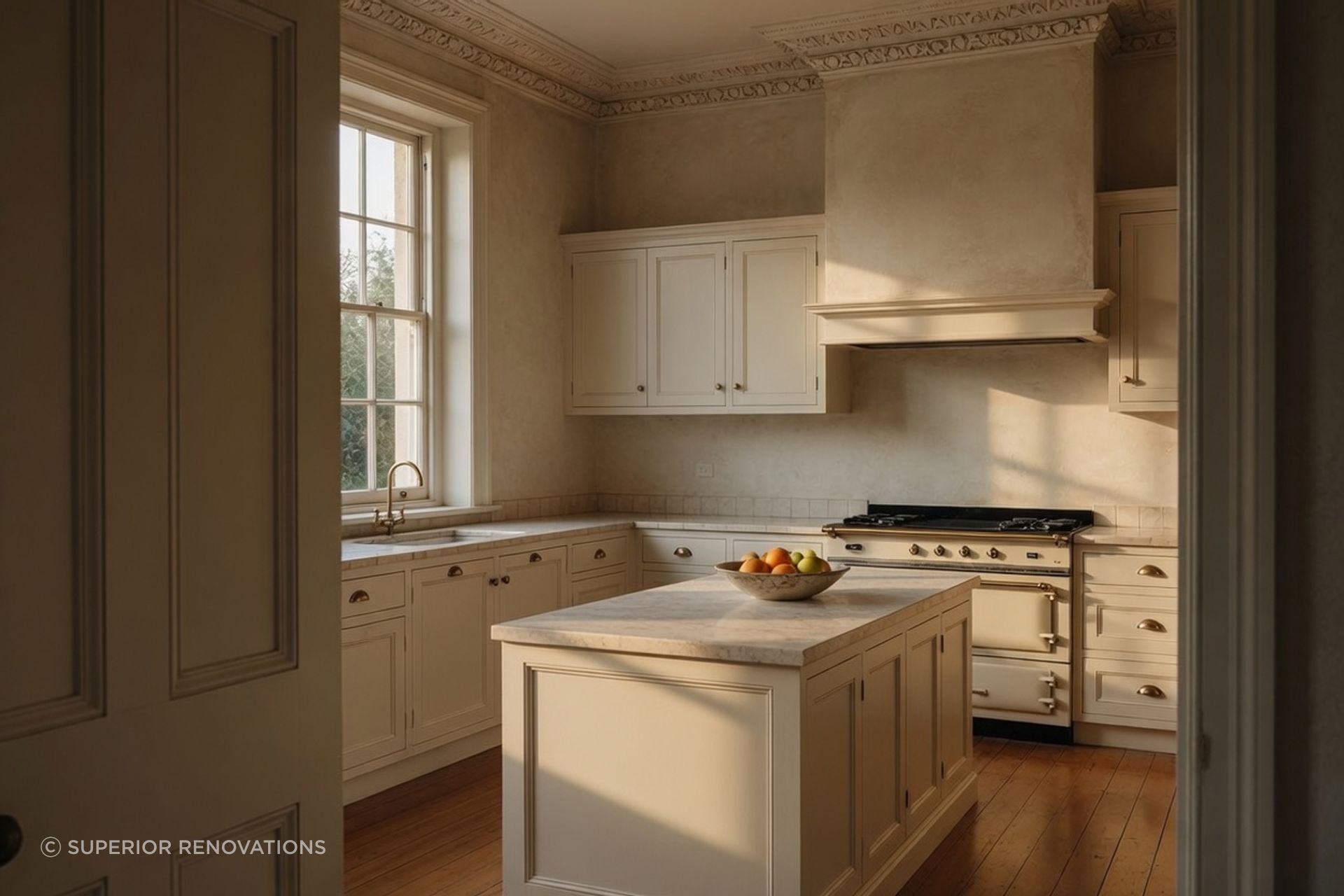
Where shaker keeps it simple, classic leans into detail — profiled doors, cornicing, a freestanding cooker, warm brass hardware. A traditional kitchen doesn't have to feel dark or dated; get the shades of cream and warm neutral working together and it echoes the villas of Ponsonby and Epsom beautifully. This style belongs in genuinely period homes where the detailing has something to talk to — the skirtings, the high stud, the original architraves.
7. French Provincial — for the renovated character home
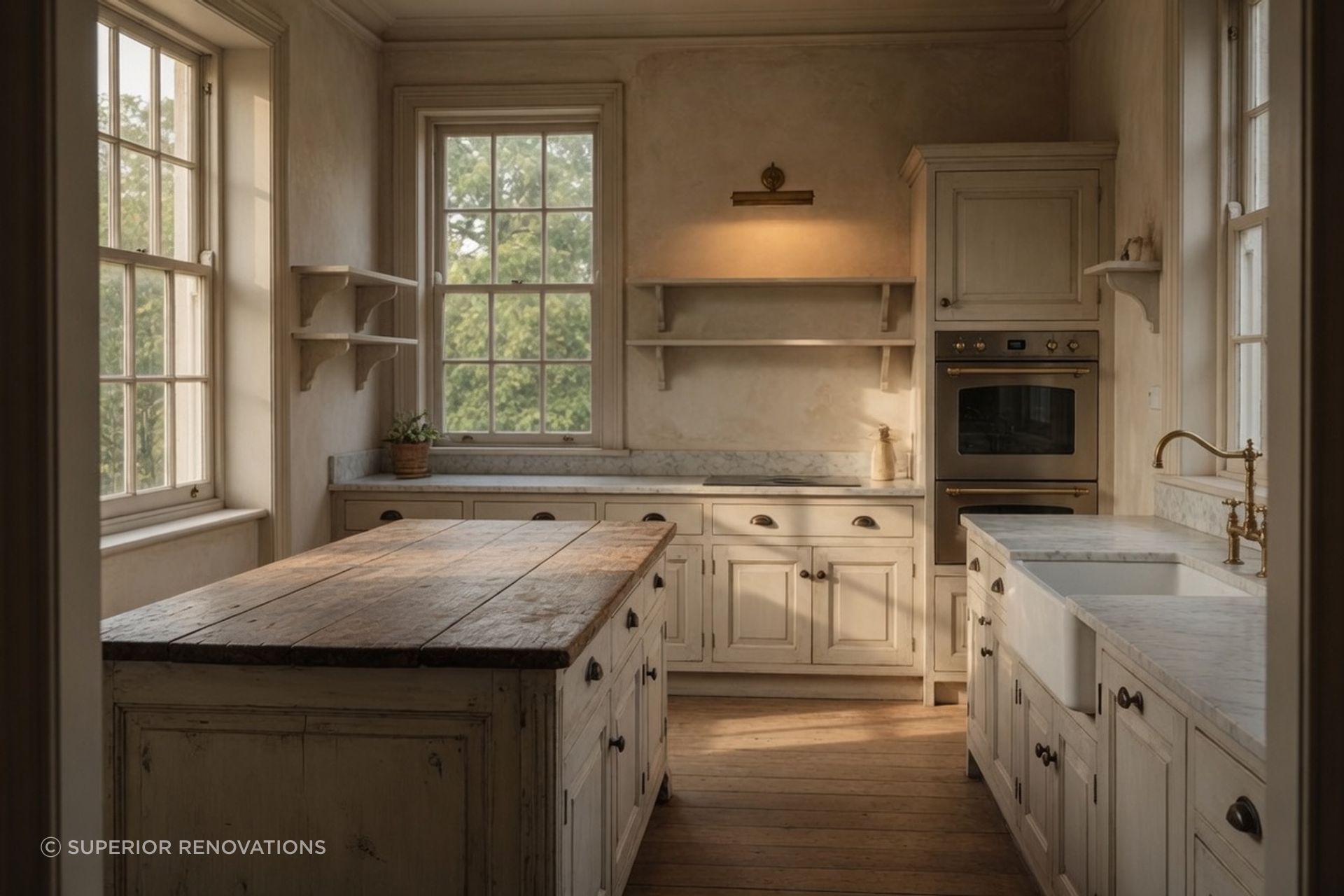
Softer and more romantic than straight classic — antique-white profiled cabinetry, a distressed timber island, marble-look stone and aged brass. It's a look with real warmth, and it suits larger renovated character homes in the likes of Remuera where there's the floor space to carry an island and the ceiling height to avoid feeling heavy. French provincial rewards generous rooms; squeeze it into a small galley and the detail overwhelms.
8. Country / Farmhouse — for the lifestyle block
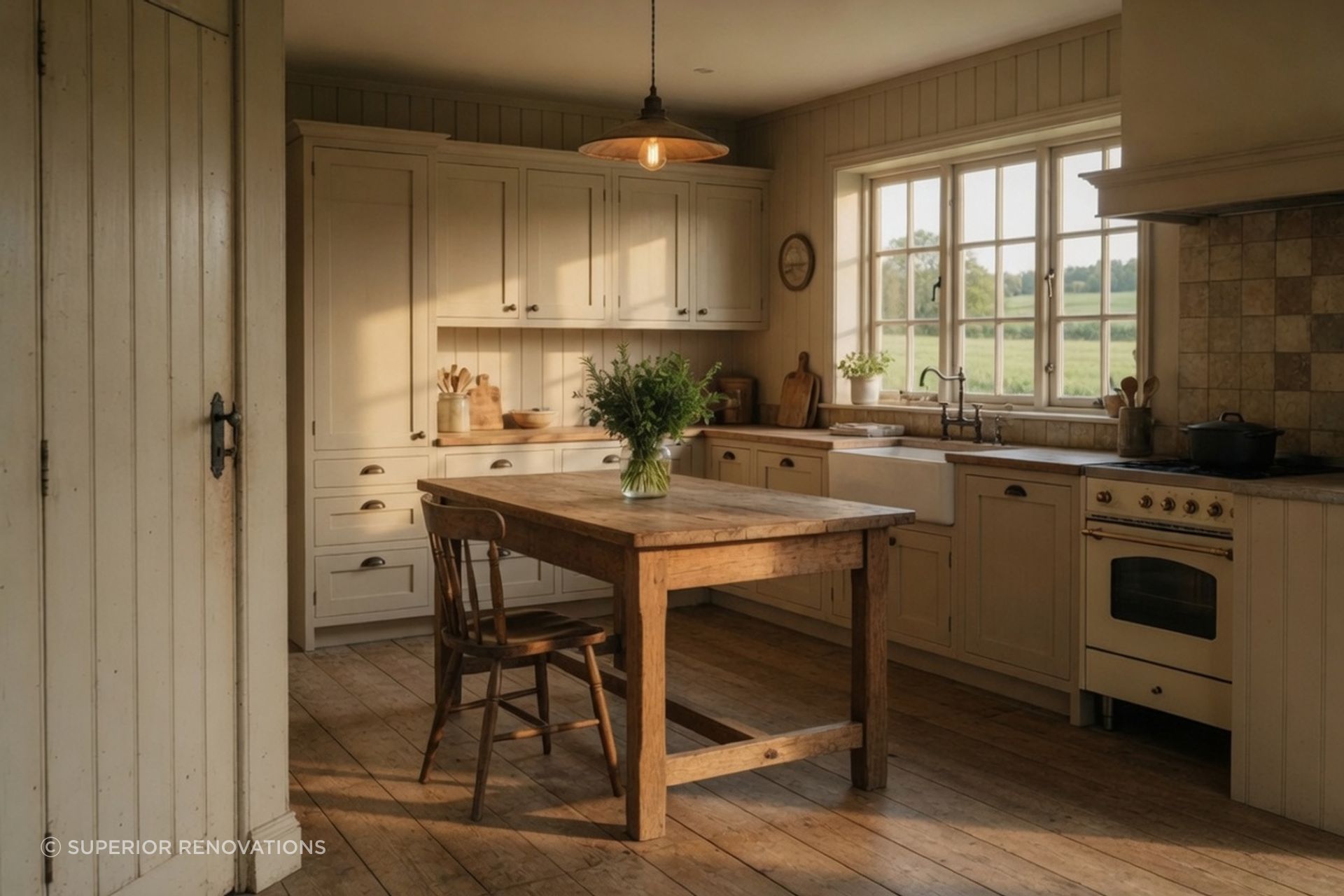
Tongue-and-groove cabinetry, a big timber island, an apron sink and a freestanding range built for actual cooking. Farmhouse is relaxed, hardwearing and made to be lived in — which is why it's the natural fit for lifestyle blocks out west in Kumeu and Riverhead, where the kitchen feeds a crowd and takes a hammering. It's a style that gets better as it wears, not worse.
The In-Betweeners: Hamptons, Coastal, Industrial and Two-Tone
9. Hamptons — for the coastal character home
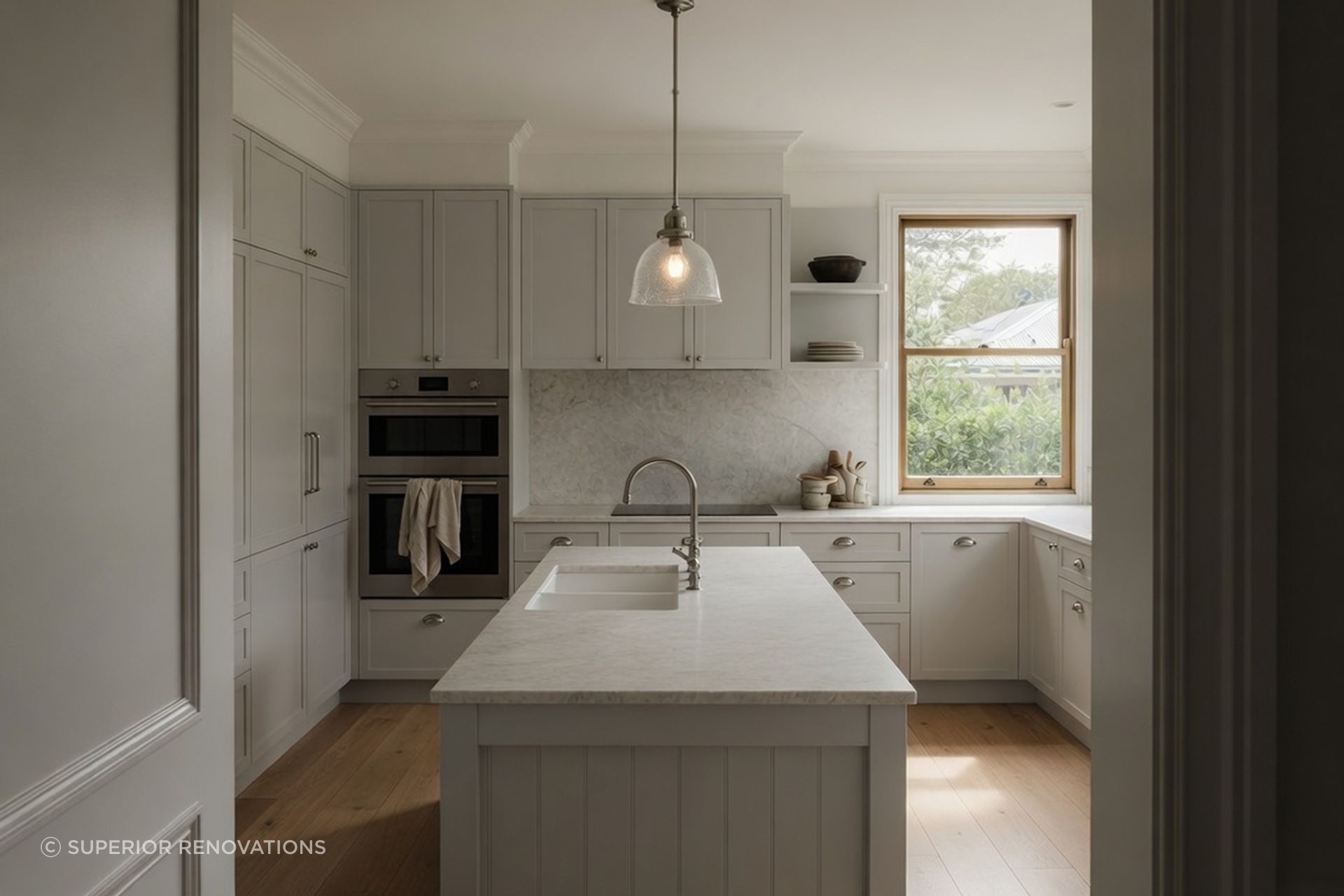
Hamptons is the most-searched style name in the country for a reason — that pale, breezy, slightly formal look with dove-grey shaker fronts, a marble-look island and brushed nickel tapware. It's a coastal-leaning style that suits the character homes of Herne Bay and Devonport, where the sea light and the traditional bones both play into it. It's shaker's more dressed-up cousin: same versatile door, more polish.
10. Coastal — for the beachside home
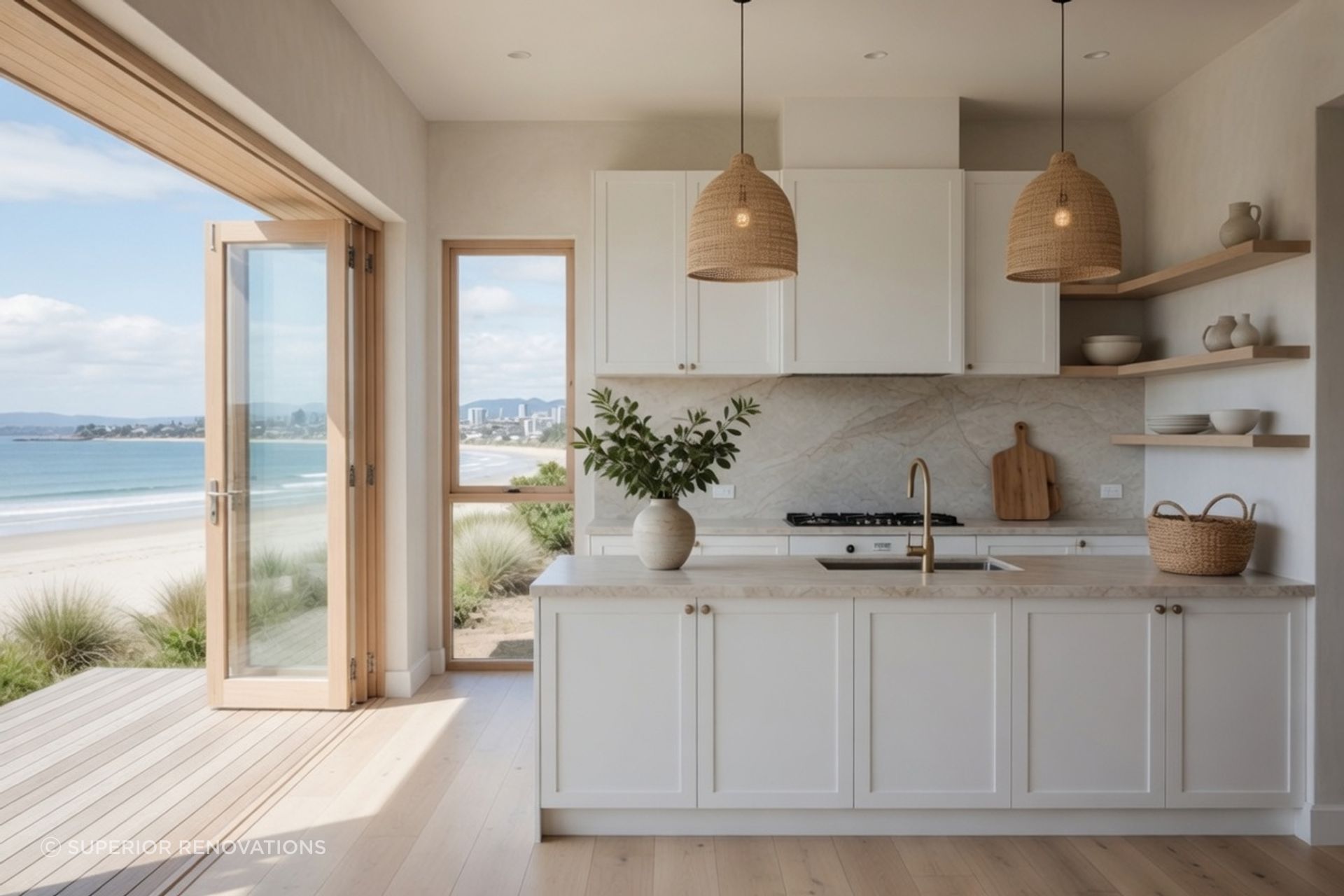
Lighter and more casual than Hamptons — crisp white, pale timber accents, light stone and natural textures like woven pendant shades. Coastal is about bringing the outside in, so it belongs in the genuinely beachside homes of Takapuna, Milford and the Eastern Bays where the kitchen opens straight to the deck and the water's part of the view. The trick is warmth: too much white and it tips clinical, so we anchor it with timber.
11. Industrial — for the warehouse conversion
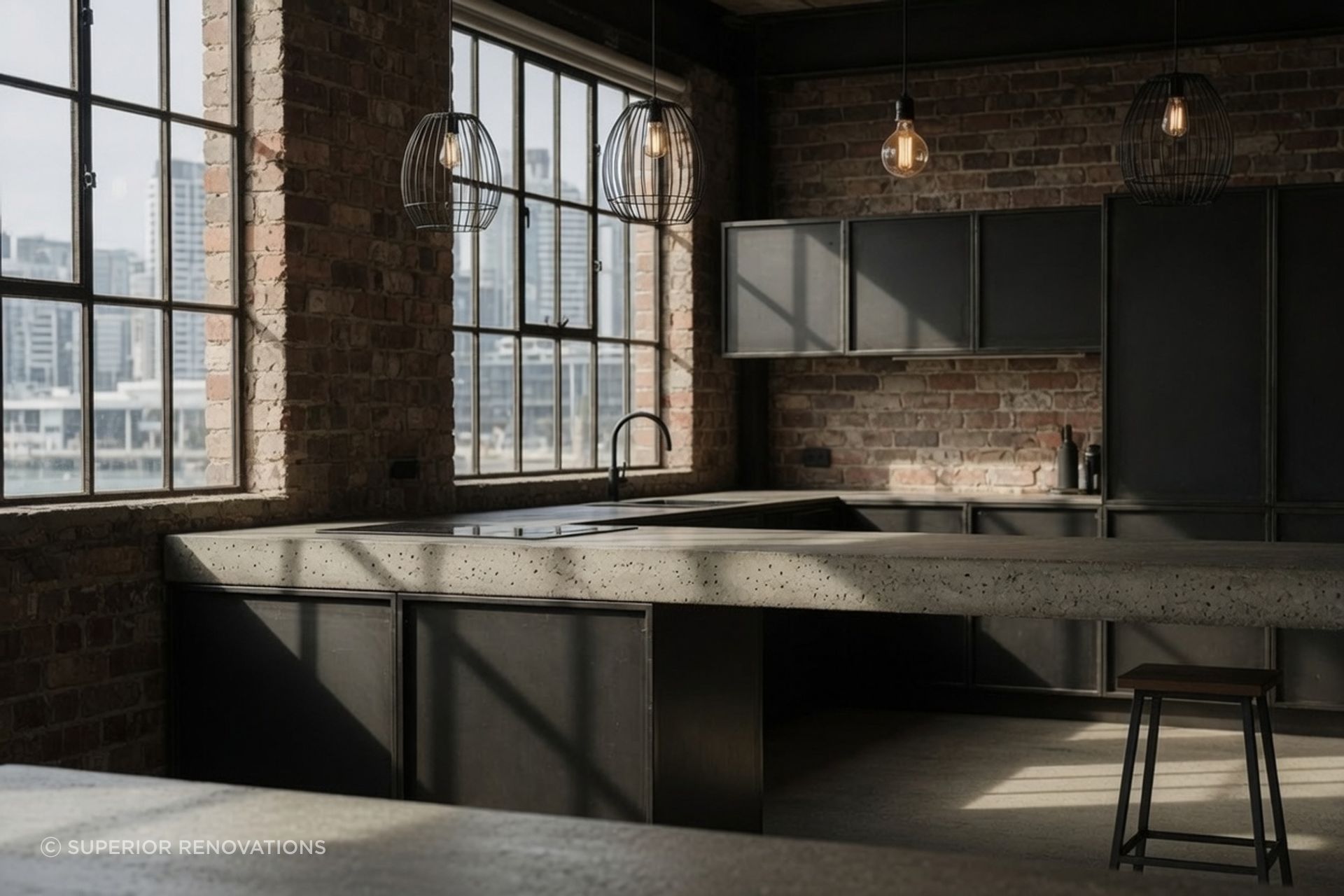
Black steel-framed cabinetry, concrete benchtops, exposed brick, cage pendants. Industrial is a strong look and a fussy one about where it lives — it needs a building with the raw materials already in play, which means warehouse conversions and hard-edged townhouses on the CBD fringe. Force it into a suburban villa and you're fighting the house. In a converted warehouse in the city, it's honest and right at home.
12. Two-tone / Transitional — for the 1970s do-up
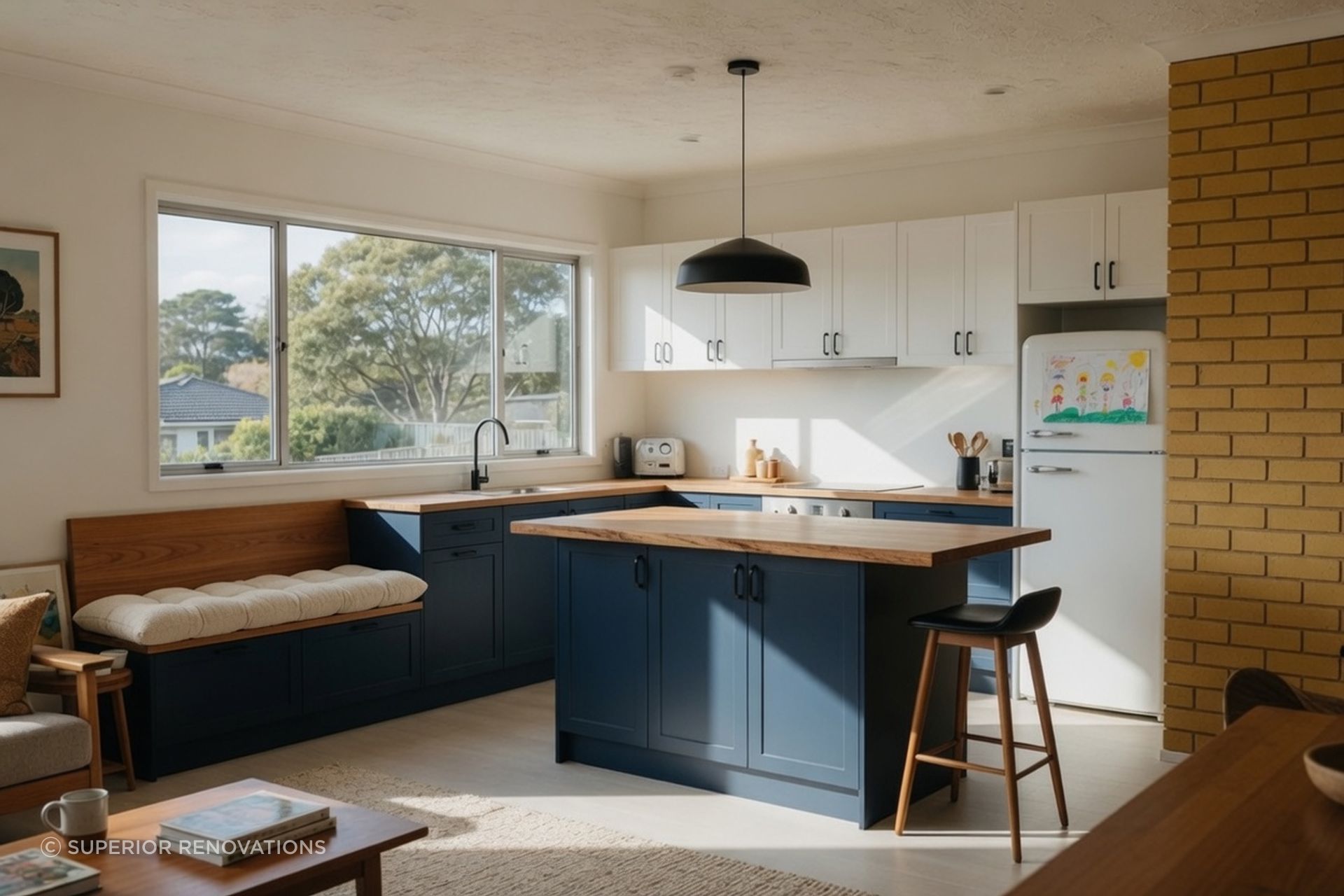
Two-tone — a darker base with lighter uppers, or a contrast island — is the transitional style that bridges everything else. It's the one we reach for most in the 1970s and '80s brick-and-tile homes of West and South Auckland, where the house is neither period nor brand-new and needs a kitchen that splits the difference. A deep navy base under white uppers with a timber-topped island updates a dated home without demanding you gut its character.
"Two-tone gets treated like a trend, but in an '80s home it's genuinely the practical answer. You use the darker base to ground a room that often has awkward proportions, and the lighter uppers to lift it. It lets us modernise a brick-and-tile place without pretending it's something it isn't — and that honesty is usually what makes a renovation feel resolved." — Eunice Qin, Designer, Superior Renovations
What Do These Kitchen Styles Cost in Auckland?
Style choice affects cost less than people expect — the bigger drivers are the size of the kitchen, the cabinetry construction, the benchtop material and whether you're moving services. That said, styles heavy on detail (classic, French provincial) or on premium finishes (Hamptons marble, Japandi stone) tend to land higher than a pared-back Scandi or shaker run.
As a working guide for Auckland, a mid-range kitchen renovation runs about $26,000 to $35,000, and sits around $2,300 per square metre. A larger kitchen — 18m² and up, the kind you see in a full-home renovation or a bigger new build — can run from roughly $62,000 to $138,000 or more once you factor in premium cabinetry, stone and appliances. For context on how renovation pricing behaves across the market, Consumer NZ is a useful independent reference.
💡 Quick tip: Want a figure for your own kitchen before you commit to a style? Our kitchen renovation cost calculator gives you a ballpark in a couple of minutes so you can plan the look around a realistic budget.
How to Choose the Right Kitchen Style for Your Home
If you're staring down all 12 and feeling no clearer, work through it in this order. It's the same sequence we use in the first design meeting.
Start with the house, not the look. Era and proportion narrow the field fast — a villa points you toward shaker, classic or Hamptons; a new build opens up modern, minimalist and Japandi; an '80s do-up leans two-tone. Let the building rule out the styles that would fight it.
Then check the light and the flow. South-facing and short on sun? Lean lighter and warmer. Opening straight onto a deck for summer? Coastal and Scandi reward that; heavy industrial doesn't. Match the style to how the room actually lives, not how it photographs.
Then, and only then, bring in taste. Within the two or three styles that suit your home, the colour, hardware and benchtop are where your personality goes. This is the fun part — and the part where seeing real renders of your own space, rather than someone else's kitchen, makes all the difference. That's exactly what we do inside our Wairau Valley Design Studio: 3D renders of your kitchen, in your chosen style, before a single cabinet is built.
You'll find our showroom at 16B Link Drive, Wairau Valley — worth a visit to put your hands on the actual finishes rather than judging them off a screen.
Frequently Asked Questions
What is the most popular kitchen style in New Zealand?
Shaker and Hamptons are consistently the most-requested kitchen styles in New Zealand. Shaker suits the country's large stock of villas and bungalows, while Hamptons appeals in coastal and character homes. Both use the versatile shaker door, which is why they bridge traditional and modern homes so well.
Which kitchen style suits a villa or bungalow?
Shaker, classic and Hamptons styles suit Auckland villas and bungalows best. Their flat or lightly profiled doors echo the original joinery and high stud of pre-1940 homes. A painted shaker kitchen in a soft neutral is the most versatile choice — modern enough to feel current, traditional enough to respect the house.
What kitchen style works in a modern new build?
Modern, minimalist handleless, and Japandi styles work best in new builds. The open-plan layouts, high ceilings and large glazing common in Hobsonville Point and Flat Bush homes give these clean-lined styles the space they need. Flat-panel or handleless cabinetry keeps the look uncluttered and lets the architecture lead.
Does the kitchen style change the renovation cost?
Style has a smaller effect on cost than size, cabinetry and benchtop material. Detail-heavy styles like classic or French provincial, and premium-finish styles like Hamptons, tend to cost more than a pared-back shaker or Scandi kitchen. In Auckland, a mid-range kitchen runs about $26,000 to $35,000 regardless of style.
Is a two-tone kitchen still in style?
Yes — two-tone remains popular and is especially practical in 1970s and '80s brick-and-tile homes. A darker base with lighter uppers, or a contrasting island, grounds awkward proportions and modernises a dated home without a full character overhaul. It's a transitional look that bridges older and newer homes.
Can I mix two kitchen styles together?
You can, and many of the best Auckland kitchens do. Transitional design deliberately blends elements — a shaker door with a modern handleless island, or classic detailing with contemporary tapware. The key is a common thread in colour or material so the mix reads as intentional rather than accidental.
Twelve styles, but only two or three that truly suit your home — and that's the point. The right kitchen style starts with your house, then your light, then your taste. Get that order right and the rest falls into place.
If you'd like to see your own kitchen rendered in the style that fits it, book a free design consultation with our team. We'll start where every good kitchen does — with the house you're putting it in.