Rebuilding a landmark: Behind the relocation of Albert Street’s bluestone wall
Written by
05 March 2026
•
3 min read

When planning commenced for the City Rail Link, drawings revealed the wall was in the wrong location by one metre to accommodate the new infrastructure. Something that may seem small on paper, it was a challenge that posed the question, how could the wall be preserved while allowing plans to move ahead?
The solution wasn’t to demolish or disguise. Instead, with the help of experts, the wall was to be deconstructed and rebuilt. Len Lavas and his team at Auckland Stonemasons were entrusted with the massive operation of carefully removing 1,800 individual blocks, before rebuilding the wall for the city’s next generations.

In 2020, the project team began by treating the wall not as something to be demolished, but as a heritage structure to be translated into something new, while retaining the original design. “We had heritage architects do a drawing for the whole wall, with every stone drawn and numbered,” Len recalls. Only then did deconstruction begin, carefully reversing the original assembly.
As each stone came down, the documentation and numbering process continued in real time with aluminium tags engraved and fixed directly to each stone. What could have been chaos was instead executed with impressive attention to detail.


With individual stones weighing anywhere between 80 kilograms and 500 kilograms, the team relied on a traditional lifting device called the Lewis pin. This process required drilling into the stone, seating the pin and lifting, an exercise in precision where one wrong movement could result in fractures and broken stones.
After numerous delays, including Auckland facing further lockdown restrictions in 2022, the reconstruction finally commenced in 2024. With each stone numbered and waiting to reclaim its place on the wall, progress came quickly. “The main structure took two and a half months,” says Len. “Then it took another couple of months to lay all the capping stones and pillars and put the balustrades up.”

While most stones were original, not everything survived. Some stones had gone missing since 1880, and others split during handling and storage. Auckland today didn’t have enough supply of replacement stones large enough for pieces like capping, pillars and steps. For these, the team sourced Timaru bluestone.
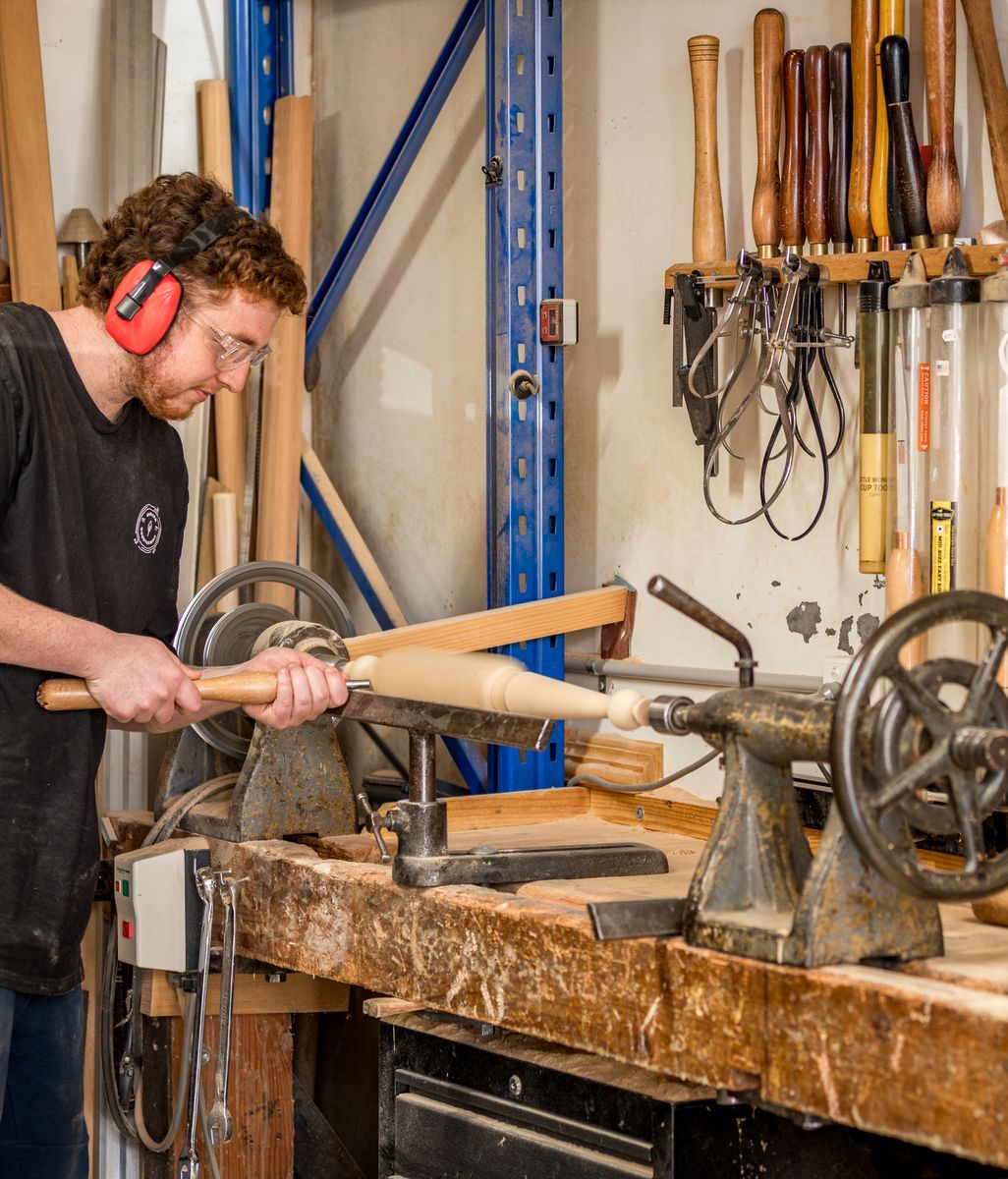
Traditional craftsmanship was also needed to fabricate the ballustrades. “The originals were made out of wrought iron, so we found a wrought iron blacksmith to make new balustrades for the missing ones.”


A careful process of rebuilding, replacing and replicating, behind the reconstructed stonework now sits the immense concrete body of the station itself. The wall has been reattached with modern fixings, creating a structure that looks the same, but is much stronger than the original.
To the unknowing eye, it would be difficult to tell that the wall has been shifted and rebuilt. It appears unchanged, each stone sitting where it was nearly 145 years ago, just one metre over. A piece of heritage that has been saved, the wall will be there for another 145 years and beyond.
From numbering 1,800 individual stones to sourcing bluestone and commissioning wrought iron balustrades, every decision balanced preservation with progress. It’s a reminder that even in the face of large-scale urban development, history can be carried forward by expert hands.
If you’re inspired by projects that blend heritage, engineering and craftsmanship, ArchiPro makes it easy to discover the specialists behind them. Explore landmark builds, connect with skilled trades and heritage experts, or save ideas to a project board as you plan your own development. Whether restoring the past or building for the future, ArchiPro helps you bring the right expertise together.