Why statement lighting is a strategic investment in commercial design
Written by
12 July 2026
•
4 min read

"We always say lighting is one of the first things people notice and one of the last things they remember," says Designer Chandelier’s Anna Le Sueur.
If you think of the last time you visited the lobby of a beautiful hotel or sat at a memorable restaurant, this statement rings true; a carefully considered lighting feature has the ability to shape your first impression of a business, reinforce brand identity and can influence how people remember a space long after they've left.
According to Le Sueur, the shift from lighting as a solely practical consideration to lighting as a key architectural component has been gradual but significant.
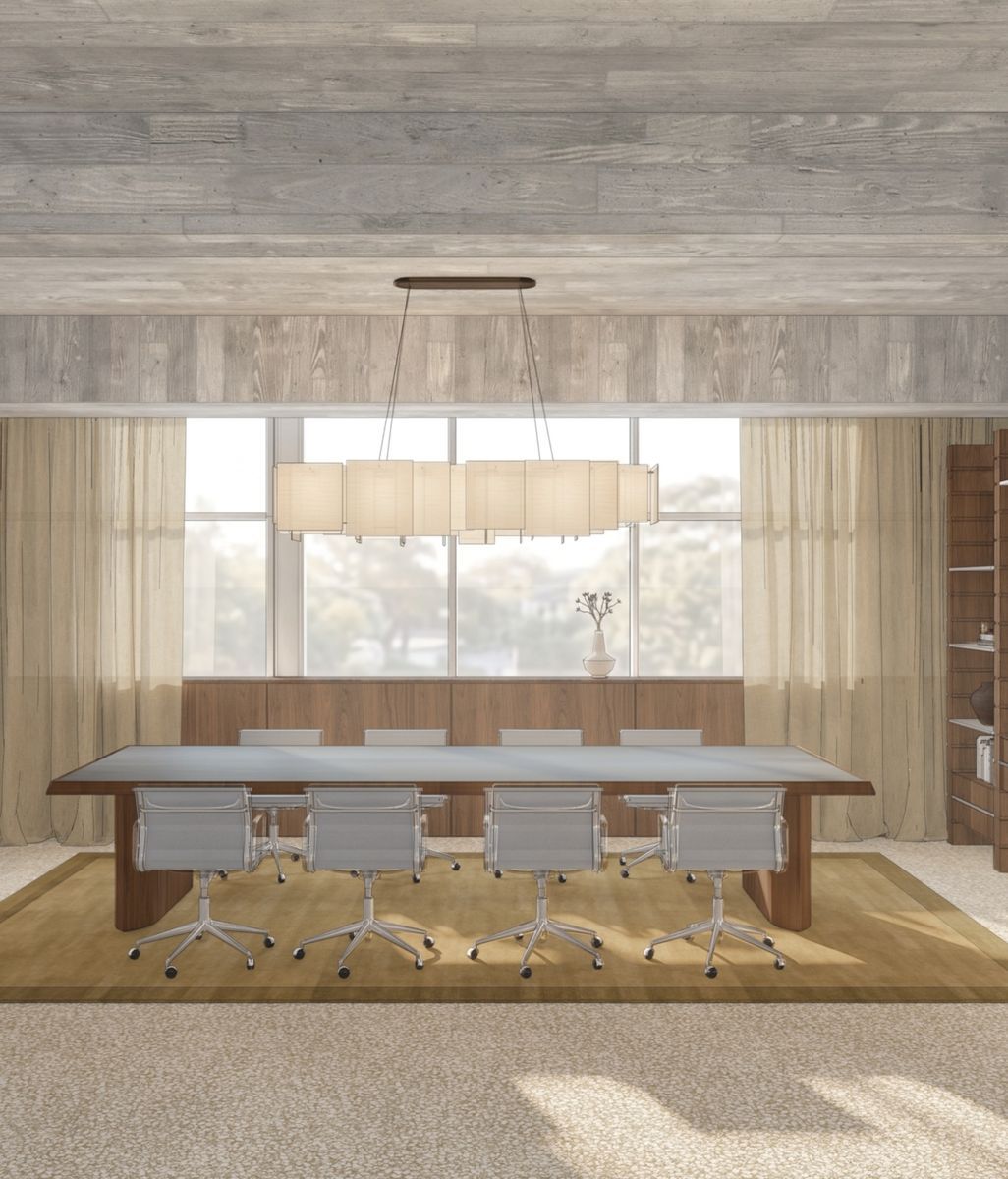
"Designers are using statement lighting less as a finishing touch and more as an architectural feature," she says. "In hospitality especially, lighting becomes a crucial part of the venue’s identity. It can create drama in an entrance, warmth in a dining space or a sense of occasion in a ballroom.”

Lighting shapes customer experience
Perhaps the greatest opportunity lies in lighting's ability to influence how people feel within a space.
A dramatic chandelier can create anticipation as guests arrive. Softer decorative lighting encourages people to linger in restaurants and bars. Carefully positioned feature lighting helps define circulation, highlight architectural moments and create memorable visual landmarks.
One project that demonstrates this particularly well is the custom chandelier by Designer Chandelier designed for the Hudson Room at Melrose Events. Featuring more than 15,000 individually hand-hung crystal elements, the installation was created specifically for the transformed ballroom.
“It became the defining feature of the ballroom, adding scale, elegance and theatre while complementing the architectural detailing,” shares Le Sueur.
Similarly, at Little Creatures Brewery in Melbourne, a statement chandelier was used to introduce warmth and refinement into an otherwise industrial setting, proving that statement lighting can soften architecture just as effectively as it can dramatise it.


Think beyond aesthetics
While visual impact is important, specifying statement lighting for commercial projects involves considerably more than choosing an eye-catching design.
Scale, proportion, ceiling heights, structural support, maintenance access, freight logistics and installation sequencing all need to be considered long before the fitting arrives on site.
"The biggest opportunity is creating something distinctive," Le Sueur explains. "But the challenge is balancing that impact with the practical realities of a commercial project."
Bringing lighting into the design process early allows these technical considerations to be resolved alongside the architecture, rather than forcing compromises later.
Large feature pieces often require structural support, coordination with services, custom suspension details and detailed installation planning. Waiting until finishes have been selected can significantly limit what's possible.
"The best outcomes happen when statement lighting is considered from the beginning, not added at the end," says Le Sueur.
Designer Chandelier is typically involved during concept design, working alongside architects, interior designers, builders and contractors to advise on scale, customisation, engineering requirements, budgets and delivery programmes.
"The more detailed the planning, the smoother the installation."


Customisation is becoming increasingly important
As commercial clients look to differentiate themselves, bespoke lighting is becoming increasingly common.
Rather than selecting an off-the-shelf fitting, many designers are adapting existing collections through changes to size, finish or configuration so the lighting responds specifically to the architecture.
These modifications don't necessarily require designing an entirely new fitting from scratch, but they can make a project feel far more resolved.
"Small changes to scale, finish or configuration can make a piece feel completely integrated into the project," says Le Sueur.


A strategic investment
As commercial interiors become increasingly experience-driven, statement lighting is no longer simply about decoration. It's an investment in how people perceive, navigate and remember a space.
For architects and designers, that means considering lighting alongside structure, materiality and spatial planning from the earliest design stages. When thoughtfully integrated, a statement fitting becomes more than an object, it becomes part of the architecture itself.
Designer Chandelier supports this process through its dedicated Trade Program, offering architects, interior designers, builders and developers project pricing, customisation options, complimentary storage, priority dispatch and access to specialist lighting expertise. By collaborating from concept through to installation, the team helps ensure statement lighting enhances both the design vision and the practical delivery of commercial projects.
Building exceptional commercial spaces requires every element to work together. Through ArchiPro, architects, designers and specifiers can discover leading products, connect with trusted suppliers such as Designer Chandelier, and source the expertise needed to deliver projects with confidence.