Designing a Home Along the Great Ocean Road and the Otways

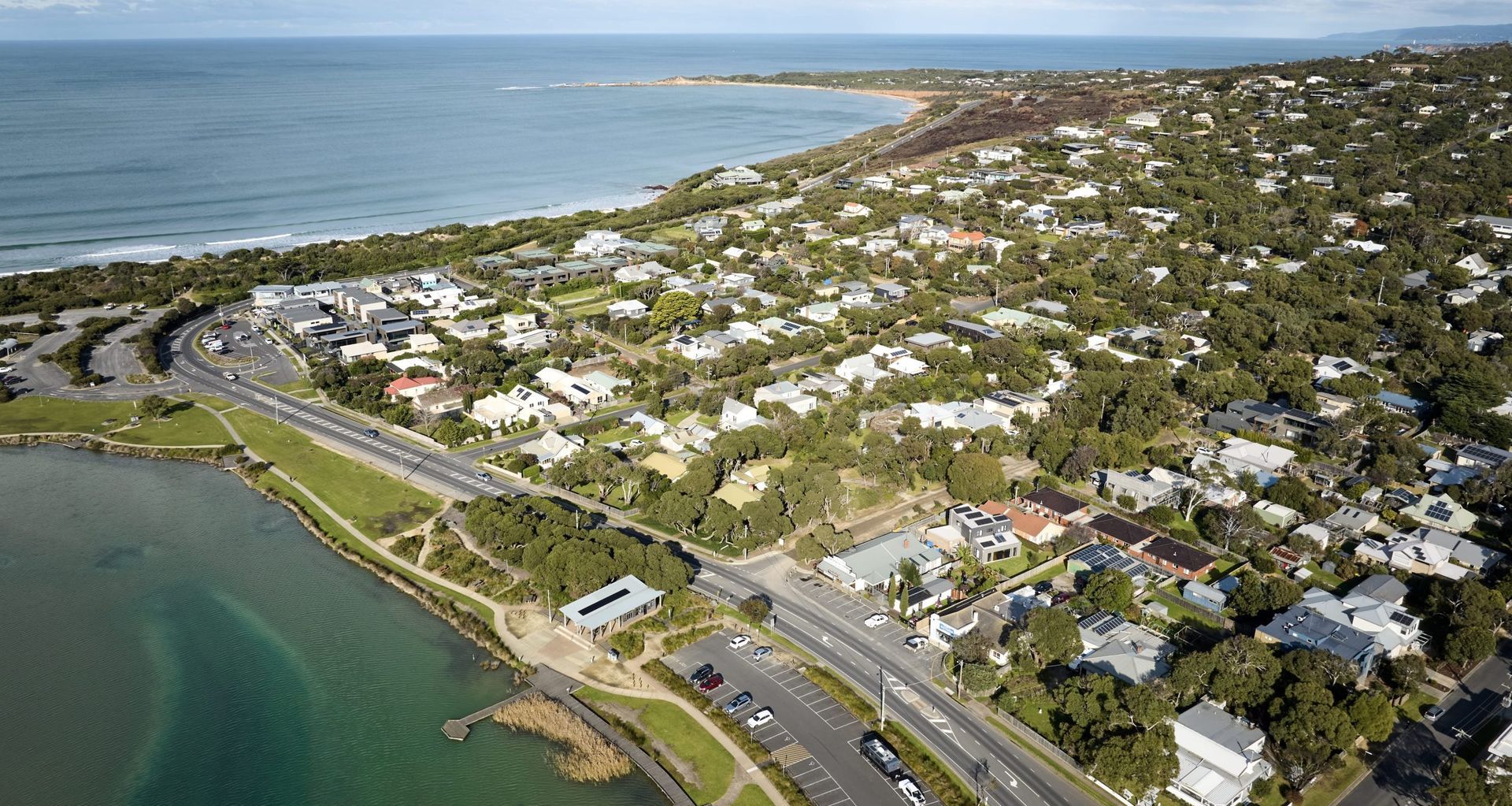
The stretch from Lorne through Wye River, Kennett River and Apollo Bay, and up into the Otway Ranges, is where some of Victoria's most extraordinary homes are built. It is dream-project country: escarpments falling to the sea, rainforest gullies, and light that changes by the hour. It is also some of the most demanding land in the state to build on.
The homes that succeed here are the ones that treat the landscape as the client. This is how we approach a home along the Great Ocean Road and in the Otways at RUBI Architects — where the constraints are real, but so is the once-in-a-lifetime opportunity.
Steep sites are an opportunity, not a problem
Much of this coastline is steep, and steep sites frighten a lot of designers. Handled well, they are the reason the architecture is memorable. A fall across the block lets us step the home down the land, capture the view from every level, and tuck parking and services into the slope so the living spaces float above it. The result is a home that belongs to its site rather than sitting awkwardly on top of it.
Steep land does cost more to build on — access, footings and retaining all add up — which is exactly why the design and the budget have to be worked together from the first sketch.
Bushfire is non-negotiable in the Otways
Almost all of this region carries a Bushfire Management Overlay, and much of it at the higher attack levels. Bushfire is not a detail to resolve at the end; it shapes siting, defendable space, materials, glazing and construction from the outset. We design to the required standard while keeping the home warm, open and beautiful — because a bunker with a view is not the brief.
Getting the bushfire strategy right early is also what keeps the planning process moving. It is far cheaper to design for it than to retrofit it.
Framing a view without losing the room
The temptation on a spectacular site is to turn the whole house toward the ocean and glaze everything. Done carelessly, that gives you glare, heat, cold, and rooms nobody wants to sit in. The craft is in editing the view — framing it deliberately, controlling the western sun, and giving each space its own relationship to the landscape, whether that is the ocean, a gully or the tree canopy.
A well-designed coastal home makes the view feel like a privilege you rediscover in every room, not a wall of glass you stop noticing after a week.
Building remotely, and building to last
Along the Great Ocean Road, access, weather windows and the availability of trades all affect what can realistically be built and how long it takes. We design with buildability in mind — detailing that a builder can execute on a difficult site, and materials that withstand salt, wind and moisture for decades. Prefabricated and modular elements can be worth considering where access is genuinely hard.
The goal is a home that is as deliverable as it is beautiful, and that ages gracefully in one of the harshest and most stunning environments in the country.
Why this landscape rewards a registered architect
There is nowhere the difference between a considered design and a generic one shows more clearly than on a Great Ocean Road or Otways site. The pressures — topography, bushfire, climate, access, planning and budget — are all at their most extreme, and resolving them into a single beautiful, buildable home is exactly what a registered architect is trained to do.
At RUBI Architects we design homes across the Great Ocean Road, the Otways, the Surf Coast and the Bellarine that rise to their settings. You can see our work at rubiarchitects.com.au — and on land this special, the earlier we are involved, the more of its potential we can unlock.