Earthquake-Resistant Garage Doors Christchurch: Complete Safety Guide

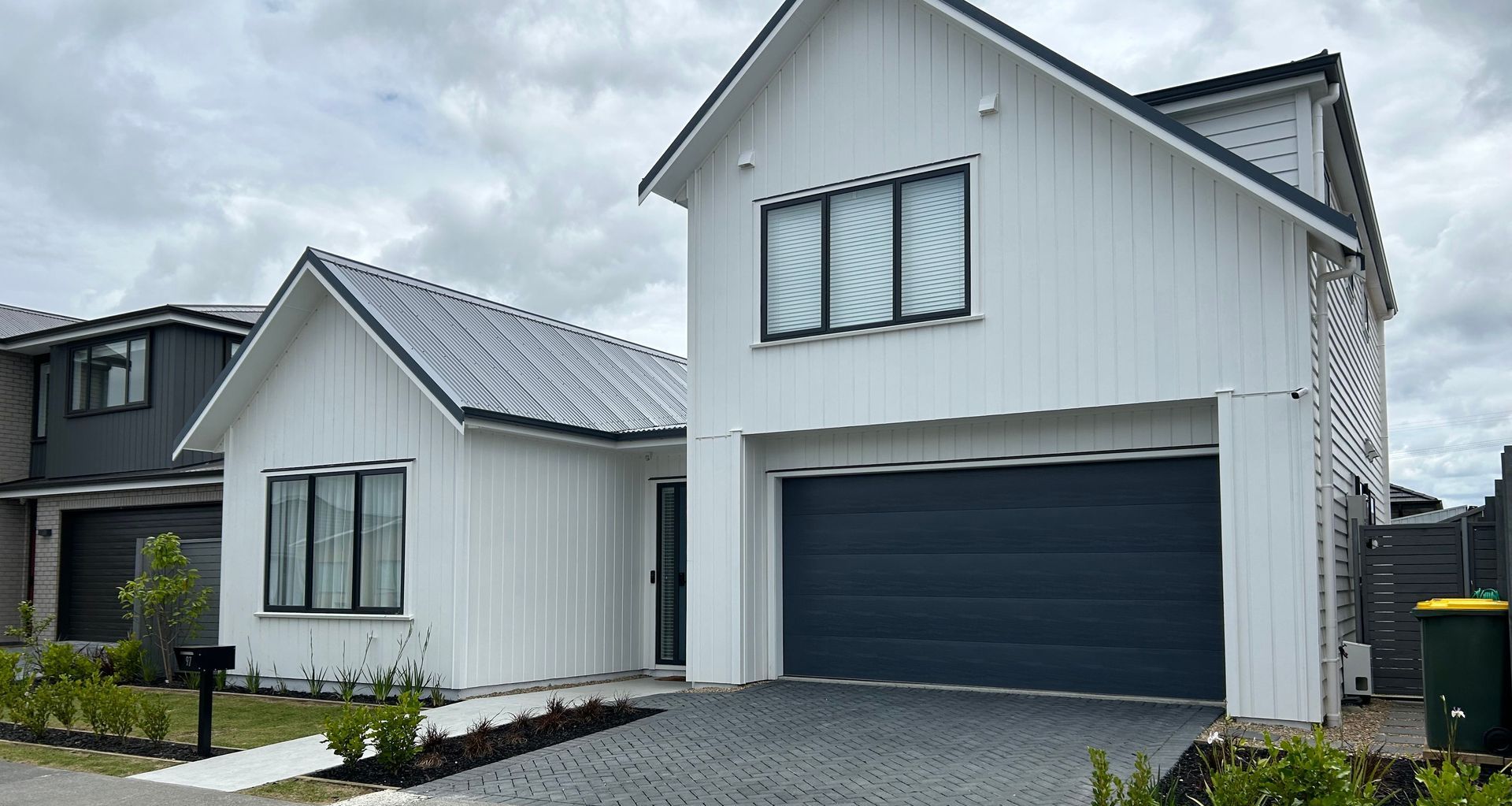
Modern earthquake-resistant doors are designed to meet today’s Building Code standards with reinforced components for seismic zones. After the Canterbury earthquakes, these requirements became much stricter.
Your garage door takes up about 30% of your home's front. In an earthquake, a door that's not up to code is a weak spot. Panels buckle, cars get stuck inside, and your house is left wide open. That isn’t safe for anybody.
A properly installed earthquake-resistant door handles the stress and keeps your home secure.
Why Garage Doors Fail During Earthquakes
The Problem With Large Openings
A double garage door weighs anywhere between 100-200kg. During earthquakes, horizontal movement pushes and twists the tracks. The wider the opening the more force the structure must absorb.
What the Canterbury Earthquakes Taught Us
When the Canterbury earthquakes happened, many garage doors gave way, which led to major changes to New Zealand's Building Code. With the new standards, your garage door now requires stronger lateral bracing, tougher tracks, and better header connections. These were designed to prepare for the issues we saw during the earthquakes.
If your garage door was installed before 2011, there’s a strong chance it doesn't meet today’s standards.
What the Building Code Requires
The Standards That Matter
In New Zealand, garage doors must meet the current structural design standards set out in the Building Code. These standards apply to new installations and also guide what’s required when older doors are repaired or replaced. The key standards are:
- AS/NZS 1170.2 – Wind actions
- AS/NZS 1170.5 – Earthquake actions (New Zealand)
- AS/NZS 4600 – Cold-formed steel structures
These standards determine how much wind and seismic force your garage opening must safely withstand, how the tracks are braced and how the door system connects to the home's framing.
For Christchurch homeowners, these requirements are stricter due to the region’s seismic risk and coastal conditions. If your door was installed before 2011, there’s a strong chance it may not align with today’s standards. New installations often require building consent and some replacements do too when structural upgrades are needed.
What Makes a Garage Door Earthquake-Safe
Reinforced Tracks
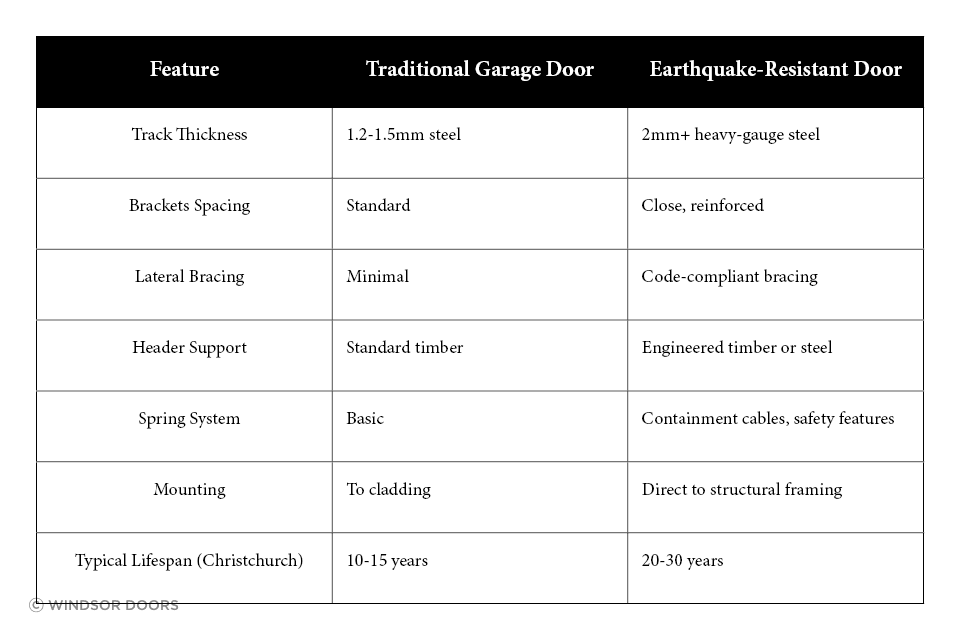
Earthquake-resistant tracks use heavy-gauge steel, usually 2mm thick or more. Standard tracks are thinner and weaker.
These tracks mount with extra brackets placed closer together. The brackets connect directly to your wall's structural framing, not just the cladding. That stops the tracks from pulling away during lateral movement and helps anchor the entire system to your home's structure.
Lateral Bracing
Lateral bracing is diagonal supports that connect your tracks to the building structure. They prevent horizontal track movement when the ground shakes.
The bracing must meet specific angle and material standards outlined in the Building Code. Retrofitting older doors can involve installing bracing kits designed for specific door types.
But not all doors can accommodate retrofit bracing, depending on available wall space and existing structure.
Stronger Headers and Jambs
The header is the beam spanning your garage opening. During an earthquake, it has to handle massive lateral forces too.
Reinforced headers use engineered lumber or steel sized for both vertical and horizontal loads. The jambs (the vertical sides where tracks mount) also need reinforcement. Without it, the opening can deform and the tracks misalign.
Safety Systems for Springs and Cables
Containment cables inside extension springs prevent broken springs from becoming projectiles during a quake. Safety cables also protect panels if a primary cable fails.
Materials Suite to Christchurch
Steel sectional doors offer good strength for their weight. They can include finger-safe joins between panels that stay strong under stress.
Aluminium is lighter but needs careful engineering in seismic zones. In coastal Christchurch, Colorsteel® with protective coatings handles salt air while maintaining strength.
The material you choose needs to cover both Christchurch’s weather conditions and earthquakes.
Traditional vs. Earthquake-Resistant Garage Doors
Retrofit or Replace?
Start with an assessment
Look for:
- misaligned or twisted tracks
- rusted or loose mounting hardware
- gaps between panels and the frame
- difficulty lifting manually
- sticking or uneven movement
A trained technician can confirm whether retrofitting is realistic or if replacement is the safer option.
Retrofitting
Retrofits may include:
- seismic bracing
- stronger tracks and mounting
- upgraded springs and cable systems
Retrofits only work when the door and tracks are in good condition.
Replacement
A full replacement is often recommended when:
- the door is pre-2011
- structural supports require upgrading
- the door is worn, rusted or bent
- you want a long-term, fully compliant solution
A new door ensures full compliance with AS/NZS 1170.5 and modern safety expectations.
Choosing a qualified installer
Why licensing matters
Earthquake-related installation is restricted building work. Installers must be LBP (Licensed Building Practitioners) and experienced with Christchurch’s seismic requirements.
What proper installation includes
- structural inspection and measurement
- confirmation of bracing and reinforcement needs
- installation of compliant track systems
- alignment and spring tensioning
- testing of auto-reverse and safety systems
- warranty and compliance documentation
A standard installation usually takes 4–8 hours.
Long term care and seismic safety
Regular Checks You Should Do
Visual inspection every three months catches problems early. Make sure tracks stay parallel and aligned. Look for loose hardware, damaged rollers, or frayed cables.
Lubricate the moving parts twice a year. Use proper garage door lubricant on rollers, hinges, and tracks. This cuts down wear and keeps operation smooth and quiet as part of routine maintenance.
Test safety features monthly. Your auto-reverse sensors should stop the door when something blocks it, and the manual release should work smoothly in case of power failure.
Professional Servicing
Get a professional inspection annually. They check things you can't safely check yourself, such as spring tension, cable condition, structural connections, and seismic bracing integrity.
Call for service immediately if you notice unusual noises, jerky operation, or visible damage. Don't wait for small problems to become dangerous ones.
After an Earthquake
After any earthquake, even small ones, inspect your garage door before using it. Look for misaligned tracks, new gaps in panels, or signs that the header moved.
If anything looks off, don't use the door until a professional inspects it. You might need to secure the door closed temporarily and use another entrance to maintain access and security to your property.
Making the right decision
If you’re building new, your garage door will already be installed to meet the current seismic standards. If you have an older door, a quick assessment will tell you whether retrofitting or replacement is the safest choice.
Windsor Doors can help you understand your options and ensure your garage door is ready for Christchurch’s seismic and coastal environment.
Questions People Actually Ask
Do all garage doors in Christchurch need to be earthquake-resistant?
New installations have to meet current code, which includes seismic requirements. Your old door? No legal requirement to upgrade it. But insurers are asking more questions, and if you sell, buyers will want to know. Upgrading saves potential headaches.
Can I retrofit my existing garage door for earthquake safety?
Often yes, if the door and structure are in good condition. Retrofitting can include adding bracing, reinforcing tracks and upgrading springs and cables.
If the door is very old, rusted or structurally compromised, replacement is usually the safer and more cost-effective option.
What's the difference between wind-rated and earthquake-resistant doors?
Wind rating is about sustained pressure—storms pushing on the door. Earthquake resistance is about rapid back-and-forth movement. Different problems. Christchurch needs both sorted.
How often should I inspect my garage door for seismic safety?
Every few months, walk over and check it. Tracks straight? Hardware tight? Nothing cracked or bent? Get someone in once a year for a proper look. After any shake—even the little ones—check it before you use it.
Will earthquake-resistant features void my garage door warranty?
No, as long as the work is done by a qualified installer using approved components.
Unauthorised modifications, DIY bracing or using incorrect hardware can void your warranty.
What happened to garage doors during the Christchurch earthquakes?
Many failed due to insufficient bracing or weak track systems. Doors bent, fell off their tracks or collapsed entirely. Some trapped vehicles inside, and others left garages open and unsecured.
These failures directly influenced the stricter Building Code requirements that exist today.
Do I need a building consent to upgrade my garage door in Christchurch?
- New installations: Usually yes
- Structural upgrades or significant retrofits: Often yes
- Straight replacement of a like-for-like door: Sometimes no
Because requirements differ by property, it’s best to work with an installer who deals with Christchurch City Council regularly and can confirm consent requirements upfront.