More about your rug, with Artisan

Artsian combines the enduring methodology of our artisans ancient practices with modern design processes to create your rug. This rug is designed for you, and Crafted for life.
Making a difference
Making rugs also gives us the opportunity to make a difference in the communities we work with. We achieve this by providing complete funding to a local primary school of 350 children as well as providing free medical care for rural knotting communities. This same infrastructure also offers empowerment programs that deliver employment skills to women in need. Your purchase not only helps to provide work for our weaving community, but also helps to establish positive futures in underprivileged areas

The Process
Making a rug is a journey. Its a labour of love. Its a long process, but we are passionate about education as we believe an appreciation of the craft can only serve to enhance the beauty of the final rug.
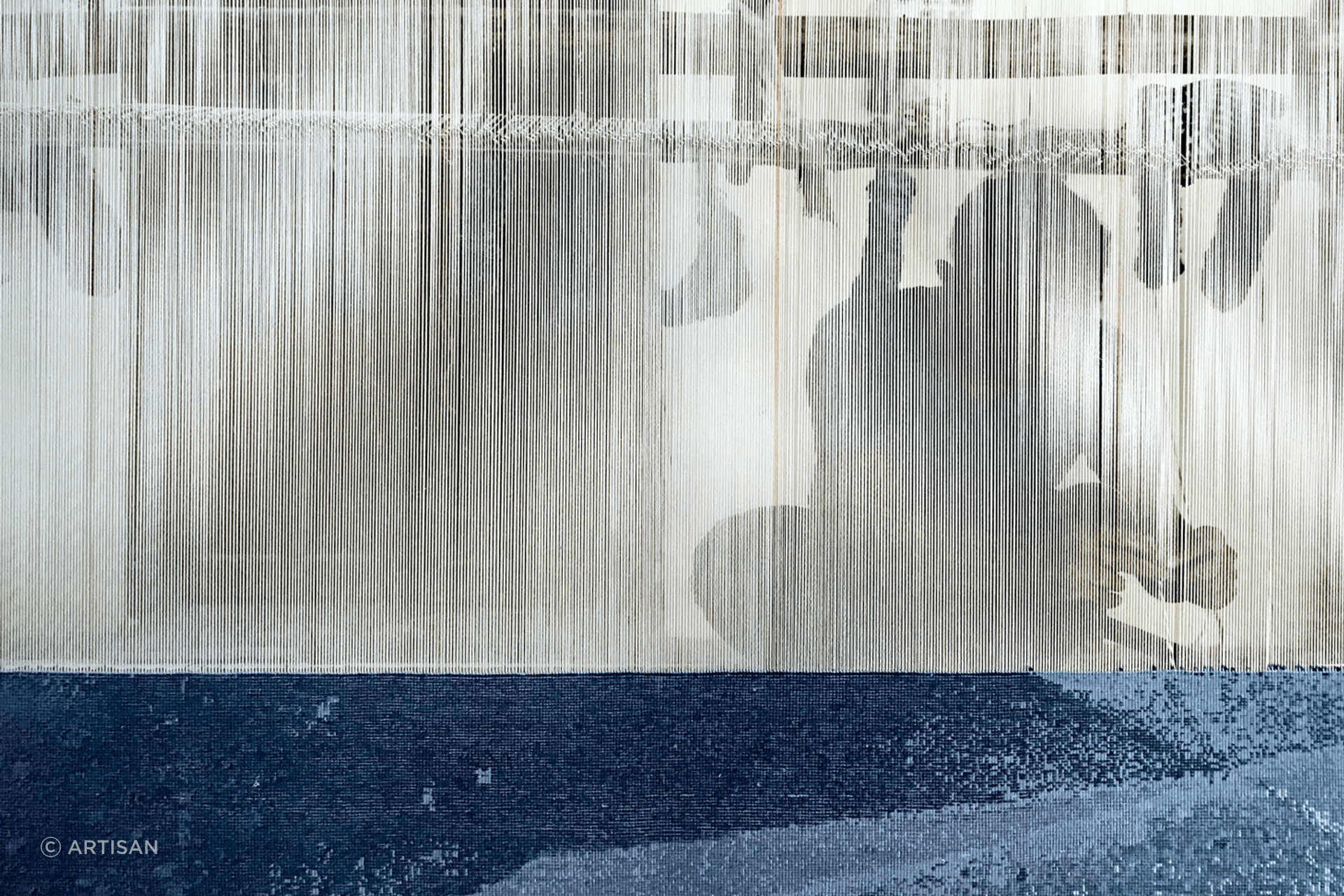
Here is the short version of how your rug is made:
Design
First, we submit your approved design to one of our mills. It then takes anywhere from 3 months to a year to create your high quality hand knotted rug. This is because there are many steps to rug making, each dependent on various factors, and each steeped in tradition.
Graph drawing
Your approved artwork is sent by our in-house studio to our Mills in India and is translated into an extremely precise graph the same scale as the finished rug. This graph acts as a map that hangs behind the loom indicating the exact position and colour of every single knot in the rug.
Loom building
A full sized loom is then created and threaded, ready for knotting to begin.
Raw material selection
Only the best wool or silk is sourced and sent for processing.
Washing
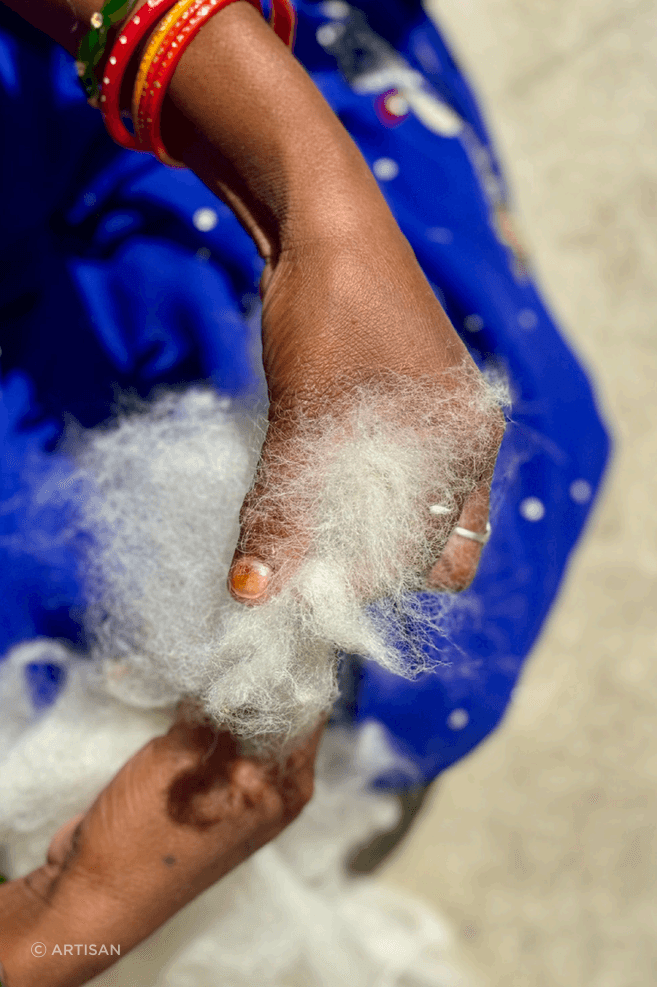
The selected raw wool / silk is washed to remove any dust or grease Carding | The clean raw fibers are brushed by hand and prepared to be spun Spinning & hanking | The carded fibers are spun into yarn ready for dyeing. Doing this by hand retains the lanolin oil in wool which is a natural stain repellent.
Dyeing
The colours required for your rug will be mixed by eye in pots by the Dye Master, the yarn is then hung onto a rack and submerged into the dye for the right mount of time to obtain the correct strength of colour.
Drying
The yarn is then hung out in the sun vertically on poles to dry. This process is driven by weather conditions.
Weaving
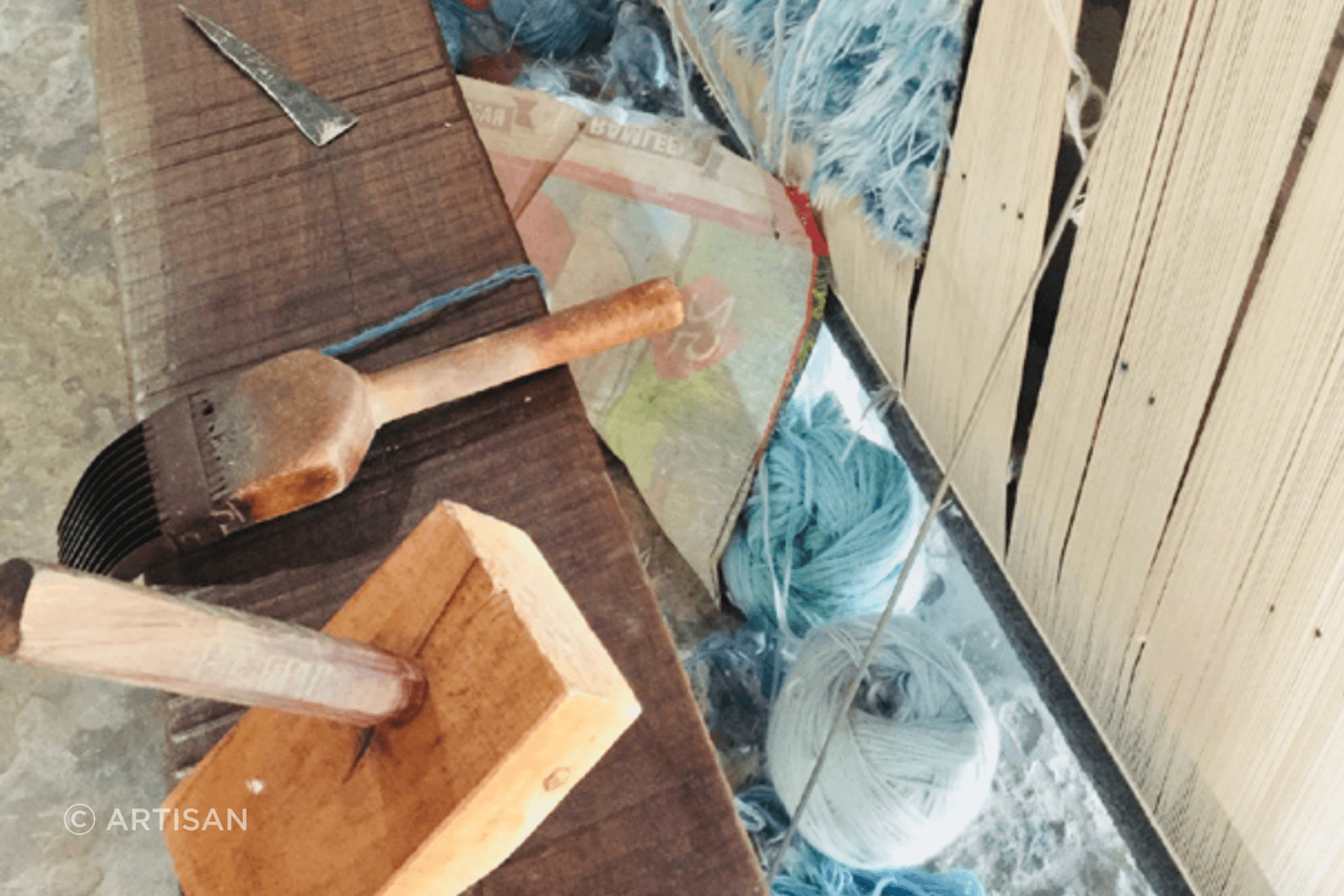
Our skilled artisans then weave the rugs knot by knot referencing the design from the graph. Every single knot is tied individually and on average a skilled weaver can tie approximately 10,000 knots per day. As the quality and detail in the design increases, in turn does the skill level of the assigned weavers and the time it takes to make the rug.
Cutting down
The rug is cut from the loom and transporting to washing stations
Washing
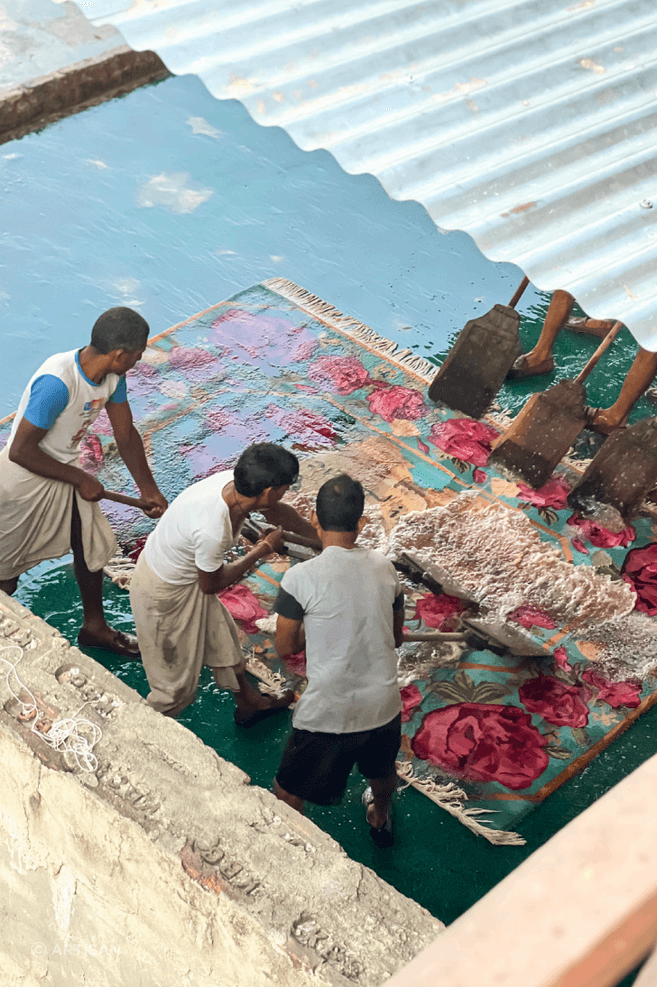
The rug is washed by 'sweeping' across the top of the pile with wooden paddles to remove any dirt, detergent and loose yarn particles from the weaving process. This also brings out the natural sheen in the yarn.
Drying
The rug is then naturally dried on poles in the sun. This insures the fibers have the best luster and sheen possible. This is also a weather dependent process.
Stretching
The rugs is manually stretched outside on specially made racks and gently maneuvered to ensure the corners measure a 90 degree angle and fiber shrinkage is countered.
Trimming
The surface is trimmed using specially made sheers to the required pile height/s. Patterns are defined by carving and carefully clipping the pile to delineate the design. This method produces smooth lines as opposed to staggered ones for a fine finish.
Hand Binding
All 4 corners of the rug are bound by hand and our ribbon carefully stitched to the back.
Rolling
The rug is then rolled, wrapped in hessian and plastic, ready to be shipped to The Rug Establishment To translate all this into a crafting a single rug : A hand knotted, 12/12 Persian rug that is 2700mm x 3700mm will have over 1,438,560 knots and more than 120 hands across the entire process. All this is done by hand and eye.


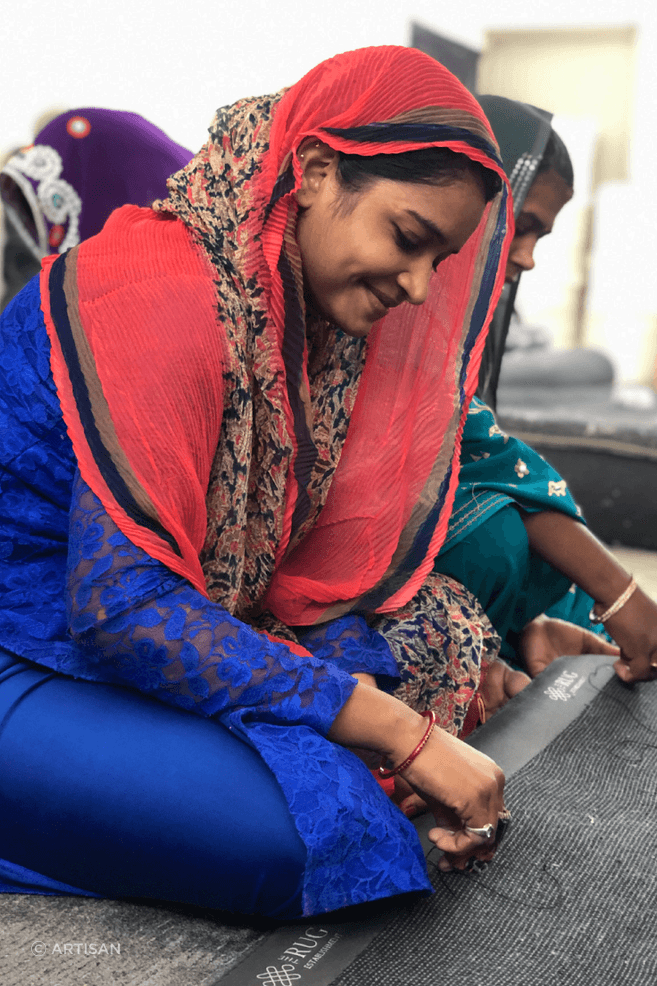

It is truly an amazing undertaking by skilled artisans. Because these rugs are made with natural fibers dyed bye eye, woven by human hand, from hand drawn graphs, the process will always lend itself to charming subtle differences that make each rug unique, never looking exactly like another.
This epitomizes the true beauty of this highly respected craft. Learn more by visiting Artisan on ArchiPro.