Garage door price guide for NZ: What impacts the cost?

To make things clearer, in this blog, we’ll break down the seven key factors that influence garage door cost, explain how to compare value (not just numbers), and highlight NZ-specific considerations and building requirements. By the end, you’ll know what to budget for, what questions to ask, and how to choose a door that delivers the best long-term value.
What impacts garage door costs? 7 key factors that determine price
With our mix of coastal environments, humidity, and UV exposure, choosing the right material isn’t just aesthetic; it affects lifespan, maintenance, and overall value.
1. Door material
There are four main types of garage door materials.
Steel (Colorsteel®)
Steel is the most popular and generally the most cost-effective choice. It’s tough, low-maintenance, and aesthetically pleasing to the eye, available in a wide range of colours.
Aluminium
This is an excellent option for coastal areas because it's lightweight and naturally corrosion-resistant, making it ideal when paired with suitable hardware. It's sleek and modern-looking with minimal upkeep.
Timber
Timber doors are a more upmarket choice. They boast unmatched character and street appeal, especially on architectural homes. As such, expect to pay more. They also require more upkeep than other material choices.
Composite materials
Composite doors mimic the look of timber without the heavy maintenance. While they still sit at the premium end, they offer enhanced durability and stability.
2. Door type and mechanism
There are five types of garage doors. Different mechanisms require different tracks, balancing systems, and setups, making labour a key factor in the final cost.
Sectional Doors
Sectional Garage Doors are made from panels that are hinged together, allowing them to fold as they lift vertically and rest under the ceiling. While double-insulated Sectional Doors are popular in new builds, installation complexity can influence the final price.
Roller Doors
Roller Doors have a curtain that rolls neatly into a drum above the opening. They are mostly automatic, but older models can be manual. All in all, they are simple, reliable, and affordable.
Tilt Doors
Tilt Doors involve a single solid panel tilting outward before lifting inside. Typically, a more budget-friendly option, but they require space and have design limitations.
Side-hinged doors
A niche choice for certain properties, offering easy pedestrian access and a traditional look, but, like Tilt Doors, they need sufficient swing room and careful installation.
3. Size and configuration
Garage doors come in a range of sizes and configurations, and these choices can influence both functionality and cost. For example, a double door typically requires a larger investment than a single door, while non-standard openings often need custom manufacturing or adjustments that add to the price.
You can also choose between multiple single doors, which can offer design flexibility, convenience, or better insulation control, or one large, wide door that delivers a clean, modern look, with costs varying depending on your selection.
Finally, high-stud garages, those with taller-than-standard walls, are common in modern homes and often require upgraded tracks and motors (typically for ceilings around 2.7m or higher).
4. Automation and smart features
Automatic garage door openers have become standard in most homes, offering added convenience and improved functionality compared with manual operation.
When it comes to motors, homeowners typically choose between chain-drive, belt-drive, and direct-drive systems. Each provides different levels of durability, noise control, and smoothness of operation. Technology has moved quickly, with app-enabled smart controls now allowing homeowners to operate and monitor their garage door remotely.
5. Insulation and thermal performance
Garage door insulation acts as both a thermal and sound barrier, helping reduce heat transfer and unwanted noise. While uninsulated (single-skin) doors are simple and economical, insulated double-skin doors offer better temperature control and noticeably quieter operation.
In New Zealand’s cooler regions, insulation can make a real difference to comfort, especially in attached garages, and may even contribute to lower energy use. Although it’s an upfront investment, insulation helps minimise heat loss, offers protection from temperature extremes and reduces noise.
6. Design, colour & windows
Design, colour, and window options significantly influence both aesthetics and value. Standard colours are typically included, while custom powder-coating or unique finishes add to the investment.
A new trend of adding window panels not only brings natural light into the garage but also enhances street appeal. However, it requires reinforced frames and suitable glazing.
Decorative finishes, such as handles, straps, or timber-look accents, further enhance kerb appeal, especially on front-facing garages. And if you want to make a statement, woodgrain textures on steel doors provide a premium, timber-like appearance without the maintenance.
7. Wind rating and structural requirements
In NZ, garage doors must meet standards outlined in AS/NZS 4505, ensuring they perform reliably in your location. Moreover, homes near the coast often require specialised hardware and coatings to resist corrosion. Similarly, exposed, high-wind areas, such as parts of Wellington and Northland, may need reinforced tracks, additional bracing or engineering certification.
Installation costs explained
The final price is more than just the garage door itself. Professional installation plays a significant role in the overall cost of your new garage door and typically takes between 4 hours and one day.
Installation is a four-step process:
- Removal and disposal of the old door
- Fitting the new door
- Ensuring proper alignment and operation
- Clean-up
Labour costs vary with door type, size, and complexity. Additionally, any extra work, such as structural reinforcement, lintel replacement, or electrical setup for automation, should also be factored in.
With the onset of home renovation shows, DIY installation may seem tempting. However, you must remember that this isn't a standard door and proper installation requires expert knowledge, equipment and qualifications. Professional installation not only protects your investment but also ensures compliance with any building requirements, offering priceless peace of mind.
Hidden costs to budget for: permits, structural repairs, upgraded motors for heavy doors, or extended warranties.
Cost comparison by popular door types
Sectional vs Roller vs Tilt: Which offers best value?
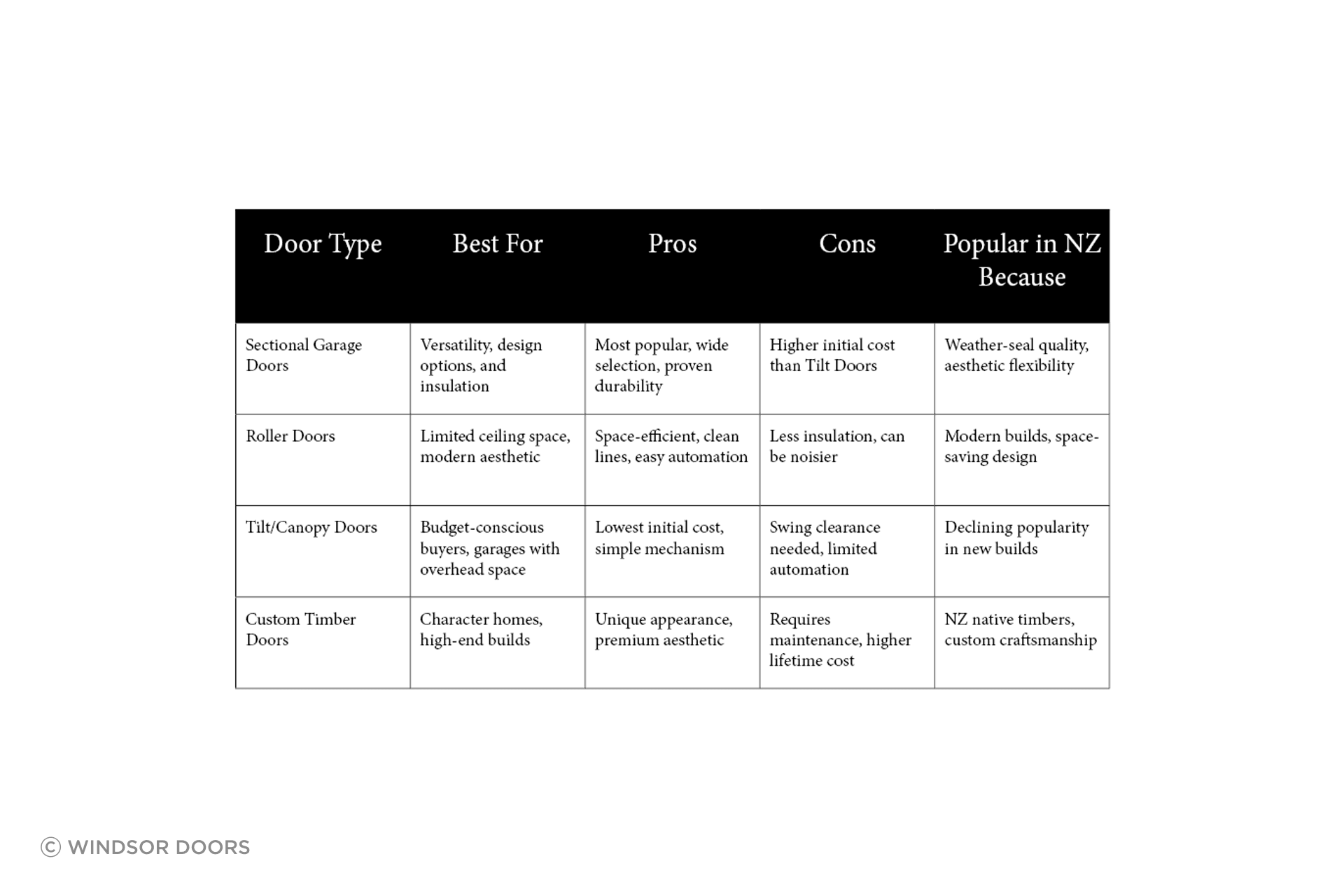
Here’s a side-by-side overview to compare the key features, benefits, and typical use cases of each popular door type.
How to get the best value (Not just the cheapest price)
Questions to ask when comparing quotes
Cost shouldn’t be your only consideration; it’s all about long-term value. When comparing garage door quotes, ask suppliers key questions, such as:
- What is the door’s wind rating?
- Is installation included, and what does it cover?
- What warranty applies to the door and motor?
- Are automated features included?
- Is the motor suited to the door’s size and weight?
Ask questions based on your property and usage. For example, you should get advice on corrosion-resistant materials for coastal homes. Or, high-use doors benefit from durable motors, and insulation may save on your energy bills.
Red flags in too-good-to-be-true pricing
Approach unusually low pricing with caution. It's likely suppliers charging well below the average rate are cutting corners on either materials, installation or warranty. Like any product or service, checking supplier reputation ensures you are investing in a door that will last.
Cost-saving tips that won’t compromise quality:
- Choose standard sizes
- Select from stock colours
- Opt for manual operation if you're working with a lower budget, you can always add automation later
- Time your purchase during supplier promotions
Windsor Doors' approach to transparent pricing
With 25+ years of servicing New Zealand homeowners across Auckland, Hamilton, Wellington, South Island and surrounding regions, Windsor Doors makes it easy to understand what you’re paying for and why.
We pride ourselves on providing clear, itemised quotes with full transparency and no hidden costs. Our pricing covers measurement, supply, installation, disposal, and warranty, with a range of options to suit different budgets. Every door is NZ-manufactured or assembled, ensuring high quality, compliance and suitability for local conditions.
Now you know what questions to ask, how to compare quotes fairly and how to balance budget with long-term value. The next step is to get a personalised quote. Windsor Doors provides transparent, competitive pricing with no surprises. Our free consultation and measure service ensures you get a solution tailored to your property.
FAQs
What makes a garage door more expensive?
Material quality, door type (such as Sectional Doors), size, automation, insulation, design features, and installation complexity all influence garage door cost.
--------------------------------------------------------
How much does a new garage door cost in NZ?
Costs vary widely depending on type, materials, and features, so a personalised quote is the most accurate way to budget.
How much should I budget for a new garage door?
Focus on value for your ideal garage door, rather than just price, considering materials, installation, automation, insulated doors and long-term maintenance when setting your budget.
--------------------------------------------------------
What is the ROI on garage doors?
Replacing your existing door with a well-chosen new door can improve energy-efficiency, functionality and kerb appeal, providing long-term value that often outweighs the initial investment.