Passive House Design Explained: Principles and Standards

What is a Passive House (Passivhaus)?
In an era where sustainable building performance is becoming the new benchmark, Passive House (Passivhaus) design stands out as one of the world’s most rigorous and respected energy standards. Originating in Germany in the 1990s, the Passive House concept has evolved into a global movement.
At its core, a Passive House is designed to achieve exceptional Thermal Comfort with minimal reliance on active heating or cooling systems.
Core Definition (Passivhaus Institute - PHI): A certified Passive House is a building for which Thermal Comfort (ISO 7730) can be achieved solely by post-heating or post-cooling the Fresh Air Mass, required for sufficient indoor air quality, without additional recirculation of air.
How Passive House Design Works
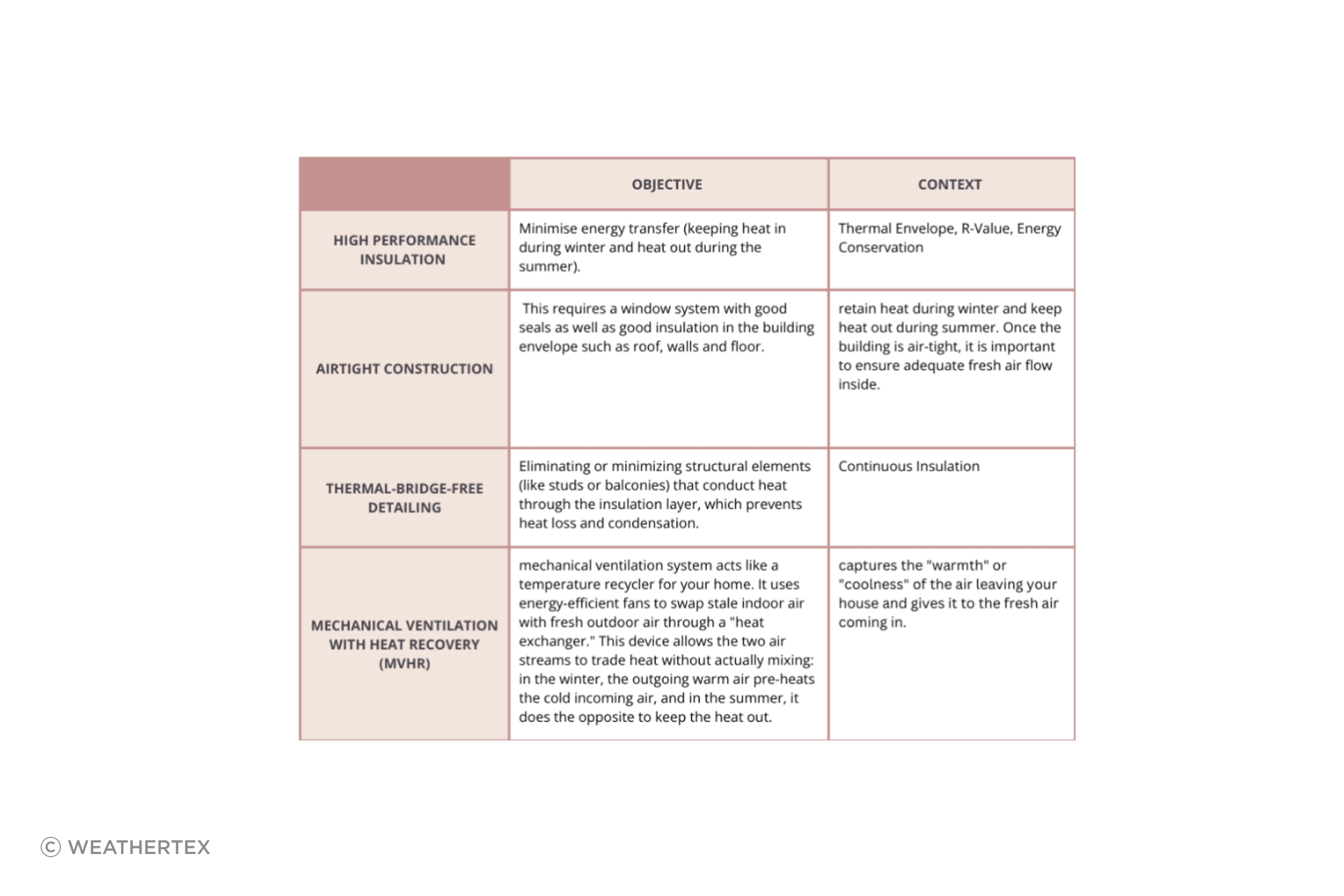
Passive House buildings maintain comfortable indoor temperatures year-round by minimising energy loss and maximising natural heat gains. This is achieved through five core principles:
Passive House Certifications and Standards
As outlined by the Yourhome website, to achieve the certification, a project must meet these strict quantitative targets (Key Performance Metrics - KPMs):
Thermal comfort must be achieved during winter
(20°C minimum) as well as in summer (this can be adjusted in extreme climates),with not more than 10% of the hours in a given year over 25°C.
- Heating demand 15kWh/m2/yr or heating load 10W/m2.
- Cooling demand 15kWh/m2/yr (in humid climates this allowance increases to allow for dehumidification) or cooling load 10W/m2 (if installed)
- Humidity must not exceed 12g/kg for more than 20% of the year (~60%RH at 25°C).
- Airtightness must be 0.6ACH50 or lower and be verified on site.
- Overall energy use (Primary energy renewable must not exceed 60kWh/m2/yr. When calculating overall energy use, Passive House includes whole-of-building energy; this includes heating and cooling, hot water, lighting, fixed appliances and an allowance for consumer electronics.
The Role of Weathertex Cladding in Passive House Performance
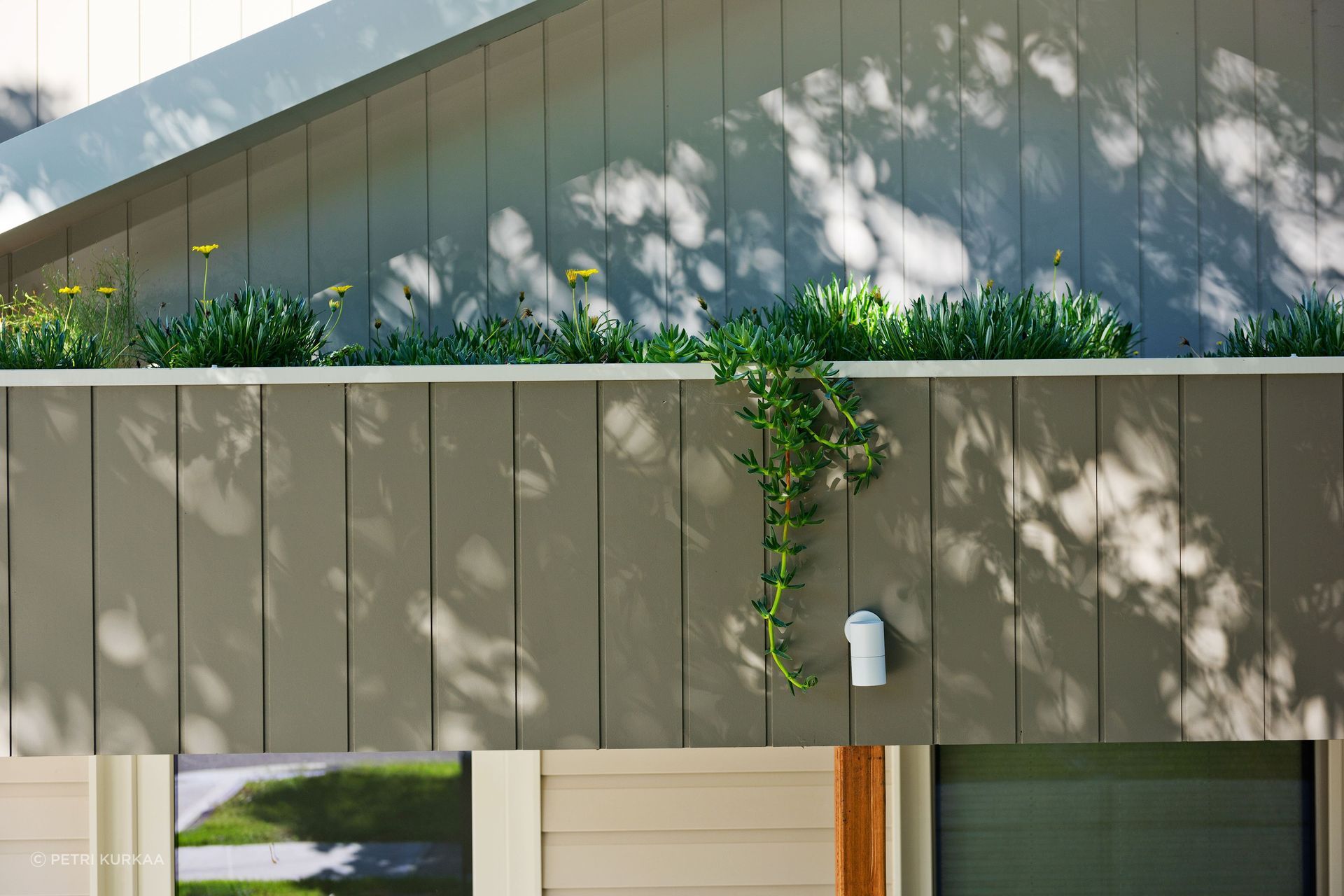
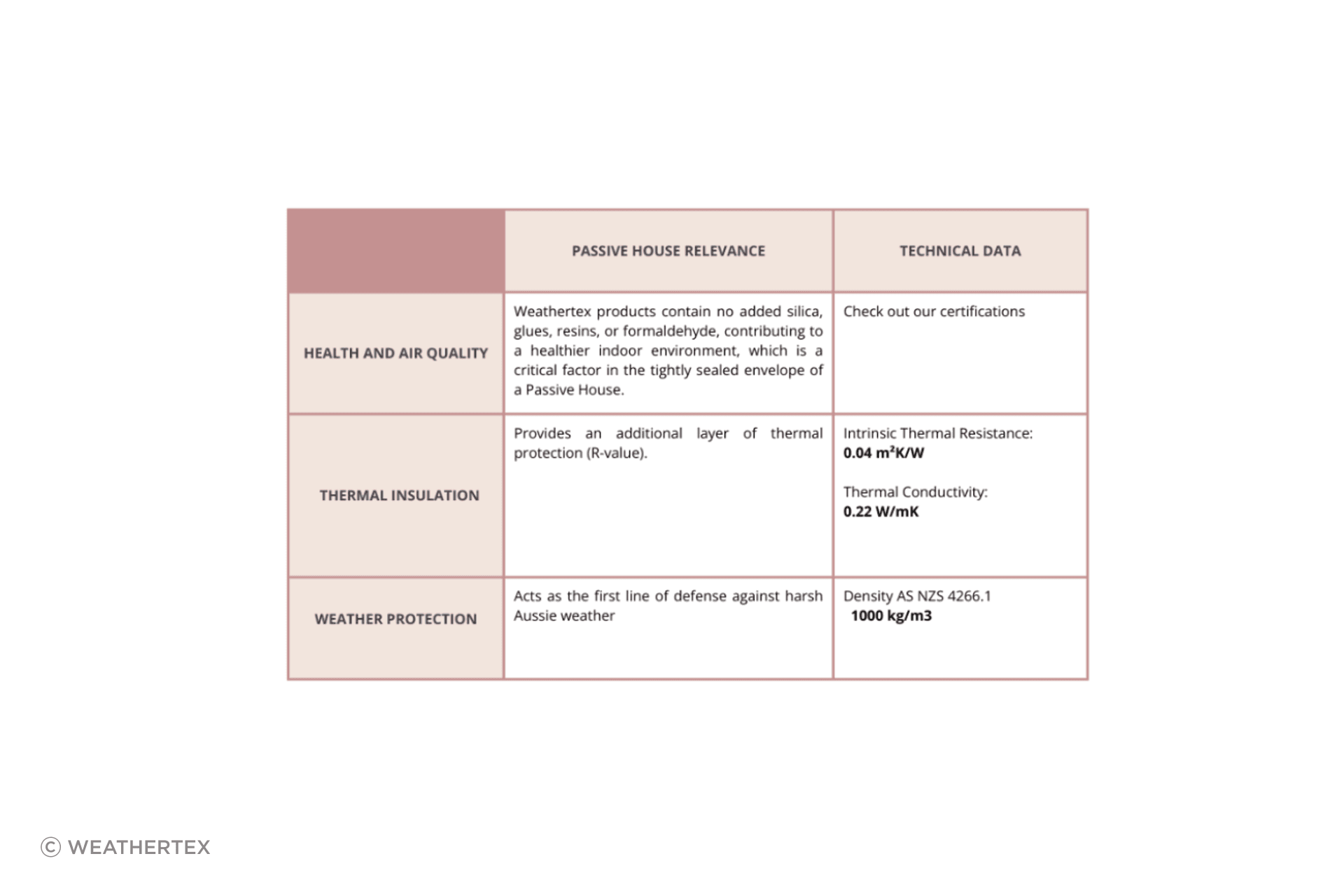
Material selection plays a major role in meeting these targets. Cladding systems, such as Weathertex, can contribute significantly.
Weathertex Cladding Contribution to Passive House:
Why Passive House Matters for the Future of Design
As building codes tighten and sustainability targets grow, Passive House principles are becoming increasingly relevant to modern architecture. The approach reduces operational energy use by up to 90% compared to conventional buildings, making it one of the most effective pathways to carbon-neutral construction. For specifiers, embracing Passive House design, and choosing materials that align with its principles, like Weathertex, represents a forward-thinking, responsible approach to construction. Using sustainable timber cladding or eco-friendly wall panels not only supports energy performance but also helps meet client expectations for healthy, comfortable, and environmentally conscious homes.