Specifying Roman Blinds in Architectural Projects: A Professional Guide


Why Roman blinds belong in the spec set
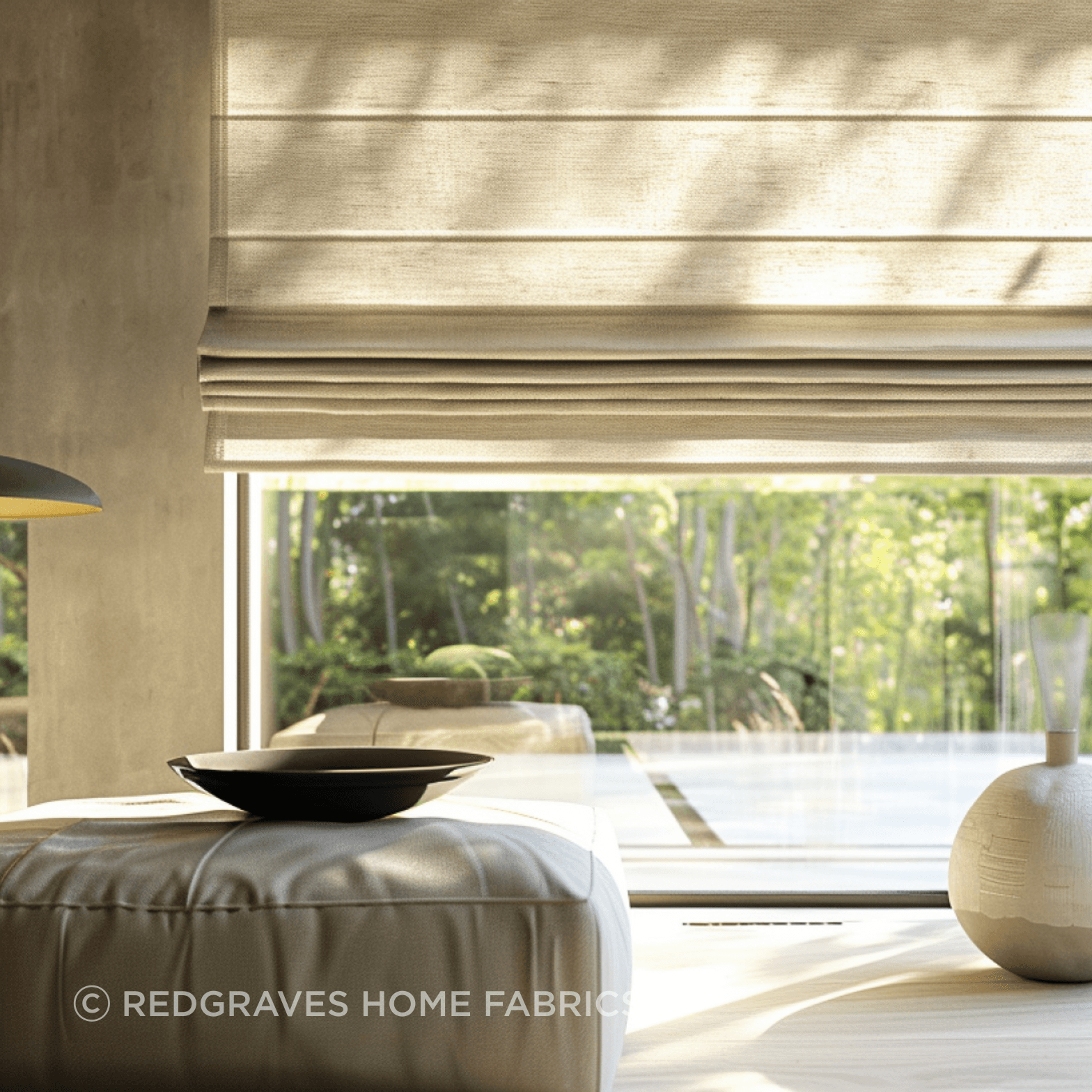
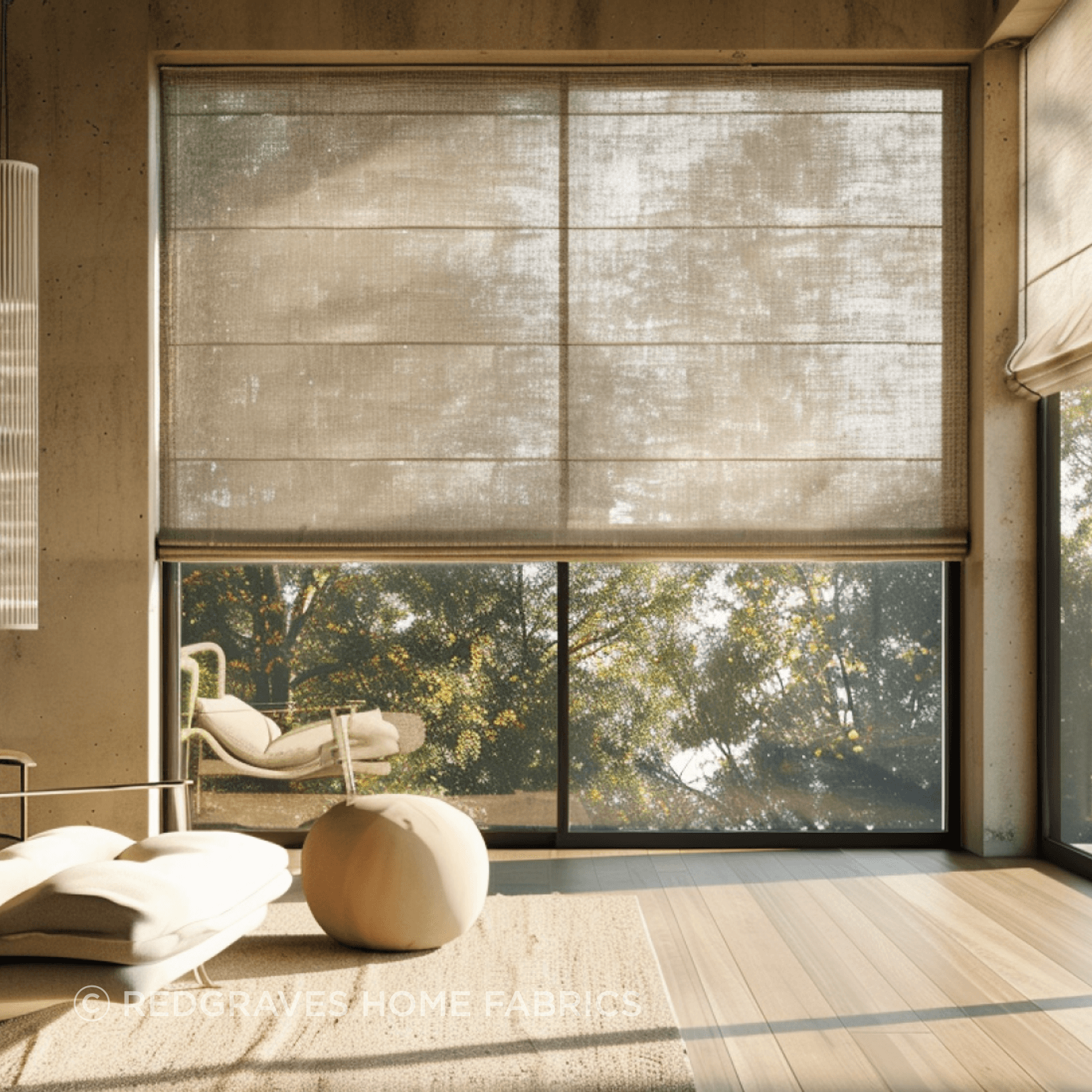
In contemporary residential and boutique commercial work, Roman blinds offer a rare combination of clean lines, soft texture and precise light control. They can sit quietly in minimalist interiors or add tailored warmth to more layered schemes, all while supporting performance glazing with additional shading and insulation.
For architects and interior designers, treating Roman blinds as part of the base build – not an optional extra – means the head details, recesses, wiring and fixing substrates can be resolved early, avoiding compromised solutions at the end of the programme.
1. Start at concept: location, mount and stacking
Before you nominate fabric or hardware, decide where the blinds sit in relation to the window:
- Inside mount (recess fit) works well when frames are deep, handles are minimal and you want a quiet, built-in look that keeps the wall line clean.
- Outside mount (face fit or above-frame) is often better for shallow reveals, irregular frames or where blackout and light control are critical, as you can oversize the blind to reduce light bleed at the sides.
Allow for stack height at the top of the blind. Roman blinds will always hold a band of fabric when raised, so coordinating the mounting height with lintels, pelmets or ceiling lines avoids cutting into views more than necessary.
2. Detail the headrail and recess properly
For architectural projects, the head detail is where the blind either disappears elegantly or looks like an afterthought. Consider:
- Recessed pelmets or ceiling pockets so the headrail is hidden and the fabric appears to drop from a shadow line.
- Projection and depth to clear handles, mullions and any existing pelmets or tracks.
- Substrate and fixings: nominate timber blocking or suitable structural support in linings so blinds can be securely fixed without visible brackets or patching after the fact.
Include these requirements on your drawings and in the blind schedule so they are picked up by the builder and electrician at the right stage.


3. Mechanism: corded, chain or motorised
Mechanism choice affects usability, safety and integration with the wider building systems:
- Corded systems are now largely for light-use or niche applications and must be fully compliant with current child-safety standards. They are rarely the right answer in family homes or high-traffic spaces.
- Chain-operated Romans are the default for most residential projects: reliable, smooth on larger blinds and easy for clients to understand, with chain safety devices and height limits documented.
- Motorised Roman blinds are ideal for architect-led builds, double-height spaces and automation-focused clients. Specify power (hard-wired vs rechargeable), control (wall switch, remote, app, integration with home automation) and grouping logic in the electrical plans.
In your documentation, pair each type with a clear performance note so the client understands why a particular mechanism has been recommended.
4. Fabric, lining and performance
From a specification perspective, fabric and lining drive both the look and the performance:
- Face fabric: nominate fibre type (linen, cotton, blends, wool), approximate weight, and whether pattern matching is required across multiple blinds or with curtains.
- Lining: distinguish between light-filtering, dim-out and full blackout, and call out thermal or interlining where additional insulation or a more luxurious fall is desired.
- Orientation and glare: on west- and north-facing glazing, consider specifying darker, denser fabrics or an additional lining to improve glare control and reduce heat gain.
For multi-unit or volume housing, standardising on a small palette of approved Roman blind fabrics and linings can streamline procurement while still offering a curated, design-led outcome.
5. Safety, compliance and user experience
Good specification protects end users and reduces liability:
- Document that all blinds must comply with current child-safety regulations, including cord/chain safety devices, cleat heights and labelling.
- Nominate operating side per opening to avoid clashes with walls, handles and furniture and to suit how the space is actually used.
- Consider accessibility: in aged-care or multi-generational homes, shorter reach distances, motorisation and intuitive controls make a significant difference.
6. How to write the Roman blind spec
You can adapt this structure into your specification or ArchiPro product notes:
- Type: custom Roman blinds to all nominated openings.
- Mounting: inside / outside mount as shown on drawings; coordinate with window schedule.
- Headrail & mechanism: aluminium Roman headrail with [corded / chain / motorised] operation, including all required safety devices and fixings.
- Fabric: [Supplier, collection, pattern/colour] or approved equal; minimum weight and composition noted.
- Lining: [thermal / dim-out / blackout / interlined] to achieve nominated light and thermal performance.
- Installation: fix to prepared substrates; set out to align with openings, bulkheads and other treatments; test operation and adjust for level folds.