The beauty in imperfection: Dylan McKay is carving a story in timber
Written by
14 January 2026
•
3 min read


Dylan McKay loves the natural imperfections of timber. The knotted swirls of character, the contoured rings that give us a glimpse into its past. His workshop walls are lined with panels of native timber, some reaching well towards the ceiling, their edges swaying in their natural, uneven form.
Working with timber has been Dylan’s day-to-day for many years. His start in cabinetry was as an apprentice boat builder. “That’s what really started my passion for timber, building boats from start to finish.” But it was work that demanded clean lines, flawless colour and a perfect finish.
“Boats had to be perfect, and the amount of waste… if the colour of the timber was slightly wrong, or the grain wasn’t absolutely perfect, then that piece of wood would end up in the bin,” he says. “Now I’m doing the complete opposite.”
Where timber’s imperfections were once rejected, they’re now the heart of Dylan’s work. It’s those details that tell a story.
“Every piece is unique with different grain and different characteristics. I’m working with the imperfections, embracing the characteristics of how the tree has grown and formed. Nothing goes to waste.”
The timber he’s using is being given a second chance. Sourced from all over the country, mostly through word of mouth, the native timbers in the workshop have been salvaged from all over the country, often having fallen during storms or reclaimed from someone’s private property. Even after a log has been sitting in a river for months after falling, it can be dried, milled and turned into something new.


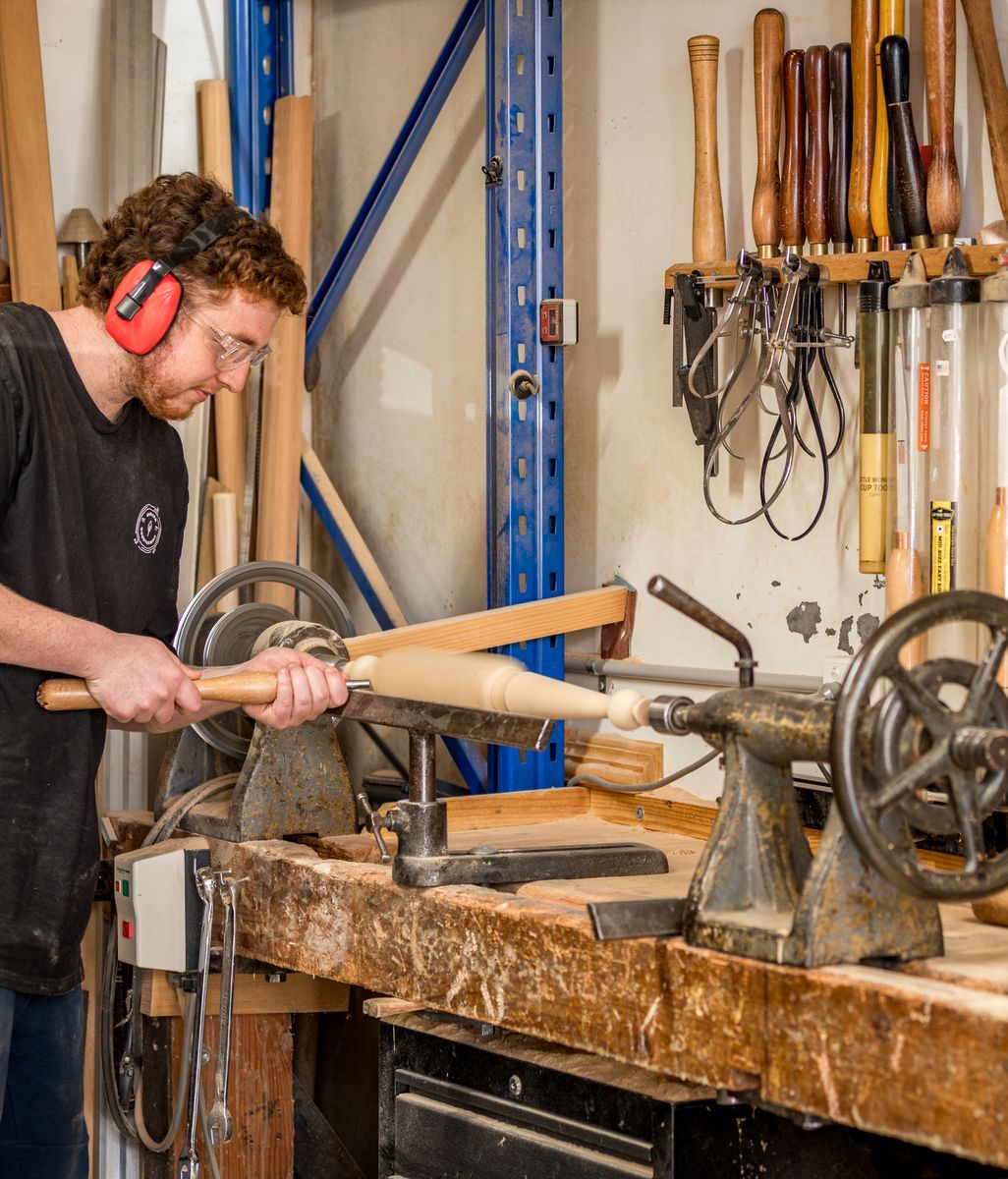
There’s a special skill in creating from an imperfect slab. Cracks require careful handling and each piece invites different techniques. The work is slow, thoughtful and deeply hands-on.
Today in his workshop, there’s that same attention to detail he once applied to boats. But here, the marks of nature are celebrated. Every fleck of timber is used, becoming part of its new life.
What began in a small home garage has quickly grown as others started to fall in love with Dylan’s work. As jobs grew, he moved into a small workshop before outgrowing that space as well. The large workshop in Pukekohe now has four on the tools, including Dylan, along with behind-the-scenes support. There’s larger machinery, but the majority of work is still done by hand… shaping, carving and finishing with the same level of craftsmanship.

Turning timber into artwork, and artwork into timber
The stories Dylan shares in his designs are just as special as the timber’s history. In his Let’s Weave collection, he collaborated with a local artist to turn her artwork into a piece of furniture. “The table was based on her painting,” he says. “It took a lot of skill and weaving of timbers.”
Translating a painted artwork into a timber artwork shows what can be done with the natural material.


Another favourite project for Dylan was a series of large waka sculptures created alongside Māori artist Graham Tipene. Standing tall in Auckland’s Wynyard Quarter, each piece has been intricately carved to tell a story, a breathtaking tribute to the maritime traditions of Māori voyagers and the cultural richness of Tāmaki Makaurau.
No matter the brief, the passion remains: shaping raw timber by hand into something new and creative.
“Every project is completely different from the last one. It’s awesome, my work never gets boring.”