The ramp basin moment: Meet the collection shaping a new bathroom typology
Written by
27 January 2026
•
4 min read

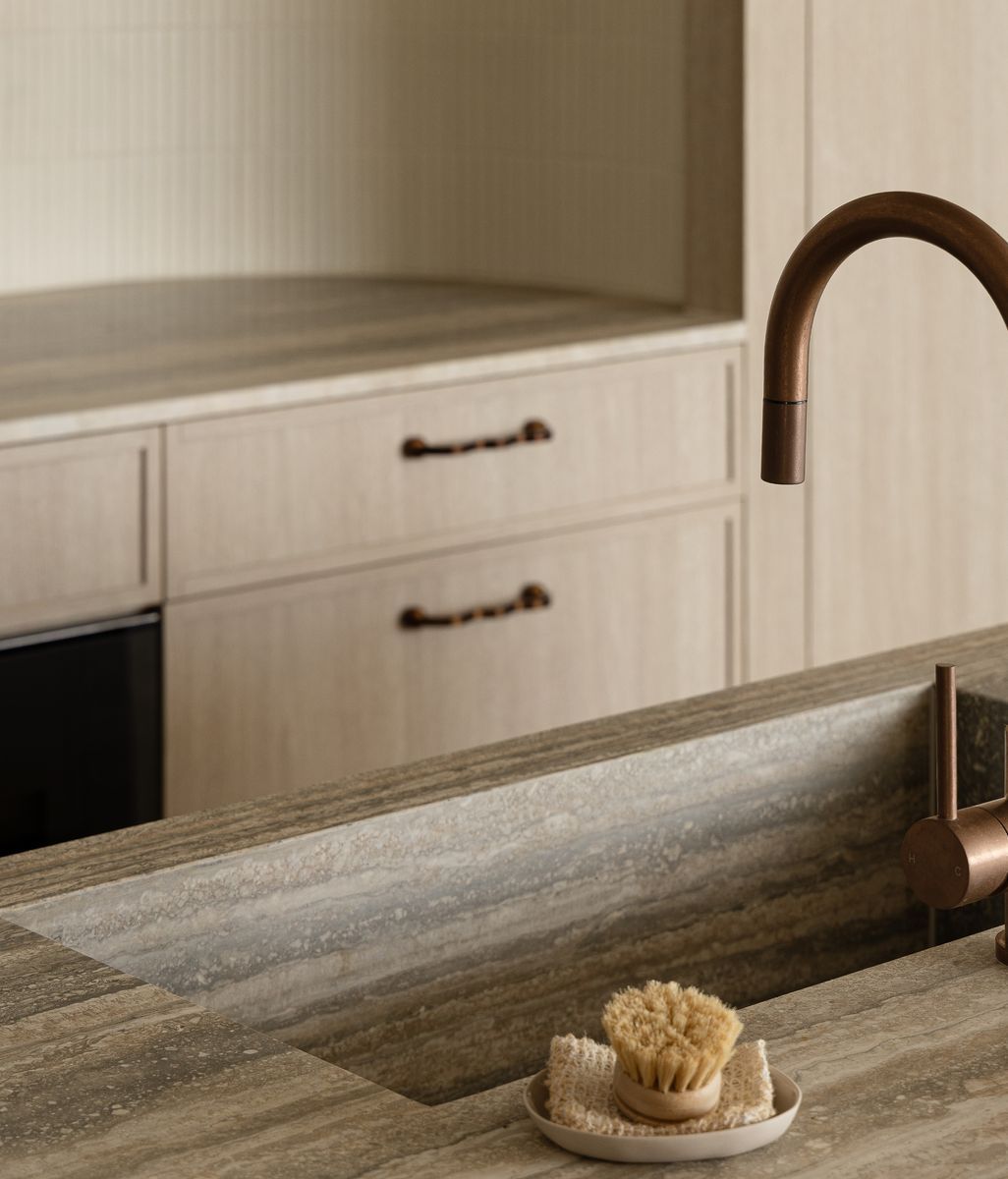
A single, continuous gesture, gathering water gently along its surface without ever feeling crowded. A departure from traditional, individual basins, ramp basins have slowly found their place in environments where restraint is valued over repetition, clarity over embellishment.
But this sense of calm didn’t always expand to performance. Many early designs were marked by cracked surfaces, unreliable fabrication and prone to failure under prolonged use. For Stonebaths, this challenge turned into a moment of opportunity: to start fresh with their own designs and manufacturing.
What followed wasn’t an immediate solution. Instead, it was about paying close attention to what worked and what didn’t.

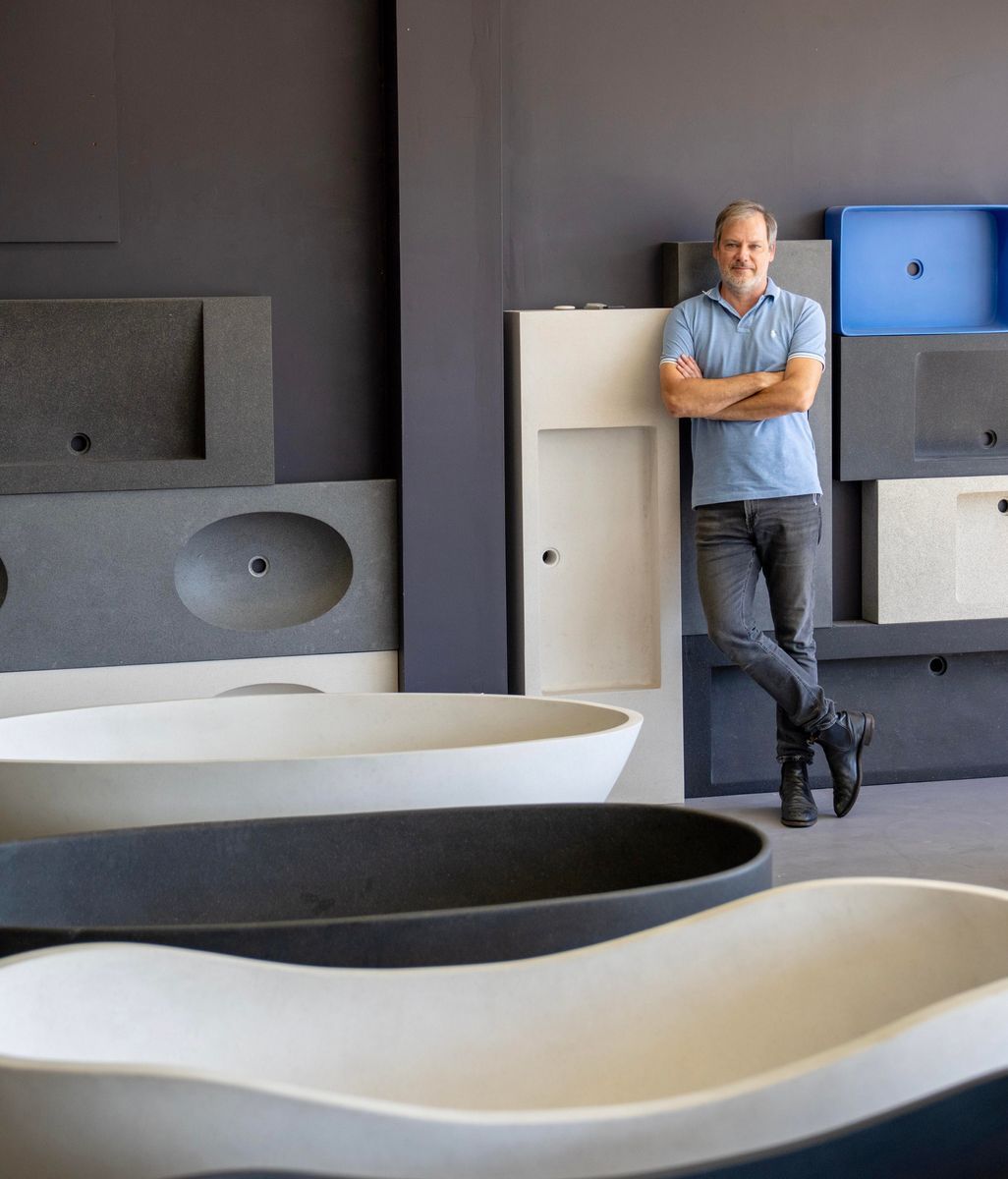
Known by friends and family for photographing nearly every bathroom design he encounters while travelling, Jim Bedwell’s design process didn’t begin at his desk. By documenting where others had failed and those designs that held up in high-traffic commercial spaces, Jim slowly observed, tested and refined. The goal was to create basins that could be specified and installed with confidence and trusted to endure. No one truly owned the ramp basin category and Jim wanted to change that.
“I kept thinking to myself, I wonder who makes these, and how can we make them better?”
Stonebaths resolved every detail in-house, from proportions and gradients to installation methods and fixing systems. Structural brackets were designed as part of the basin itself, not as an afterthought, allowing the form to remain visually continuous while ensuring it could be securely installed and withstand real-world use.
“We didn’t go to an existing company. We didn’t go to somebody who had already been doing it. We started from scratch,” says Jim. “We formed a joint venture with one of our manufacturers and provided the designs and specifications. They supplied the labour, the machinery, the factory. That’s how it all started.”

From this, The Ramp Basin Collection began to emerge, each design developed with longevity and the rhythms of everyday use in mind.
Scaled for small hands and constant use, Stonebaths’ Junior ramp basins have been making their way into childcare centres and have been widely specified in Nido early learning centre refurbishments.
Longer formats are found in commercial settings across Australia and New Zealand, including department stores like David Jones and Bondi's Westfield shopping centre, where their extended surfaces offer a moment for shoppers to pause. At Coca-Cola’s Auckland head office, the decision to include a ramp basin was less about expression and more spatial logic, a response to shared amenities, high daily use and the need to support movement within the space.
“Once I started looking at sizes from 550 millimetres up to four metres long, I realised there was an opportunity to do a whole range of different sizes.”


In every project, the ramp basin becomes part of the architecture in ways traditional basins simply cannot. This is especially evident where custom designs have been developed for the Queenstown International Airport to integrate hand-drying systems such as Dyson Airblades, seamlessly hiding components to allow the design to take focus. Another new concept McDonald’s store in New Zealand also included ramp basins fitted with Dyson Airblades in their upmarket fitout.
Narrow footprints never feel overwhelmed by the presence of ramp basins and durability comes before unnecessary decoration. At the same time, they have a monolithic presence, becoming a visual focus. In private homes, they’re a grounding, quiet element: a surface that slows the act of washing and allows the room to breathe.
What was once an improvised solution has evolved into a considered collection, with designs from The Ramp Basin Collection by Stonebaths settling into the architectural language of contemporary bathrooms across Australia, New Zealand and globally.