Think Brick Awards 2026 put masonry at the centre of design

featuring ArchiPro AU

  • 2.7M profile views
  • 1.7K saves

The 2026 Think Brick Awards have highlighted the continuing versatility of brick, block, pavers and roof tiles, with this year’s Re:Form theme placing renewed attention on durability, reuse, craftsmanship and material restraint. More than 150 projects were submitted, with the winning work demonstrating how masonry can do more than form a building envelope. Across the categories, it becomes structure, texture, landscape, shelter and architectural expression.

Featured Professionals

Written by

  • Ruby McKenzie

Rethinking a familiar material

The Horbury Hunt Commercial Award went to 24/7 Latelab by Kosloff Architecture, an adaptive reuse project that retains and builds upon an existing brick structure. The jury recognised the way the project uses brickwork to give the building a new life while retaining its expressive qualities.

In residential architecture, Sandstock by Clayton Orszaczky takes a more restrained approach. Textured masonry, deep gardens and carefully controlled openings create a home that feels protective and grounded in its coastal setting. The jury highlighted the project's restraint and attention to detail.

Eaglemont House, Adam Kane Architects

Eaglemont House by Adam Kane Architects received the Kevin Borland Masonry Award. The three-storey Melbourne home uses masonry as a defining architectural element, with a restrained material palette and carefully detailed brickwork reinforcing its monolithic character. The jury singled out the precision of the project and its use of a single material.

Brick Theatre at Surrey Hills by Ted Quinton Architecture

Masonry beyond the building

The awards also demonstrate how masonry can shape spaces beyond the conventional building envelope.

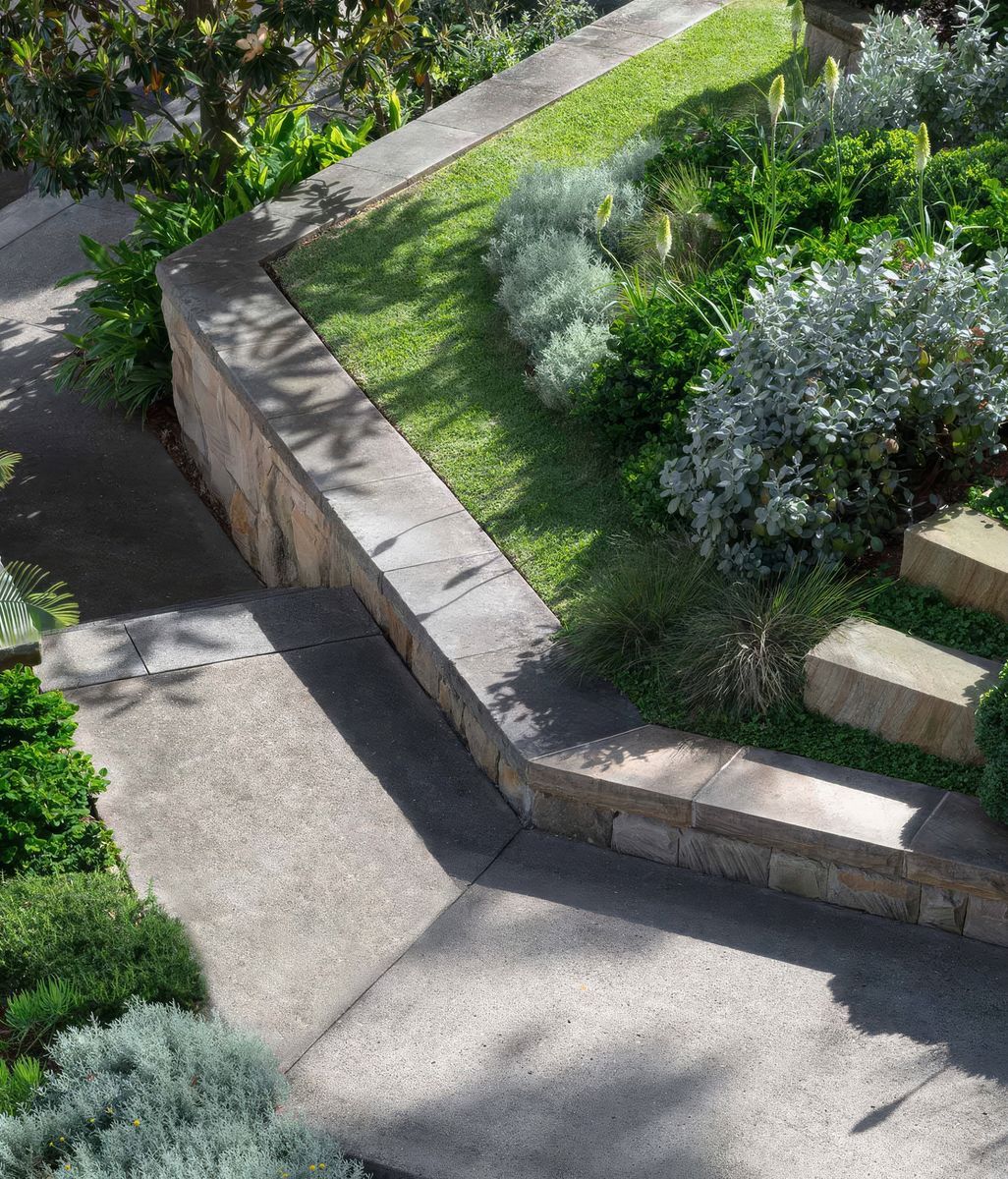
Edgley Street Reserve by Jane Irwin Landscape Architecture transforms a small leftover urban site into a pocket park, using masonry to establish a durable and carefully resolved public space. Hanslope House by Olaver Architecture, winner of the Robin Dods Roof Tiles Award, pairs a slim terracotta roof form with surrounding masonry, with precision detailing central to the result.

The New Entrant Award went to Marlborough Street by Ted Quinton Architecture, a Surry Hills project that converts a warehouse into a flexible cultural hub. The existing brick shell is retained on three sides, while a new façade uses recycled bricks, deep red flush grout and weathered steel to create a strong, monolithic street presence.

St. Clare Retirement Living, by Woods Bagot

Studley Park, St. Clare Retirement Living by Woods Bagot received a high commendation in the Robin Dods Roof Tiles Award, further demonstrating the role of masonry and terracotta products in projects where materiality and longevity are closely connected.

Across the winners, the common thread is not a particular brick type or aesthetic. It is the deliberate use of familiar materials to achieve permanence, texture and a strong relationship with place.

For a building industry increasingly focused on durability, adaptive reuse and material efficiency, the projects offer a reminder that innovation can also come through better use of materials that are already well understood.

Explore more building projects, materials and architectural practices on ArchiPro, from new residential work to commercial, civic and adaptive reuse projects.

Credits

Discover More Readingin News & Events