
Nulook® Windows & Doors New Plymouth
Glaziers

About us
Nulook Aluminium New Plymouth is proudly owned and operated by Wayne and Deralee O’Neill.
Nulook provides top-quality aluminium joinery for new and existing homes.
Experts in our field, we will guide you through your journey towards contemporary and reliable windows and doors you can be proud of.
FAQs
Frequently Asked Questions
Altus is
Altus is a leader in window and door design, supporting the Nulook Licensee network with IT systems, Tooling, Manufacturing and Marketing support. Nulook is a registered trademark of Altus NZ Limited.
Where can I view Nulook™ products?
Most Fabricators have comprehensive showrooms or can direct you to view jobs they have finished. Please view the Licensee Contact Section for further information. Or alternatively, contact your local Nulook Licensee for further details.
What is WeatherTight™?
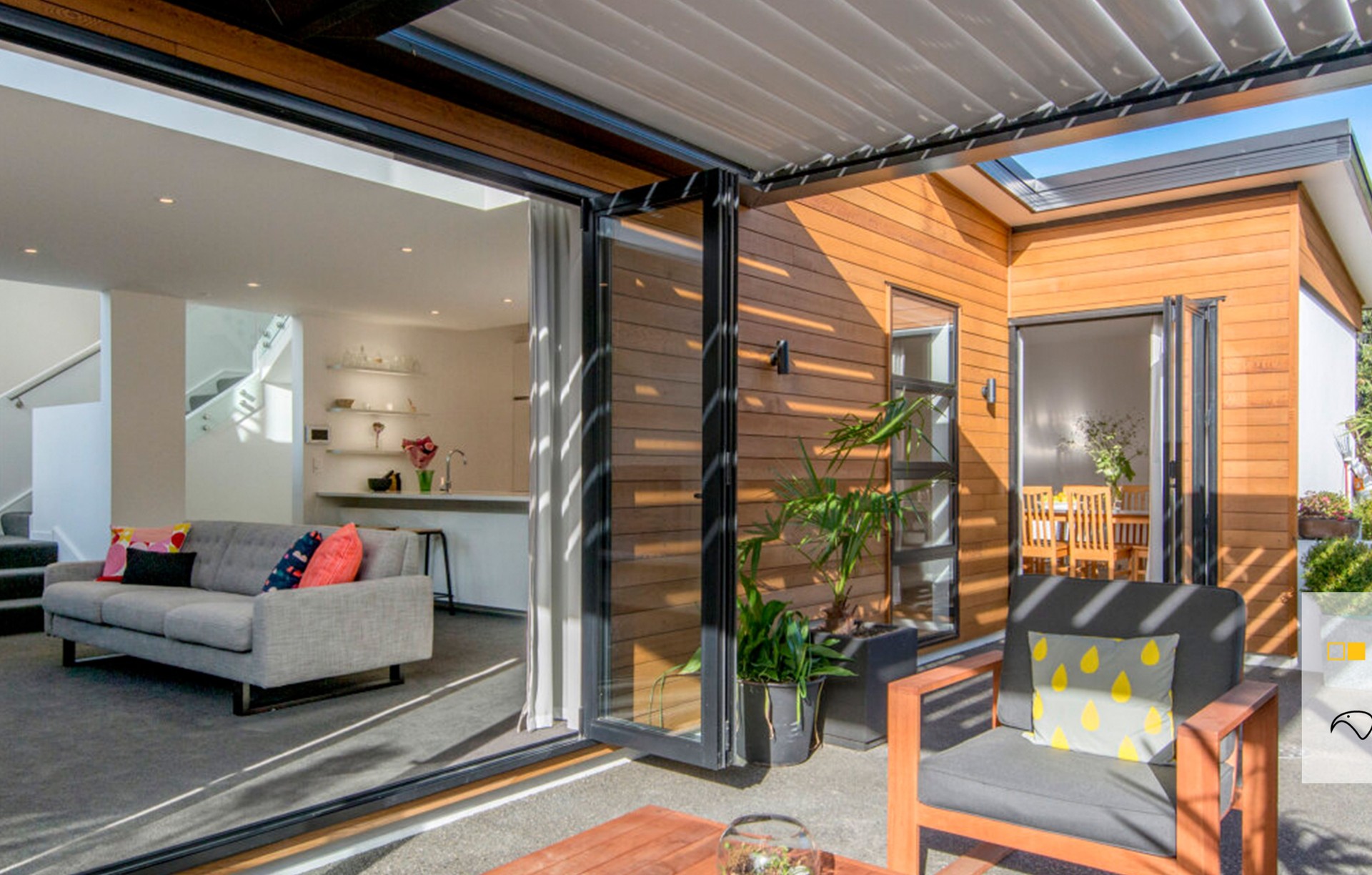
Weathertight™ is a new residential suite from Nulook. WeatherTight™ includes the latest in design technology to provide reliable high-quality attractive joinery for homeowners. The WeatherTight™ range includes a full range of windows, doors, bi-folds, and sliders; in fact, for almost anything you or your architect can dream of for your home, there's a Nulook solution.
Why WeatherTight™?
Leaky buildings have prompted changes to building practices. Nulook's suite has been designed to significantly reduce the likelihood of weather-related building problems occurring within window and door joinery. Homeowners are guaranteed the highest quality joinery without question.
How does WeatherTight™ work?
The secret to Nulook's phenomenal performance lies in our advanced drainage and jointing technology. This technology features: Advanced drainage technology2. Crimped corner connectors3. Hidden mullion/transom junction connectors and4. Torsional corner blocks, WeatherTight™ gives you quality by design.
Condensation - What is it?
When the air outside is saturated it rains. When the air indoors is saturated we get condensation.For each air temperature, there is a limit to the amount of water vapour the air can hold. When that limit is reached the air is saturated. Indoors, condensation forms when moisture-laden air comes into contact with a cooler surface. This cooler surface, often walls or windows, chills the air, causing water to fall out of it and accumulate as moisture.
How to reduce condensation?
New homes are usually well-sealed and insulated and do not naturally breathe as much as older homes. This often means they are more prone to condensation problems. Below are a number of condensation management options:
- Indoor Temperature & Ventilation: In cooler weather, sufficient ventilation combined with keeping your house 5 - 7°C warmer than the outside air, will keep your home dry, healthy and comfortable
- Ventilation: Simply open windows a little, even on dull days, to create some natural ventilation. Opening windows on opposite sides of the house create a very effective cross-air flow, removing excess moisture and introducing fresh air into the house
- Vents: Passive Vent's that allow secure airflow when the house is closed are a good option
- Installed ventilation systems: Installed ventilation systems operate by ducting warm air from the attic space, via a fan and an optional electric heater, down into the living areas of the house by way of ceiling outlets
- Dehumidifiers: Dehumidifiers remove moisture from the air by lowering the relative humidity. Reducing humidity levels decreases the likelihood of condensation forming
How crucial is sill support & installing sill support bars?
Sill support has always been a crucial part of window installation but is often overlooked. The detrimental effects of not having sill support bars, are not immediate but usually manifest themselves over a period of time, and hence we see indifference to using them.
Most joinery is fixed to the building framing, through the jamb liners thereby creating a cantilevered action. This action stresses the corners, mullion joints, frame/liner connection, and eventually compromises their integrity, and in turn the integrity of the whole window system. With Double Glazing becoming more commonplace, the weight is practically doubled and the problem is further compounded. With the combination now of both double glazing and cavities becoming the norm, the stresses placed on joinery have increased.
What are R-values and U-values?
R-value is the resistance a material has to heat flow. The higher the R-value, the greater the resistance. U-value is the amount of heat transferred through a material. The lower the U-value, the slower the rate of heat flow and the better the insulating quality.
What is Low E/Argon-filled glass and how does it work?
Low E (Emissivity) Glass is glass with a transparent metallic oxide coating applied onto or into a glass surface. The coating allows short-wave energy to pass through but reflects long-wave infrared energy which improves the U-Value. Argon Gas is an odourless, colourless, tasteless, non-toxic gas that is six times denser than air. It is used to replace air between the glass panes to reduce temperature transfer.
How to make sure your windows & doors open, close, lock and unlock easily for years to come
- Vacuum dirt from sill and track areas regularly, and before each washing
- Check to make certain that drainage holes are clear of dirt or obstructions. Drainage holes can be found outside the window or door in the bottom of the frame. Use a small, soft bottlebrush to clear openings. Note: If the window is “stacked”, there may weep holes between units
- Moving parts in hardware components and tracks and rollers should be lubricated regularly. In salt-air environments, this can mean at least monthly
- Check weather stripping around operable window and door panels to be sure it seals evenly
- Adjust sliding door rollers for proper height clearances. Most door rollers can be adjusted with a screwdriver through access holes in either the end or side of the sliding panel at the bottom. Be sure to lift the panel to take the weight off of the roller during roller adjustment
- After making roller adjustments, it may be necessary to also make adjustments in the lock strike placement. Most strikes may be adjusted by loosening screw fasteners, moving strike plate and retightening. Check for proper lock operation.
Get in touch
Business details
- Category:
- Glaziers
- Verified ArchiPro member since:
- 2021
Reviews about
Nulook® Windows & Doors New Plymouth
Professional Reviews