

Timber Floor Specialists
Manufacturers and Suppliers

About us
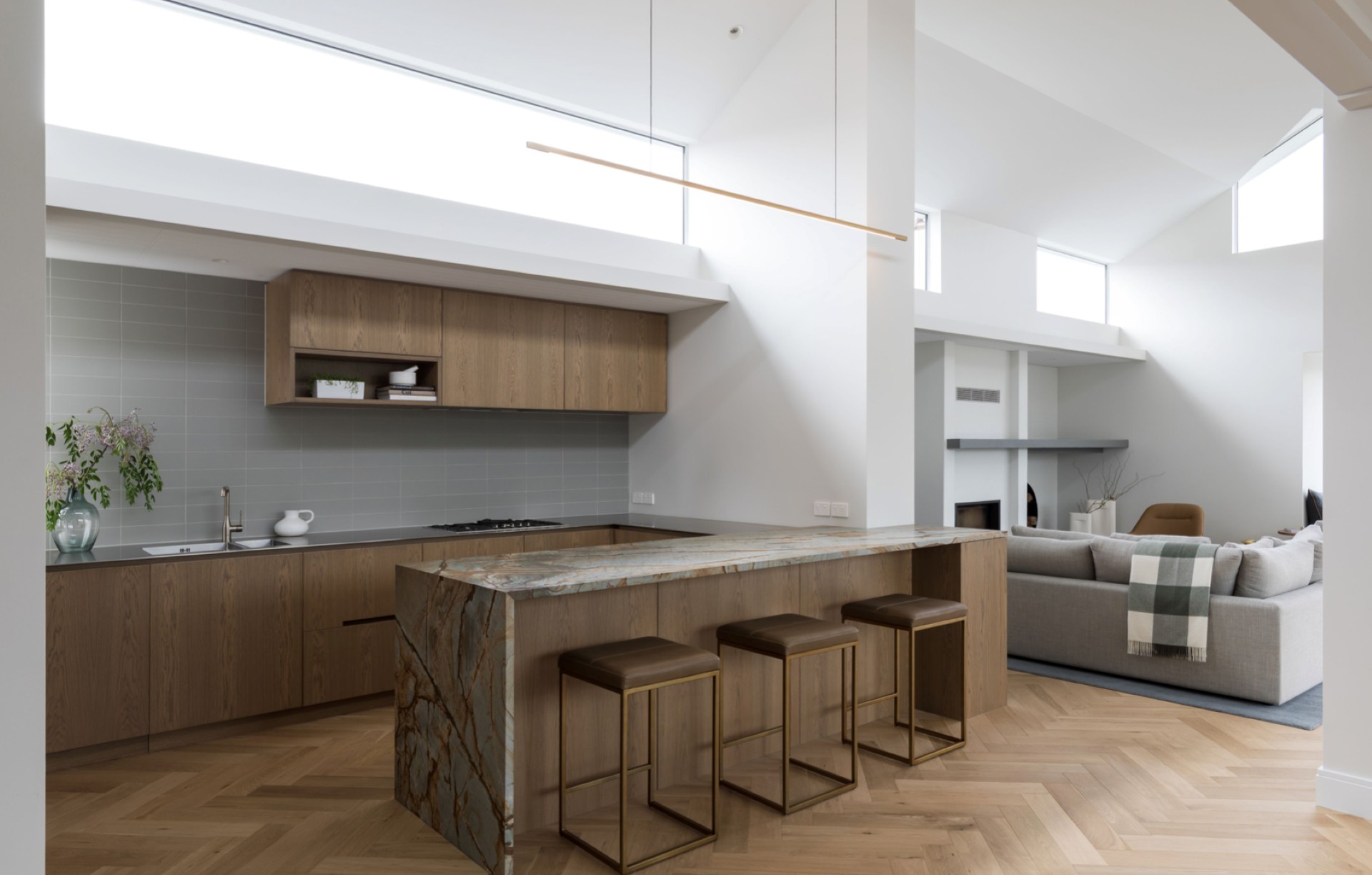
We are an Auckland based company creating beautiful interior spaces with the use of solid and engineered timbers.
We believe that home interiors and work spaces are an extension of our inner world, that should bring us a feeling of calm and balance in this fast paced world. Starting with a consultation with one of our flooring experts, we will bring your concept designs to reality.
Our floors have featured in many homes receiving Regisitered Master Builders House of the Year Awards since 2014.
The Heart of TFS
Alan Scott and Campbell Pilkington lead our expert flooring team. Together they guide our skilled installers and floor finishers: overseeing timber selections, flooring directions, custom colouring and bespoke designs in floor and wall covering concepts.
Alan, Director and Colour Expert, has installed and finished thousands of timber floors across New Zealand over the past 20 years- in a variety of applications from residential to education facilities and everything in between. This, combined with his keen desire to create personalised solutions for each client has seen his work commended in RMB House of the Year Awards since 2014.
Cam, Contracts Guy, has a background in building and construction and brings years of practical experience to design concepts and on-site expertise. Cam joined TFS in 2012 to lead the growing team of timber flooring installers.
Commitment to Sustainability
We're Committed to the Health of Our Environment
We're continuously committed to respecting the wood and forests where timbers are sourced. Supporting PEFC and FSC certified sustainable forests, means the timbers we use are consistently replenished as soon as they're harvested.
Health Conscious Options
Speak to us about Formaldehyde free, Solvent free, Radiation Free flooring options.
Wide Range of Timber Selections
We source a large selection of timbers to bring your design ideas to life.
Highly Requested Timbers: Solid American White Oak, Pre-finished and Un-finished Engineered European Oak
Speciality Timbers: Jarrah, Tasmanian Oak, American Ash, Canadian Maple, Black Walnut, Teak, Pulilaris (Blackbutt), Spotted Gum, NZ Matai
Timbers come in grade selections: Rustic, Farmhouse, Bandsawn, Feature Grade, Prime Grade
Formaldehyde, Solvent and Radiation free flooring also available. Please enquire.
Consultations and Advice
From re-finishing your existing floors with a new colour to a full flooring makeover - we're here to help you on your journey.
As the designer of your space, we understand the importance of listening to you, in achieving the home and floor that you love.
Dependant on your goal, vision, budget and maintenance preference, we will provide a tailored flooring solution that captures your design visions and inspires you to share it with others.
We’ll be with you from start to finish, from sub-floor preparation through to the final detailing of your floor.
Caring for Your Floor
Taking Proper Care of Your Floor
Maintenance of timber floors depends on the type of coating used and the intensity of traffic and wear. Floors benefit greatly from regular care and maintenance, lengthening the life of your floor.
Oiled floors will benefit from frequent applications of products like oil refreshers, 'maintenance oils and soaps', that build additional wear layers to the surface of your floor. With the wide range of timbers, grades and constructions, you have the freedom to choose from a large range of finishes and coatings to achieve your specific design visions.
Now you have a stunning new timber floor, it takes care and regular maintenance to preserve the integrity and lifespan of your floor finish. One cleaning product or method does not suit all.
As timber floors have grown in popularity, ideas about how to clean a timber floor have emerged, but some of these cleaners attack and damage floor coatings, so use the methods and products that are specified by the manufacturer of your floor finish.
Some Quick Do's and Dont's
- Stay off the floor for at least 24 hours. Between 24-48 hours later, the floor can be walked on IN SOCKS, but NO SHOES.
- Don't walk on the floor with wet feet or get water on the floor for the first 7 days.
- Don't use detergent on the floor.
Don't pour water directly on the floor. - Don't use excessive water. Use a damp NOT wet mop.
- Don't use baking soda, ammonia or abrasive cleaners.
- Avoid abrasive chemical products or harsh microfibre cloths as these will damage the floor finish. Please be aware that some micro fibre cloths are extremely harsh and may strip the nutrients or oil from the floor. Cotton mops or cloths that can be removed and washed are ideal.
Taking Proper Care of Your Floor
Maintenance of timber floors depends on the type of coating used and the intensity of traffic and wear. Floors benefit greatly from regular care and maintenance, lengthening the life of your floor.
Oiled floors will benefit from frequent applications of products like oil refreshers, 'maintenance oils and soaps', that build additional wear layers to the surface of your floor.
Newly Finished Floors
Although a floor may be walked on after the initial curing/hardening of the coating, some precautions are necessary until the coating system has fully hardened.
This may take several days to several weeks depending on the coating option you've chosen and weather conditions at the time of flooring application.
- As stated above, floors should only be walked on with socks. No shoes for 24 hours. 48 hours is better.
- Do not walk on the floor with wet feet or get water on the floor for 7 days. This is very important. Issues such as ‘Ghosting’ can occur. (Over time as the coating darkens with UV, these marks show up as a lighter cloudy appearance. Sometimes imprints only become obvious after one year or so.) The only way to remove ghosting is a total re-sand and finish.
- Floor covers like mats and rugs should not be laid immediately after laying. Allow the floor to stabilise and harden first. This usually takes a few weeks.
- Wait 5-7 days before the placement of furniture. Climate conditions affect how long it takes for polyurethane to reach its full strength. Generally, this time is shorter during the summer months.
- While light furniture can be replaced and used during this period, ensure that felt protector pads are attached to the feet of tables, chairs etc. The moving of any furniture such as fridges and other heavy furniture should be done by lifting or wheeling on solid protective coverings e.g. plywood or hardboards over carpet. The use of carpet or cardboard is not adequate enough to prevent surface damage to your flooring.
Preventing Unnecessary Damage
- Do Not Use: Steam Mops, Ammonia Based Cleaners, detergents, bleach, polishes, abrasive cleaning soaps, steel wool or abrasive cloths, turps or kerosene. Steam Mops can cause peeling of the floor finish or a whitening/cloudy appearance on the floors.
- Furniture: Use soft felt or protective pads applied to the feet of your furniture and tables. If you plan to move furniture around, do so by lifting or wheeling on solid protective coverings e.g. plywood or hardboards over carpet. The use of carpet or cardboard is not adequate enough to prevent surface damage of your flooring.
- Rugs: If you’re concerned about wear in high-traffic areas of your home, like passages, kitchen, etc. - Use rugs or mats that are made from ‘breathable’ materials, avoiding mats that have solid rubber or vinyl backings that could trap moisture under the rug. Rearranging or moving rugs on occasion will allow the flooring colour to age evenly.
- Pets: Keep pet claws trimmed to avoid scratches and gouges.
- Footwear: Shoes may be your preference, but keep high heels off your timber floor, keeping heels in good repair. Encourage guests to remove shoes on arrival to preserve your floor.
Maintenance + Cleaning
- Protecting Oil Floors: Do not wash your floor with water! Only use the cleaning product that is supplied to you as this is specifically designed for your flooring finish. Cleaning the floor with water will compromise and strip the floor finish.
- Sand and Grit: These small particles act like sandpaper that will scratch and damage your floor, dulling the finish. Vacuum (only with soft head/broom attachment) or sweep floor with a damp micro-fibre mop as often as possible. General cleaning once every week is recommended. Mats placed both outside and inside external doors provide a simple and effective means of significantly reducing sand, dirt and grit from entering the house.
- Spills and Leaks: Mop up any spills immediately. Many beverages will stain most floor finishes if left on the floor. Any leaks must be addressed immediately. Failing to attend to leaks can result in far more severe problems as water and moisture will damage your floor.
Protect Against Changes in Climate
- Exposure to Heat: Prolonged exposure to direct heat or indirect heat from sun, heaters, and fireplaces can have a detrimental effect
- Air Temperature / Humidity: Endeavour to maintain a consistent level of humidity in all living areas throughout seasons. Drastic changes in humidity may cause hardwood floors to swell, cup, shrink or show excessive gaps between boards. Using a dehumidifier or similar systems will assist in achieving a consistent humidity level. Aim for an average relative humidity should be maintained between 40-70% and the average indoor temperature should be between 18-25 Degrees Celcius, not exceeding 35 Degrees Celcius.
- Air Circulation: Avoid leaving rooms with timber flooring locked up for long periods of time during hot weather. Any wood flooring requires some air circulation at all times to prevent board shrinkage.
- Under Floor Heating: The underfloor heating should be turned on preferably 2 weeks prior to the timber flooring being installed to assist with warming the temperature and drying out the concrete slab. From the time of timber flooring installation, the heating should be turned on with a max slab temperature (Not room temperature or timber floor temperature) of 27 degrees Celsius. Ideally, the slab temperature should sit at 23 degrees Celsius. For best performance, the heating system should be operating at all times, all year round to avoid the floor cooling and taking on moisture from the environment. If the underfloor heating does not run at a constant temperature all year round, more movement should be expected in the timber flooring, with gaps appearing and closing up from season to season. Once the floor has been finished it is best to slowly build the temperature up, moving it either up or down by 1 degree Celcius per day to begin. Failing to follow this recommendation, may affect the timber flooring causing it to expand, shrink or crack.
Protect Against Sun/UV Exposure
- Exposure to Sunlight: Prolonged exposure to intense direct sunlight can soften the tone of different timber species to varying degrees and can accelerate the darkening of wood colouring due to a process called oxidisation. This is also known as ageing or weathering. This direct sunlight can contribute to gapping or possible cupping of the floorboards (board edges being higher than the centre of the board). Filtering sunlight through curtains, blinds or UV-treated windows/doors is an effective way to slow down any colour changes, control the gap widths between boards and reduces the direct heat from north-facing rooms that are exposed to a lot of sun.
Get in touch
Business details
- Category:
- Manufacturers and Suppliers
- Business focus:
- Residential & Commercial
- Verified ArchiPro member since:
- 2023
Reviews about
Timber Floor Specialists
Professional Reviews