An alpine retreat in Central Otago
For a city-based couple seeking a retreat from urban life, the answer lay east of Queenstown, in the wide, open landscape of Gibbston Valley. Here, with the Crown Range rising majestically to the north, and the valley stretching east to west on either side, they found a setting that offered an escape from city life and immersion in a place where skiing, hiking and water sports are on your doorstep.
The site, positioned within a vineyard development by Gibbston Valley Wines and overlooking a golf course, presented an opportunity to create a true retreat: somewhere to slow down and reconnect.
Tasked with translating that desire for refuge into a house that would not only sit comfortably within its dramatic setting, but perform across Central Otago’s extreme climate, Condon Scott Architects conceived a design that pays homage to the traditional vernacular of the area, while offering all of the conveniences of contemporary architecture.
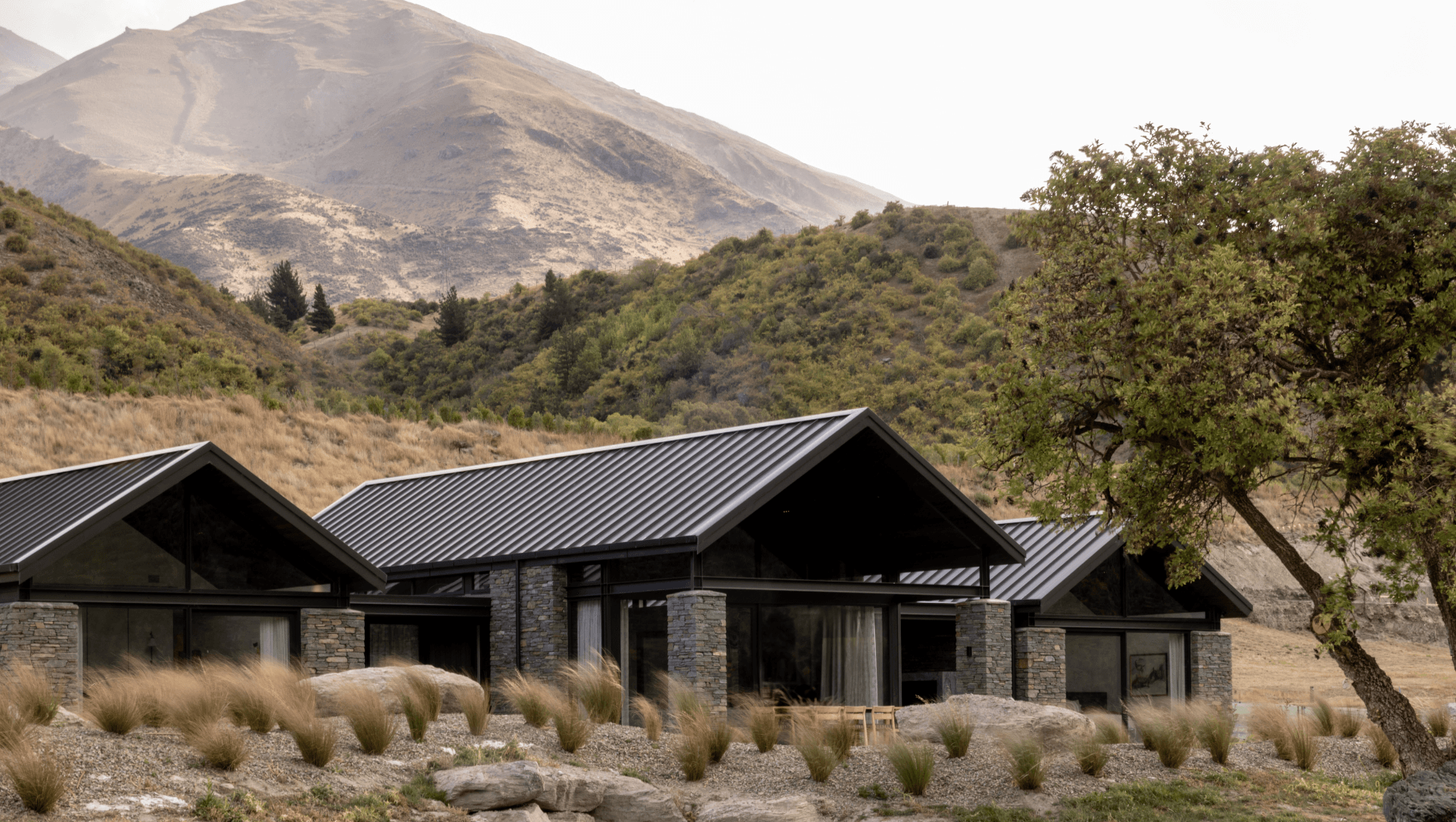
“We've designed it as three distinct gable forms, reflecting the alpine vernacular,” shares Barry Condon. “The central form is the main living area, which is slightly wider and taller than the other two forms, so you can immediately see there’s a hierarchy to the volumes.”
The brief called for a modern lodge-style home that felt understated and timeless, while offering flexibility for both quiet weekends and larger family gatherings. As such, the master suite and guest bedrooms are separated from each other. To the east sits the master wing, connected to laundry and garaging, while the western wing accommodates guest bedrooms and ensuites.
“The idea is that if it’s just the owners there, they can pretty much just live in the main house and their wing,” Condon explains, while larger gatherings allow the entire house to be activated.
Climate was also a key driver for the architecture. Designing in Central Otago means accommodating a wide temperature range, from mid-thirties in summer to well below zero in winter. The orientation and massing of the gables help create sheltered courtyards and protect outdoor spaces from prevailing winds. Deep eaves provide passive solar control, while a west-facing loggia with operable louvres allows the house to adapt seasonally.
“In the wintertime, you can open that up and let lots of the light in, while in summertime you close all that up and use it as a shady, cool space on a hot day,” shares Condon.
Materially, the exterior palette is deliberately restrained and robust. Local schist anchors the house to its setting, cedar introduces warmth and texture, and tray roofing and steel detailing add durability and a subtle industrial edge.
“We try to use materials that we know are tried and tested in this environment,” says Condon, with the limited palette ensuring the house will weather gracefully over time.
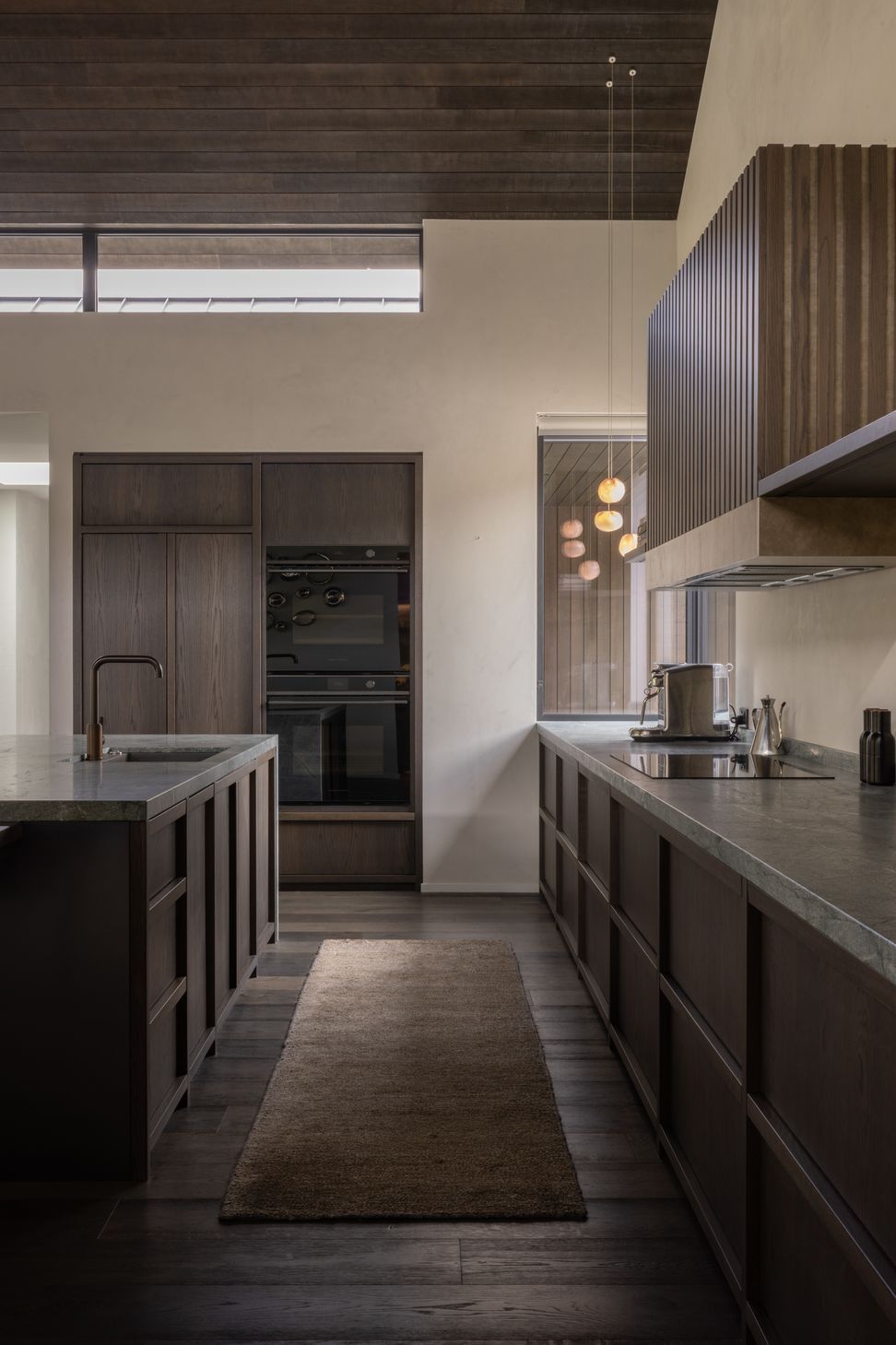
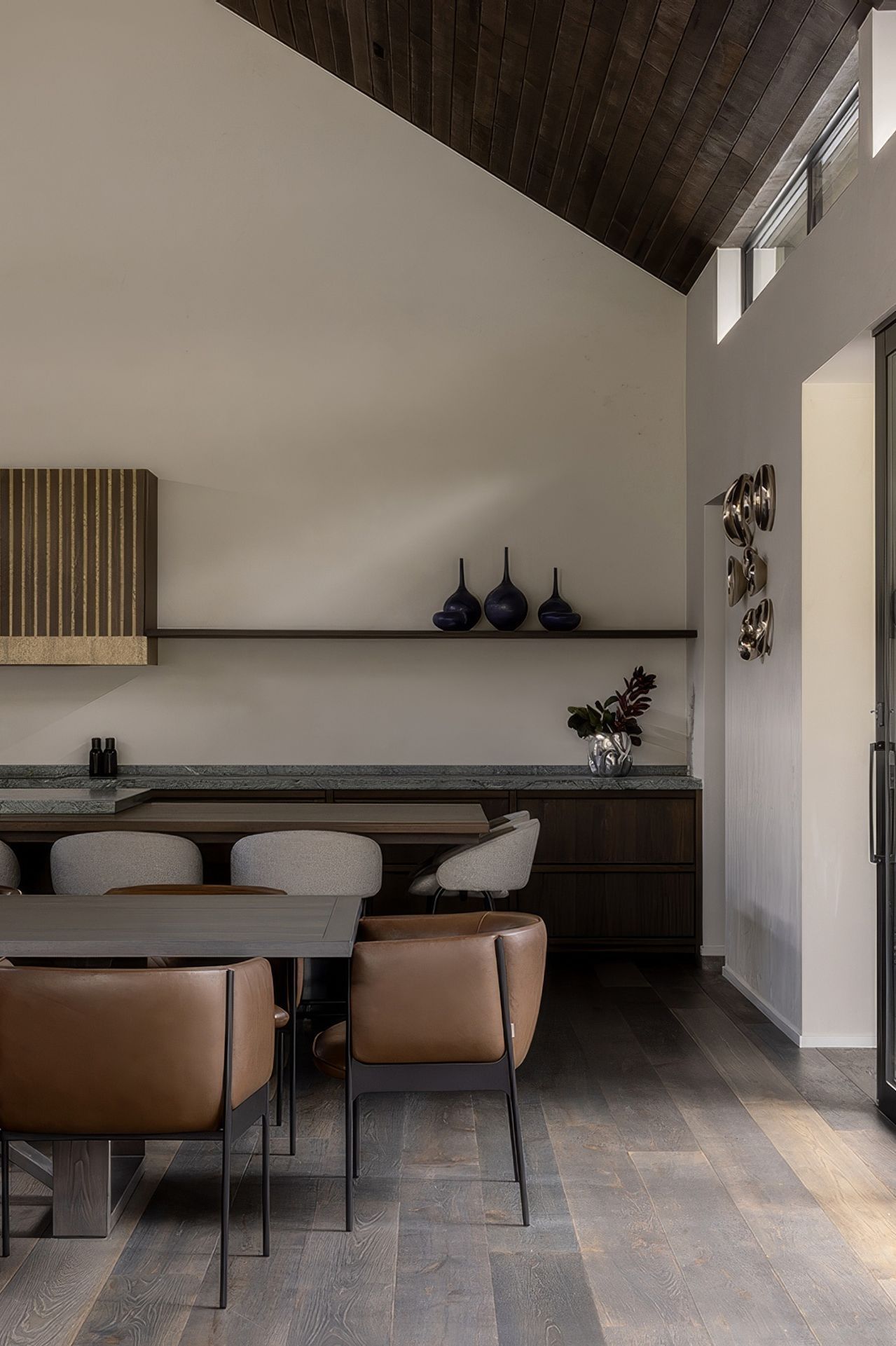
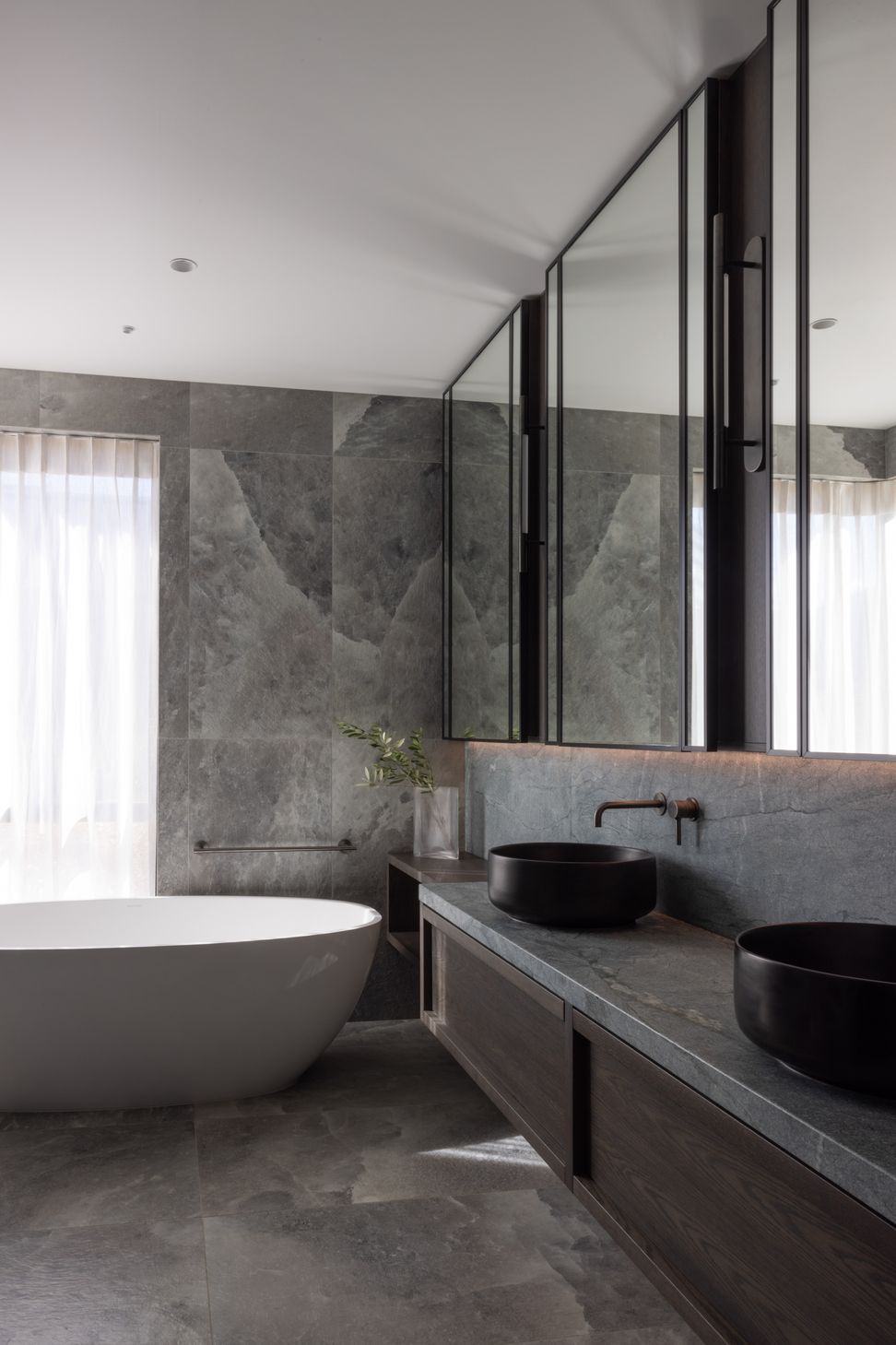
That material language continues inside, creating a sense of continuity between exterior and interior. Working with David Sweatman from Space Studio on the interiors, the team carried timber soffits through to beech-lined ceilings, complemented by timber flooring and Milano polished plaster walls. The aim was to create a deliberate contrast between materials, says Sweatman.
“We balanced the sharpness, refinement, and asymmetry of the architectural form with richness of texture throughout the interiors,” he shares. “The materials themselves are either dark or white and textured, providing a considered backdrop. Against this, the furniture, decoration, drapery and art bring richness through polished finishes, patterns, and sparkling elements.”
The lighting is targeted and warm, while details throughout are square, chunky and asymmetrical.
“This approach creates two distinct objectives that contrast and complement each other, allowing the architecture and interiors to have a dynamic conversation,” shares Sweatman.
Spatially, the experience of moving through the house is carefully choreographed.
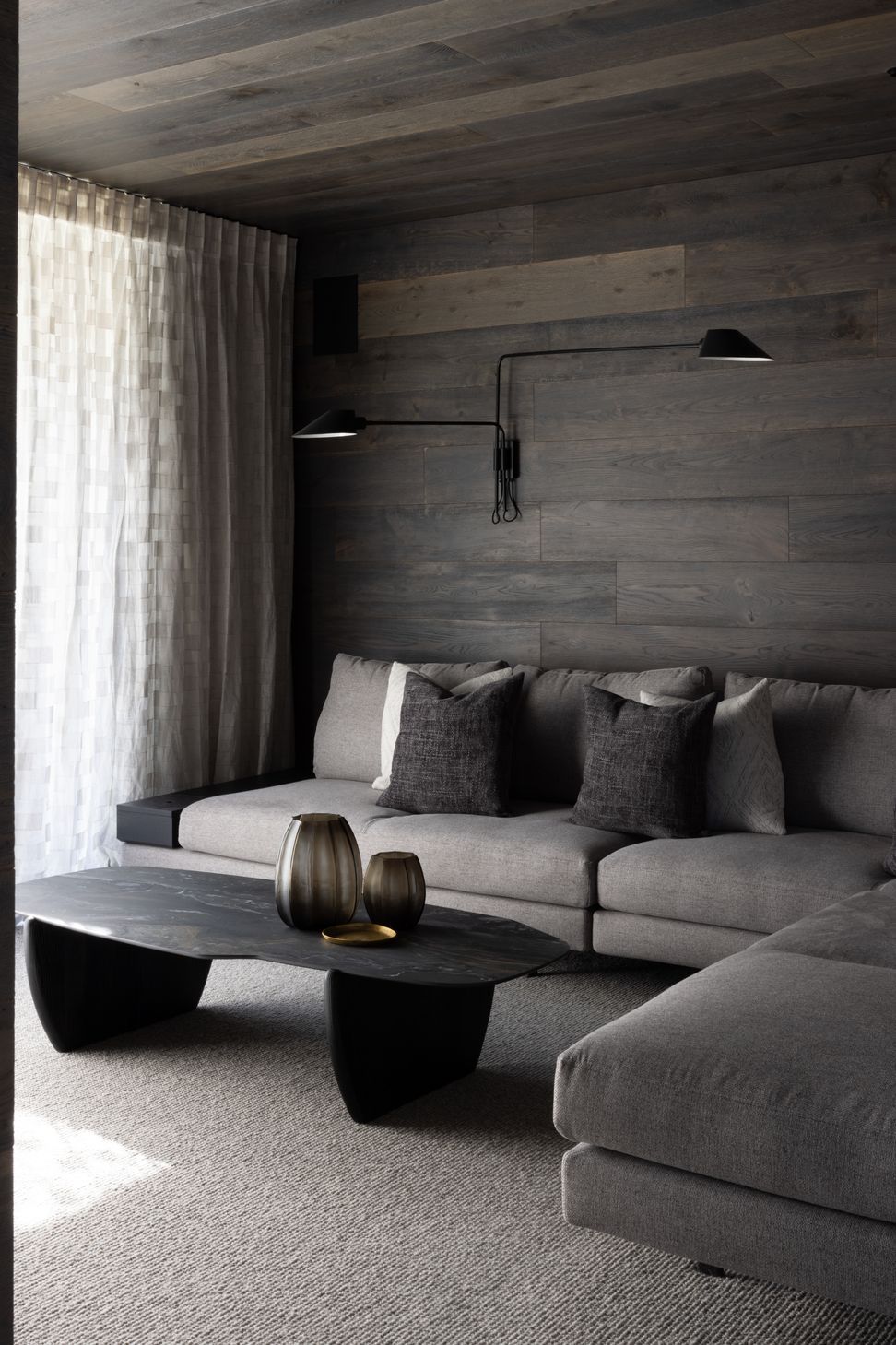
Lower-ceilinged linkways compress before releasing into vaulted living spaces, heightening the drama of arrival and framing the expansive views beyond. “You come into the home into a compressed arrival space and then as you enter that living space it opens up to the view,” says Condon. It’s this central living area that remains his favourite aspect of the project, alongside the darker, more intimate media room designed for cosy evenings in.
Underpinning everything is a strong focus on performance. Passive solar principles, efficient heating and cooling systems, and careful attention to thermal breaks all contribute to a house that performs as well as it looks.
“We design all our homes to maximise thermal performance and minimise thermal breaks,” says Condon. “Every site's different, but we think about passive solar design from the outset, getting the orientation of the house right to let sun in winter, and shade ourselves from the worst of the hot summer sun.”
This site-responsive, climate-conscious approach finds a clear expression in the Gibbston Valley retreat, where traditional forms are reinterpreted through a contemporary lens, materials are honest and enduring, and the house offers flexibility without compromise.
Words: Jo Seton
This luxury, expansive home is located in ‘The Reserve’, a new development within Gibbston Valley Resort, located on Gibbston Valley Station.
The station is over 1000 acres and the current resort, which includes the Gibbston Valley Winery & Lodge, is now being progressively developed and expanded in stages into a full resort development.
The home is located on a prominent, sought-after front lot, slightly elevated and overlooking the 9 hole golf course, and oriented towards the Crown Range mountains.
Reflecting the surrounding high-country landscape and history of the area, a classic, schist-clad lodge was designed with dual gable pavilions and a linkway. The exterior stonework creates a sense of solidity and harks back to the humble gold-mining cottages that were dotted throughout the valley in the past.
The gable roofs provide high ceiling spaces to the living area, creating a sense of spaciousness and light accentuated by generous glazing. A sheltered courtyard is nestled between the two pavilions, with operable louvres allowing the outdoor space to be conveniently adjusted to suit all times of day and weather conditions.
Interior design by Space Studio