A Perth restaurant designed for theatre, location and a little voyeurism
In the affluent beachside enclave of Cottesloe, where Perth showcases its most coveted stretch of coastline, fine dining has historically felt out of place. But with Gibney, the newest restaurant project by Rezen Studio, that gap has been decisively and opulently closed.
The client’s inspiration for the restaurant began with an unexpected hybrid: a Parisian hotel lobby crossed with a Californian country club. It was an unusual starting point, but it immediately set the tone for Gibney’s identity.
The three words that crystallised this concept were: theatre, locality and voyeurism. As Rezen Studio architect Rhys Bowring explains, “The client’s brief was to pitch it at an international standard, but then also showcase the best of West Australia in terms of wine and local ingredients, celebrating the locality. The theatre and the voyeurism came from this idea that when you go to a fine dining restaurant, you're paying that bit extra and there's an expectation of an experience.”
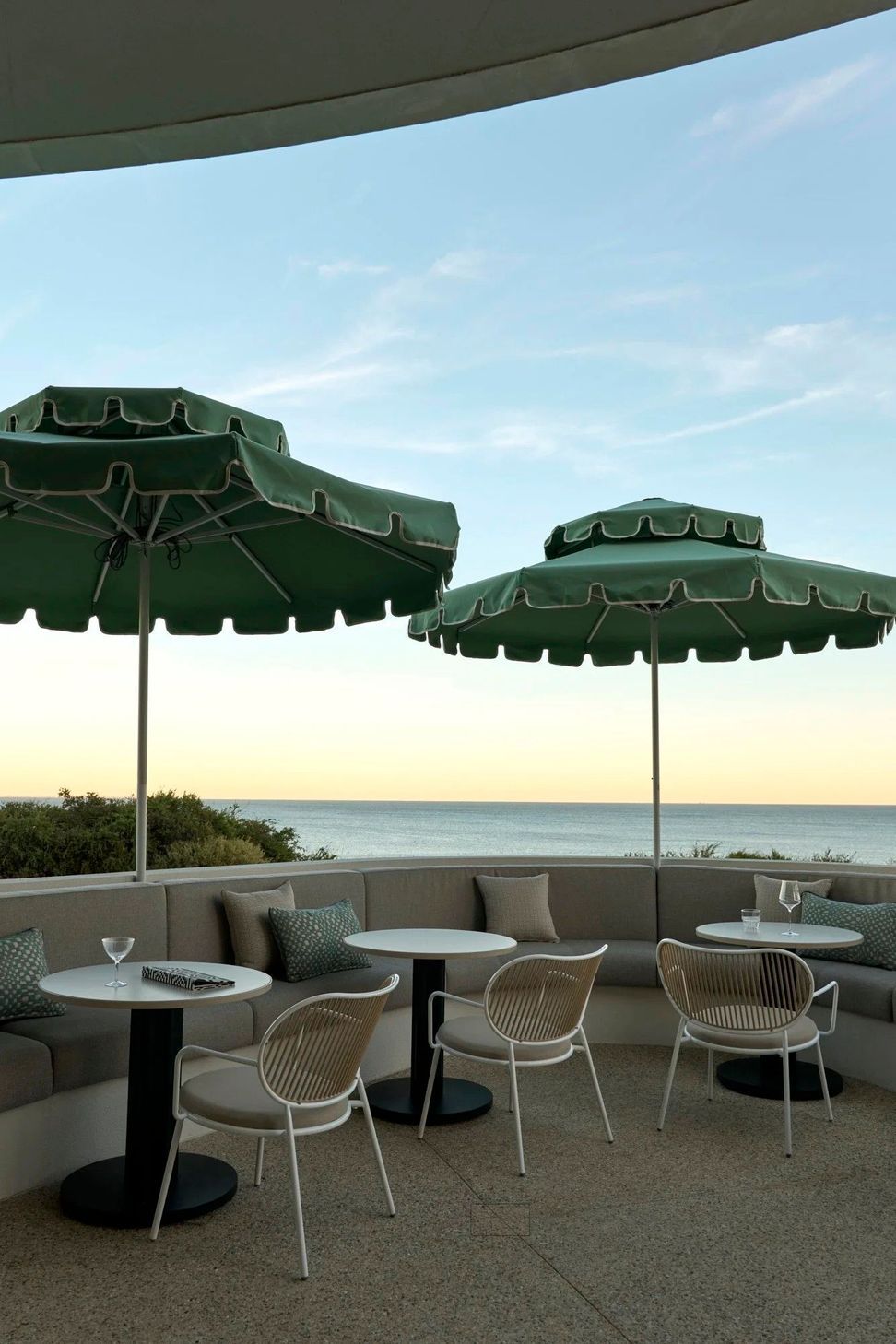
The client is known for their coveted oceanfront venues, yet this location presented something new: equal emphasis on interior and exterior dining, and a setting so visually dominant that any gesture had to stand up to the view.
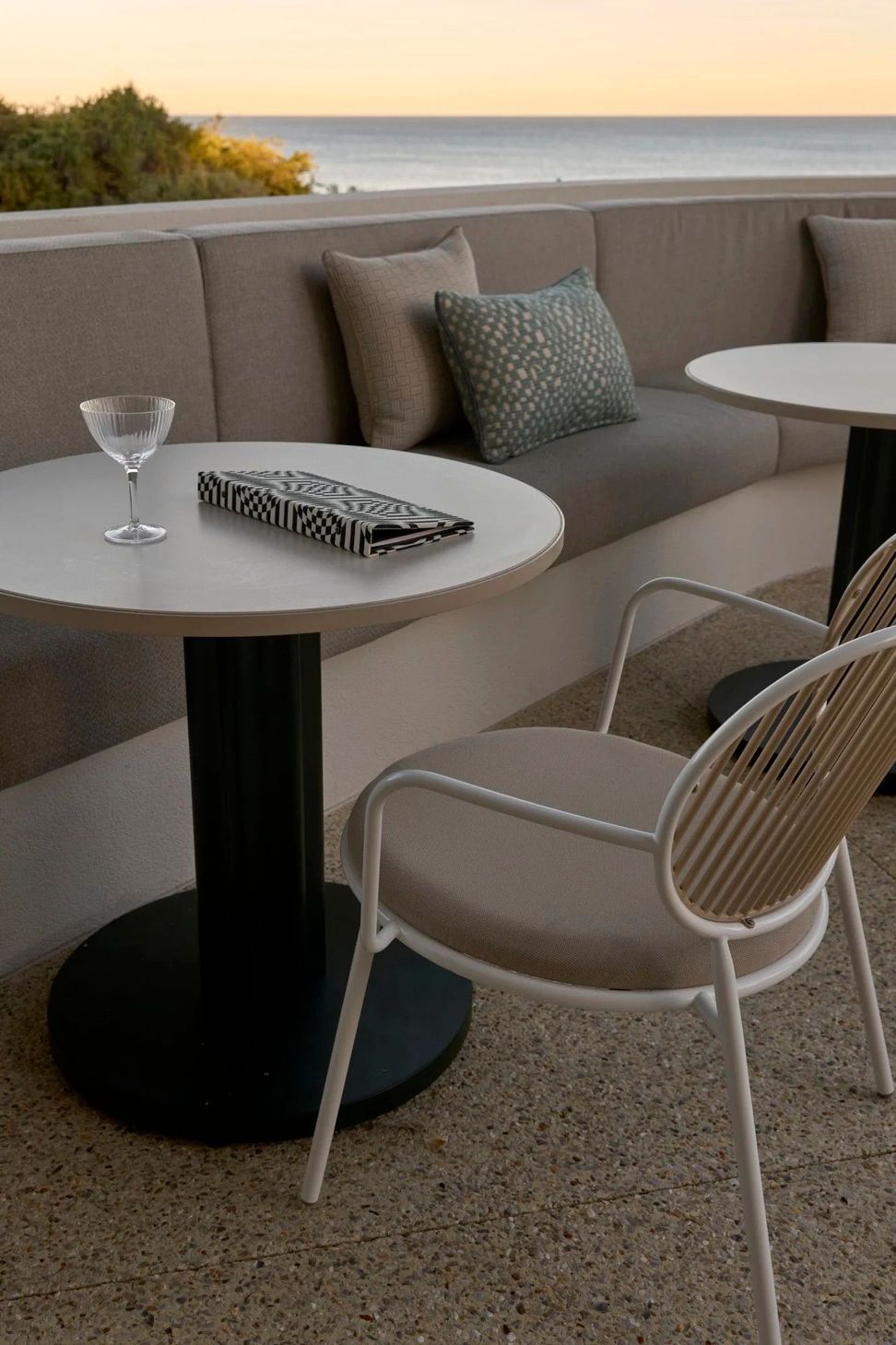
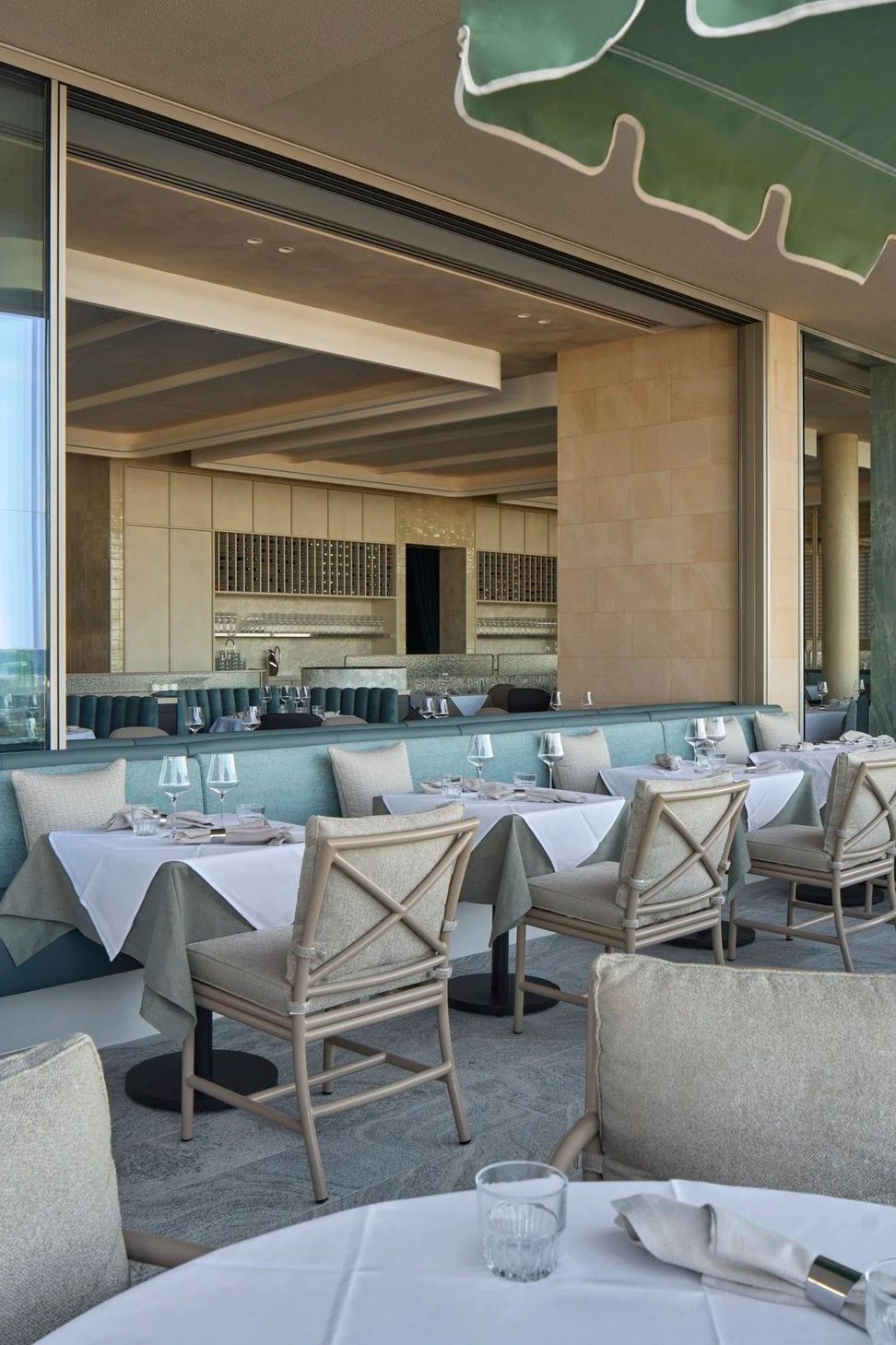
As architect Zenifa Bowring explains, “The site itself is essentially as big as it is outside in the alfresco area as it is internally, so that was an interesting part of the brief in that the external spaces also had to feel as opulent and luxurious as the internal spaces.”
Starting with place
Despite the request for glamour, Rezen began, as they always do, by interrogating the site. The coastal setting held obvious temptations, but the studio was adamant about resisting the predictable palette of blues, stripes and nautical motifs. Instead, they mined the subtle naturals: the warm limestone that edges the coast; the sandy undertones of the cliffs; the textures of the water when the sun drops low; the dusty, faded light unique to the west-facing horizon.
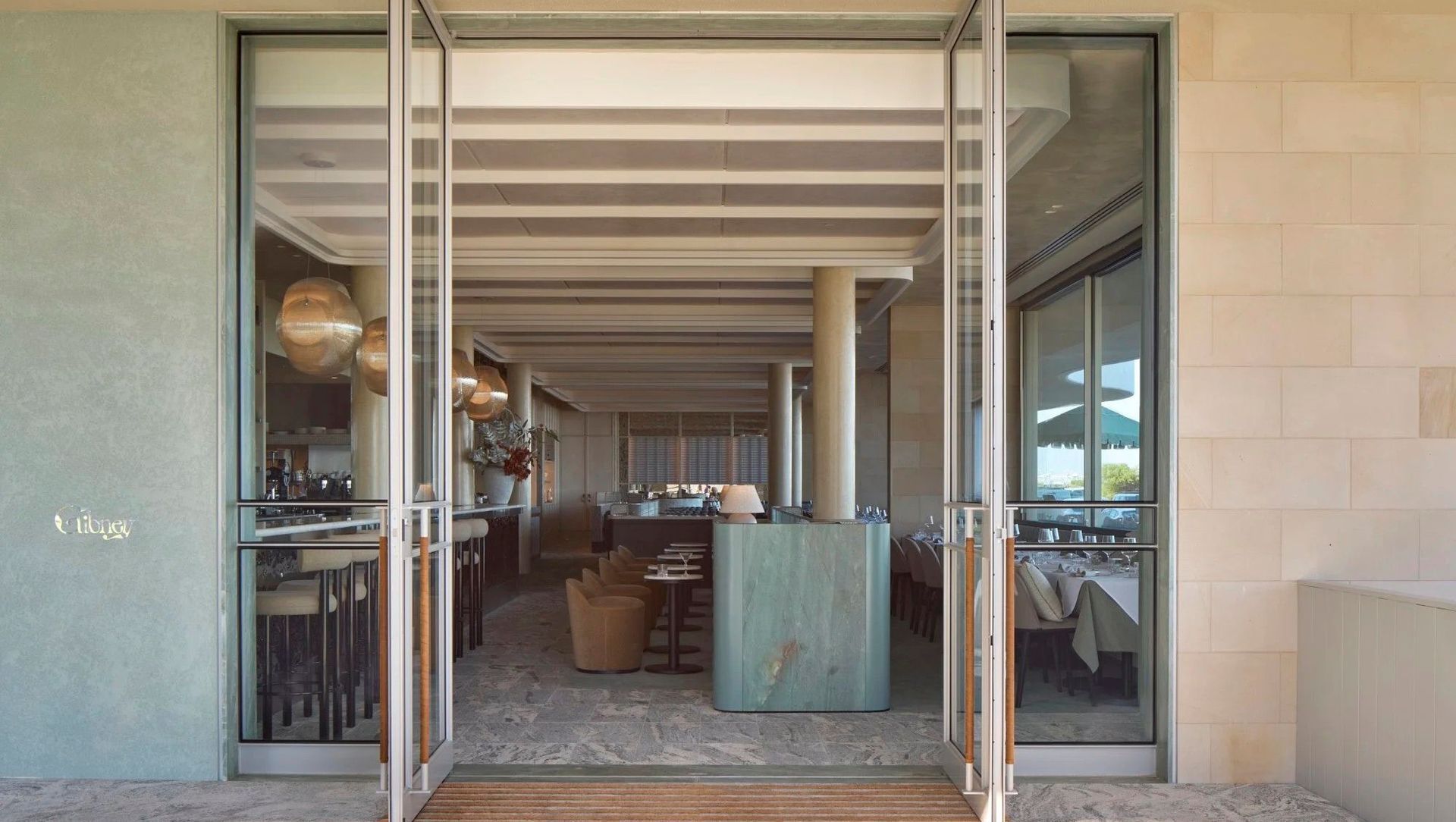
That study of place set the foundation for a material palette that feels international yet grounded. Western Australian sandstone appears in the base build and threads into the interior, anchoring more decadent materials chosen for their tactile resonance. Figured granite runs continuously on the floor from inside to out, which was an early decision that visually dissolves the boundary between restaurant and terrace.
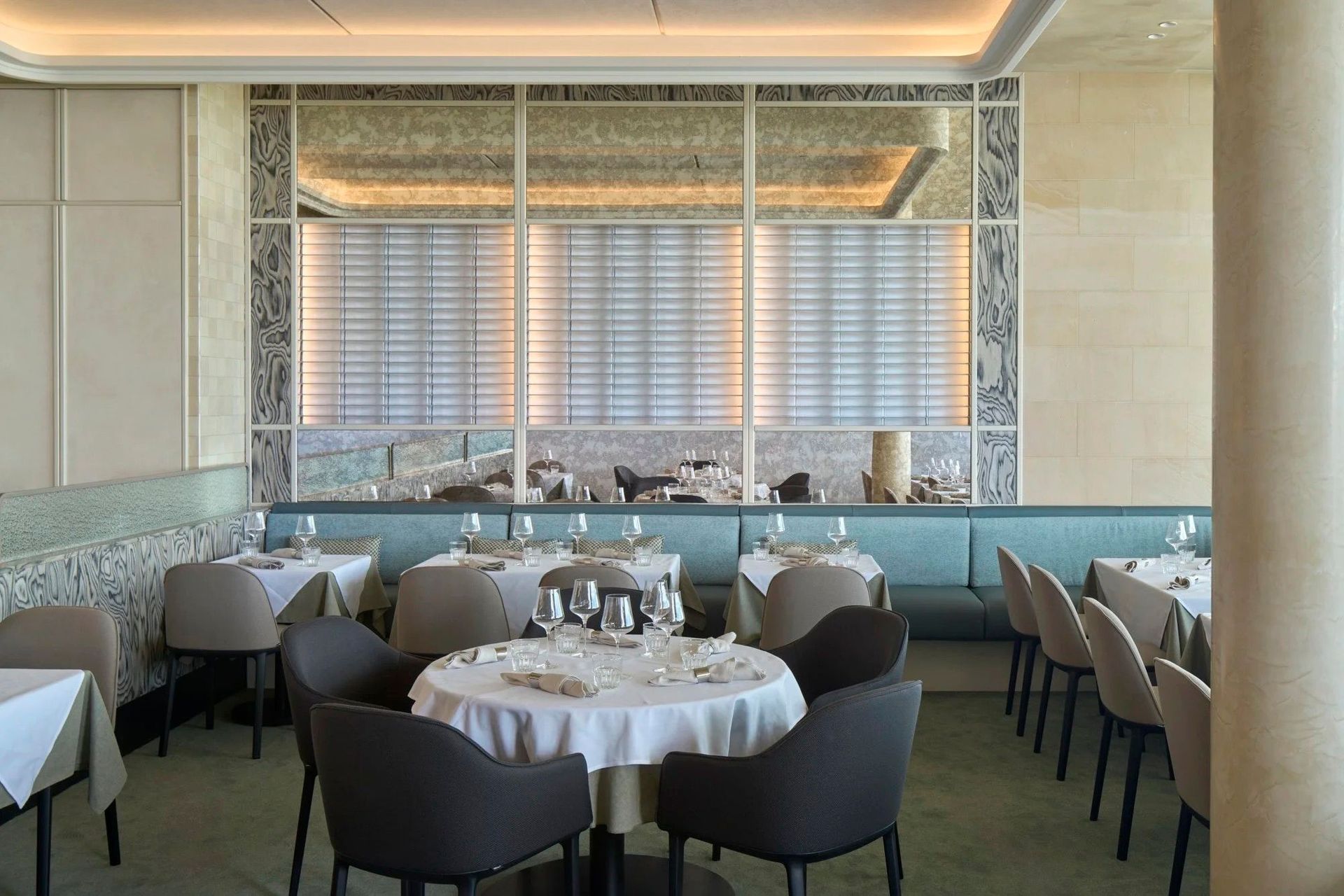
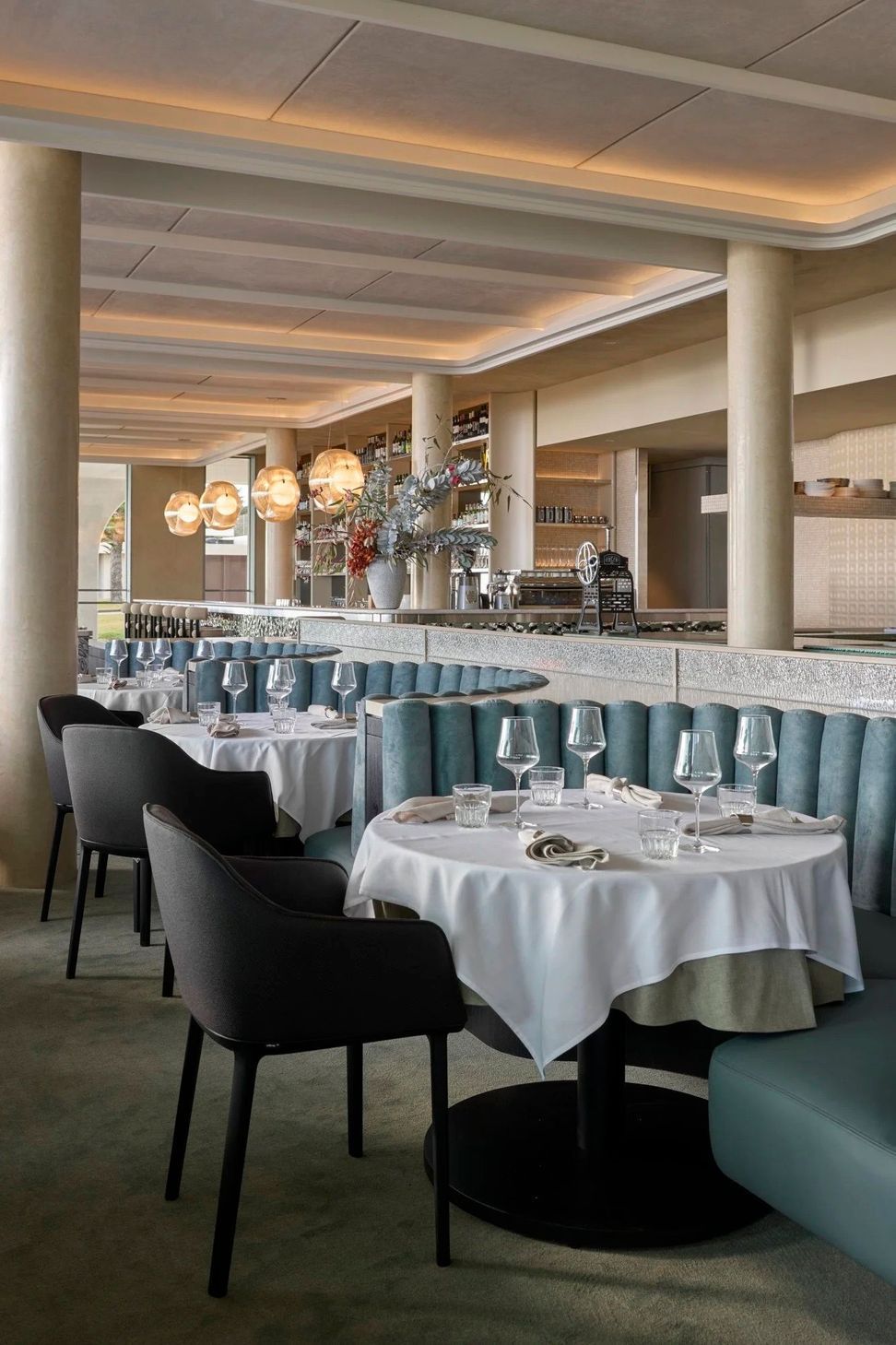
The restaurant’s sweeping outlook defines the experience, but a great view can also flatten a dining space, turning it into a spectator box. Rezen’s challenge was to preserve the spectacular sightline without letting the interior become secondary. Their strategy was twofold: keep furniture deliberately low-slung, and build a dining room dense with detail so that, as Rhys puts it, guests would feel “there was interest and detail in every moment rather than everyone sitting perched and looking out at the view.”
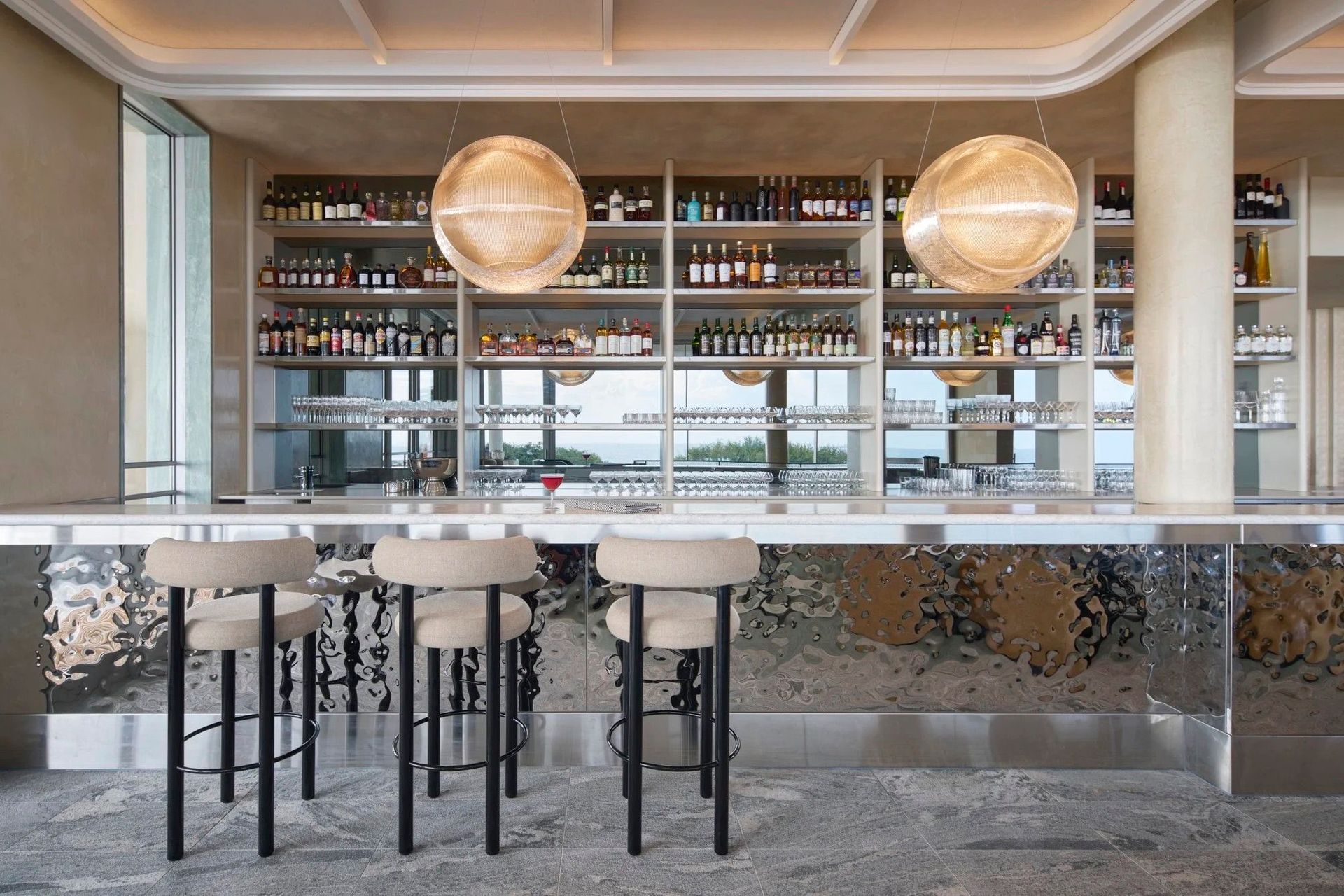
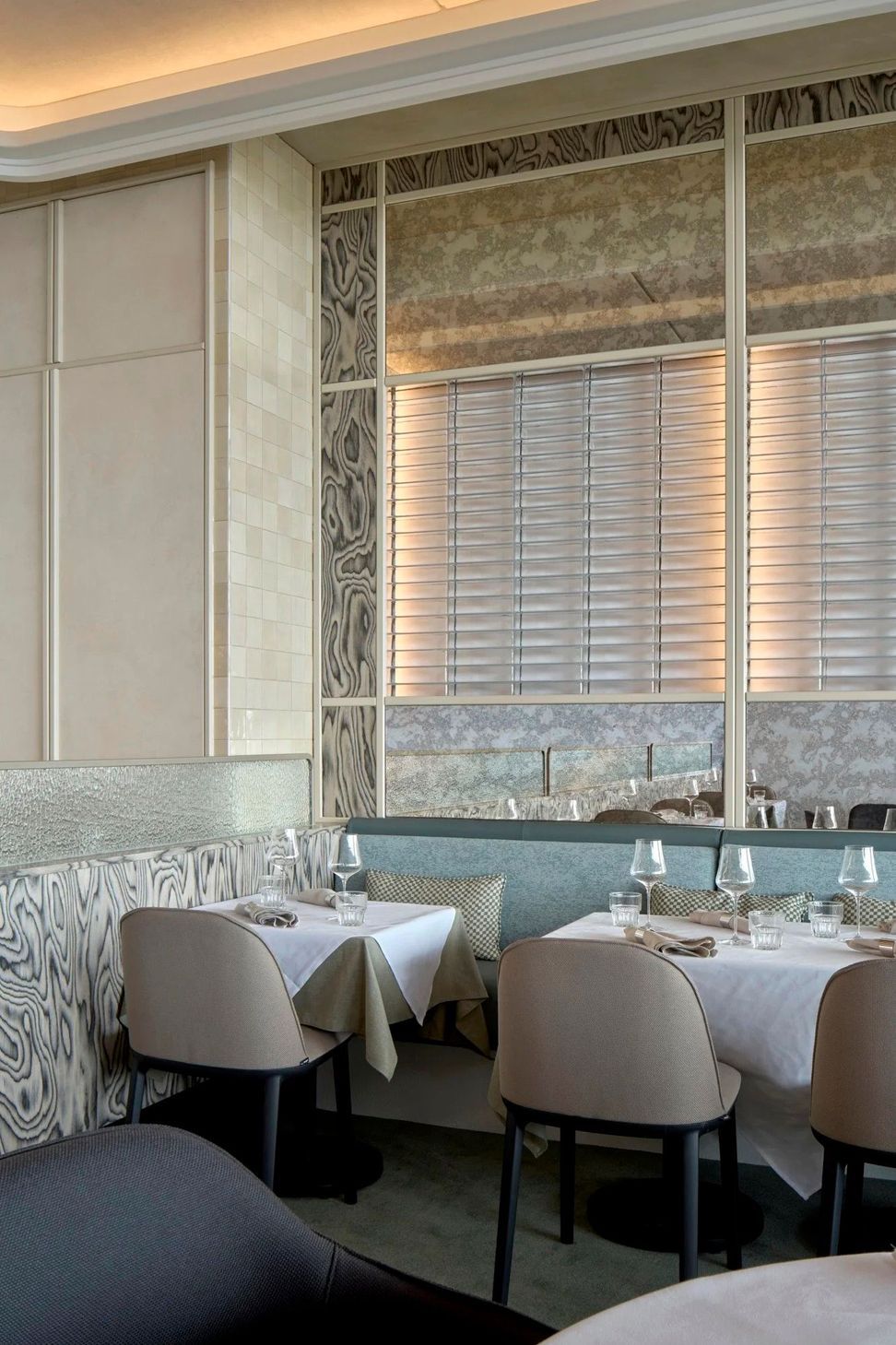
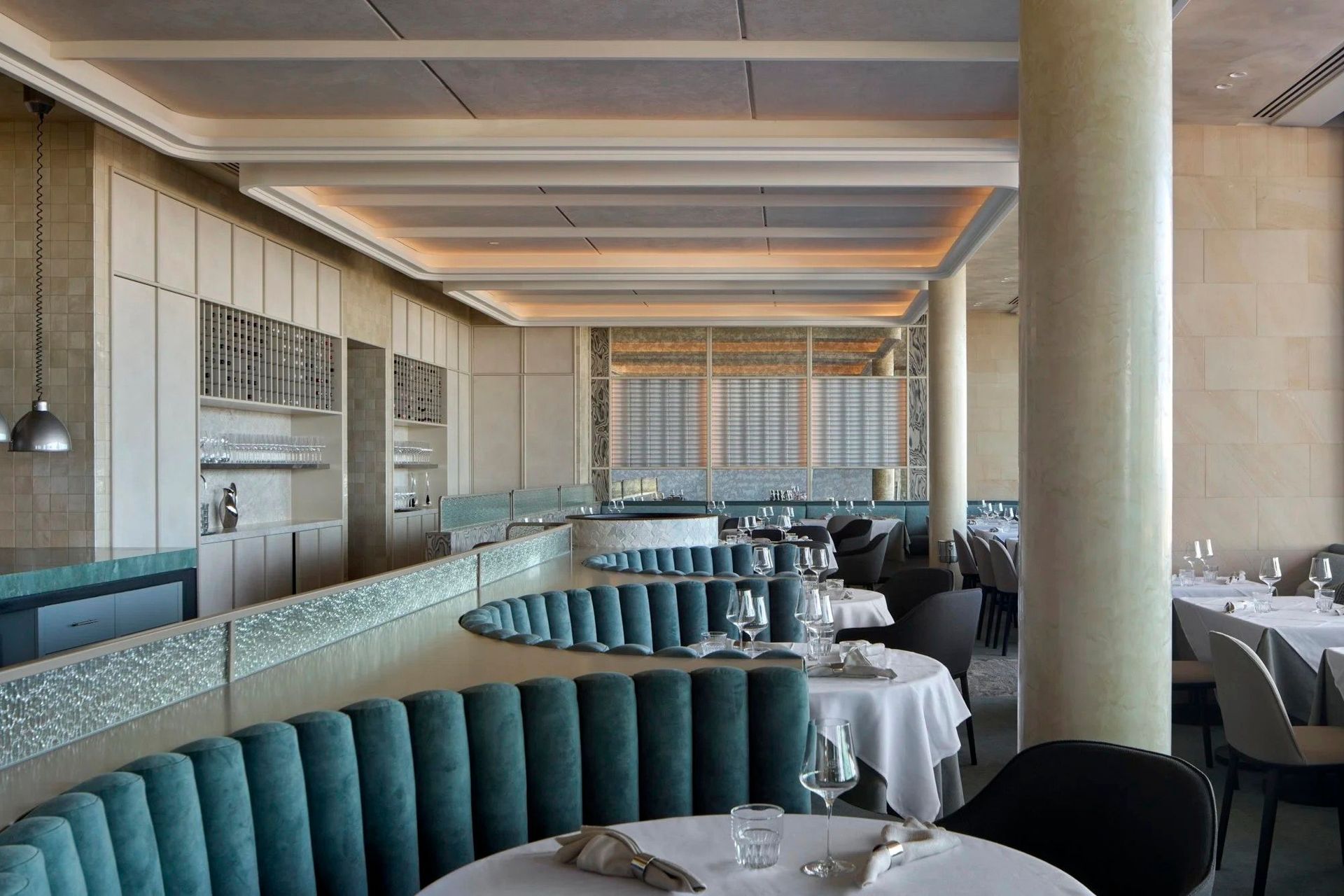
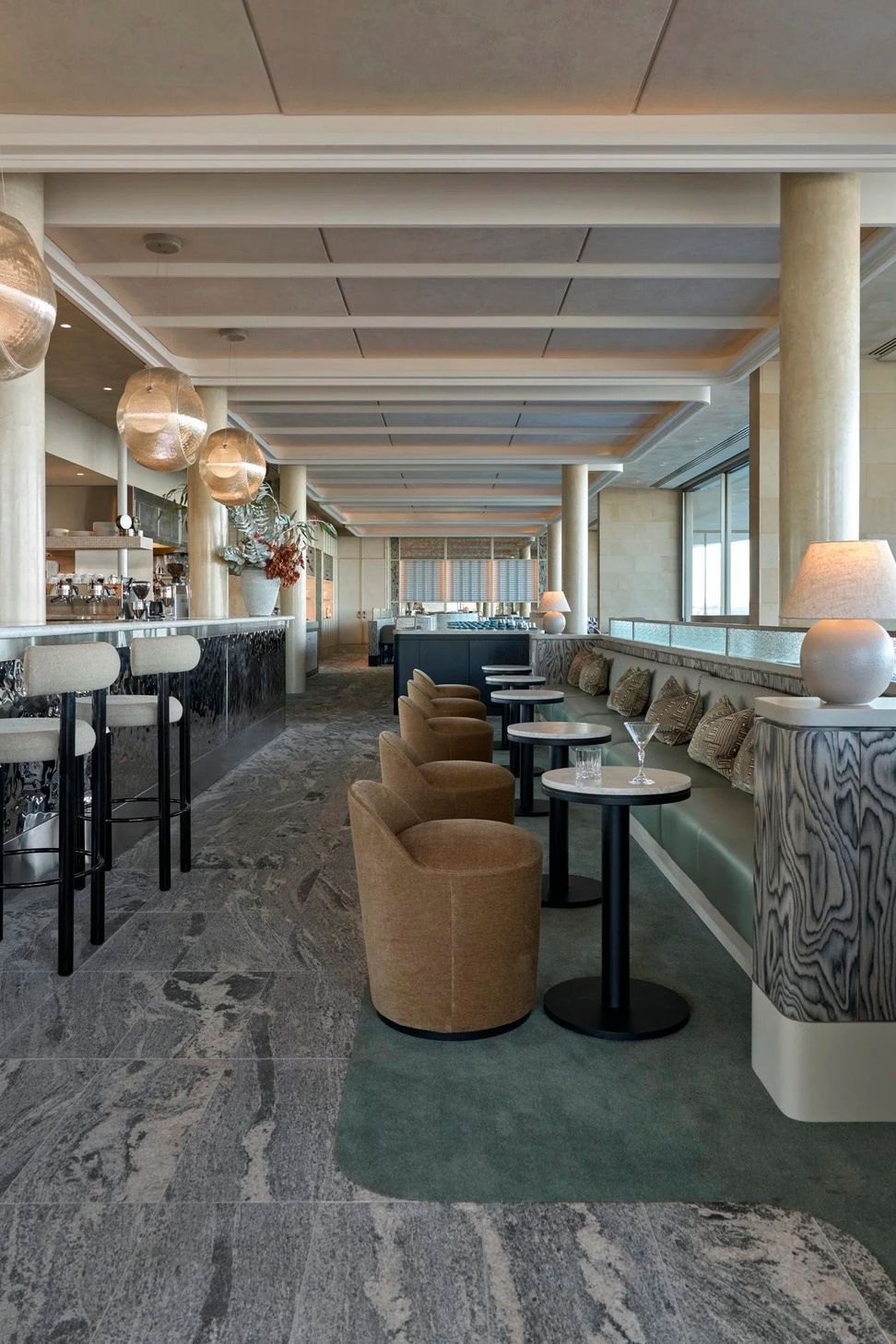
Inside, the textures concentrate at seated eye height: veneers become more intricate, fabrics more layered, reflections more subtle. When facing the room rather than the water, guests encounter mirrored back-bar surfaces that refract slivers of ocean, warm sandy tones drawn from the coastline, and glimmers of lighthouse-inspired pendant lights above the bar that nod to the beacons of nearby Rottnest Island.
The quiet drama of service
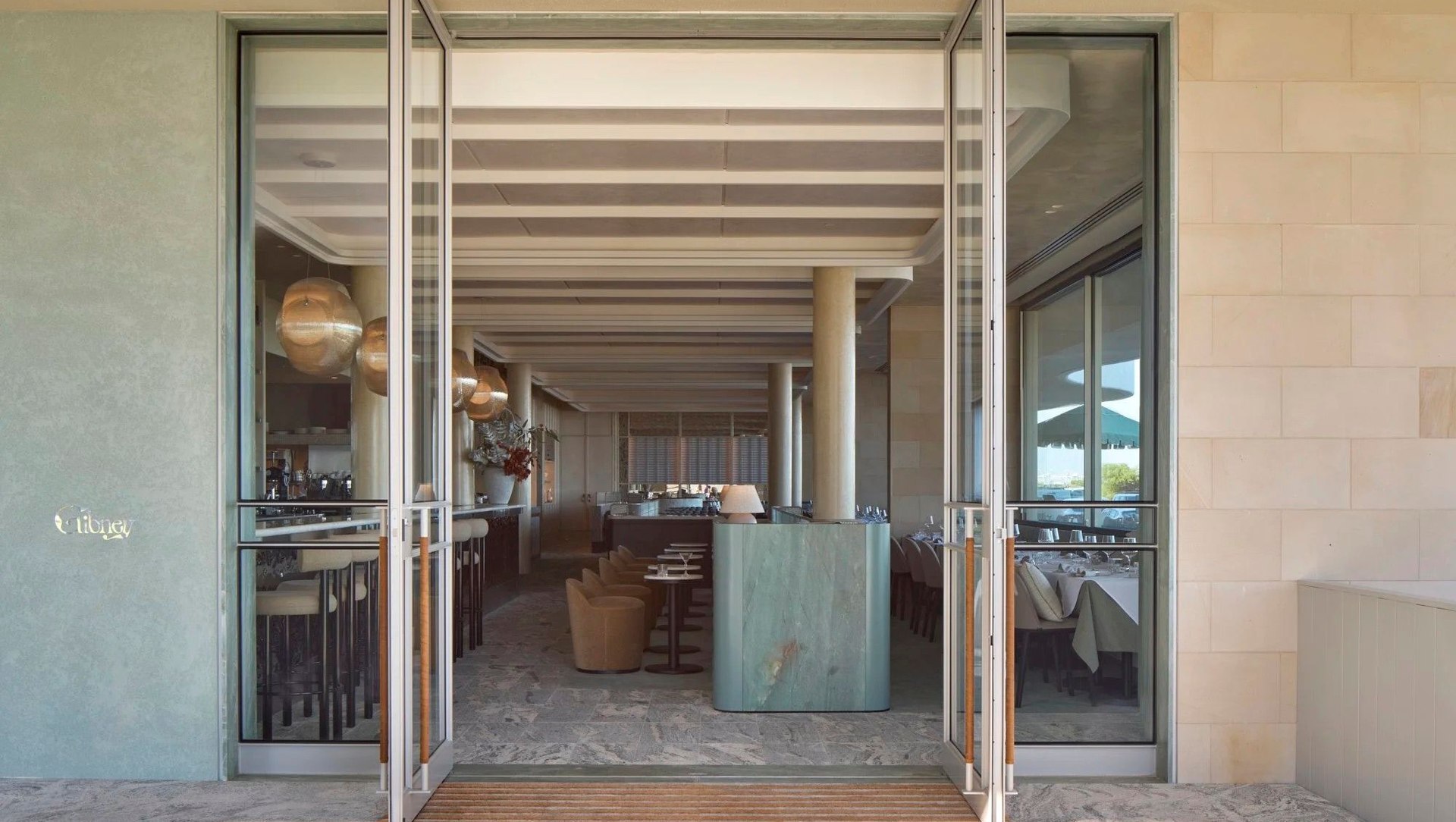
Gibney’s plan unfolds as a sequence: a concierge desk in teal marble, the shimmering rippled steel-clad bar, and then a procession past the open kitchen before reaching the main dining spaces. Every threshold is layered, every material shift intentional.
Each moment in this procession is part of a performance, shares Zenifa.
“We wanted the fit-out to heighten and enhance the experience of what the talented staff can do, really elevating that experience, and we had this idea that we could create little moments and little stages for each of them to perform on.”
As such, the bar was conceptualised as a stage for the bar staff and sommeliers, and the fully exposed kitchen operates as part of the theatre of the room.
This performance aspect extends to the lighting, which needed to transform with the intensity of Perth’s afternoon sun. A rhythm of ceiling shells conceals services, softens acoustics and carries an indirect lighting strategy programmed to evolve throughout the day, from high summer glare to golden hour warmth to evening intimacy.
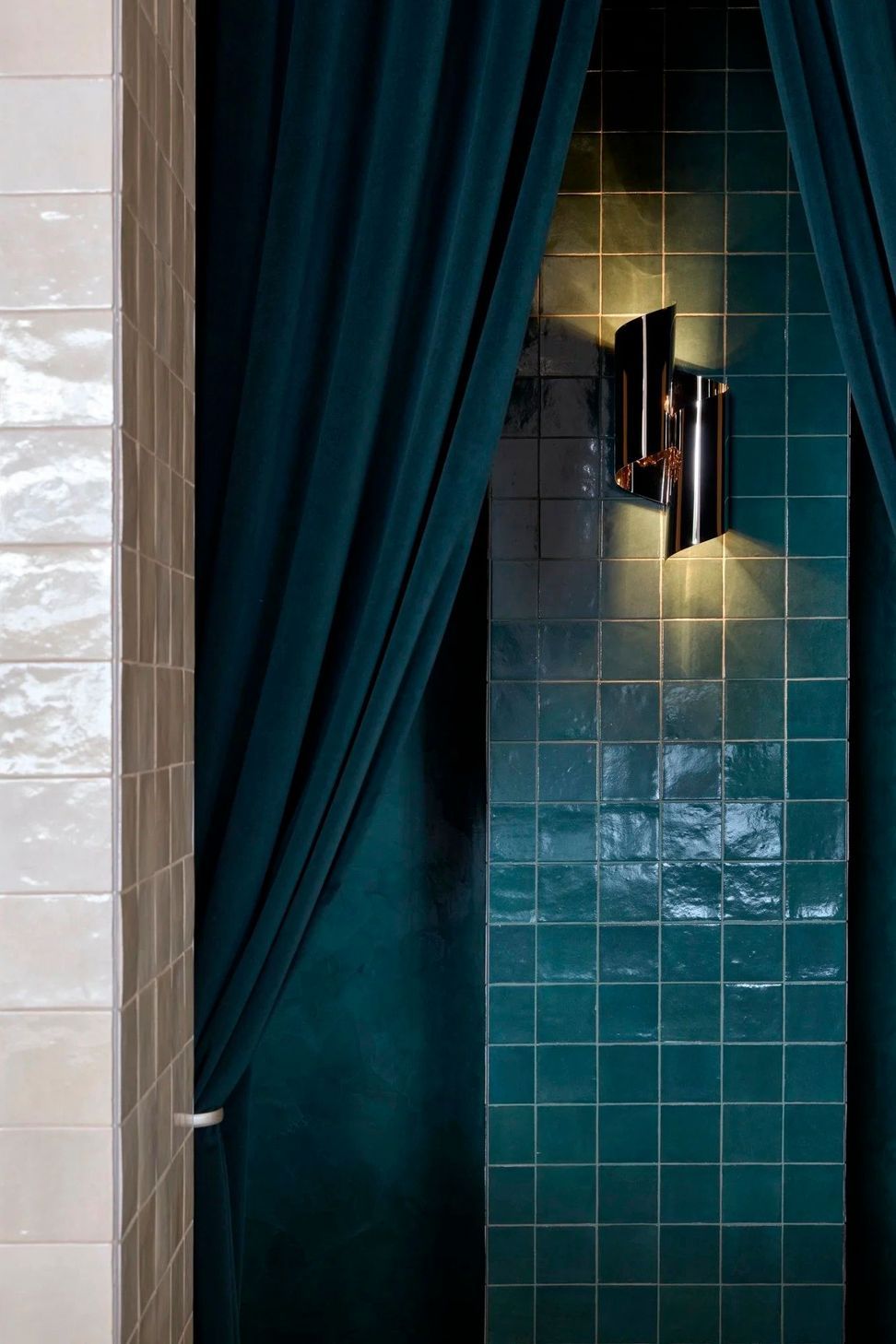
The careful consideration of the customer’s experience leans into a spirit of generosity and a sense of occasion. Marble door architraves mark each threshold with ceremonial grandeur and even the bathroom experience, concealed behind a deep green velvet curtain and a vestibule with a rippled ceiling, offers a playful, unexpected moment.
For a suburb unaccustomed to fine dining, Gibney has landed with purpose and confidence, shares Zenifa.
“It's been really well received and is doing really well. The client had this special vision and knew the market that he was targeting, and the end result has exceeded expectations.”