
Project team
- Luke Moloney Architecture
- Tom Ferguson
Product Suppliers
How light and landscape frame the beauty and pace of rural living.
Rural living framed by light & landscape
Every home begins with a conversation, and Highlands House began, better still, with a long lunch. By the time architect Luke Moloney sat down with the clients and his former boss, the project had already been unfolding for years. The clients, a couple who had owned the 200-acre Highlands property for more than a decade, had taken time imagining what a house there might be, allowing ideas to coalesce, rather than rushing to build.
That lunch marked a turning point. Moloney’s former boss, who had worked with the clients for years, was stepping into retirement, and what followed was a passing of the baton from old guard to new. Moloney, whose architectural sensibility closely aligned with his mentor’s, stepped in to carry the creative partnership forward on a site that clearly deserved something special.
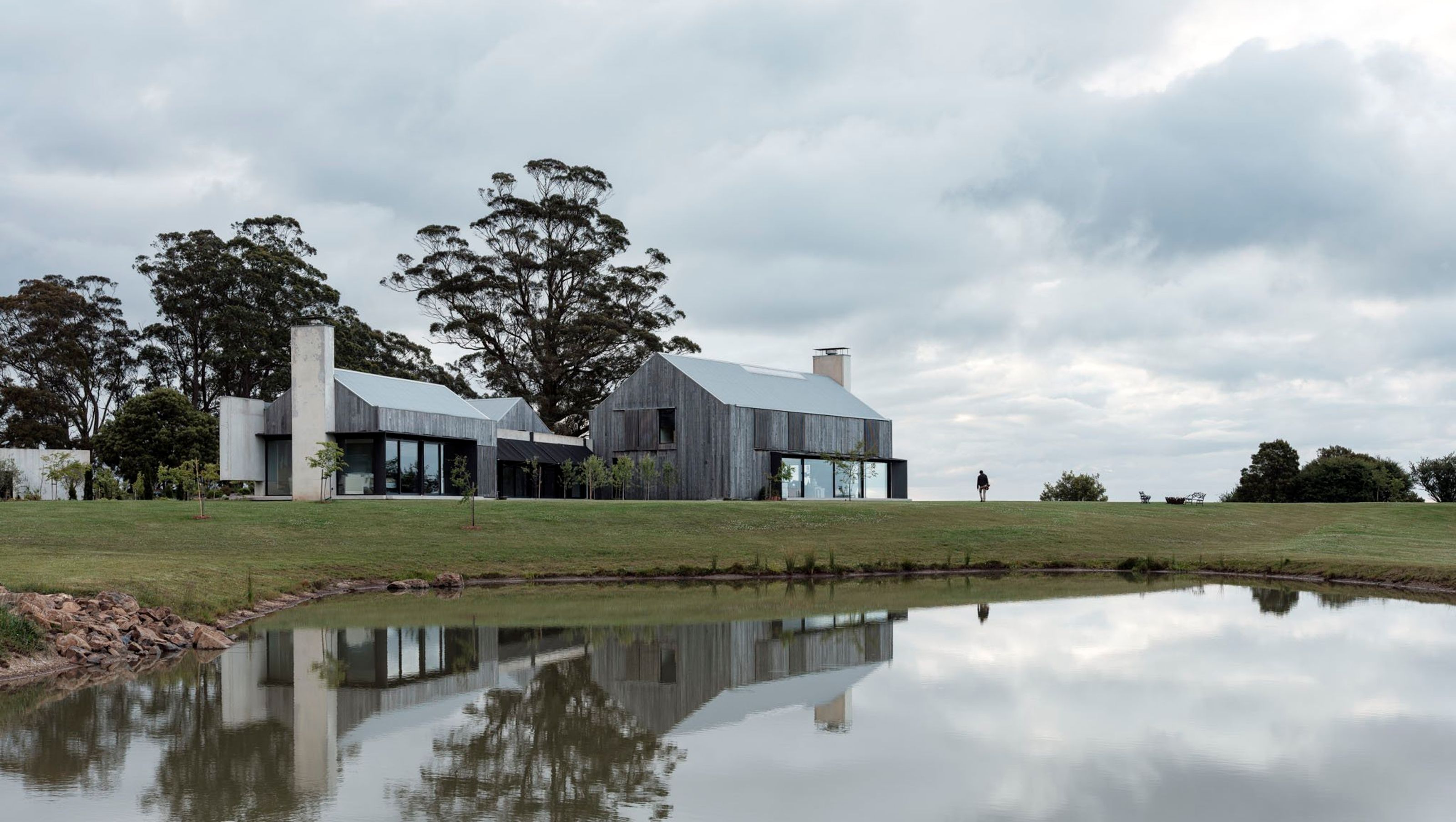
Set high to the west of Kangaroo Valley in New South Wales’ Southern Highlands, the clients’ property takes in the serene, grey-green views of the adjoining National Park that runs all the way to the southern tip of Sydney, and on clear days, glimpses of the Blue Mountains and Sydney’s skyscrapers winking in the distance.
Because of its elevated position, the drive up to the home becomes a journey in its own right.
“It’s a large site with extraordinary views. When you’re driving up there, the hill is so steep it feels like you're taking off in a plane with the ground falling away,” shares Moloney. “Thinking about the arrival was one of the starting points for how we arrived at the design. It was about orchestrating the arrival - moving from limitless space on top of a hill to getting to the front door.”
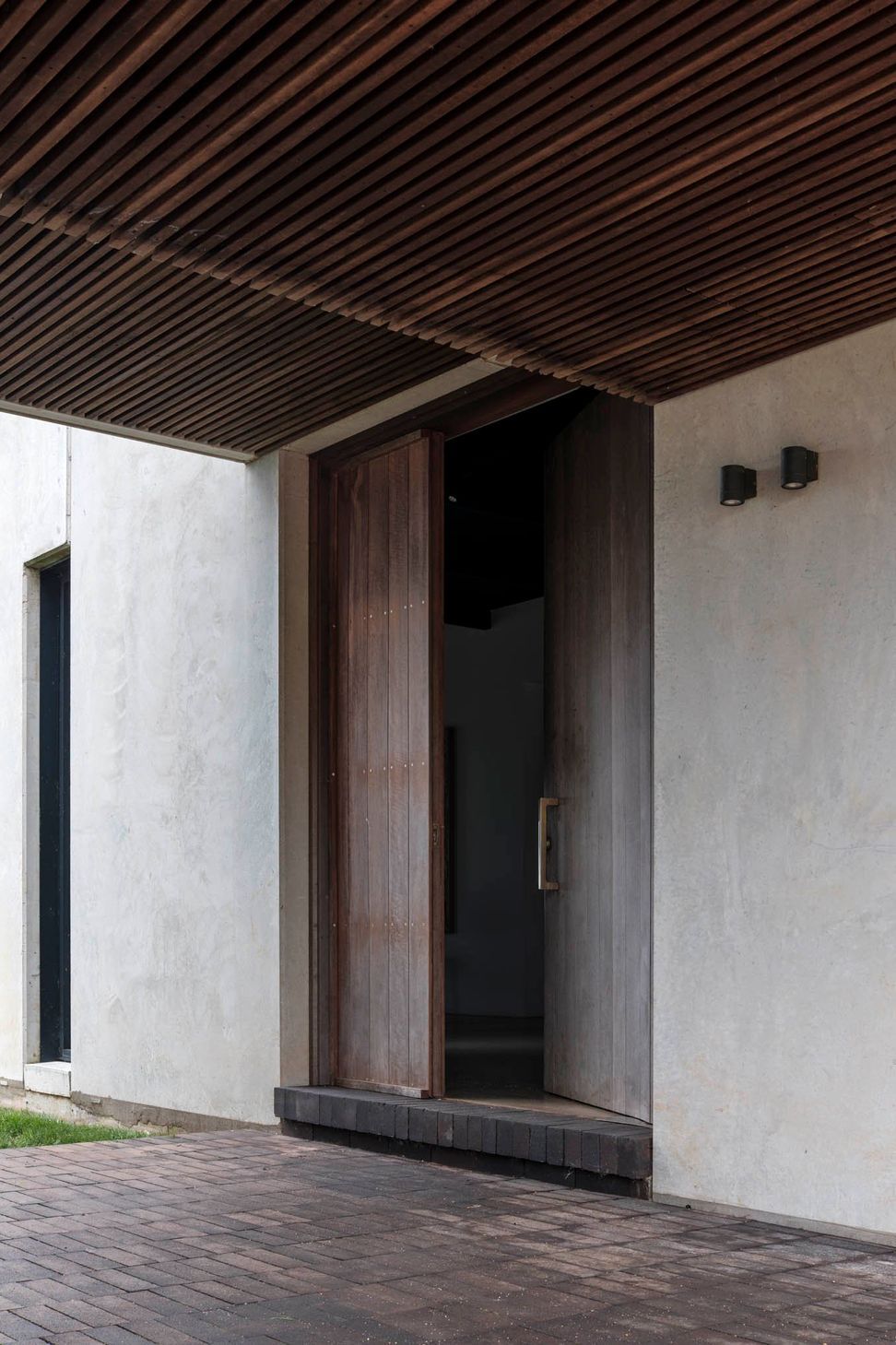
As such, the home is conceived as three pavilion forms in a rural vernacular, arranged into a Y-shaped plan that “throws its arms out to you” as you arrive. Navigating an entry courtyard to the front door, the expansiveness of the setting is compressed into a low front porch, bringing the architecture down to a human scale.
Materiality also plays an important role in the arrival sequence.
“The entrance borrows from Alvar Aalto’s notion that the front door is the handshake of the home’, so while the courtyard consists mostly of cool concrete, the entry features more tactile materials, including warm timbers and handmade bricks.”
Accommodating the clients’ expansive art collection was another requirement that actively shaped the architecture. Moloney measured key works early on, designing the walls and ceiling heights of the entry gallery space around them.
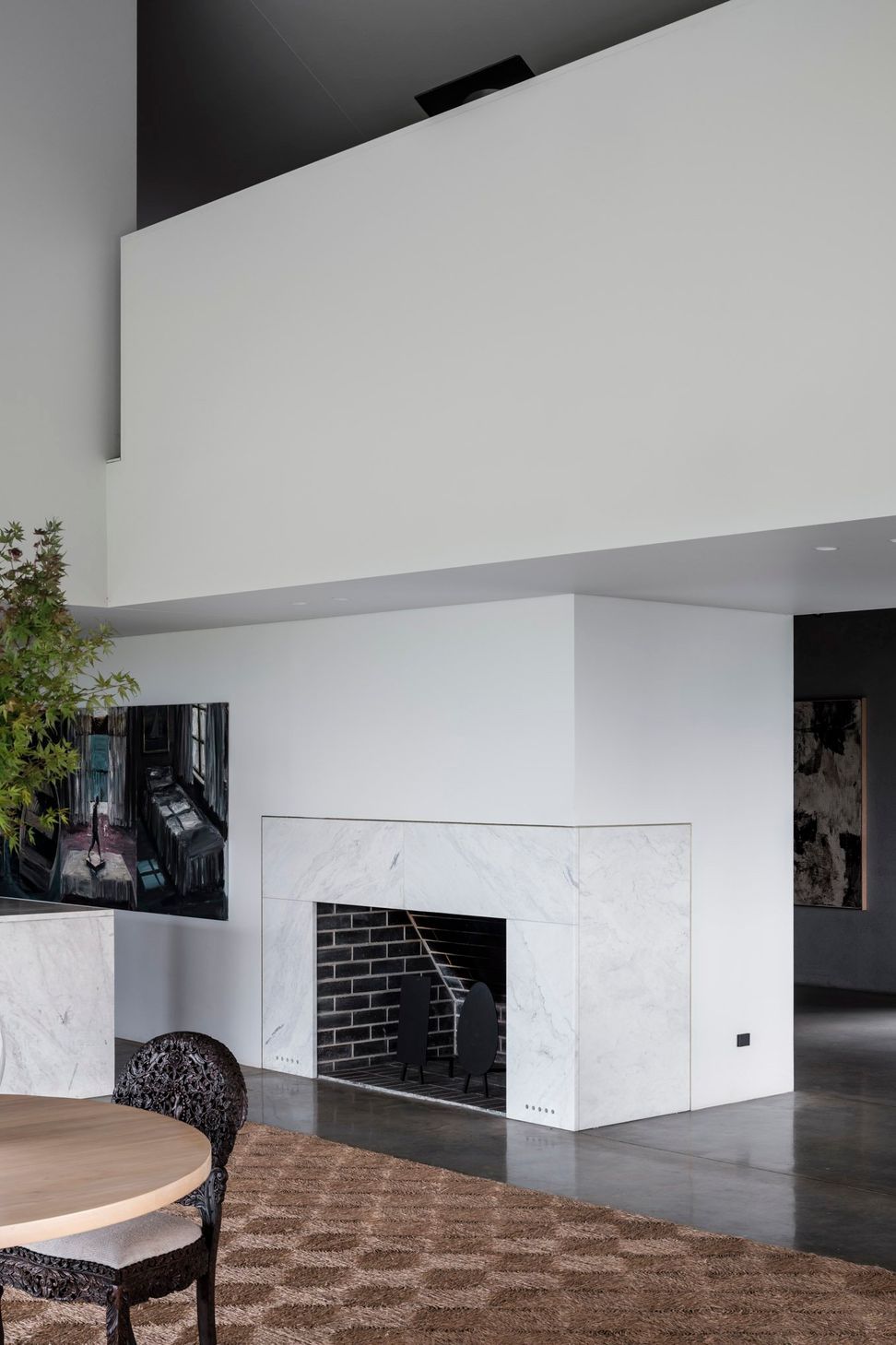
Beyond the gallery, the house opens gradually toward its main living spaces, where the view is finally revealed in full. The interior spaces are delineated by modulated ceiling heights, rather than walls, doors, or materials. Lower ceilings create intimacy around the fireplace, while soaring volumes accommodate large family gatherings in the dining space.
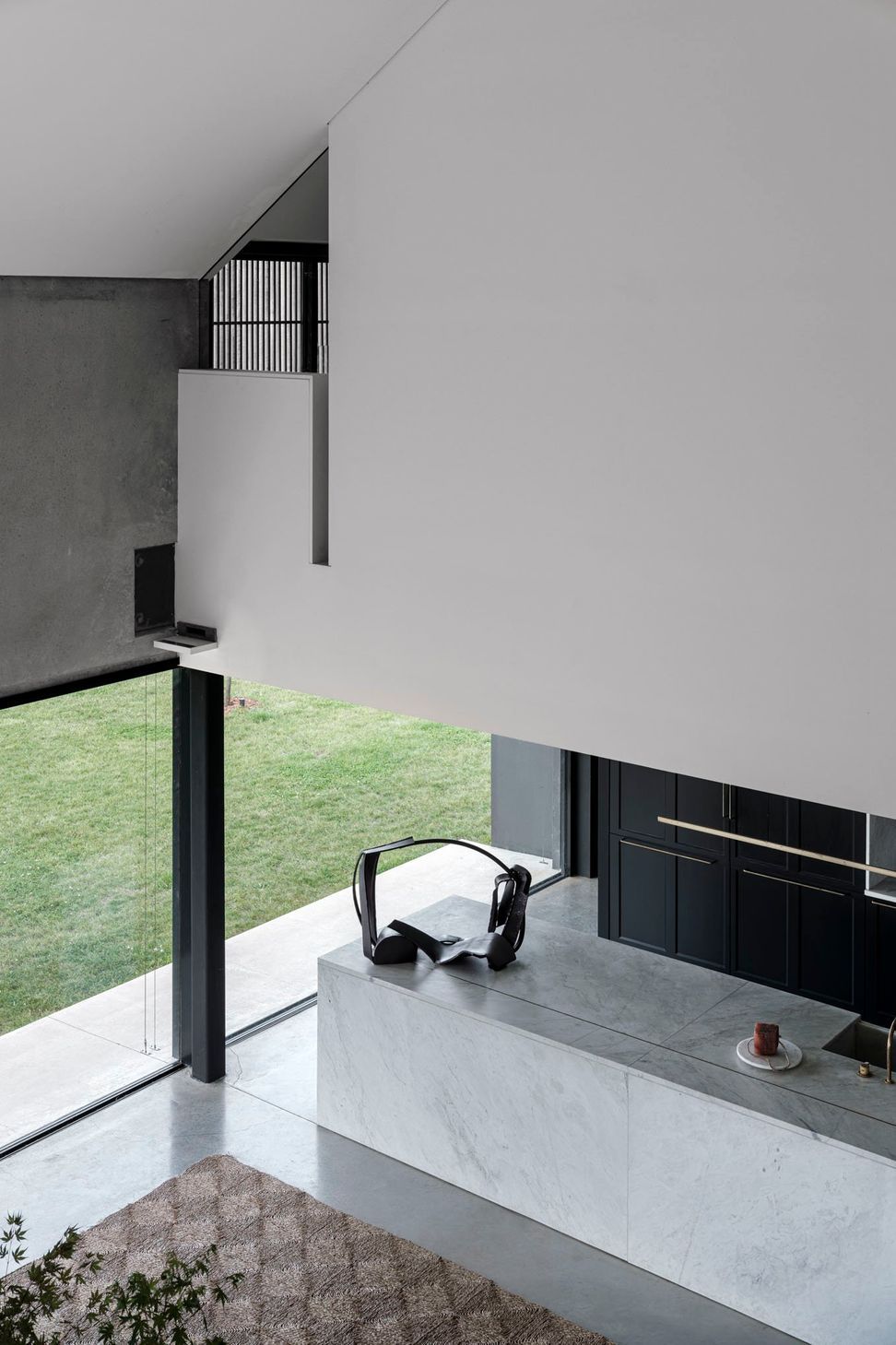
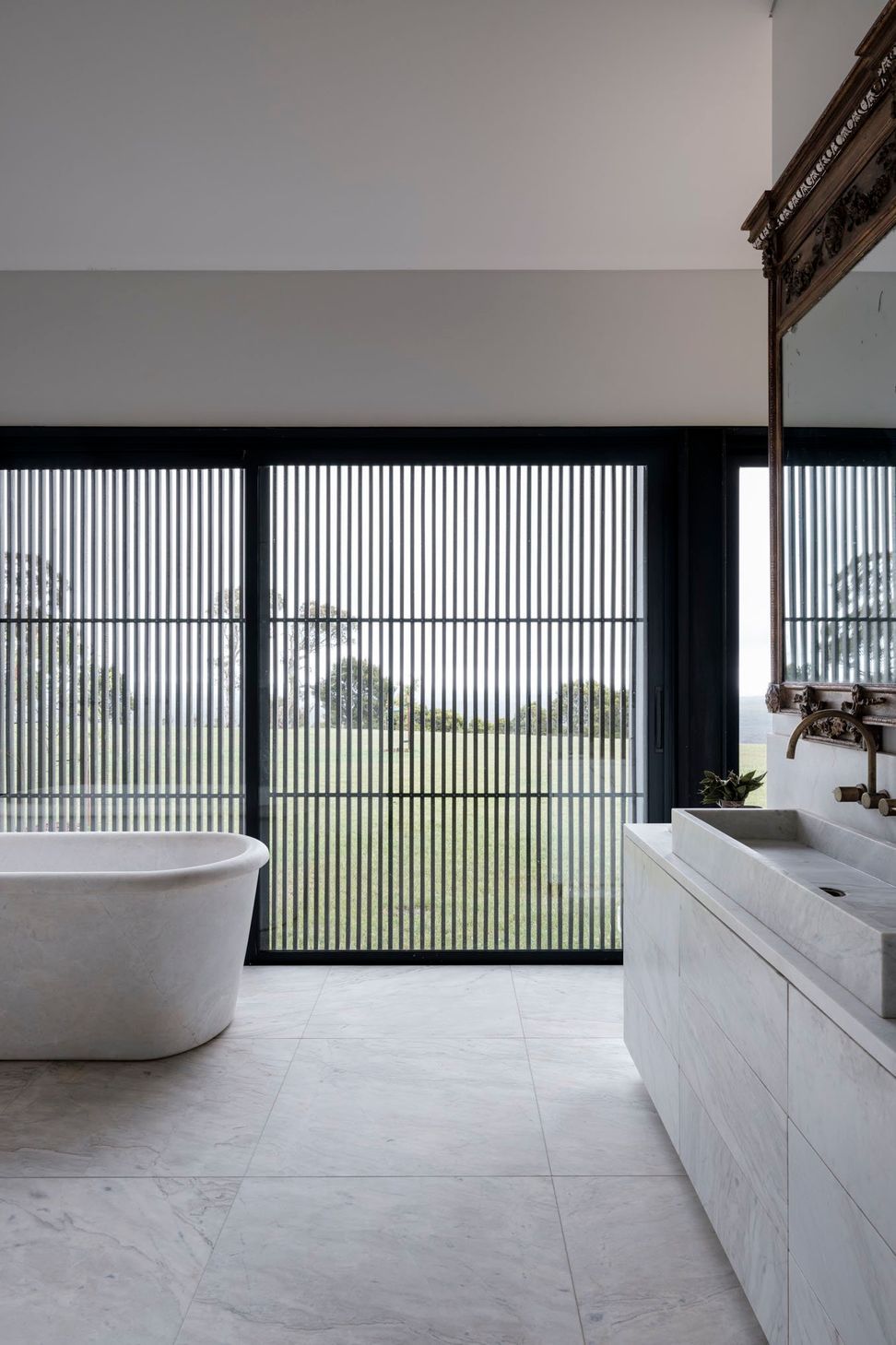
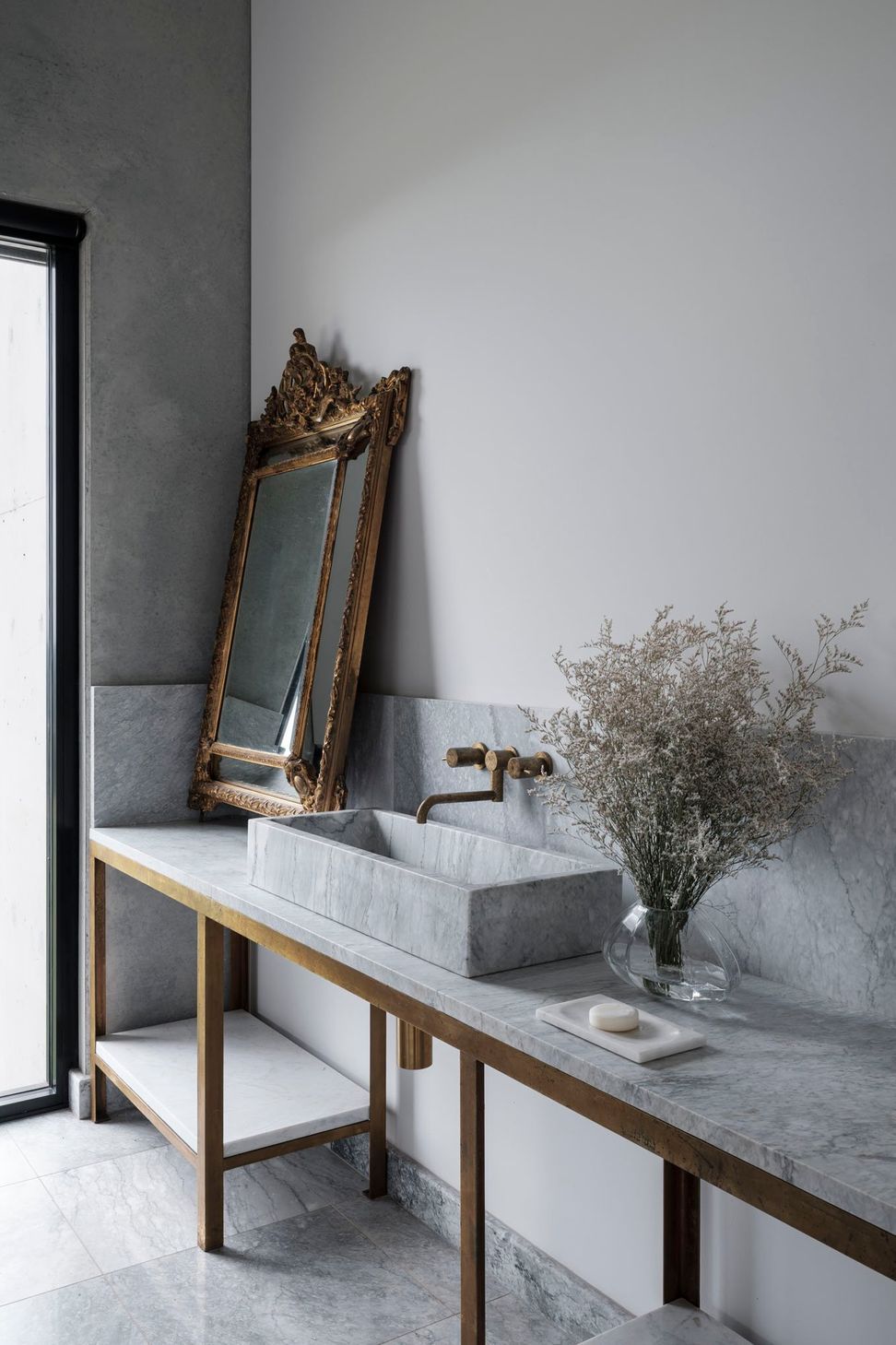
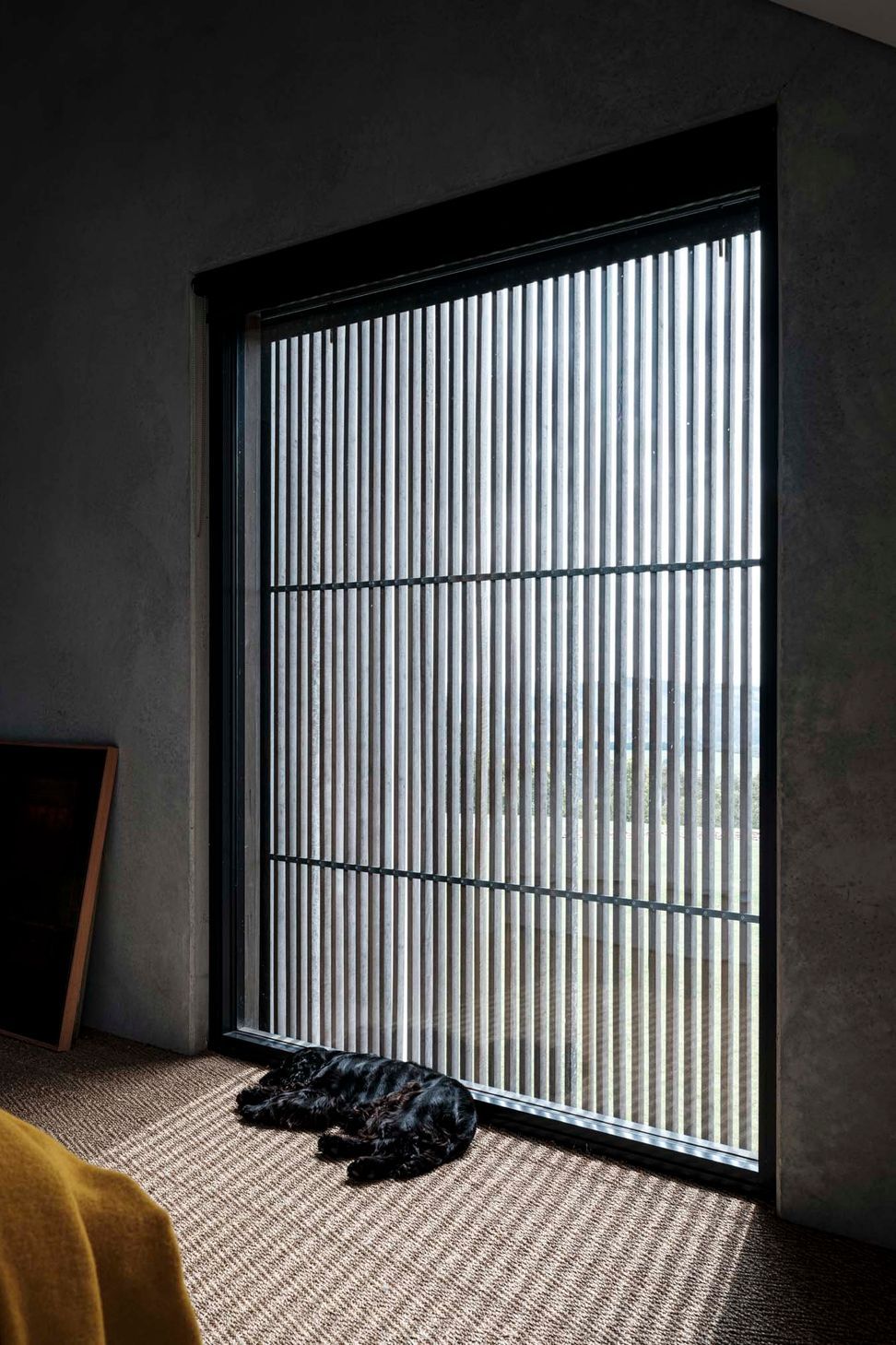
The interior materials palette is kept deliberately simple; walls, ceilings and floors are concrete and painted plasterboard, while fittings and furnishings feature textured finishes including linen, sea grass, rustic timber and marble.
“Everything that's at the scale of a person in the space is lovely to touch and lovely to sit on - all soft and tactile; the rest borders on monastic,” shares Moloney. “The interplay between those two qualities makes the spaces feel serene.”
The restrained interior palette allows the landscape to take precedence. In many ways, the real feature of the house lies beyond its walls. A long ribbon of glass wraps around the living spaces, dissolving the boundary between inside and out, allowing the landscape to rush in. From almost every room, the house frames shifting views of bushland and distant horizons, reinforcing the sense that the architecture exists primarily as a lens through which to experience its setting.
That same restraint underpins the project as a whole. The clients’ patient approach, their deep connection to the site, and the trust passed between mentor and architect, shapes a house that feels embedded and responsive, rather than imposed.
“I always reflect that the project started with the foundations of longstanding friendships, with my old boss and the clients (and a really excellent lunch)” Moloney says. By the measure of the finished house, it was an excellent place to begin.
Words: Jo Seton
2024 Australian Institute of Architects award for Residential Architecture: Houses, New (NSW Country Division).
2024 Australian Institute of Architects commendation for Interior Architecture (NSW Country Division).
Winner: 2023 INDE Award for ‘The Interior Space’.
- Building style
- Modern





Like this Project?
Hire Luke Moloney Architecture
The products behind the project
One product specified into this build from one supplier, a verified ArchiPro member. Tap through to specifications, suppliers and lead times.

Professionals used in
this project
The practices and trades credited on this project.



More projects from
Luke Moloney Architecture
Other work by Luke Moloney Architecture, across every category they build in.


More in
Luxury Homes
Everything else in Luxury Homes, from every practice on ArchiPro.


Next Project
Keep scrolling