Scattered like shells on the coast: A house that finds its place at Te Arai
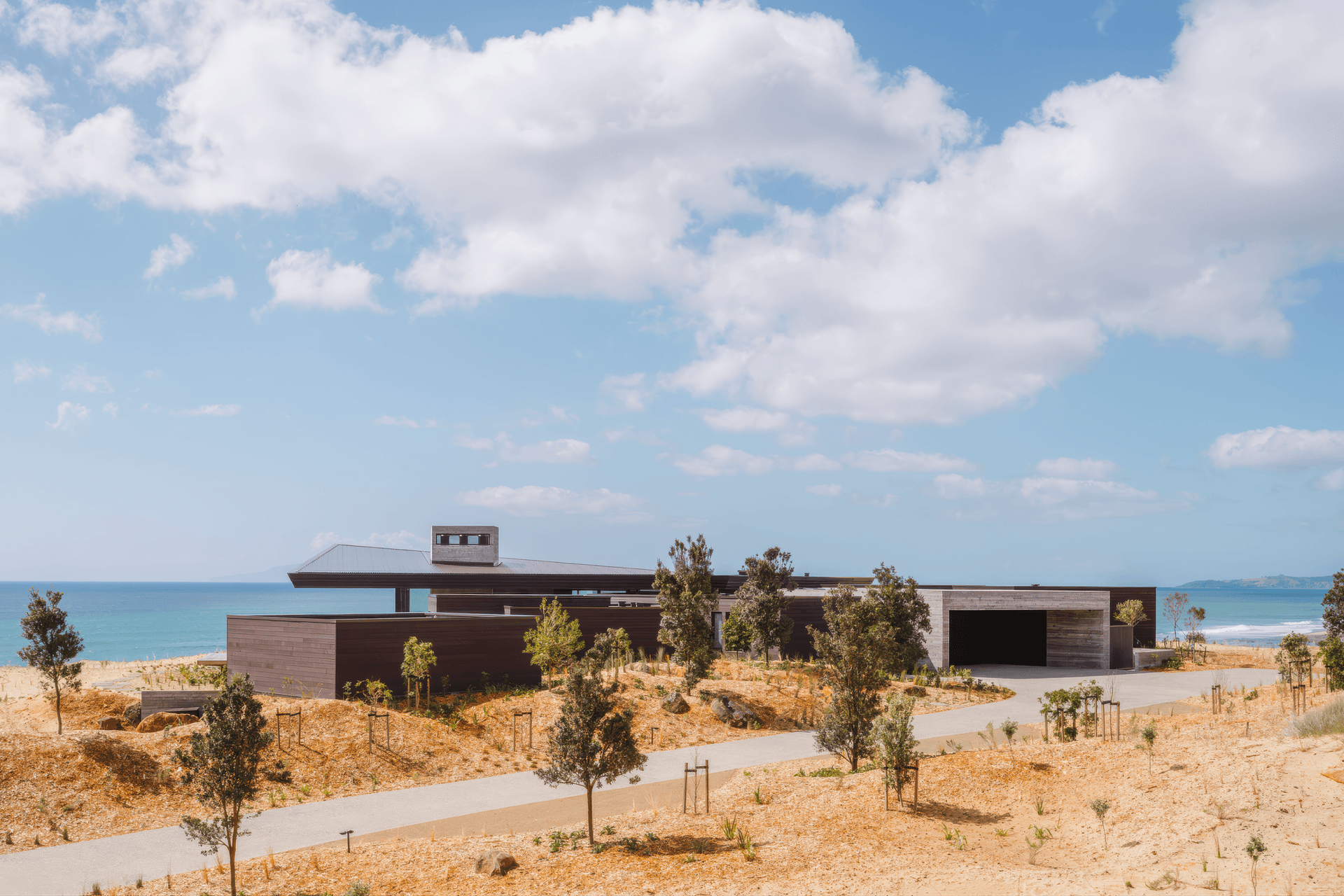
There are places in Aotearoa where architecture must tread lightly. At Te Arai, north of Auckland, the coastline still carries the rawness of a landscape that hasn’t been overly handled. Its wind-shaped dunes, pines leaning toward the sea and long horizons without habitation are carefully integrated with the immaculate green ribbon of fairway curling through. It is a tawny, east coast environment, softer than the wilder Tasman side, but still elemental, still undeniably untamed.
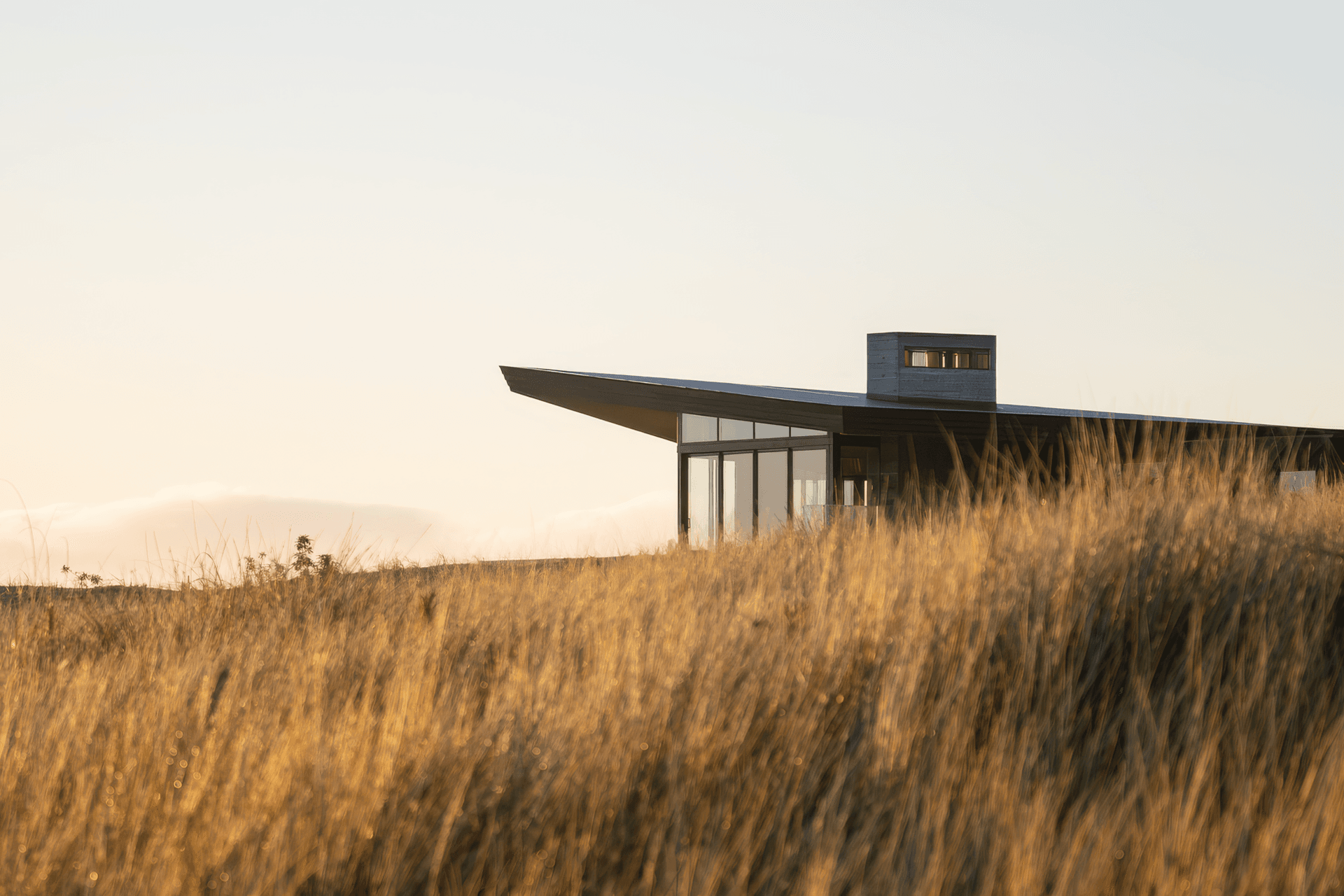
Into this setting, Ponting Fitzgerald Architects was tasked with designing a holiday home that was less like a typical residence and more like an artifact discovered within the terrain.
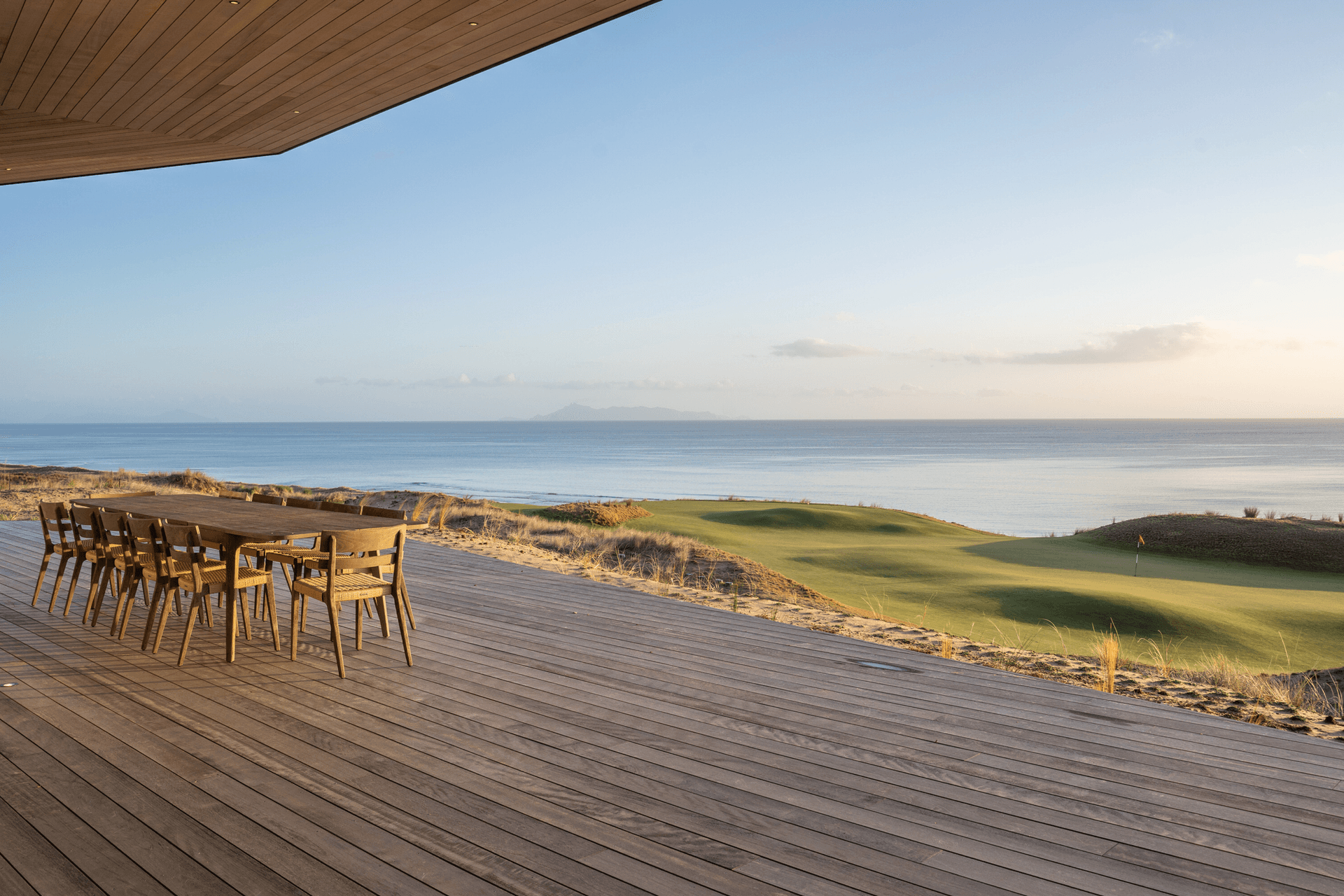
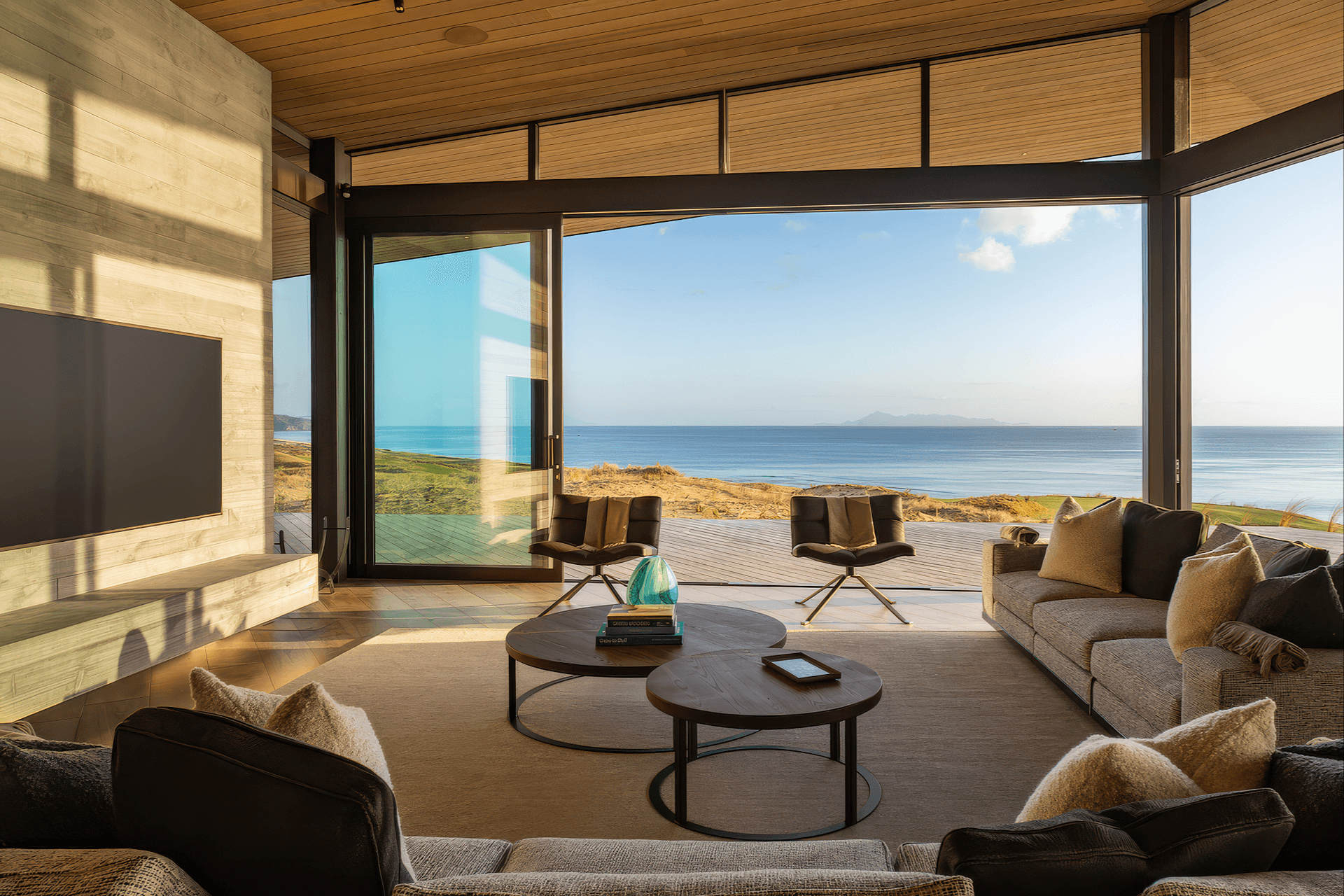
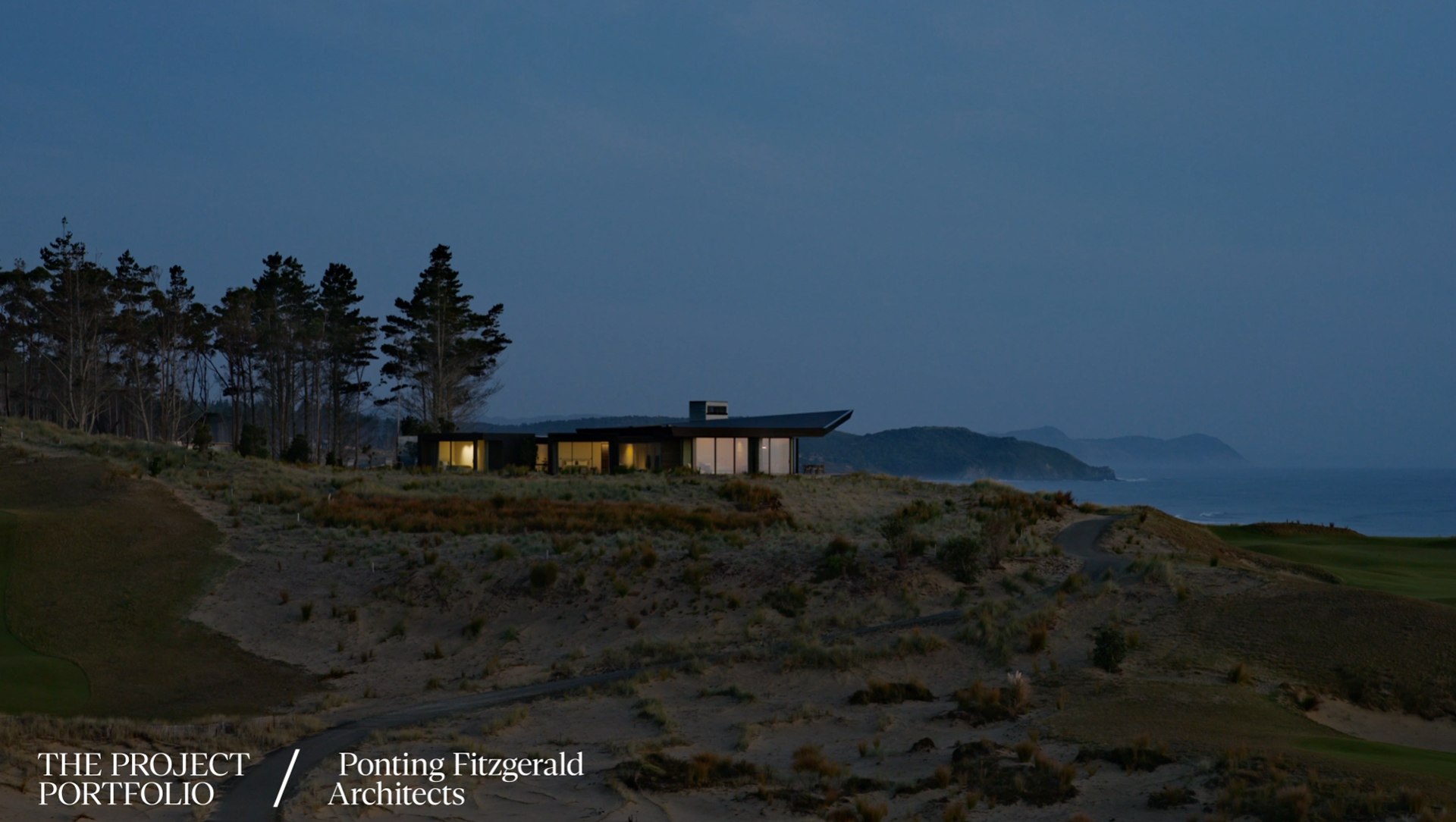
The house sits at the southern edge of the southernmost golf course at Te Arai Links, where sweeping views take in the dunes, the fairway, the ocean and distant islands at sea. It’s a remarkable setting, exposed to vast outlooks, yet also intimate, with golfers moving through the scenery as part of the everyday theatre of the place.
The clients, a couple with a young family, were deeply invested in creating something meaningful here. Both former professional golfers, they were drawn to the location not only for its beauty but for the lifestyle it represented. This was to be a place where friends and family could gather, where the golfing lifestyle and the landscape would integrate easily into their weekends.
As the initial design conversations evolved, so too did their ambition.
“The more we explored the ideas, the more the clients wanted to unleash it, remove the usual constraints and let it be free,’” says architect David Ponting.
What followed was a design process that worked almost against expectation. Rather than beginning with a striking external form, the house was imagined from the inside out, shaped by moments they hoped to have there, feelings they wanted to experience and the way the family would occupy it.
“The look and feel was a result of function and emotive experience,” Ponting explains. “It possibly feels counter-intuitive to design from the inside out, but it’s a very humanist response because it’s starting from the psychology of how they want to live in the moment.”
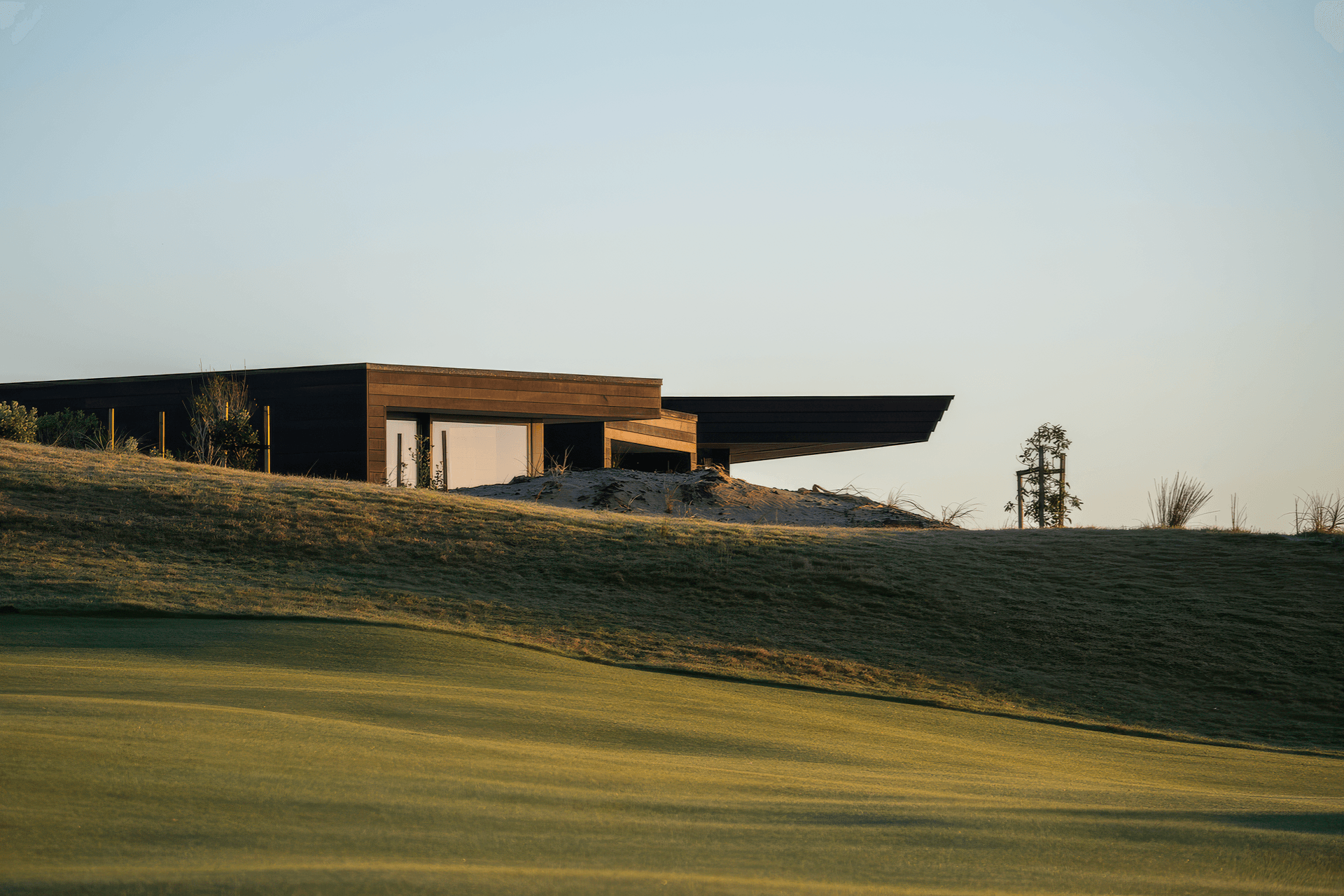
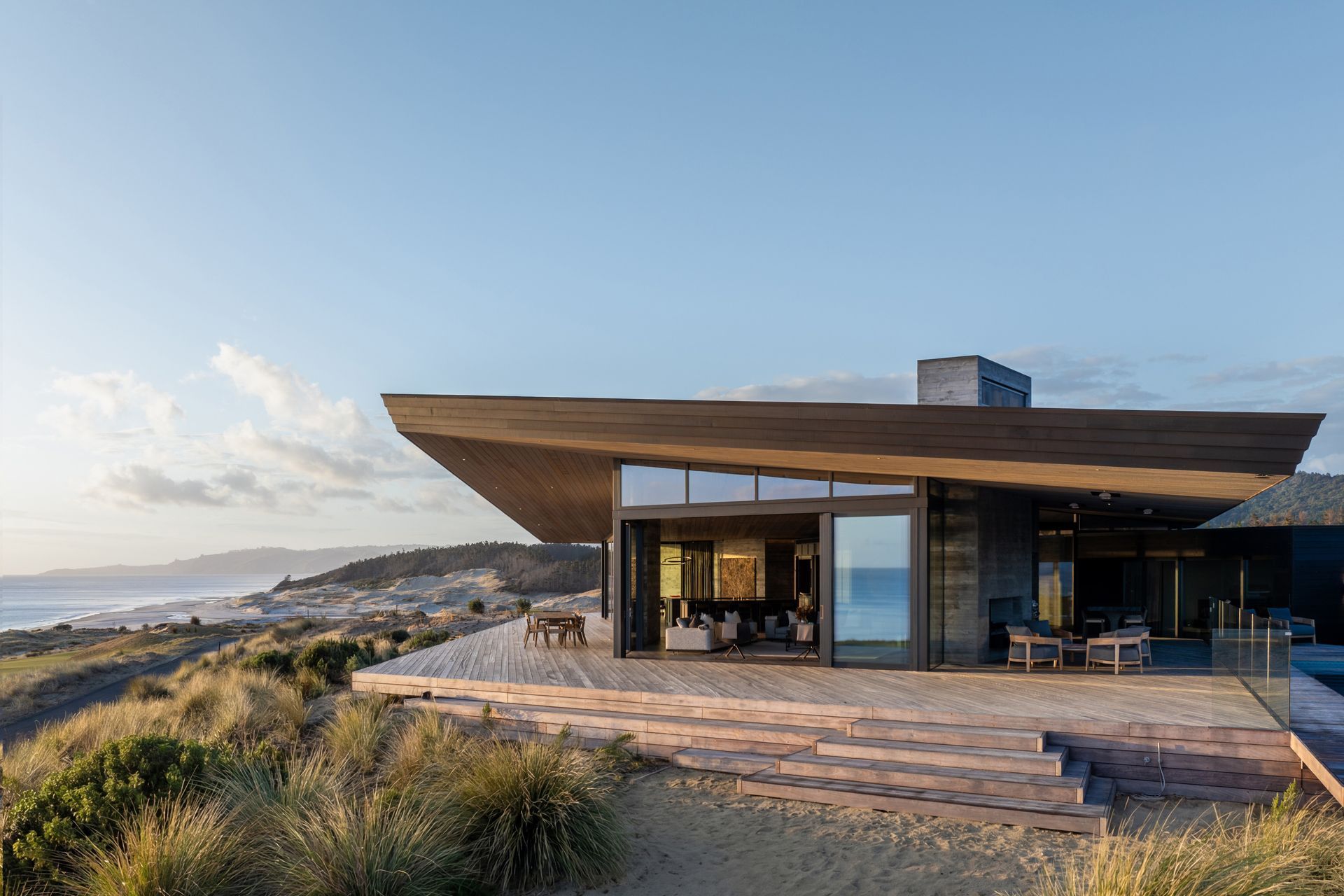
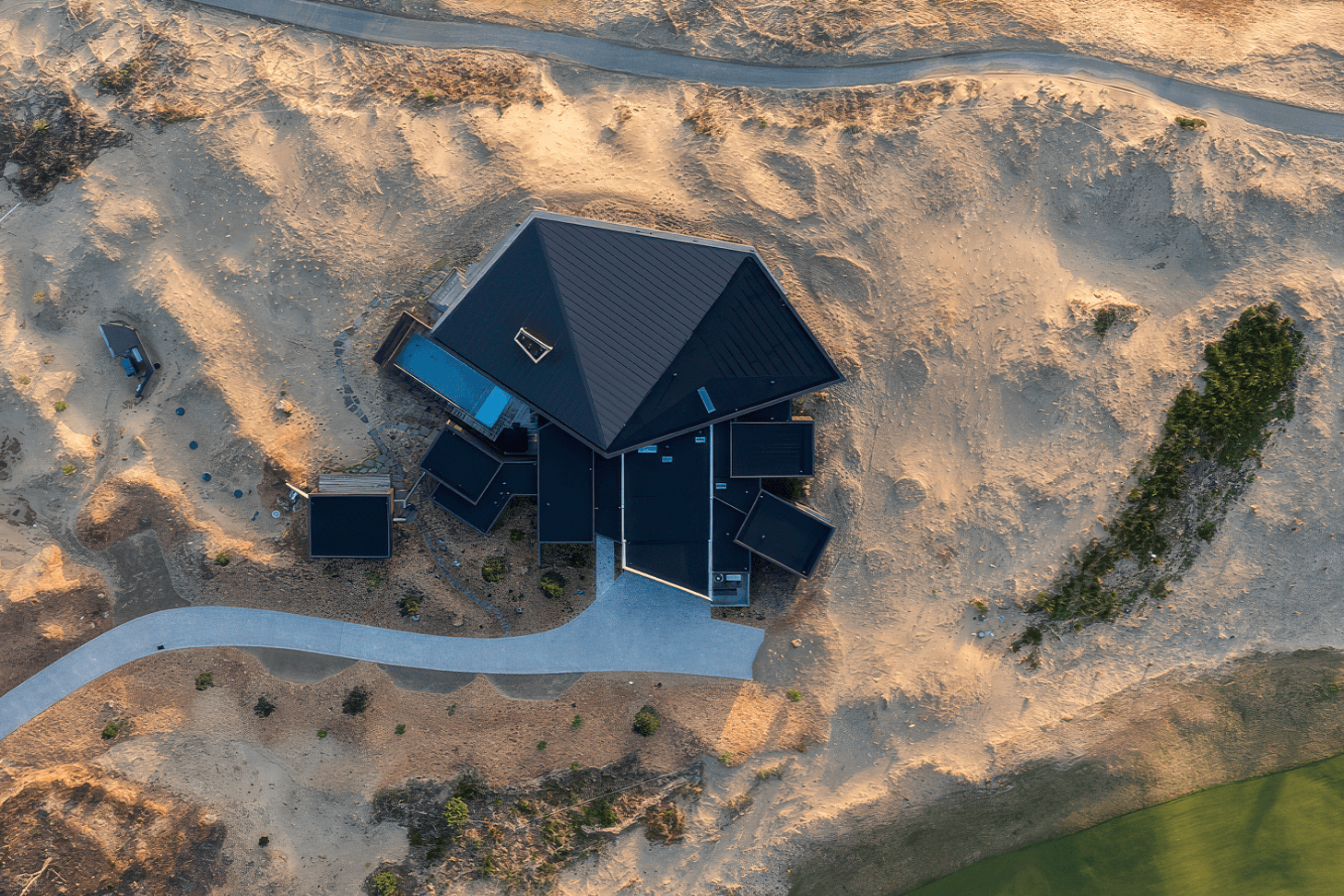
The concept that emerged was something like a scattering of stones and shells in the sand. From above, the roof forms radiate outward toward the coast, each spine directing a particular space toward its own view. The geometry is deliberate, yet it carries a looseness, an organic arrangement reminiscent of the flotsam and jetsam that collects along a shoreline.
“The result is very much the opposite of what you’d find in a more constrained, urban environment,” Ponting says. “The site allowed this outward expression and connection, and sculptural confidence can be seen in that.”
The triangular elements seen in fanning shells became the key to that freedom. They allowed the architecture to stretch, pivot and adjust, letting rooms claim their own relationships with horizon, light and landscape.
“Embracing the triangular element allowed the house to be whatever it wanted to be,” Ponting explains. “It’s a sculptural evolution, a careful play that allows the less formal side of architecture to express itself.”
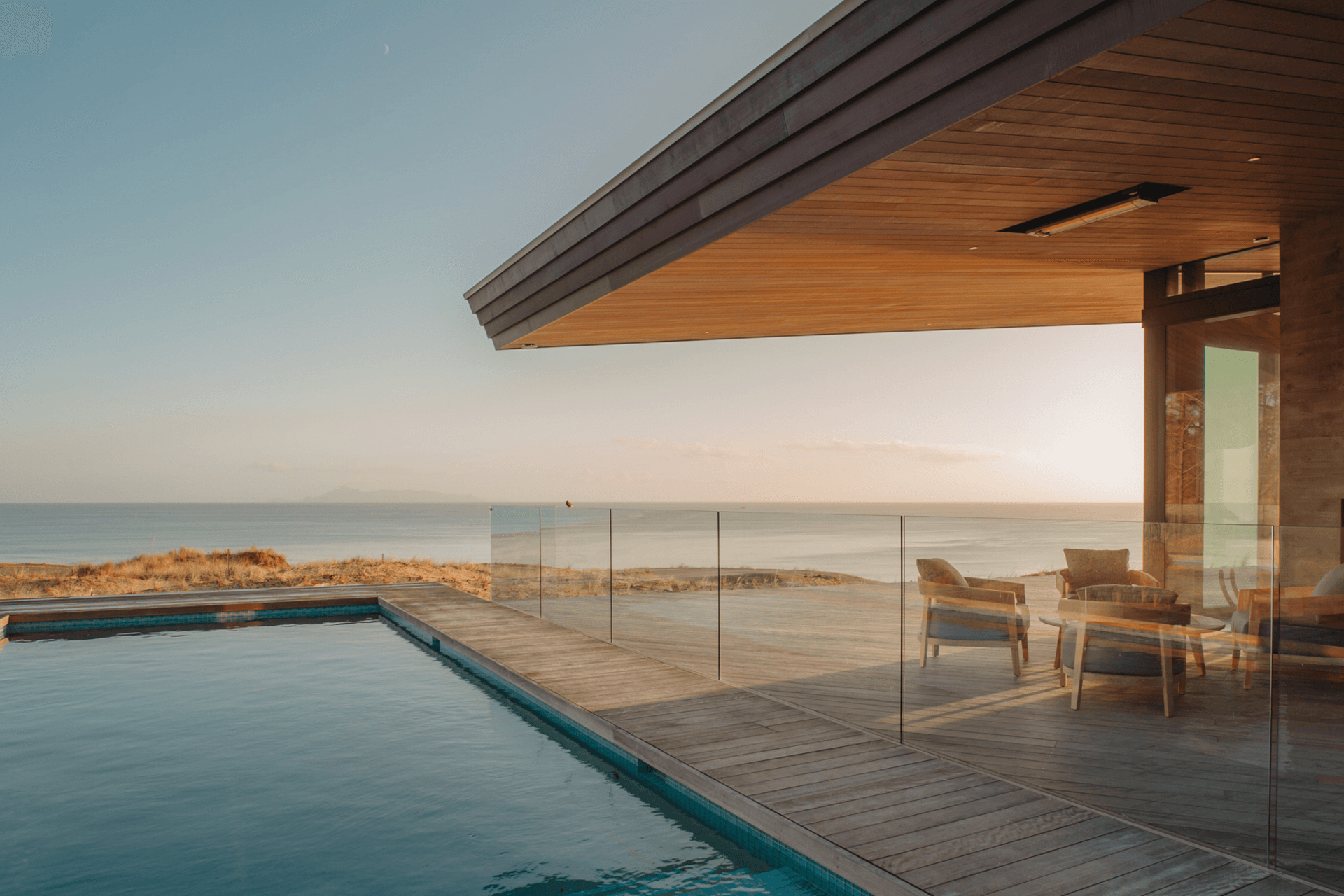
Arrival at the house is intentionally subdued. Rather than announcing itself immediately, the architecture reveals itself slowly as you move through it. Separate forms appear first; a small building form with a gym sitting slightly apart and a guest suite near the pool come into view before the main home begins to unfold.
There is something almost scattered about the composition, as though the pieces have simply gathered together over time.
“It’s not shouting out, ‘Hey, here’s a special house to come and see!’” Ponting says. “But the result is a house where you find yourself meandering through the forms and realising, as it opens up to you, how enjoyable this journey is.”
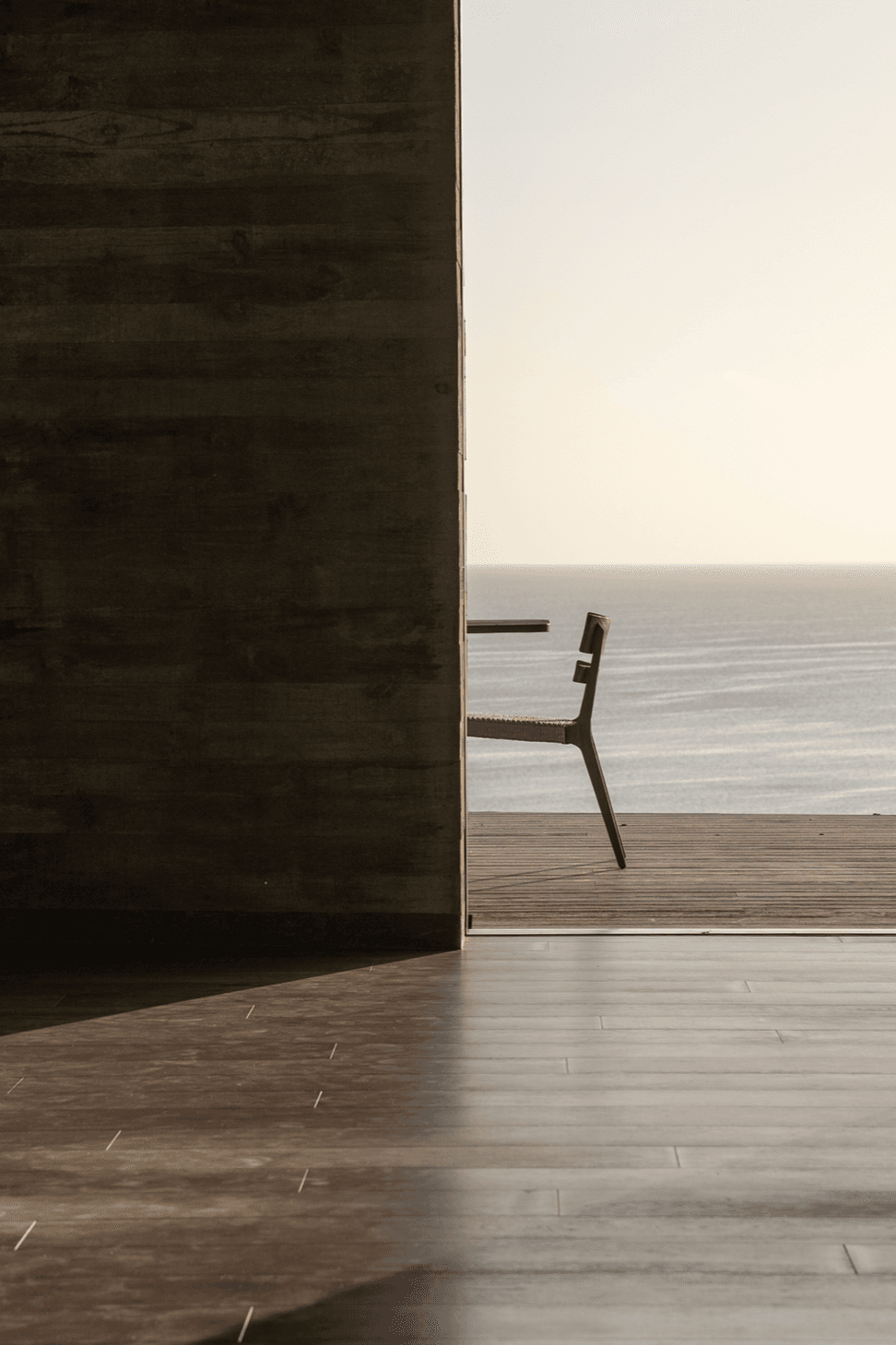
The entry sequence enhances that sense of discovery. A narrow gap between a concrete volume and a cedar-clad form draws you inward, offering only a small glimpse of water beyond.
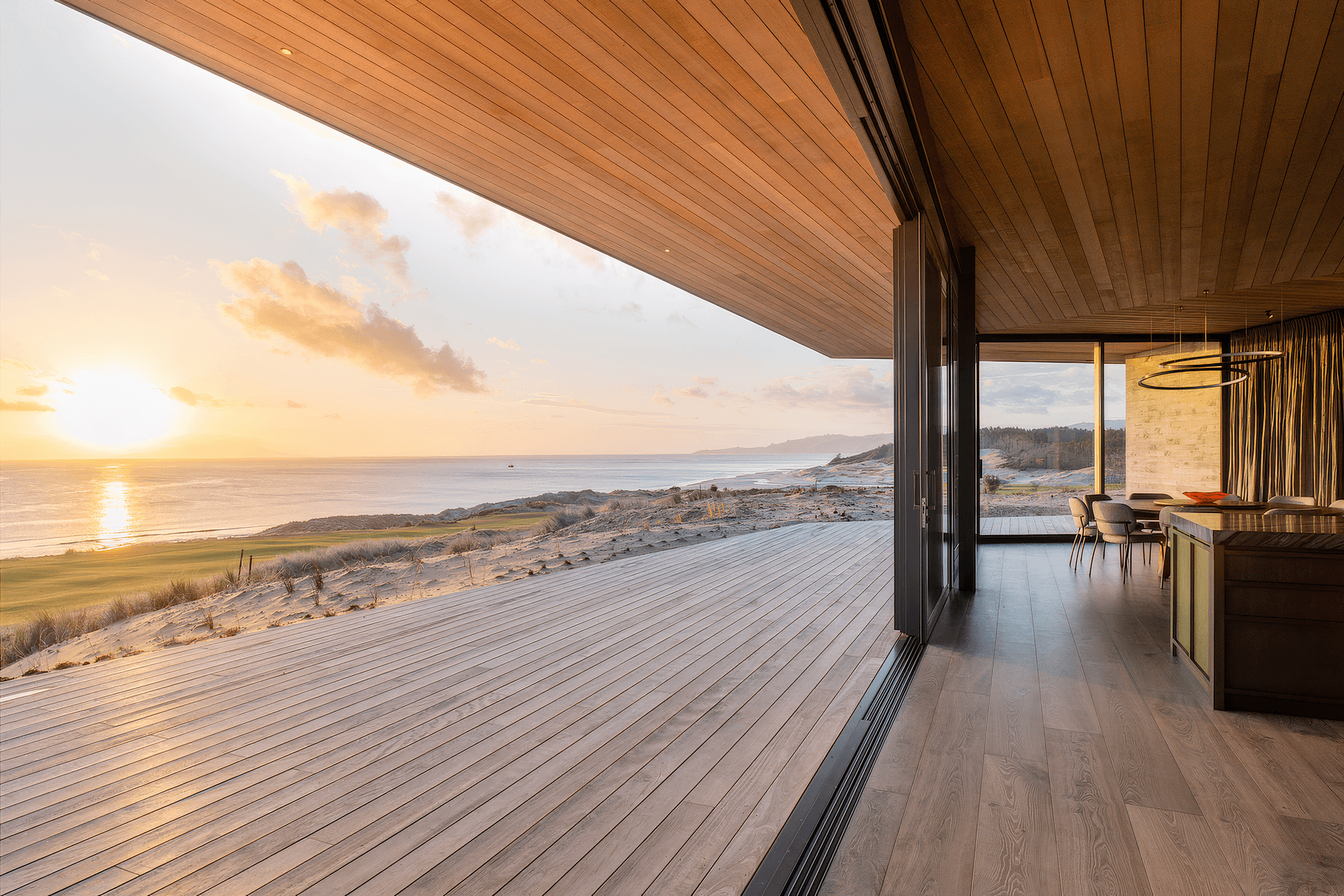
Inside, the architecture bends and shifts rather than moving in a straight line. Textures sharpen your awareness of the space (concrete to one side, cedar to the other) while ceiling heights subtly begin to change, starting first in a compressed entry space, then, step by step, the building releases. Floors lift slightly, ceilings rise, and angles begin to open toward the view.
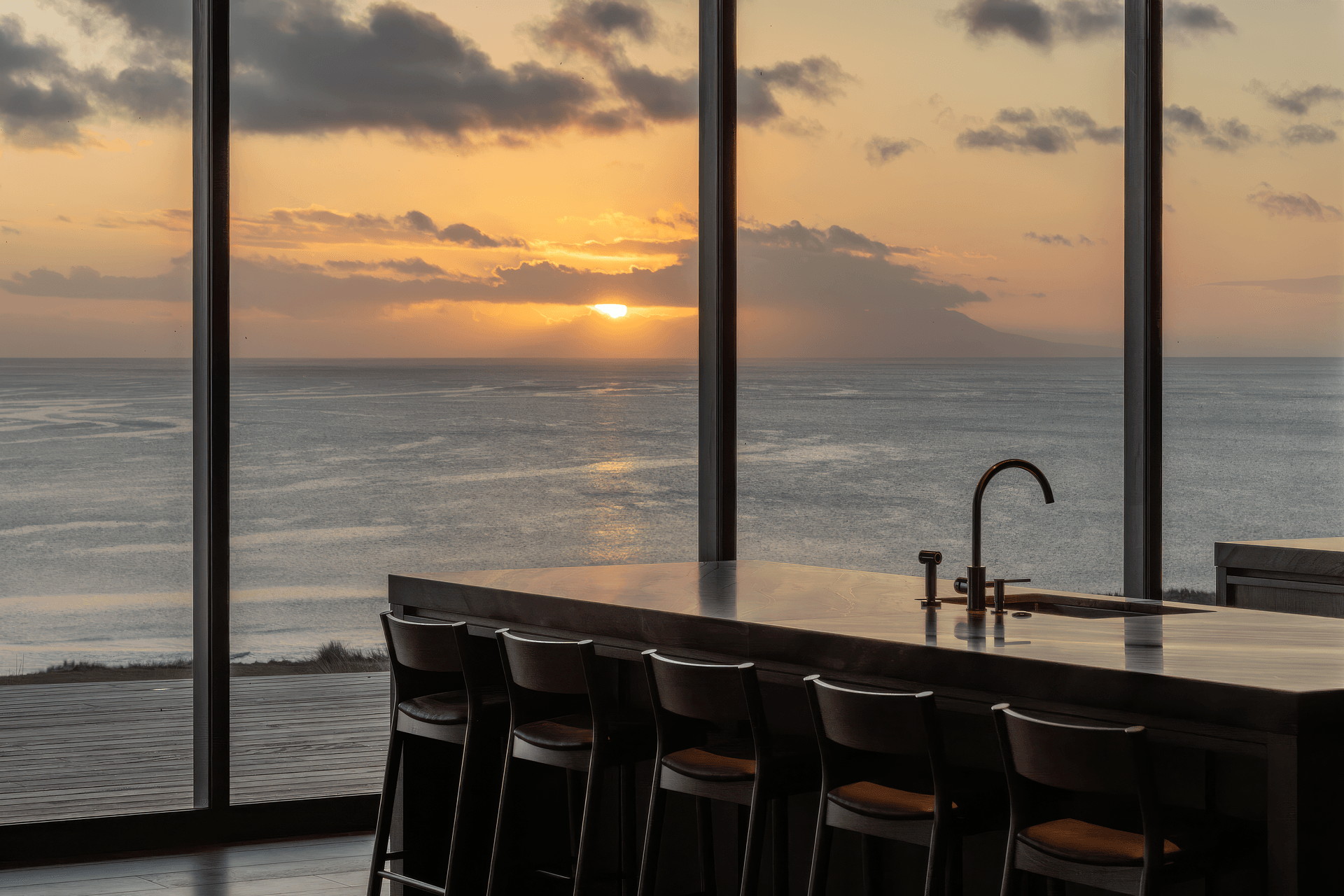
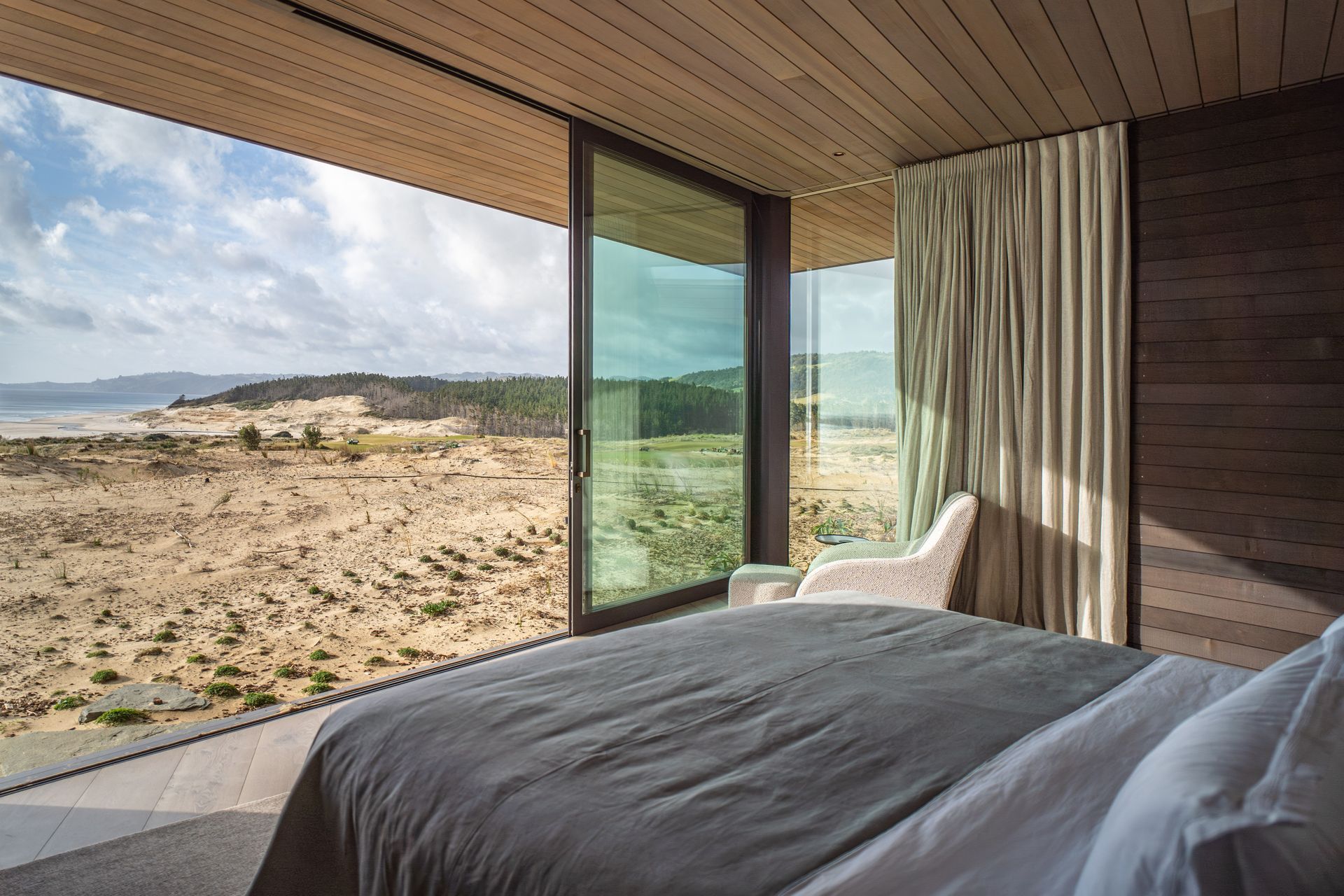
“All the windows, all these various unexpected angles let you engage outward,” Ponting says. “So you’ve got this sensation of release — a spatial release and a visual release, to the horizon and the sky.”
Amidst the expansive views, the fairway spreads out like a vivid green carpet. Occasionally, golfers appear briefly in the landscape before disappearing again, offering an ever-changing foreground to the home.
Material choices anchor the architecture firmly within its environment. Building at Te Arai requires passing through a rigorous design review process intended to ensure new houses integrate with the landscape.
“There’s a stringent review process by four architects,” Ponting says with a smile. “Fortunately, I’m one of them!”
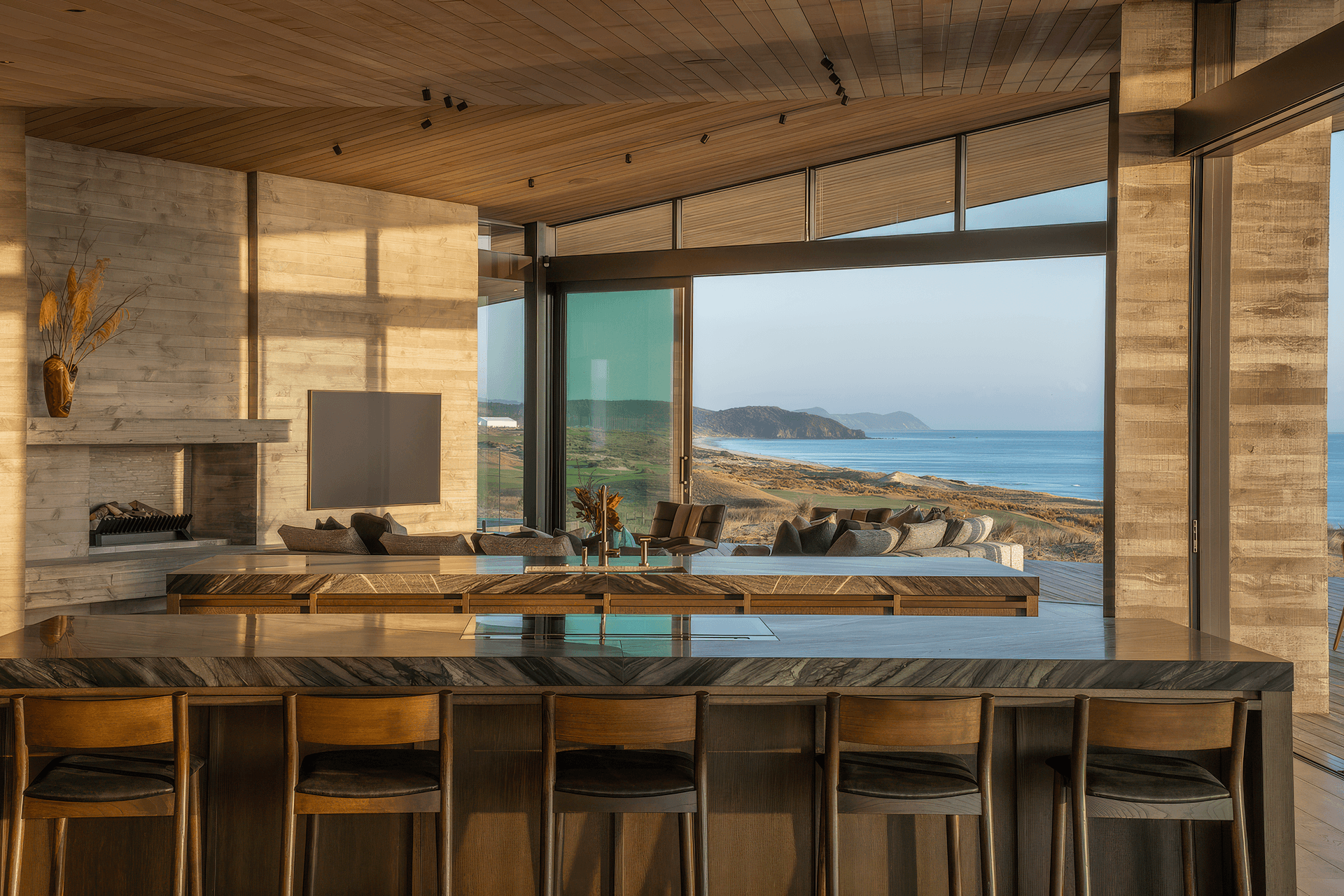
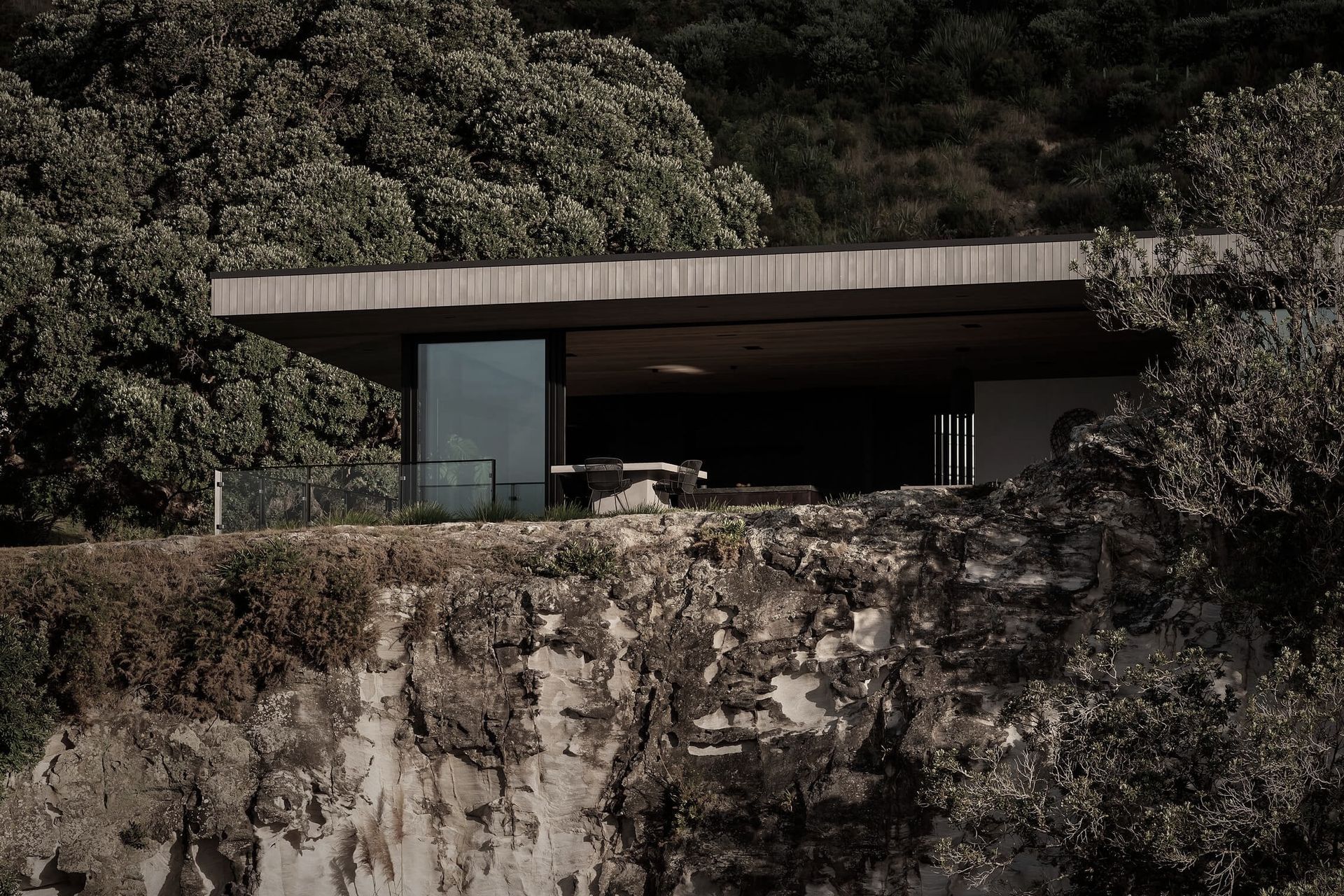
As such, the material palette is contextual to the visual and textural elements of the setting. Board-formed concrete walls ground the house physically and visually, giving it a sense of permanence against the coastal weather. Cedar volumes soften that strength, while pale cedar ceiling linings internally lend lightness to the sweeping roof forms above.
Light plays across these materials throughout the day. It dapples along textured concrete and lifts beneath deep overhangs. Glazing is positioned perpendicular to each fanning space, dissolving the sense of a barrier between inside and out. Instead of looking through a rigid frame, you feel pulled directly into the environment.
Among the home’s more playful moments is a putting green positioned at its centre. Originally conceived as a courtyard space, it was eventually drawn inside beneath the sheltering roof so it could be used year-round, bringing nature directly into the middle of the home.
Design choices such as this one evolved through close collaboration rather than fixed ideas.
“There wasn’t any ego in the process,” Ponting says. “The clients’ empathy for the environment, and their self-awareness were present behind each design request, so I was able to respond to these wonderful requests, their evolving wish list, that became more and more refined the further we met.”
Conversations with the builder, Oli Tuck, throughout the concept stages allowed material junctions and construction decisions to be resolved at the outset, which resulted in a surprisingly smooth build process considering the complexity of the building.
Standing within it now, the home feels remarkably sympathetic to its setting, which is in itself a feat, given how transcendent that setting is. The forms are expressive, yet they integrate seamlessly into the raw land around them. That sense of harmony has recently been recognised in a particularly meaningful way. The house has been blessed by local iwi and given the name ‘Whaitere’, the enchanted stingray, referencing a form that is distinctly visible from above.
“For the home to be blessed by local iwi is an honour for all involved and the chosen name reflects the organic design intent that led to the result,” Ponting says. “I’m humbled this could happen and truly delighted for the owners — it’s very meaningful.”
The image is perfectly fitting. Much like the sea creature, the house is a guardian of the place it inhabits, residing fluidly within its landscape, both commanding and showing respect for its environment.