Concrete, light and the art of privacy
Preston Hollow Residence is built around a contradiction. It is open, light-filled and deeply connected to landscape, yet almost entirely protected from the street and surrounding neighborhood.
Located in Dallas, Texas, the 8,000-square-foot home began with a clear ambition. The clients wanted a single-story primary residence — a place to live comfortably, remain closely connected to nature, and never sacrifice privacy.
By the time Specht Novak was engaged, the original building on the site had been demolished. What remained was a wide, open parcel of land with select trees and a dense perimeter of bamboo, rising up to 20 feet high and forming a natural screen around the property. The question became how to use that openness without leaving the home exposed.
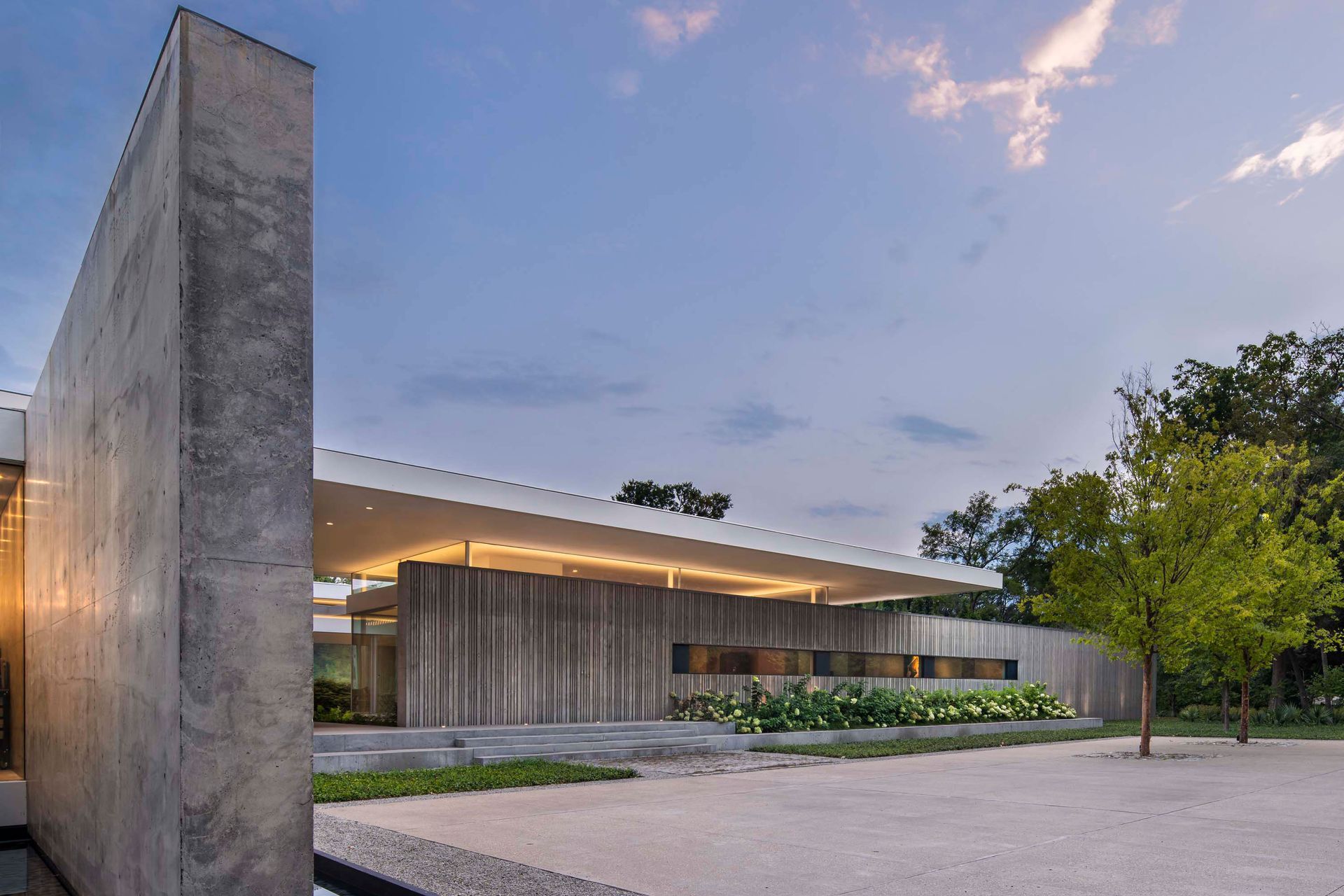
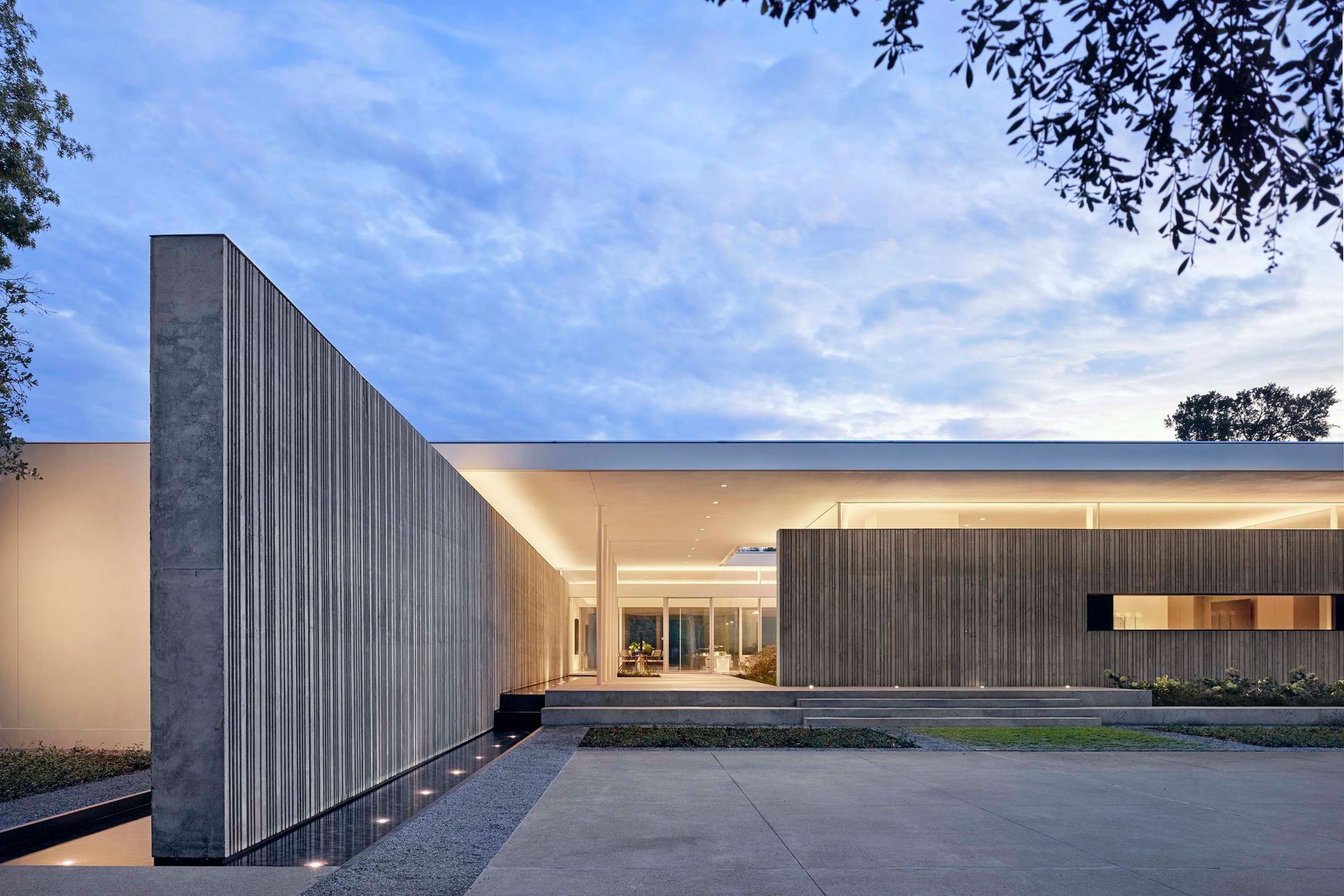
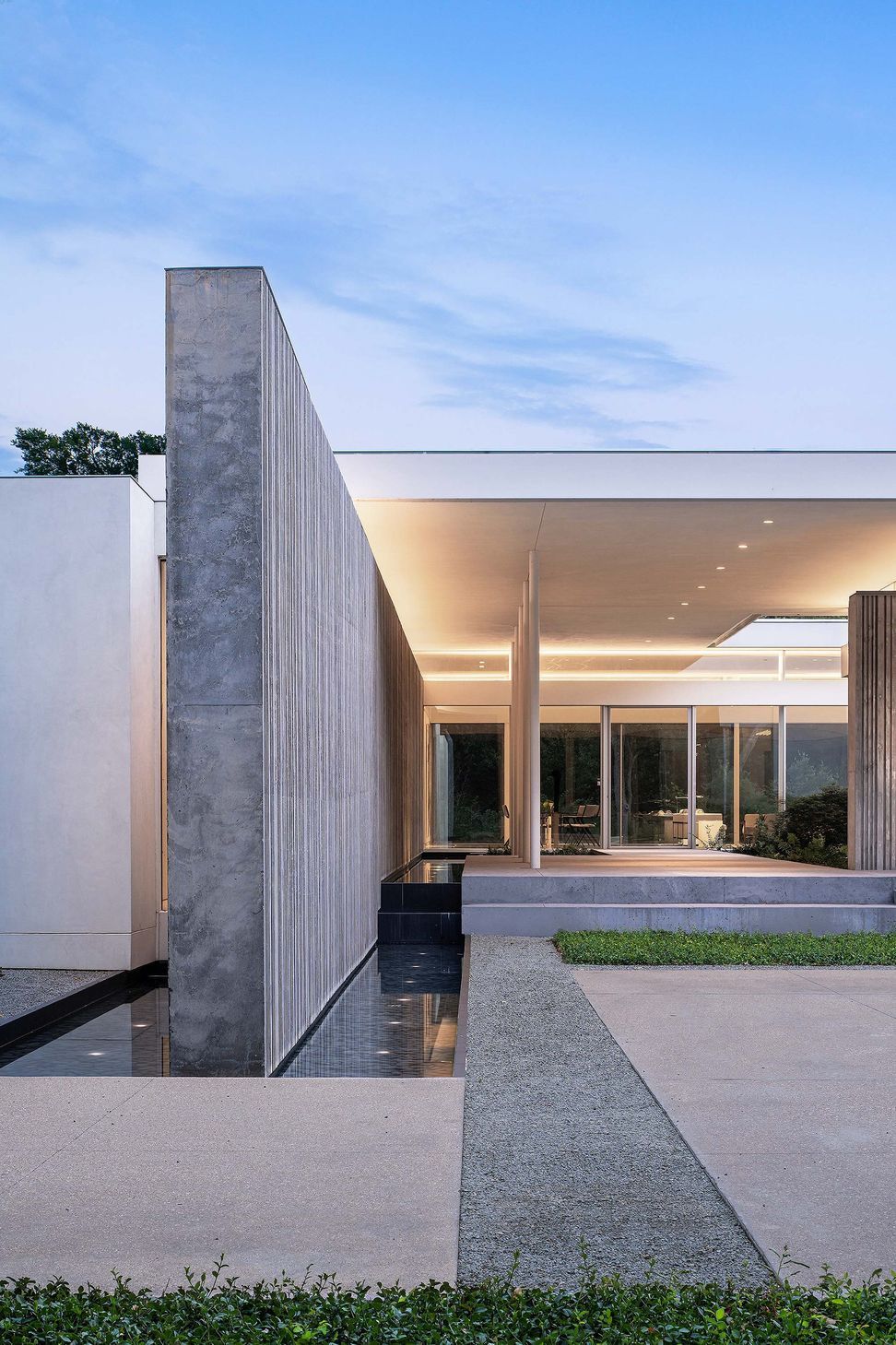
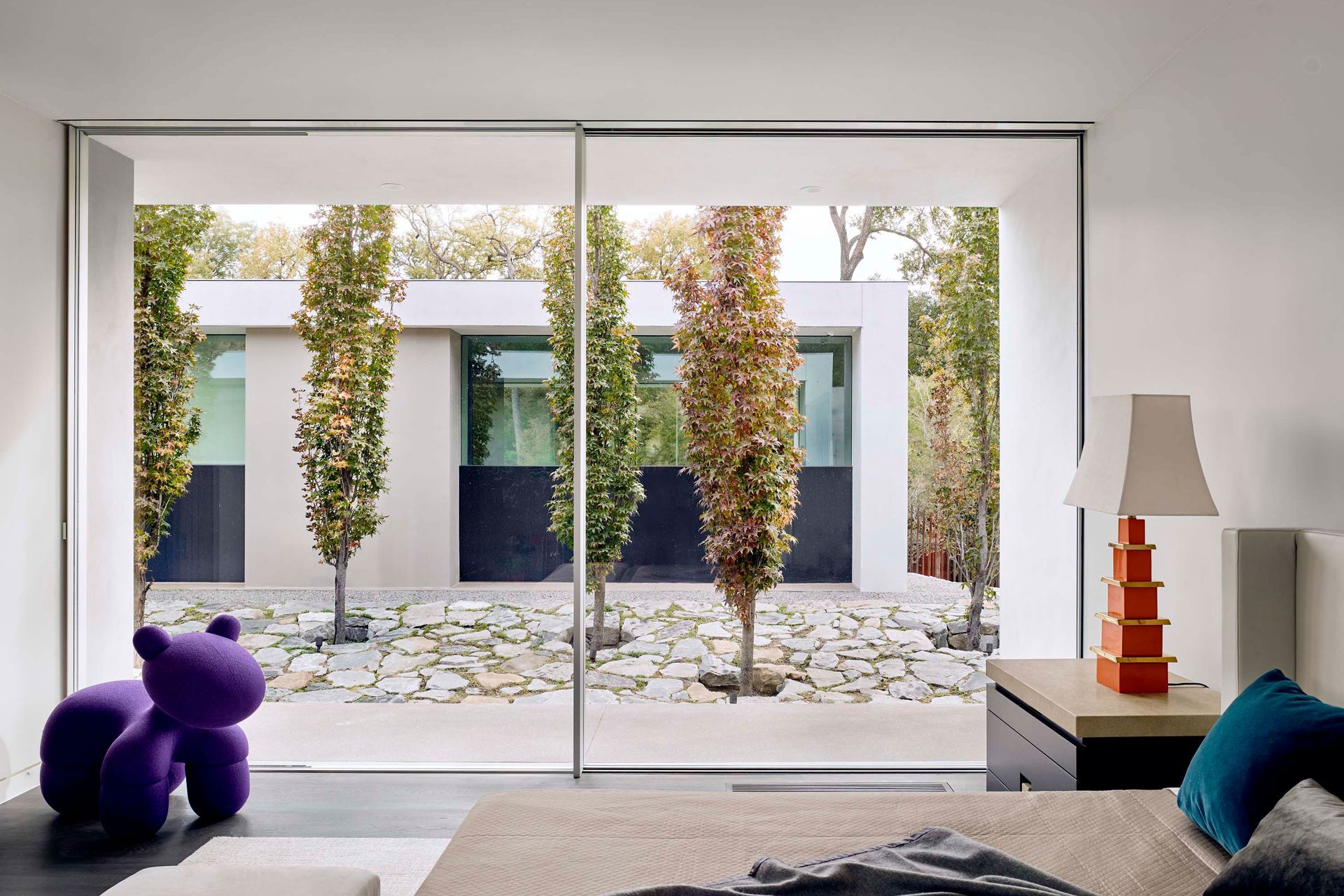
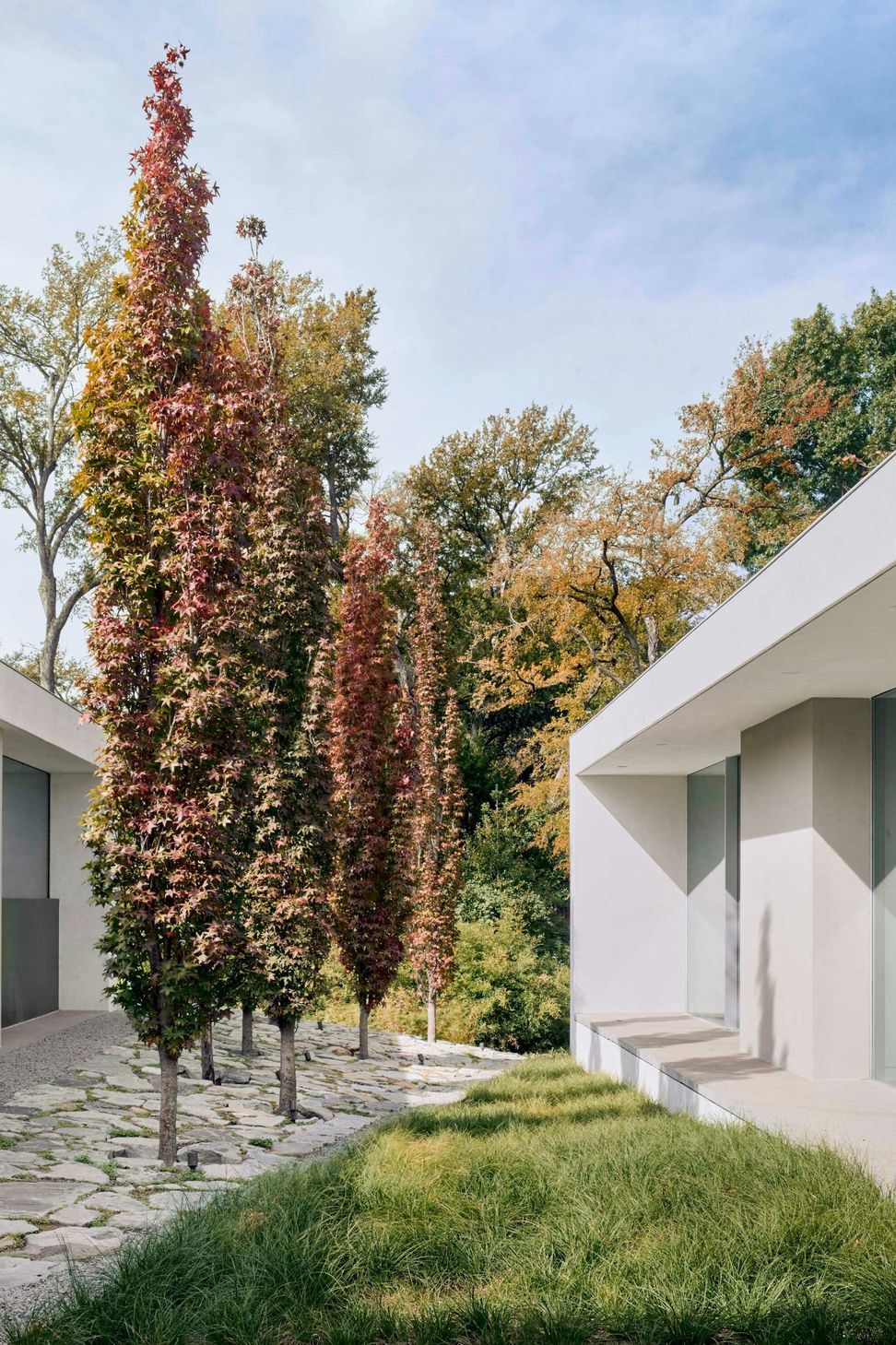
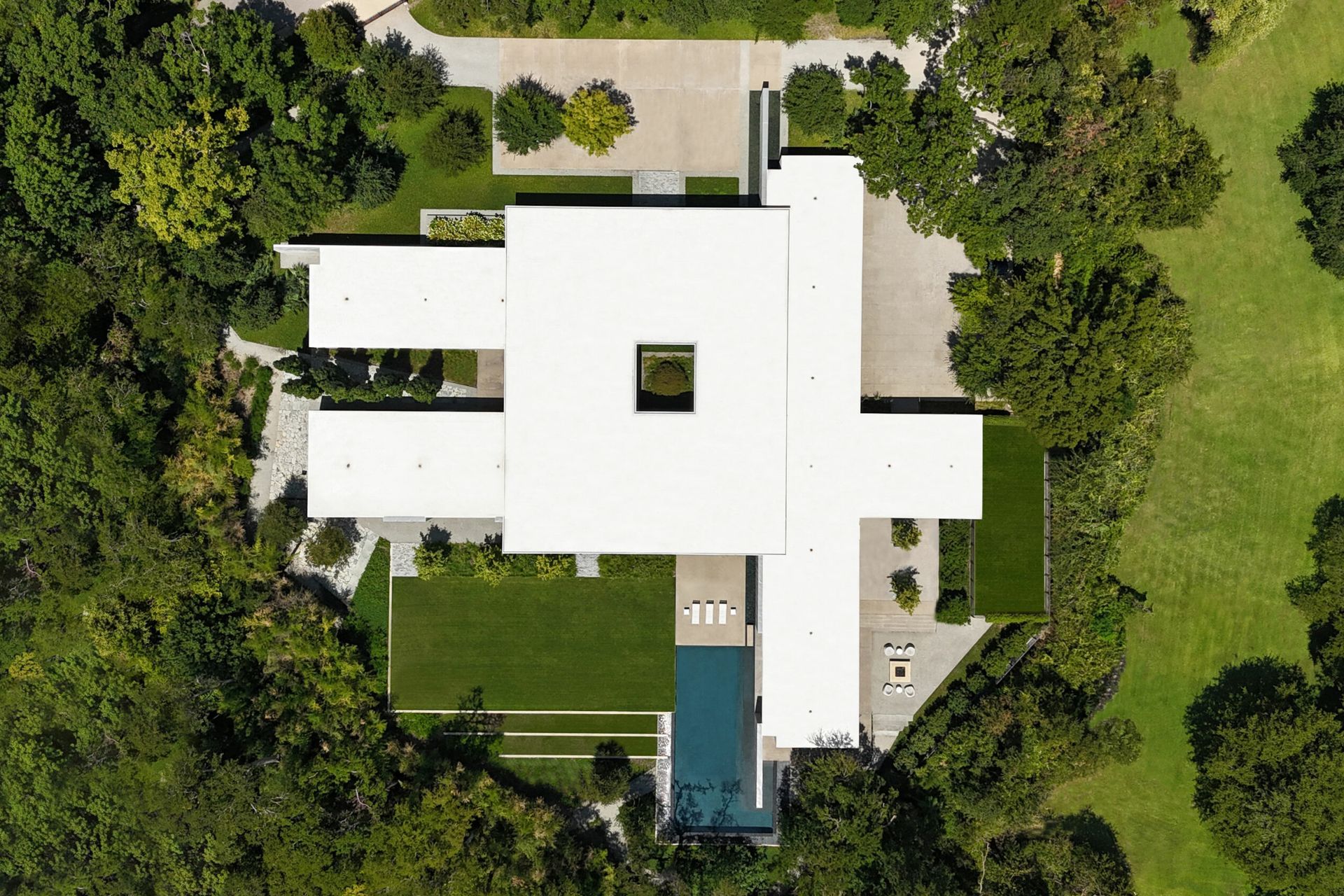
The architectural response began with cleverly-specified walls. Specht Novak developed the idea of substantial concrete spine walls that extend from the interior of the house into the landscape, moving in two directions across the site. These walls are not merely structural or decorative, but rather they organize the house, create privacy, define courtyards, frame views, and establish the project’s central rhythm.
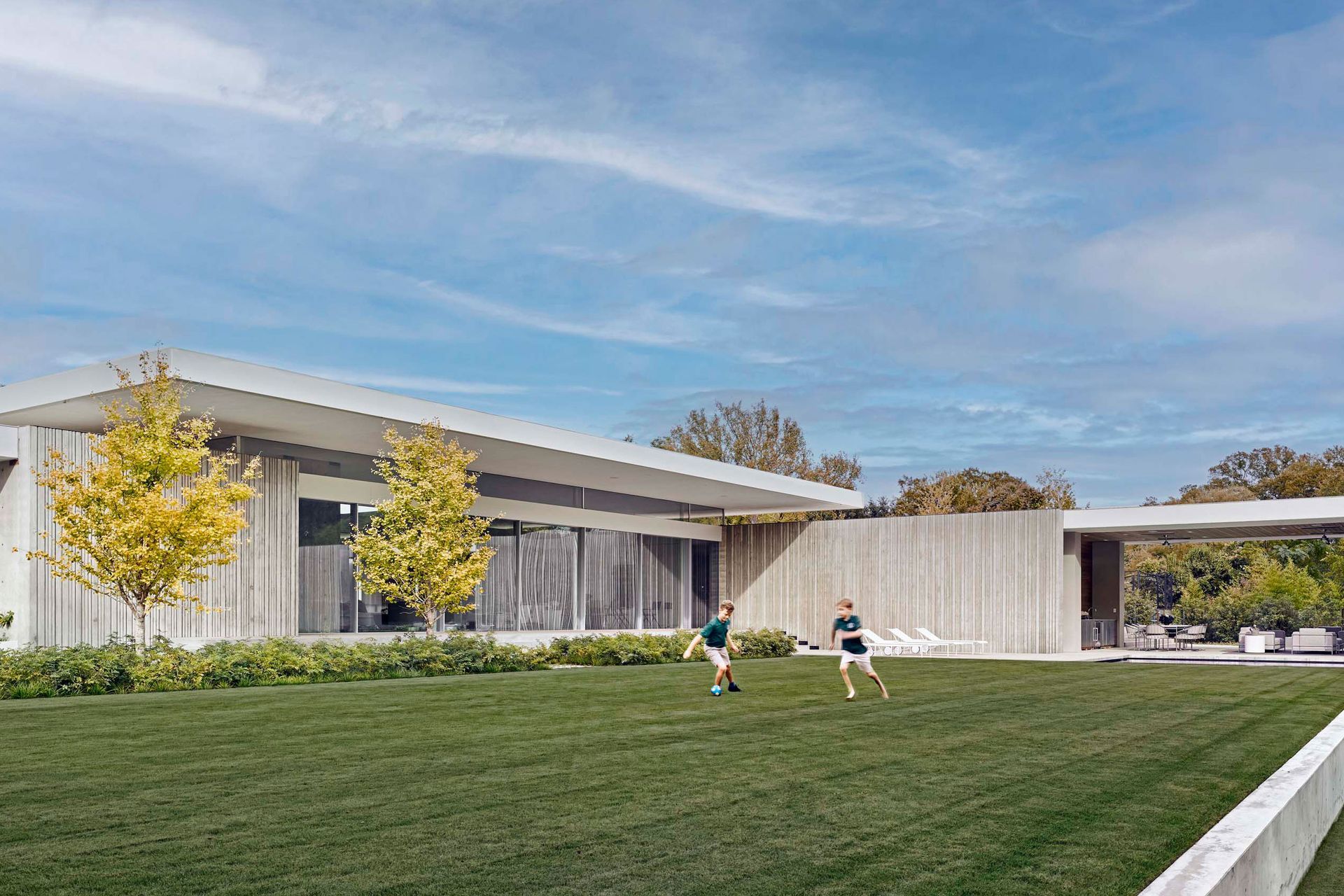
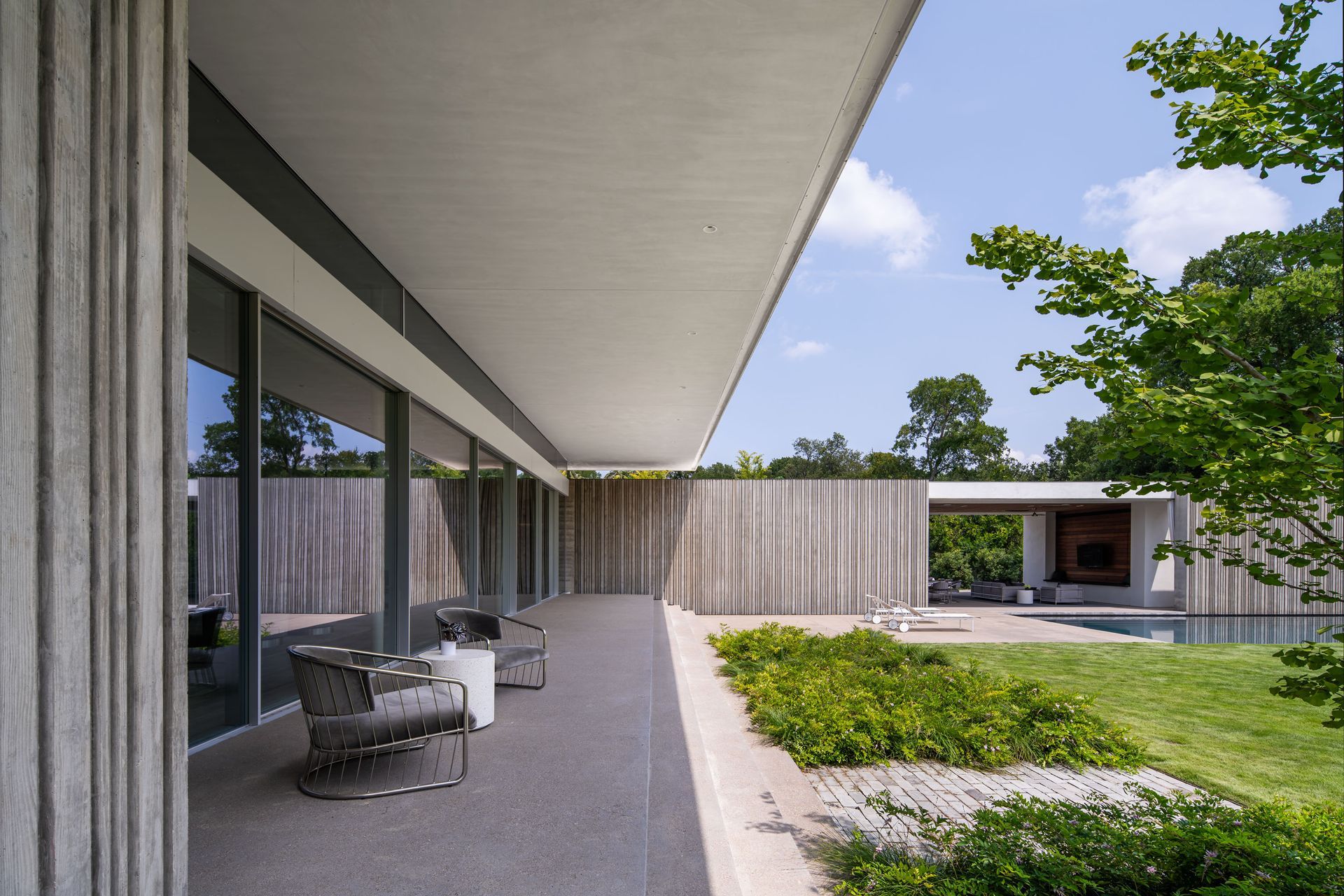
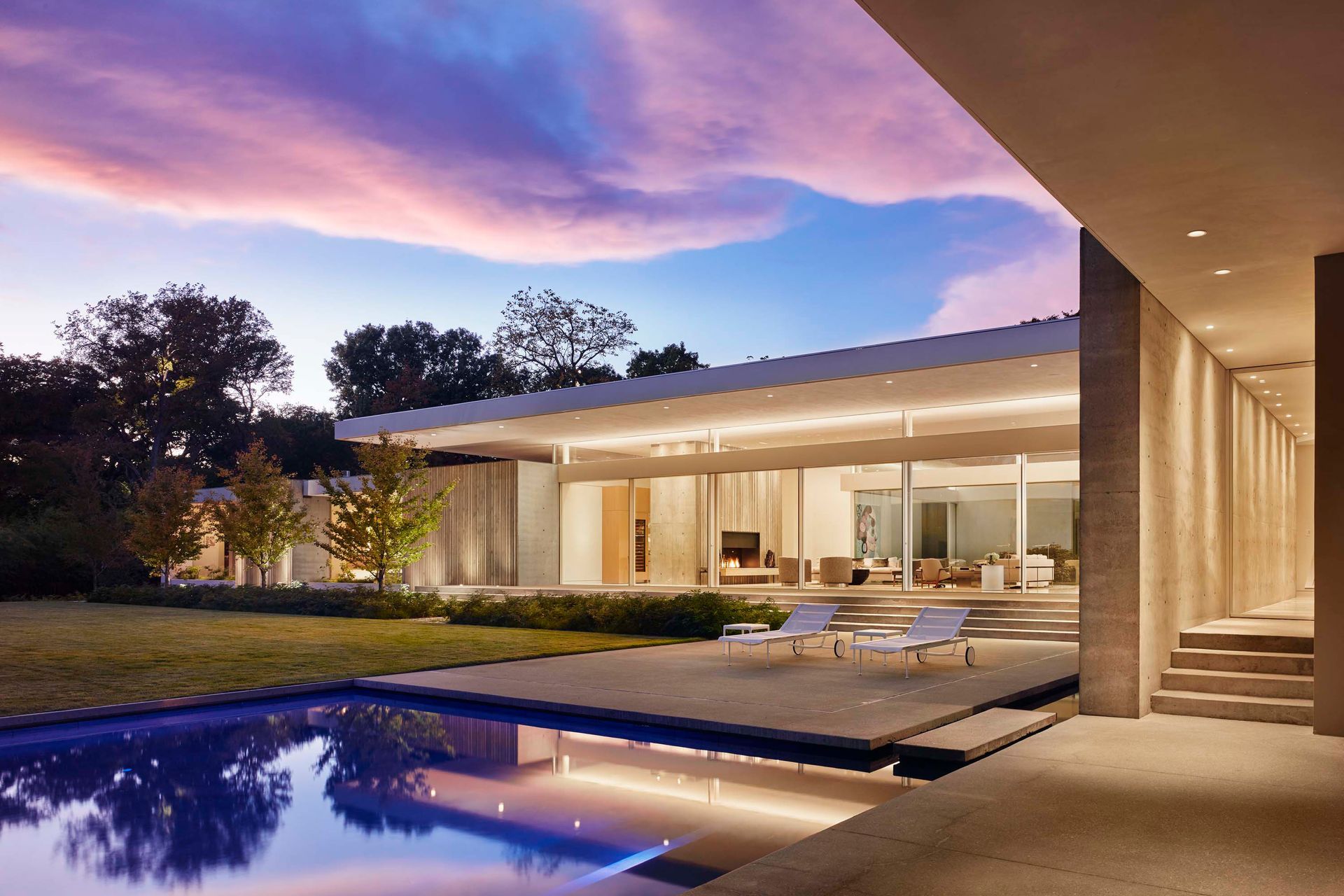
Above them, an elongated floating roof stretches across the home, where its large cantilevered overhang was carefully configured to mitigate solar gain, particularly in a climate where the west-facing sun can become punishing. The west facade is predominantly solid, while openings are concentrated between the concrete walls, allowing light to reach deep into the interior without overheating the home. The result is a residence that feels open and shaded, heavy and light, protected and expansive.
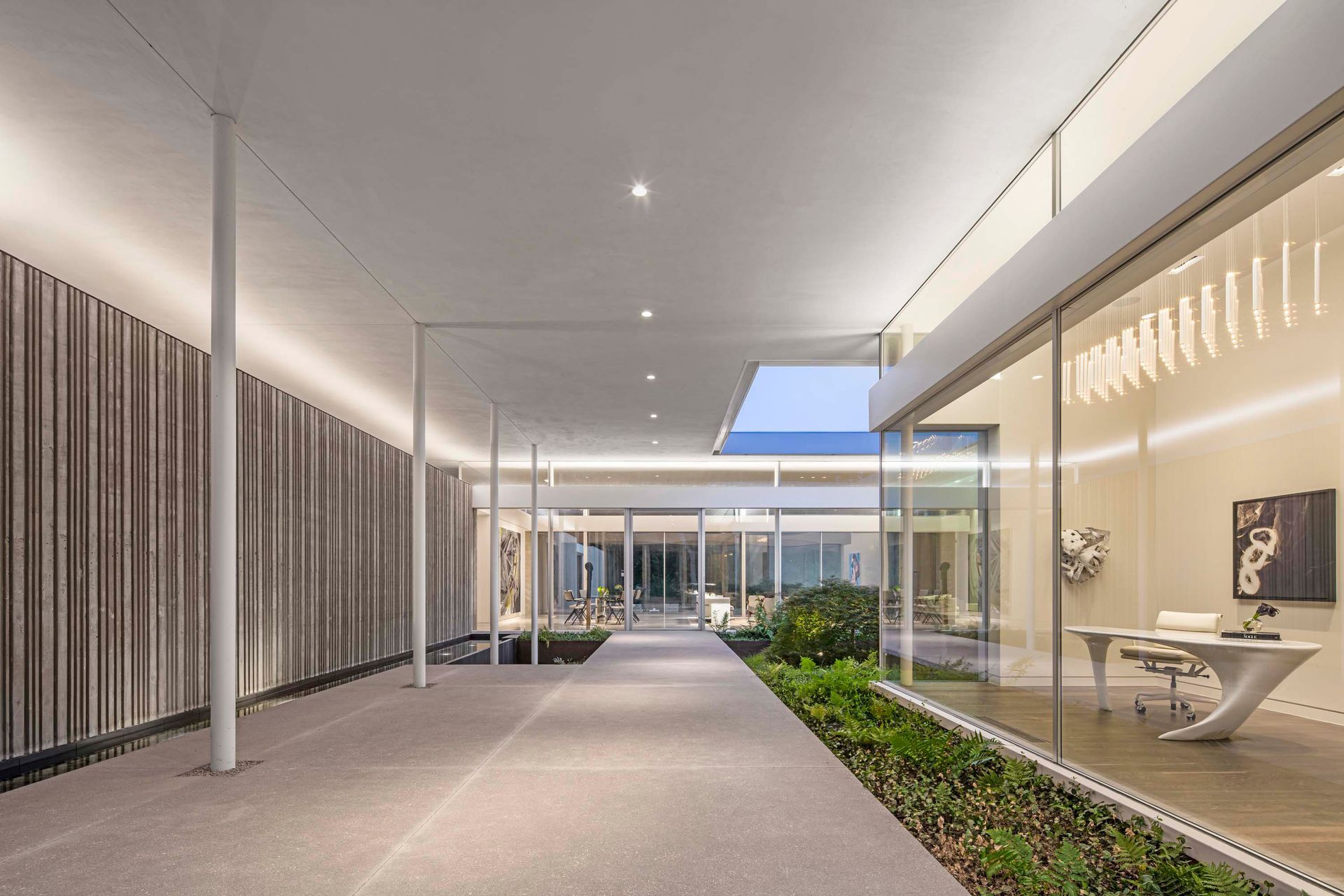
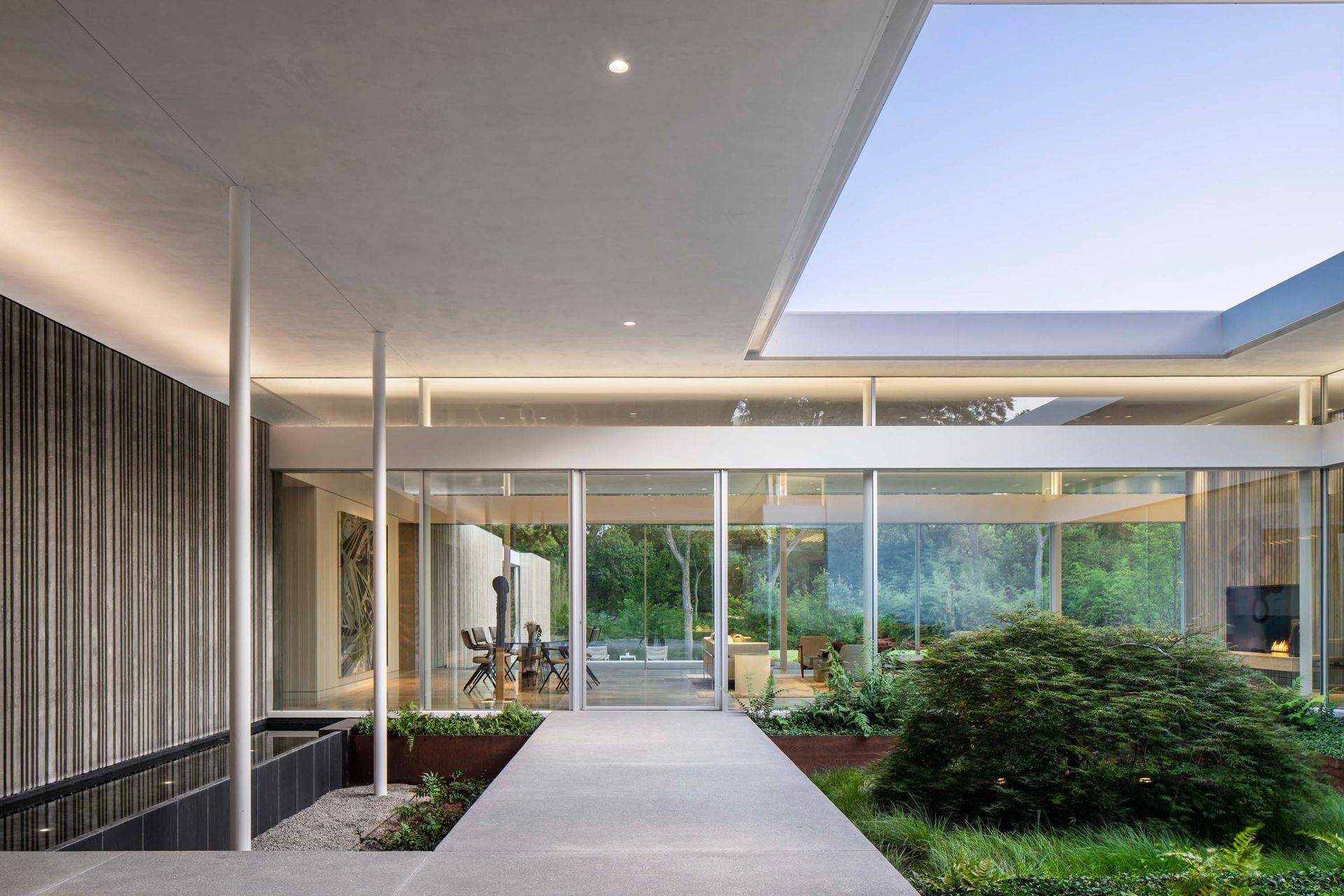
Water also plays an important role in the experience of the house. From the entry, a narrow channel moves through the site and connects visually to the pool beyond. An impluvium, an opening in the roof inspired by traditional Roman houses, allows rainwater and light into the central garden below. At night, water casts reflections across the textured concrete walls, changing the atmosphere of the house entirely.
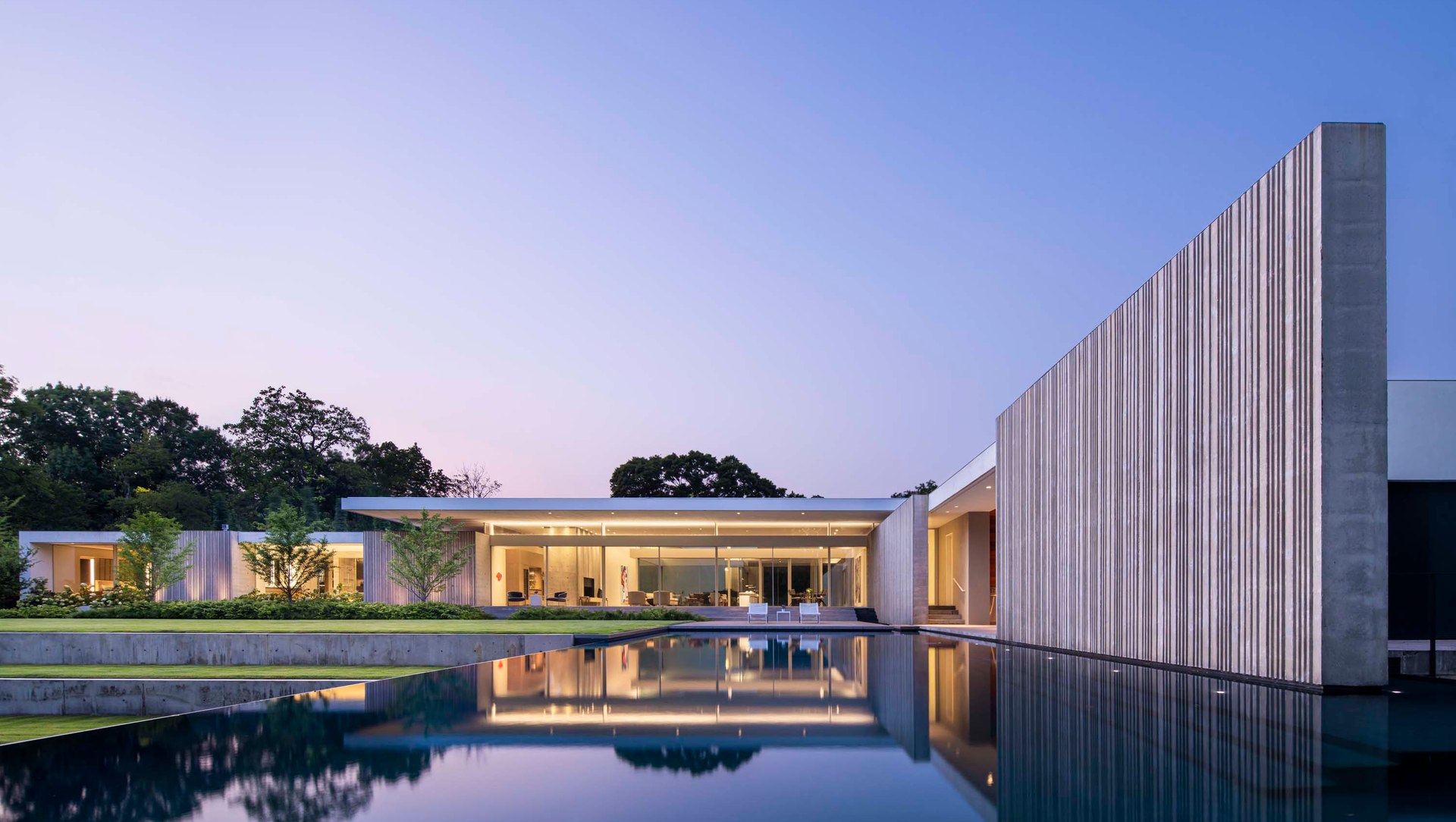
The concrete itself became one of the most carefully developed elements of the project. Specht Novak explored stone and conventional board-formed concrete before deciding to push the material further. The team wanted the walls to feel monumental, but not crude, so the walls were textured, but not overly decorative. Through a series of large “tombstone” mock-ups, they tested how vertical striations could be cast into the concrete, eventually reversing an early pattern to achieve a more substantial and resolved finish.
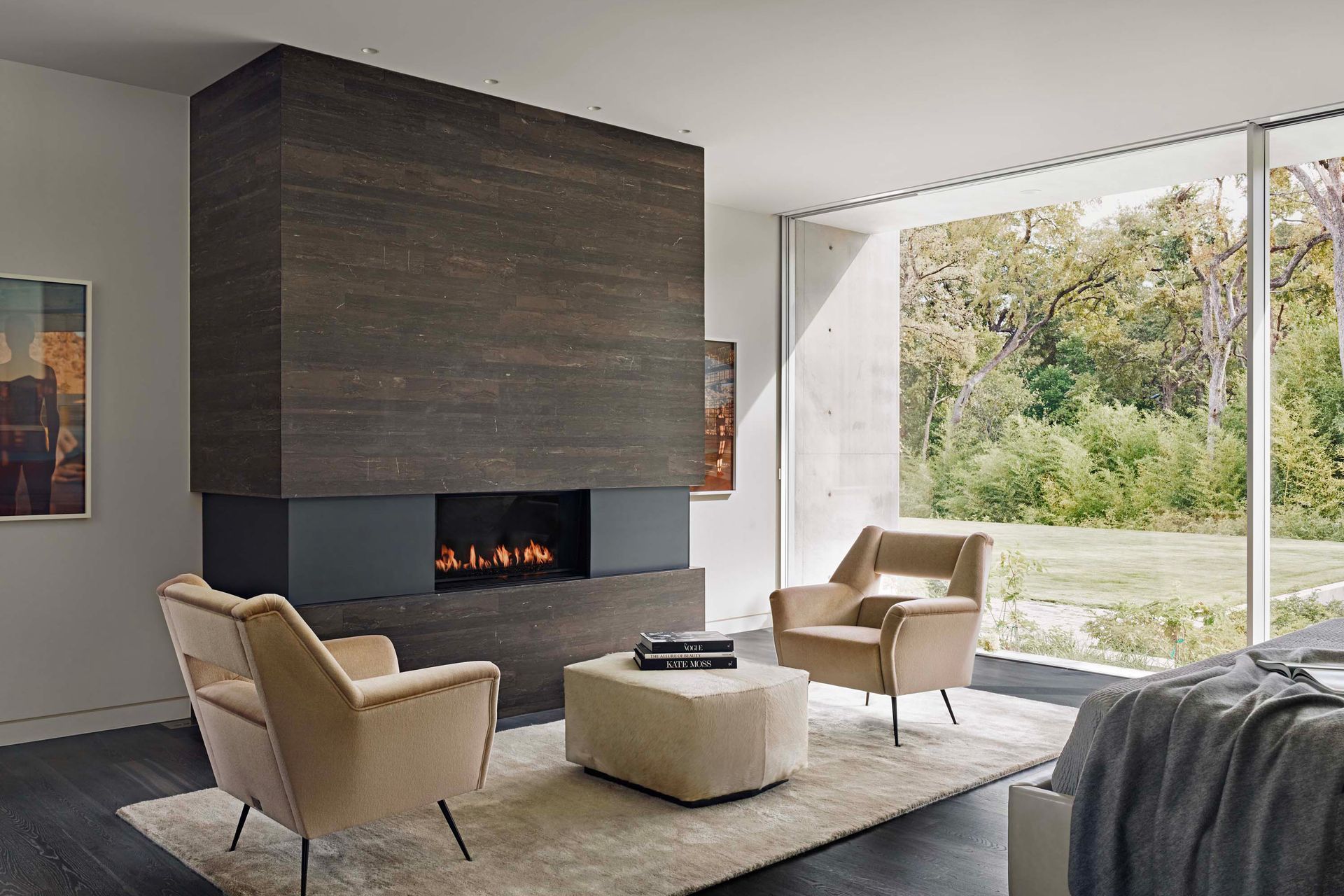
The final walls have two distinct characters. On one side, the concrete is articulated with a corduroy-like vertical texture that catches shadow and light throughout the day. On the other, it is smoother and more restrained, and at corners, the shift between the two surfaces becomes part of the choreography of the building. Inside, the textured finish reappears only once, at the fireplace, a deliberate moment that brings the exterior language back into the home.
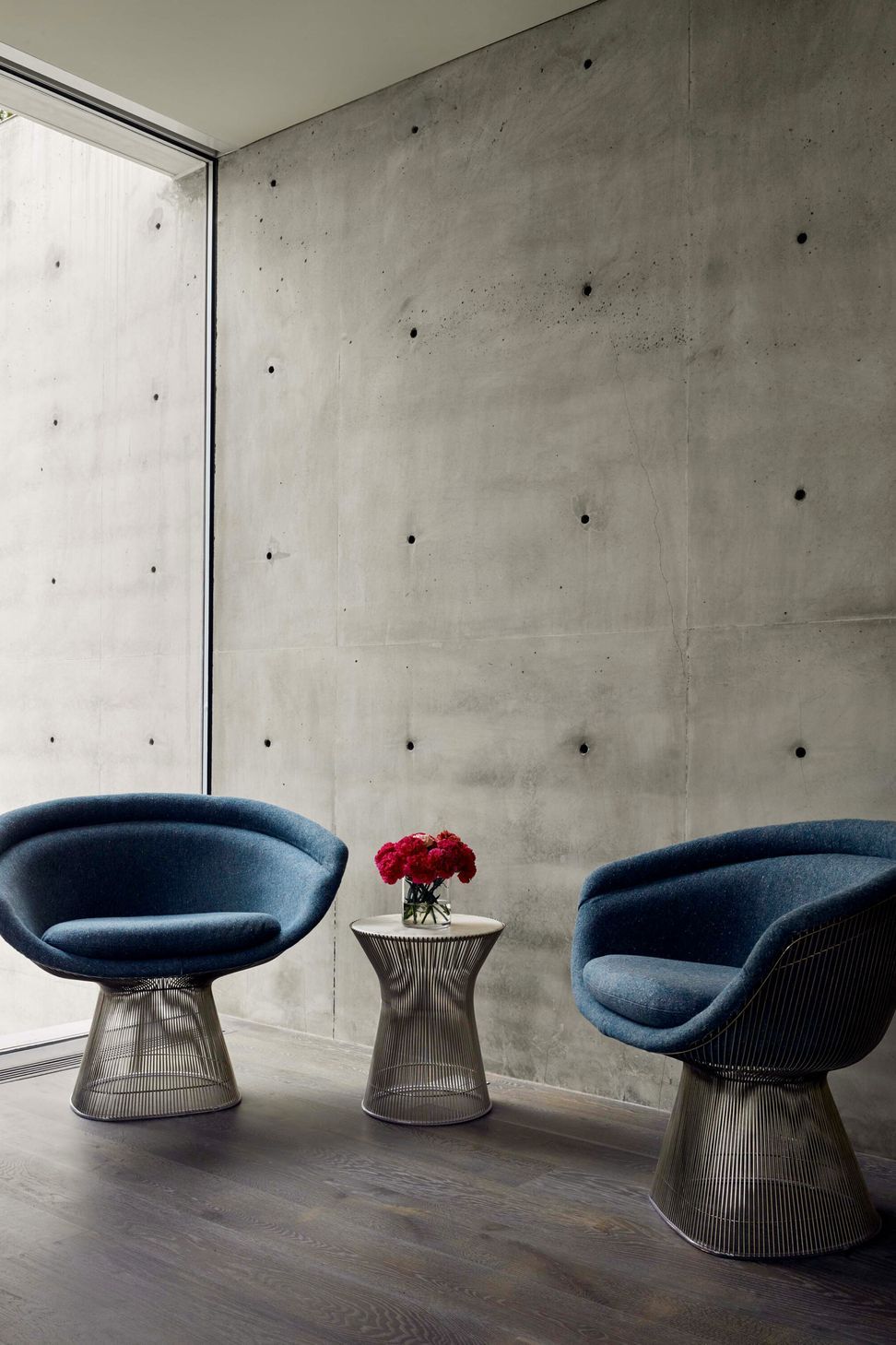
This level of material development required deep collaboration. The concrete team had never produced this exact finish before. A concrete mix consultant was brought in to refine the chemistry, the boards were milled to precise angles, release agents were tested, and every form tie and joint had to be considered. Even the small holes left in the concrete walls, a visible memory of how the walls were made, were treated as part of the architectural expression.
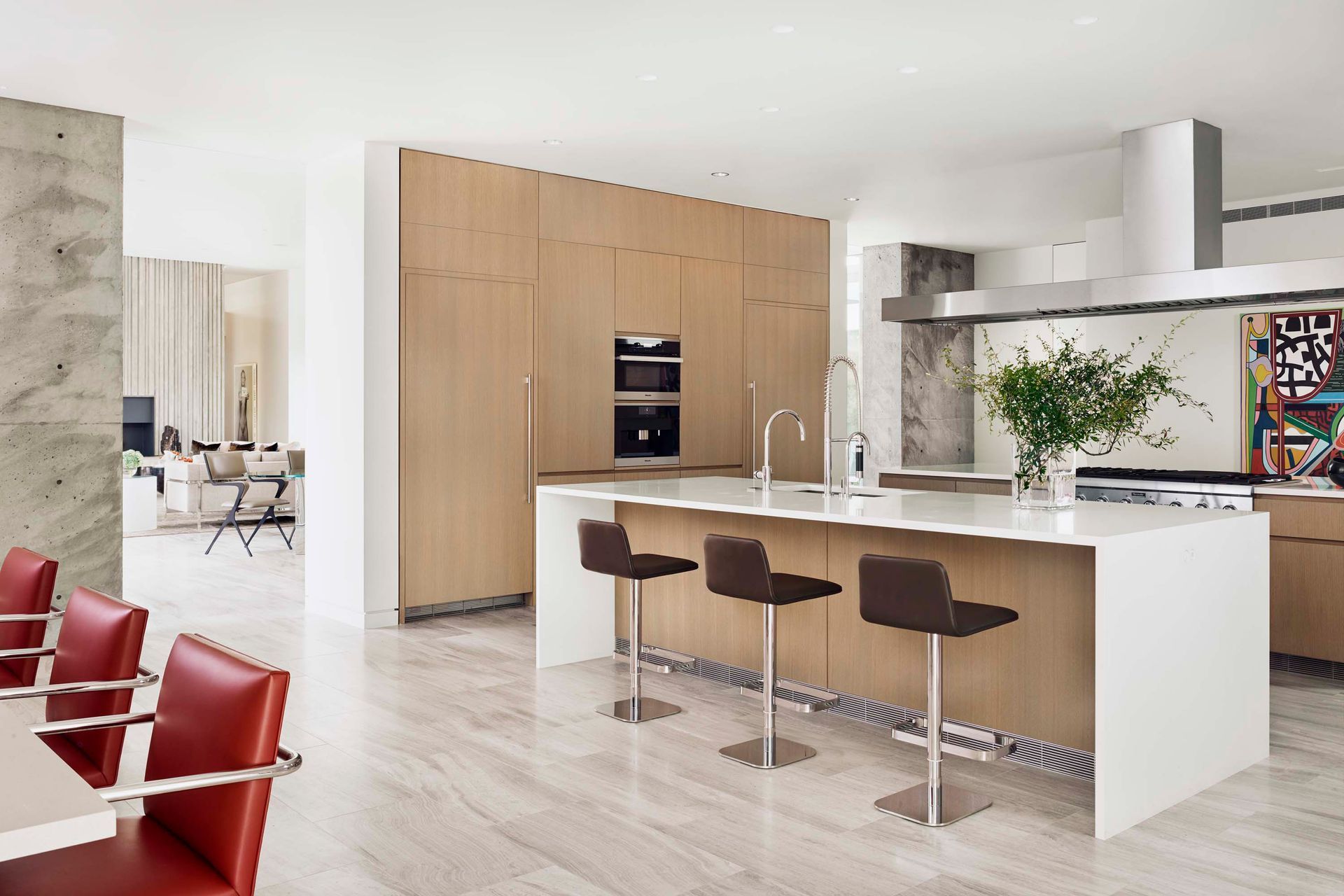
Other materials were selected to counterbalance the concrete’s mass. Minimal-frame glazing allows the walls to feel lighter, while travertine flooring and a cooler interior palette respond to the Texas climate. Wood appears in more private areas, bringing softness where it is needed.
The landscape was equally important to the way the home works. Landscape architect David Hocker of Hocker Design helped refine the relationship between the pool, water feature, and concrete spine walls, bringing the pool closer to the architecture and turning it into part of the house’s spatial sequence. From certain angles, the water doubles the presence of the home, reflecting the roofline, trees, and concrete surfaces back into the living spaces.
What makes Preston Hollow Residence compelling is not simply its scale or drama, but the way every element performs. The walls create privacy. The roof controls light. The water changes the atmosphere. The concrete holds memory. The courtyards bring landscape into the center of daily life.
For homeowners, the project offers a sophisticated lesson in privacy. A private home does not need to be closed off. With the right architect, privacy can be created through partitions, gardens, thresholds, light, shade, and orientation. ArchiPro helps homeowners understand these decisions by connecting finished projects with the professionals, products and materials behind them. Explore Specht Novak on ArchiPro, browse more residential projects or discover concrete, glazing, flooring, landscaping and outdoor living products that help shape homes from concept to completion.
Words by Tara Bird