

Project team
- Chan Architecture
- Elise Scott Photography
Set on a rare corner site along Altona’s Esplanade, this dual-residence development responds directly to its coastal context, using elevation, form and materiality to maximise uninterrupted views.
Contemporary coastal architecture shaped by site & outlook
Designing without a defined end homeowner can be one of the more complex architectural challenges. Without a single lifestyle, aesthetic or daily routine to anchor decisions, the architecture must walk a careful line between specificity and universality. For this beachfront development on The Esplanade in Altona, however, the site itself became the guiding force. With uninterrupted views across Port Phillip Bay and a rare corner position directly on the water’s edge, the brief demanded something special.
Commissioned by a developer client, the project comprises two dwellings: a premium, view-focused residence to the front, and a secondary dwelling positioned behind.
From the outset, the ambition was clear. “They really wanted a premium high-end, high-level finish product,” says Anthony Chan, Director of Chan Architecture. “There’s not much of that in the area. A lot of the houses along the Esplanade look quite similar, and they wanted something really high-end that could sit confidently in that context.”
The location itself is one of Melbourne’s quieter coastal pockets, but one that holds significant value. “Being on the Esplanade is quite rare because you can have uninterrupted views of the water, and that’s something people really value in Melbourne,” shares Chan.
The corner site also allowed the architects to maximise water views while keeping vehicle access discreetly to the side.
But with no single occupant in mind, the design needed to appeal to a broad market including downsizers, families and professionals, while still feeling enduring.
“What was difficult is that you don’t actually know who your end homeowner will be,” says Chan. “So a lot of what we did needed to be timeless and really integrated with the site.”
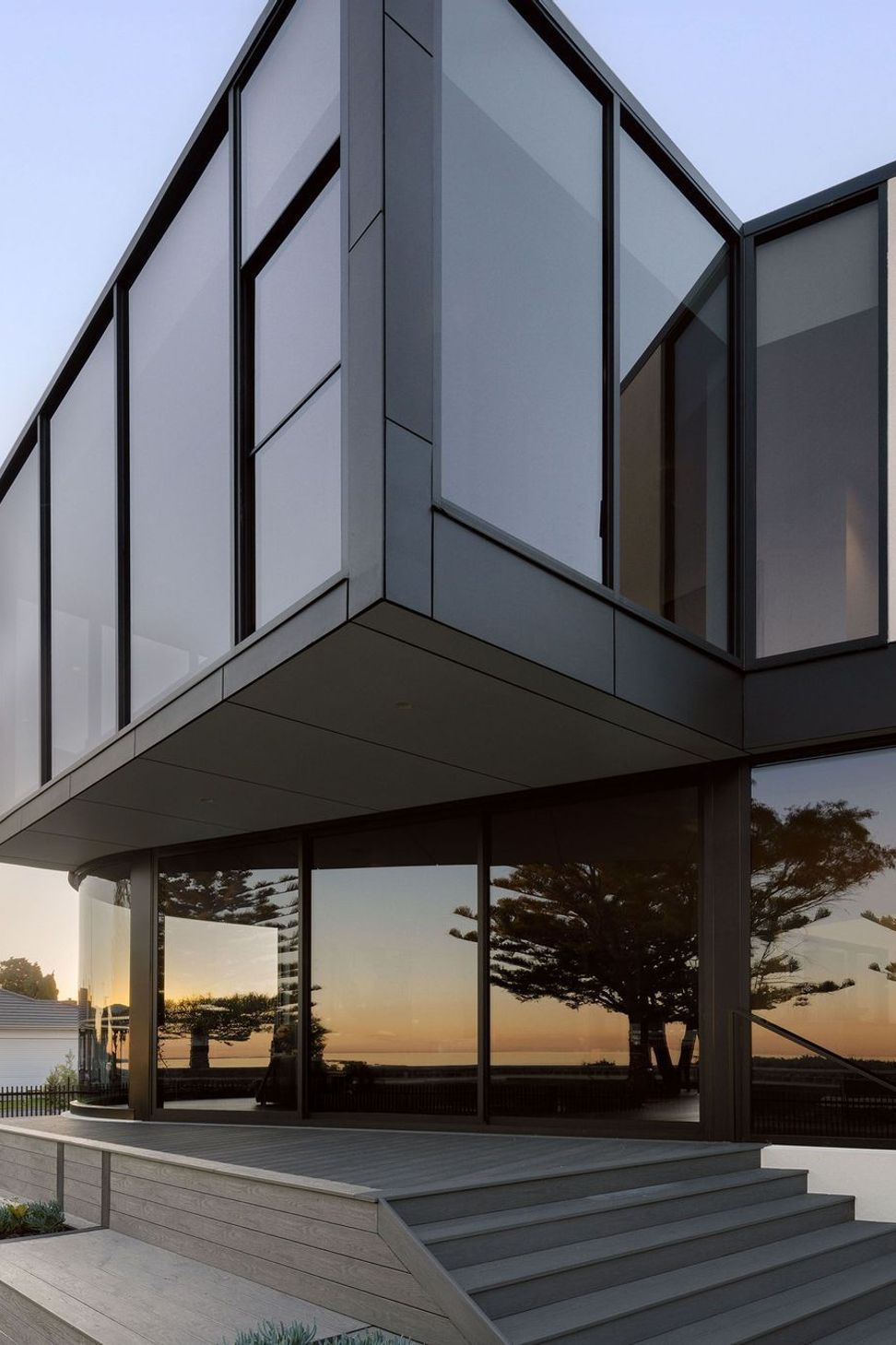
The irregular, slightly skewed geometry of the site became a catalyst rather than a constraint, informing a form that aligns itself both parallel and perpendicular to the shoreline to capture shifting views throughout the home.
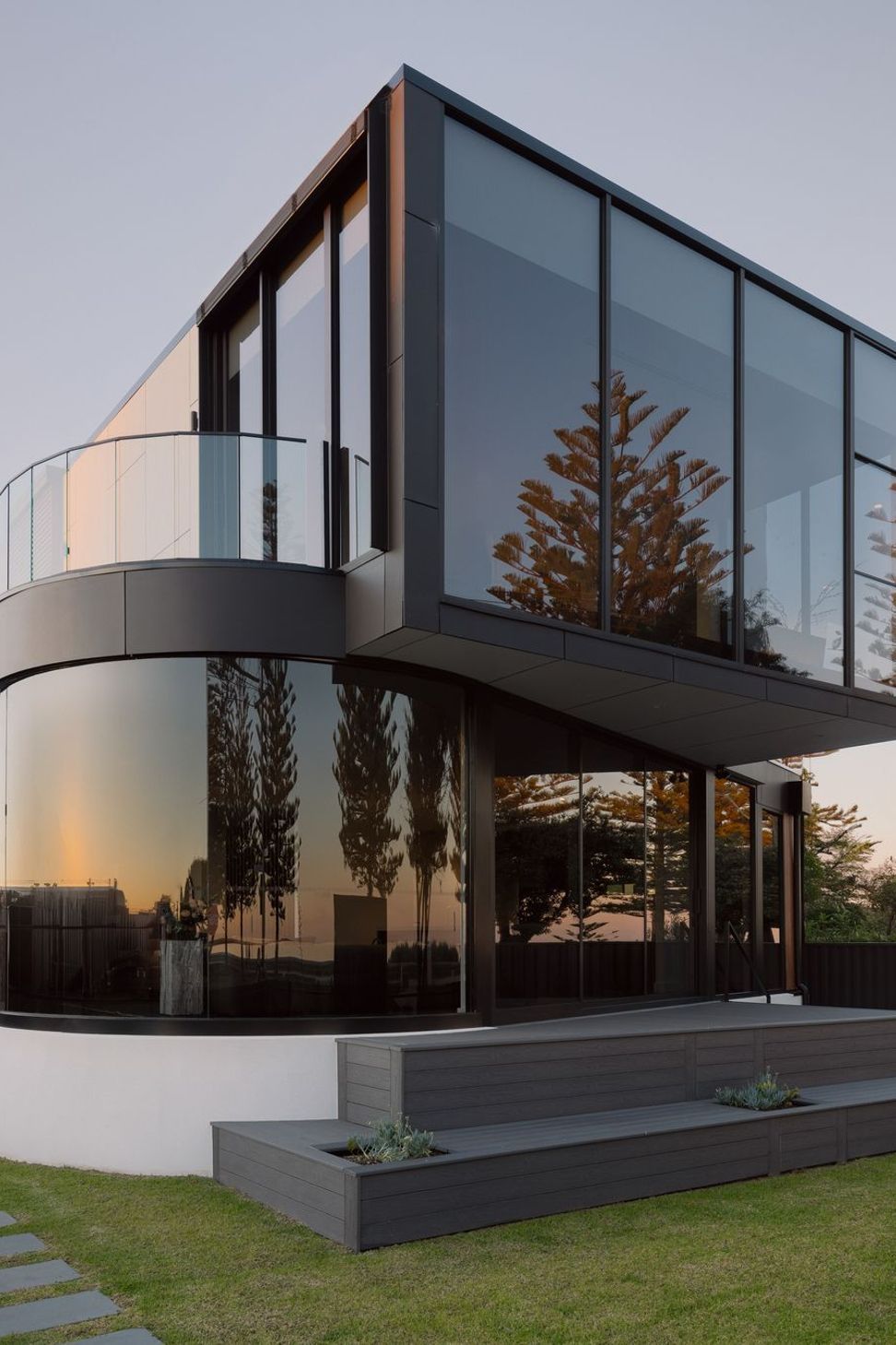
One of the project’s defining moves is its elevation above ground level. Responding to potential flooding concerns, the raised form also delivers a valuable architectural dividend.
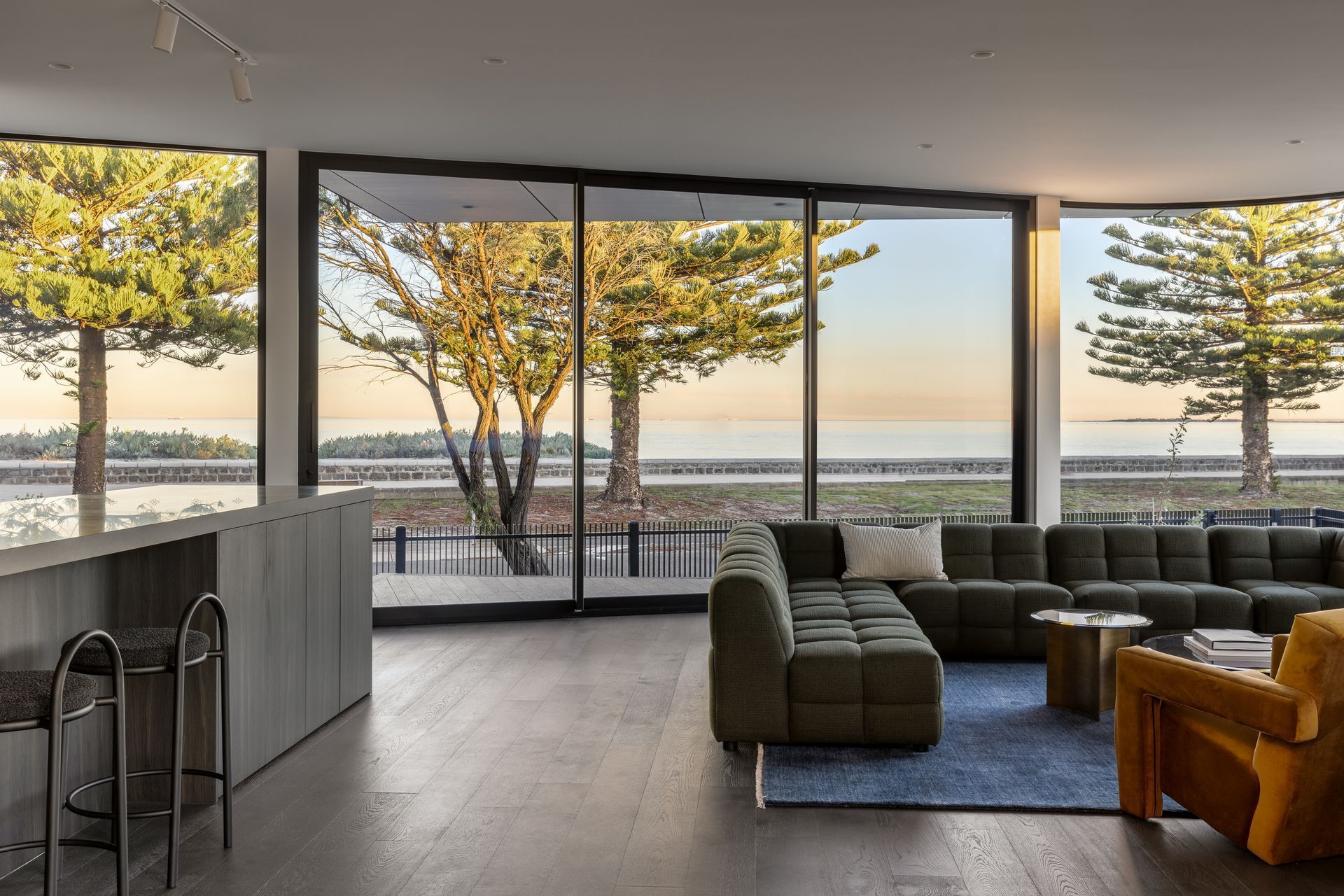
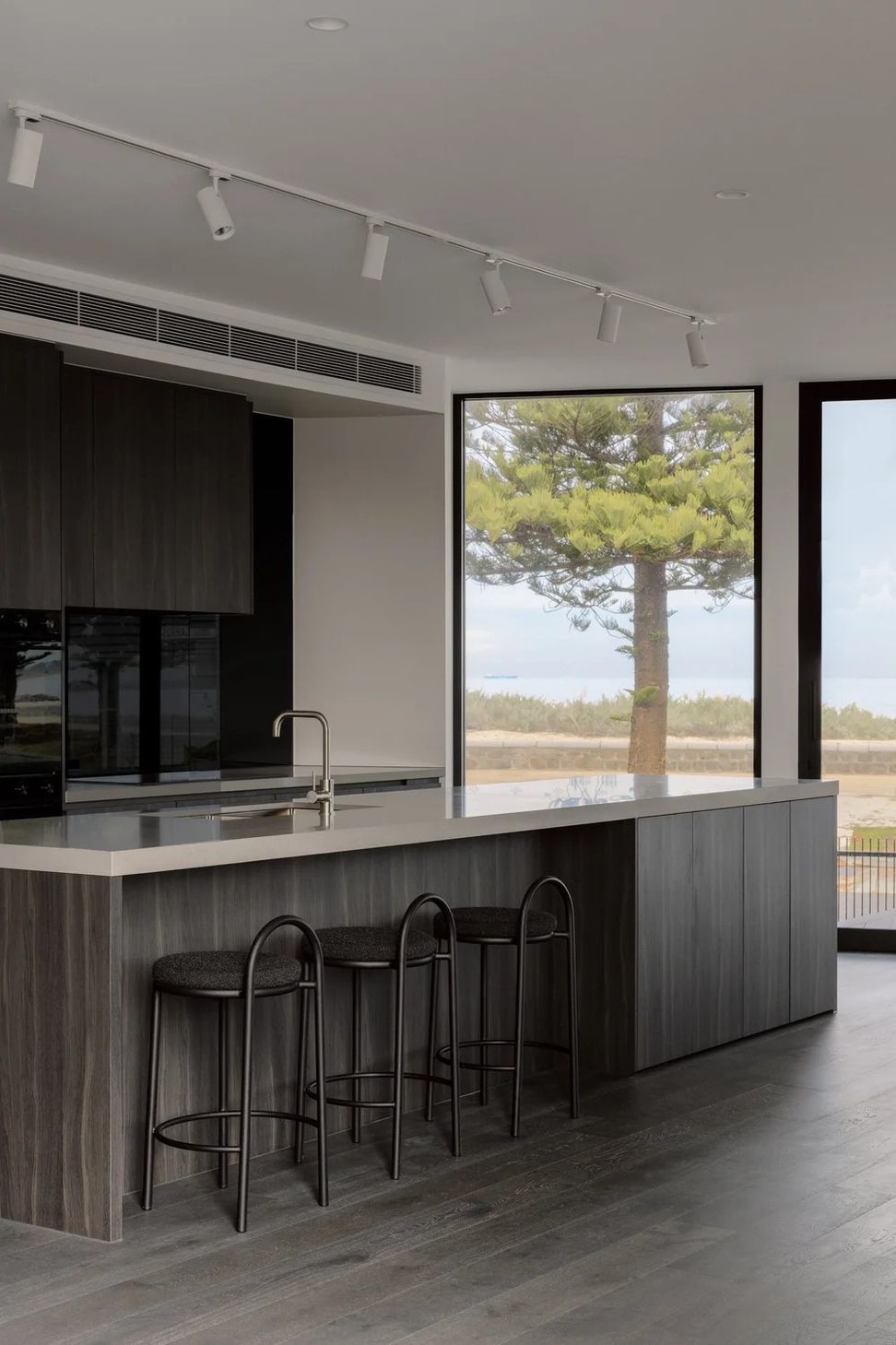
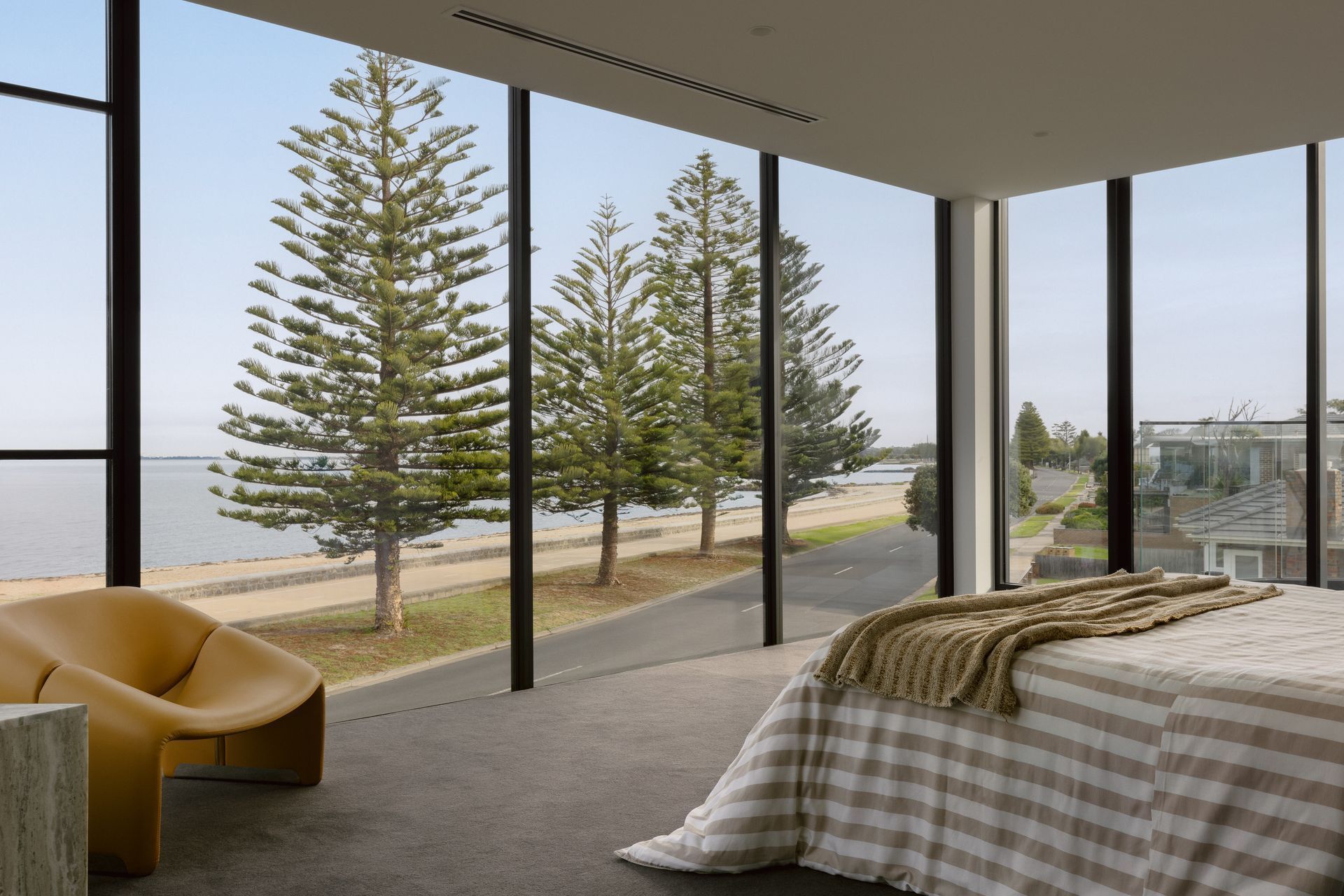
“We used that as an opportunity to raise the whole house, which means you get sea views on both floors,” Chan says. “It’s not a typical architectural move you see these days, but it really improved the outlook.”
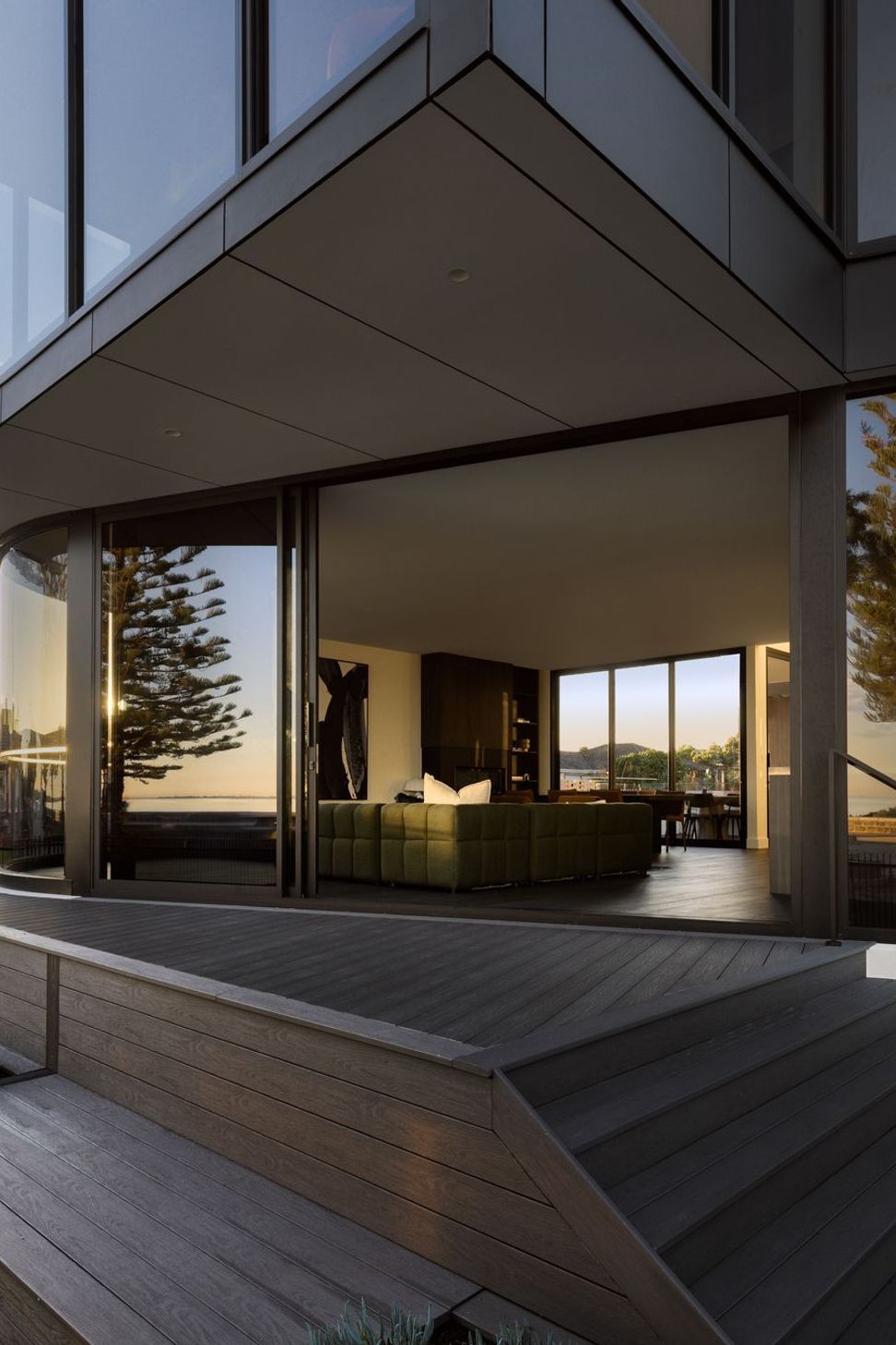
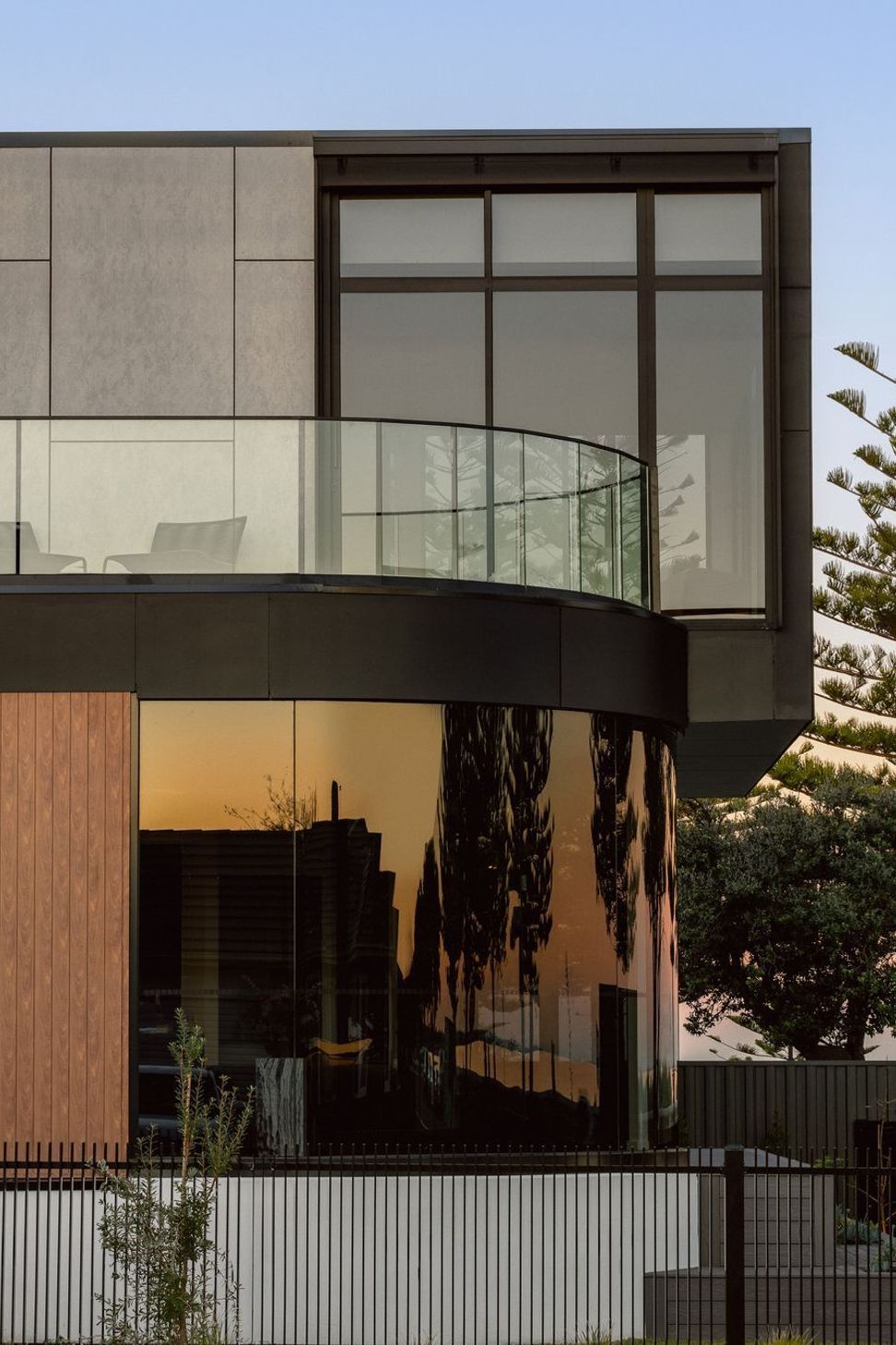
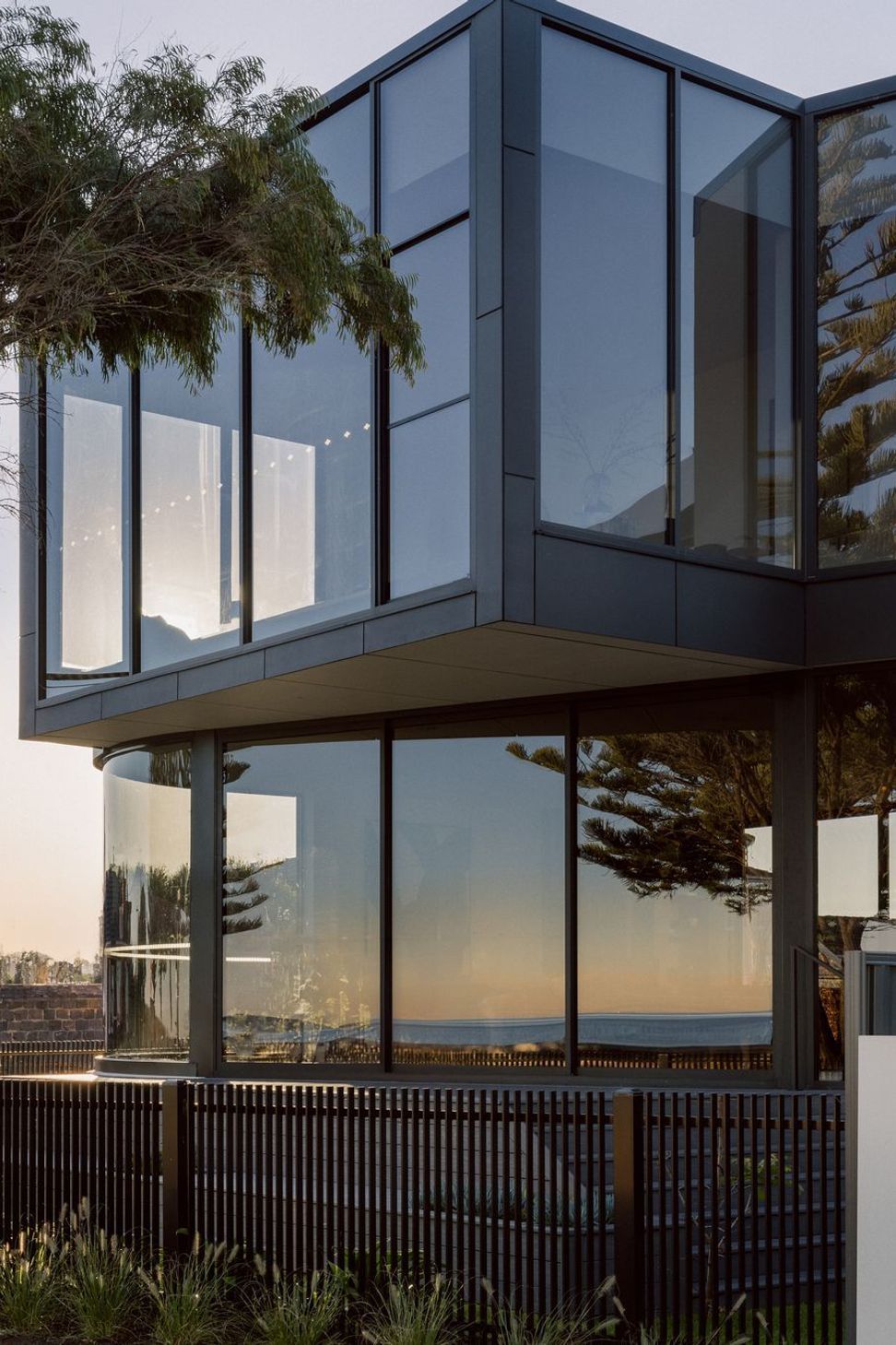
The resulting form is distinctly modern, softened by subtle curves that temper the expanses of glass and lend a sense of fluidity to the façade.
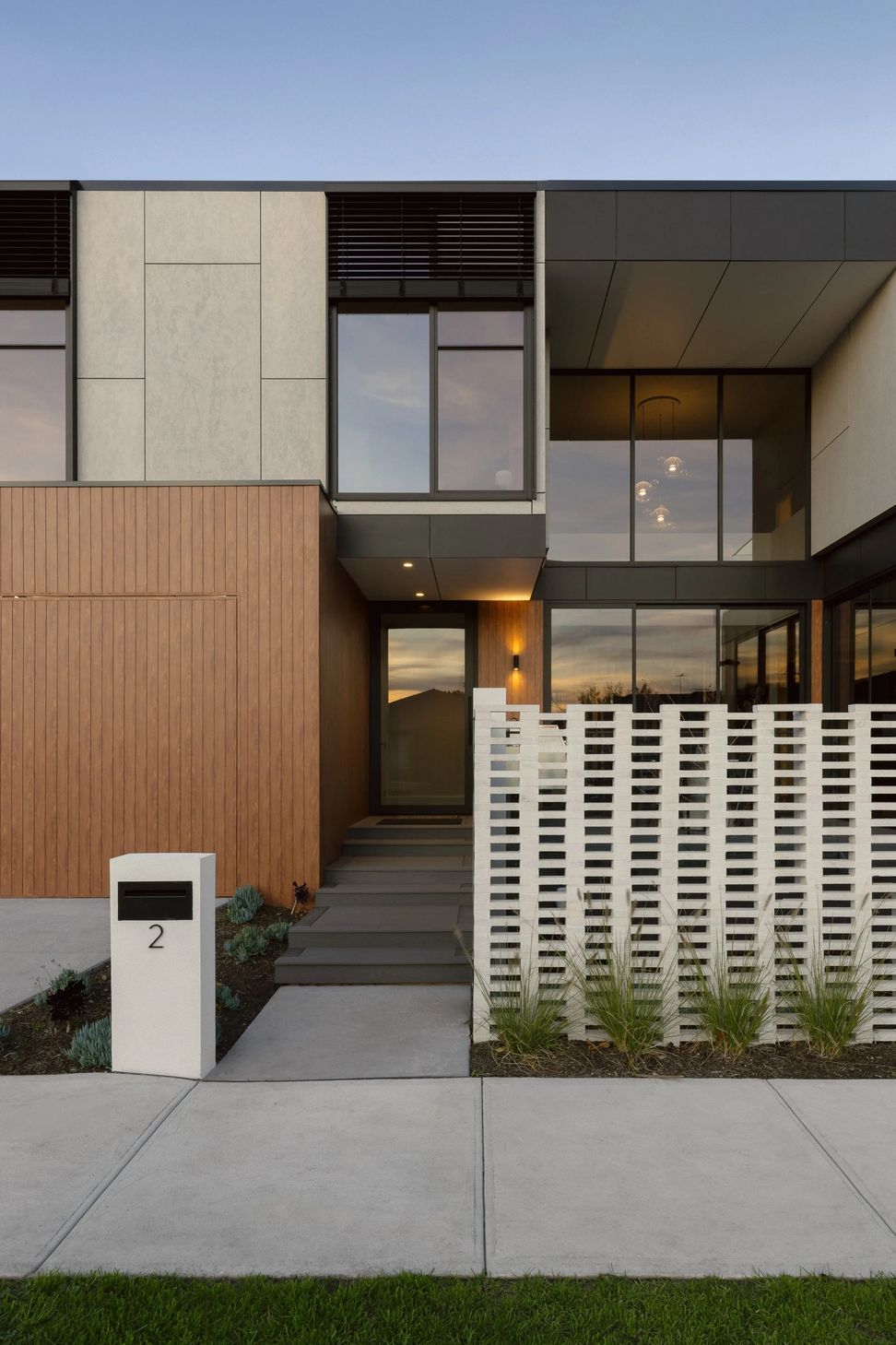
Materiality was carefully considered in response to the coastal environment. Longevity was essential, but not at the expense of warmth or texture. The exterior palette combines metal cladding, extensive glazing, brickwork and composite timber elements that won’t degrade in the salt-laden air.
“It had to be really robust because it’s on the coast,” Chan notes, “but we also wanted to soften the façade with texture and colour.”
A perforated brick fence at the front provides privacy while introducing depth and tactility to the streetscape.
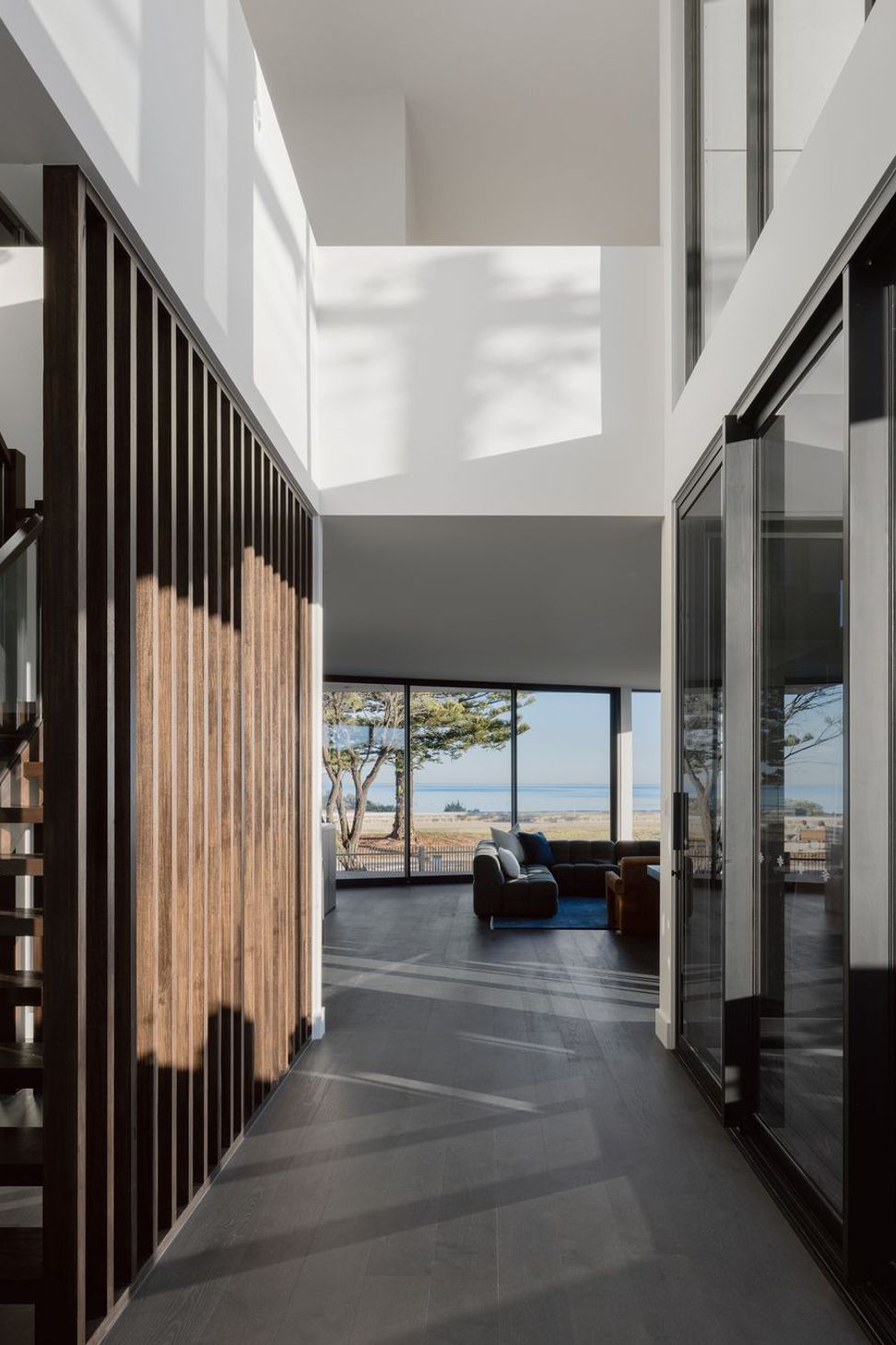
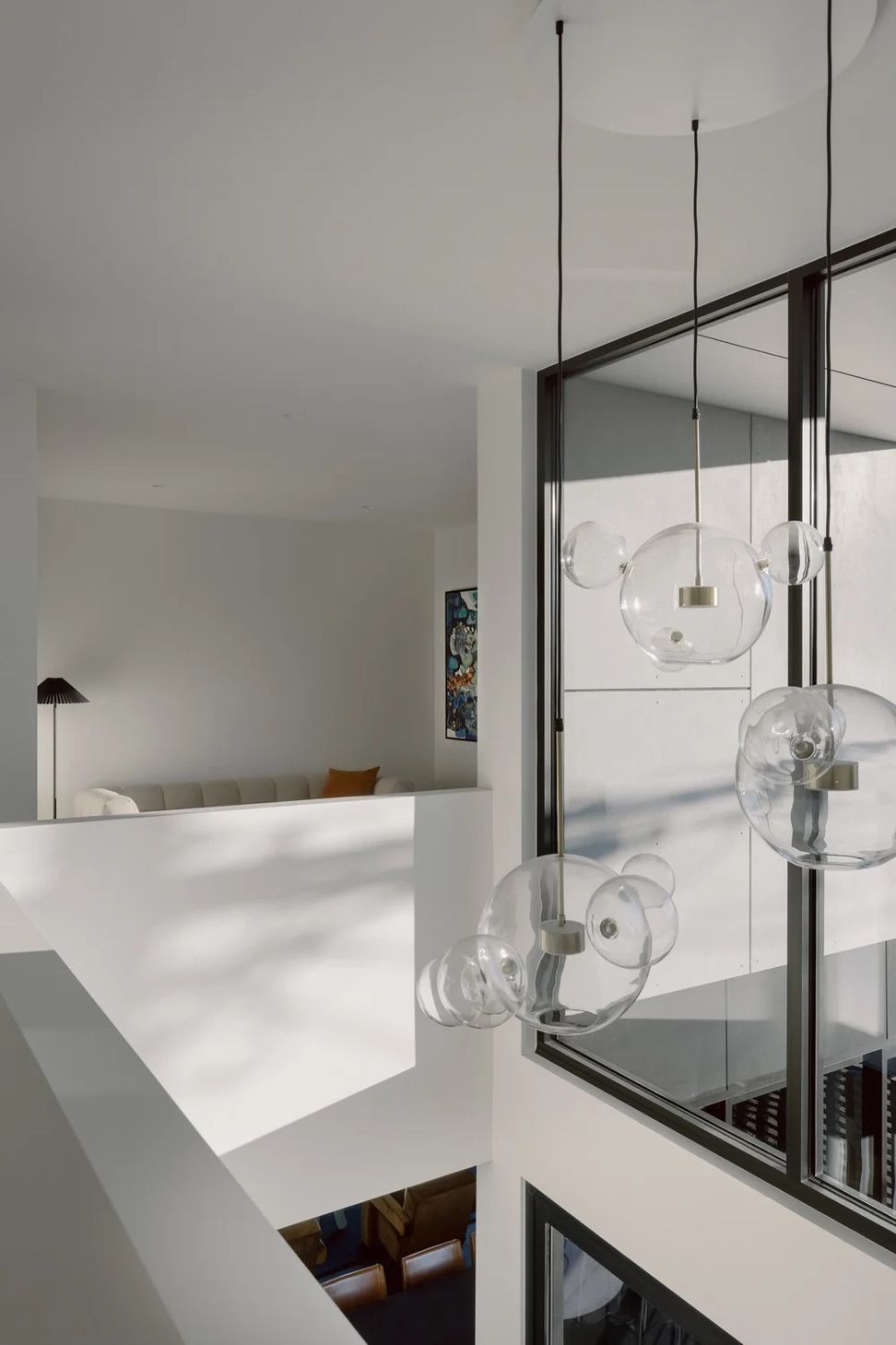
Inside, the experience is deliberately choreographed. Arrival is marked by a dramatic double-height void that immediately draws light deep into the plan and visually connects both levels of the home.
“It connects all the internal spaces, and then as you move through, you see the view of the beach through the windows at the end… that’s the real showstopper.”
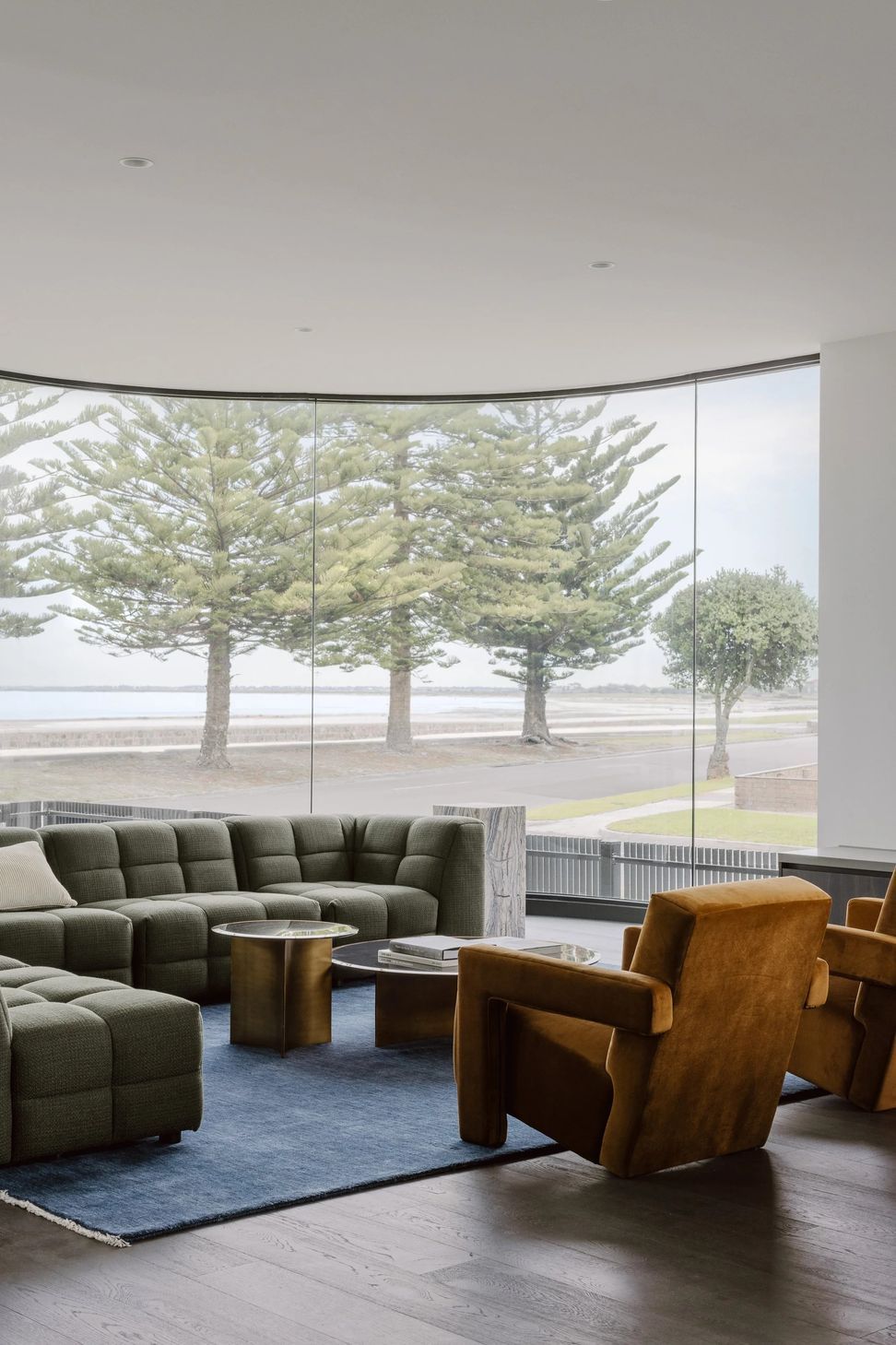
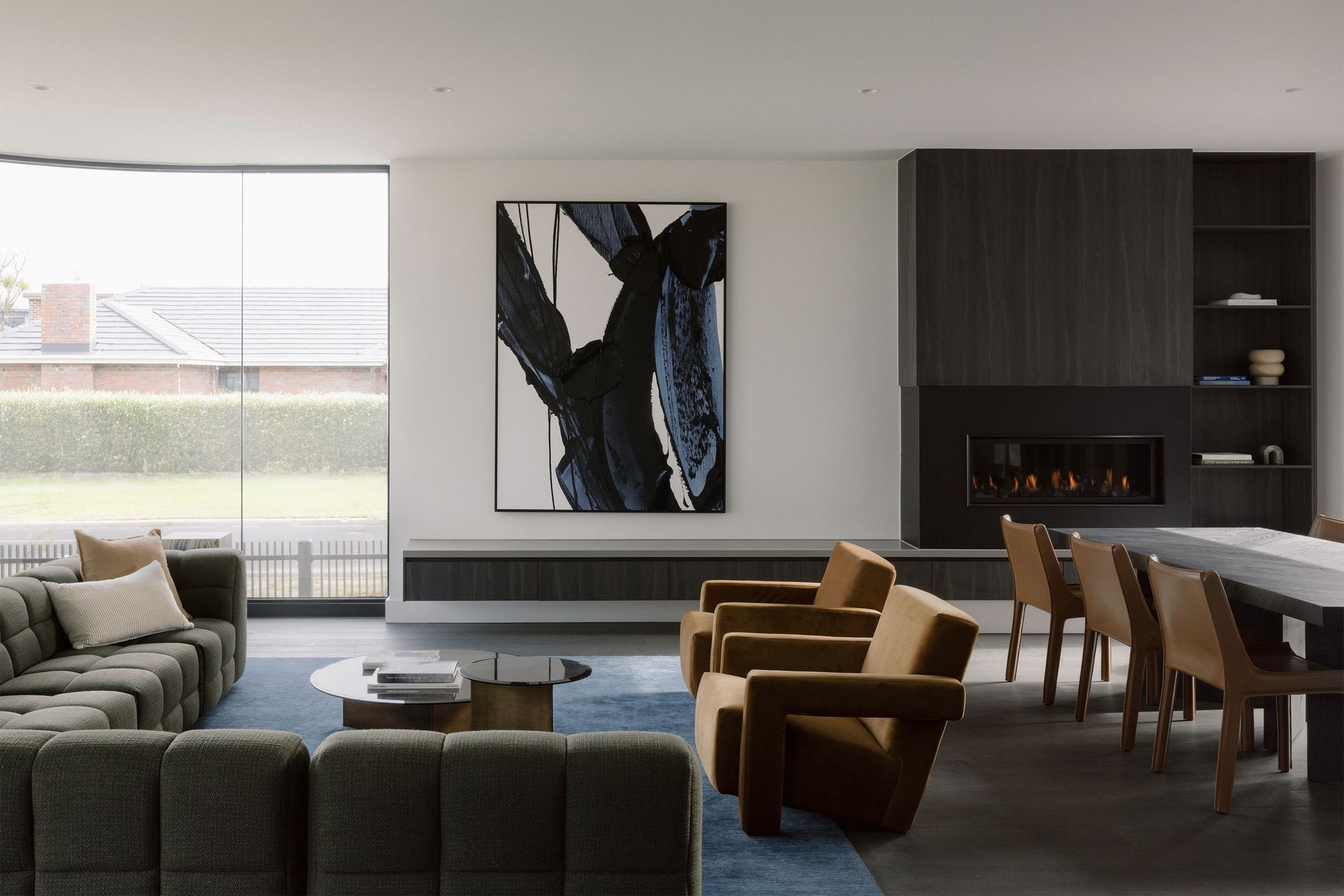
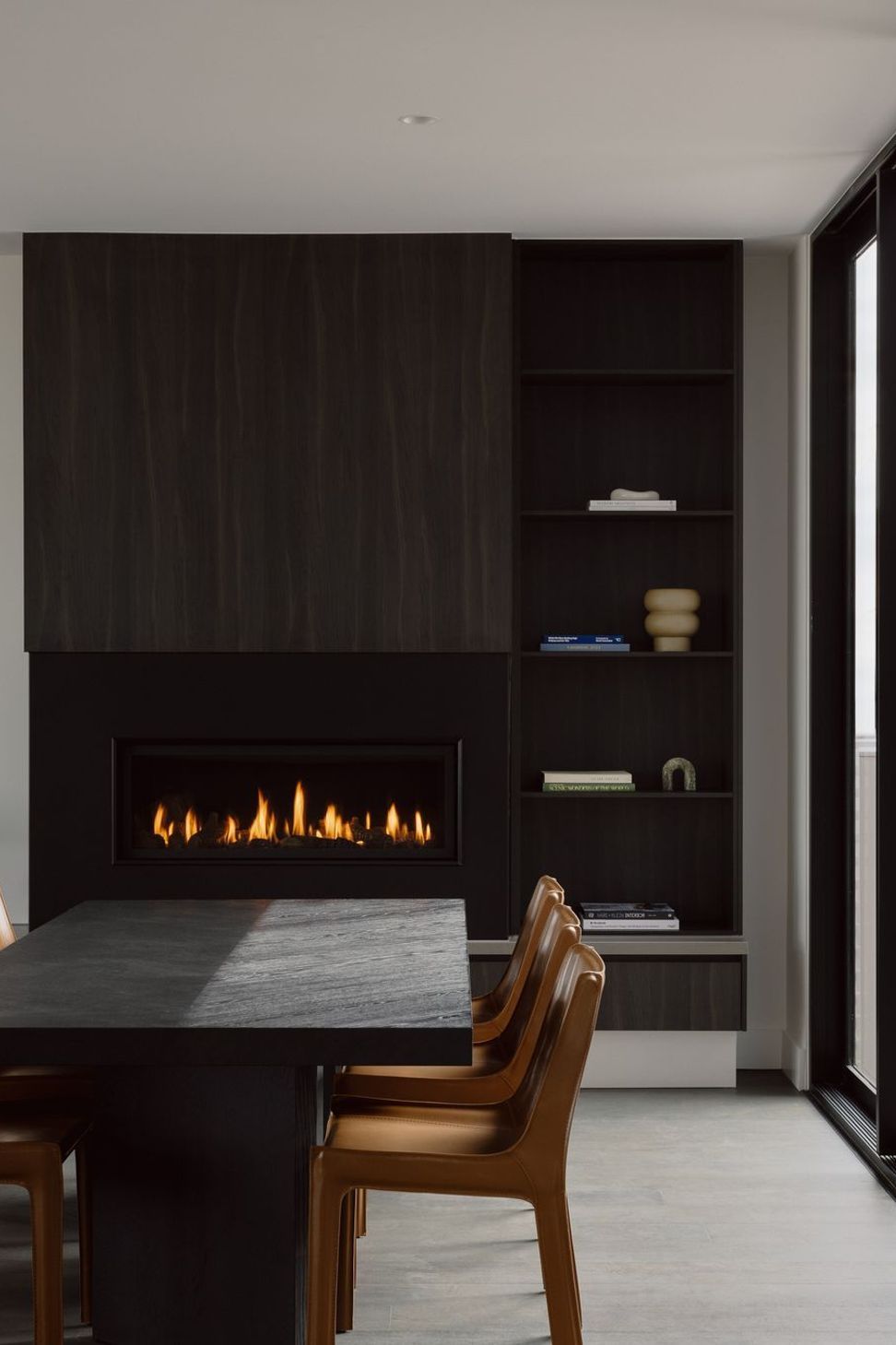
From the kitchen and dining area to the living room’s curved glass wall, the plan is oriented to ensure that moments of daily life are consistently framed by the water beyond.
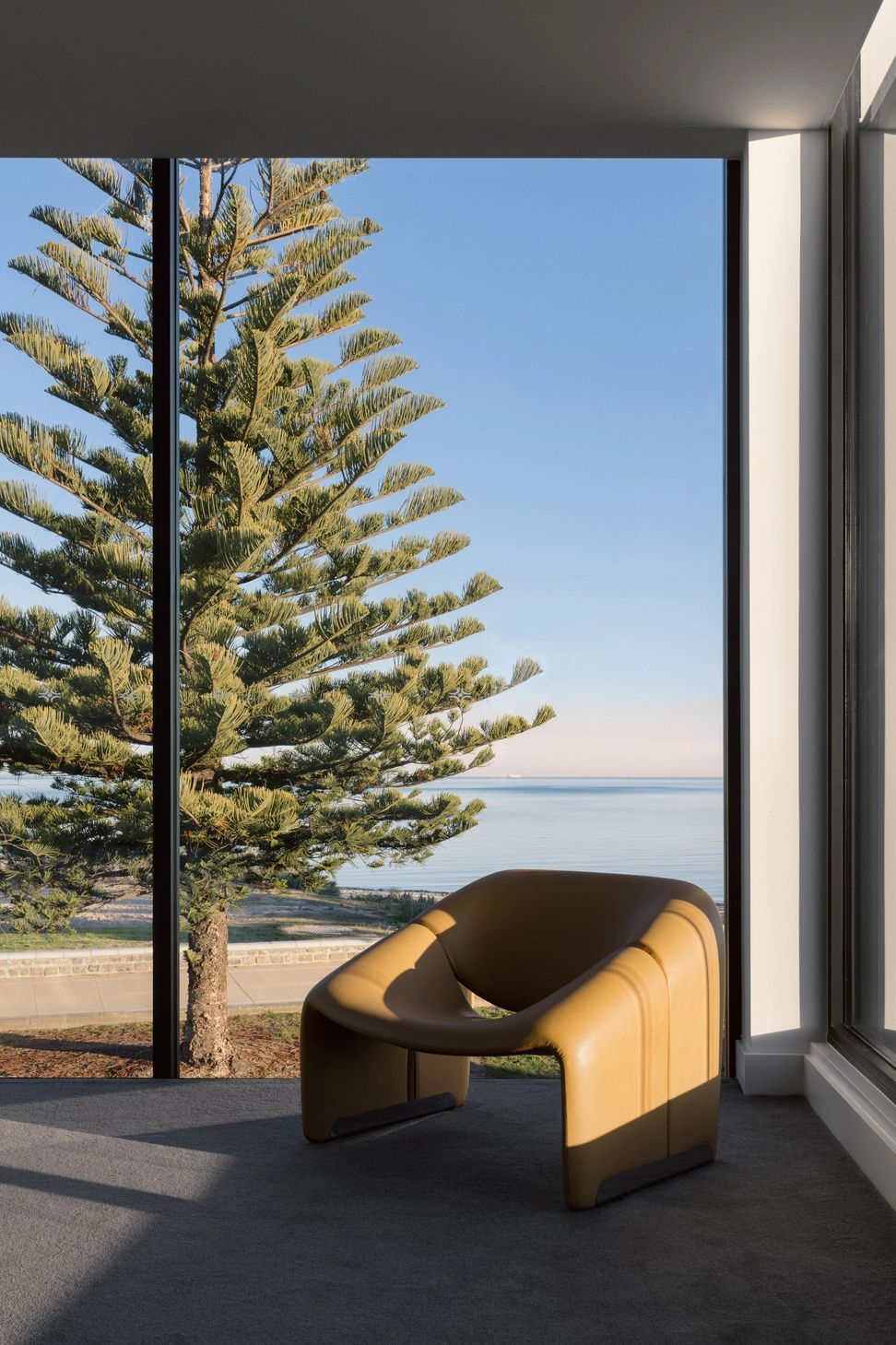
Upstairs, the master bedroom occupies a privileged position overlooking the bay, while additional bedrooms enjoy their own carefully curated glimpses of the surrounding landscape.
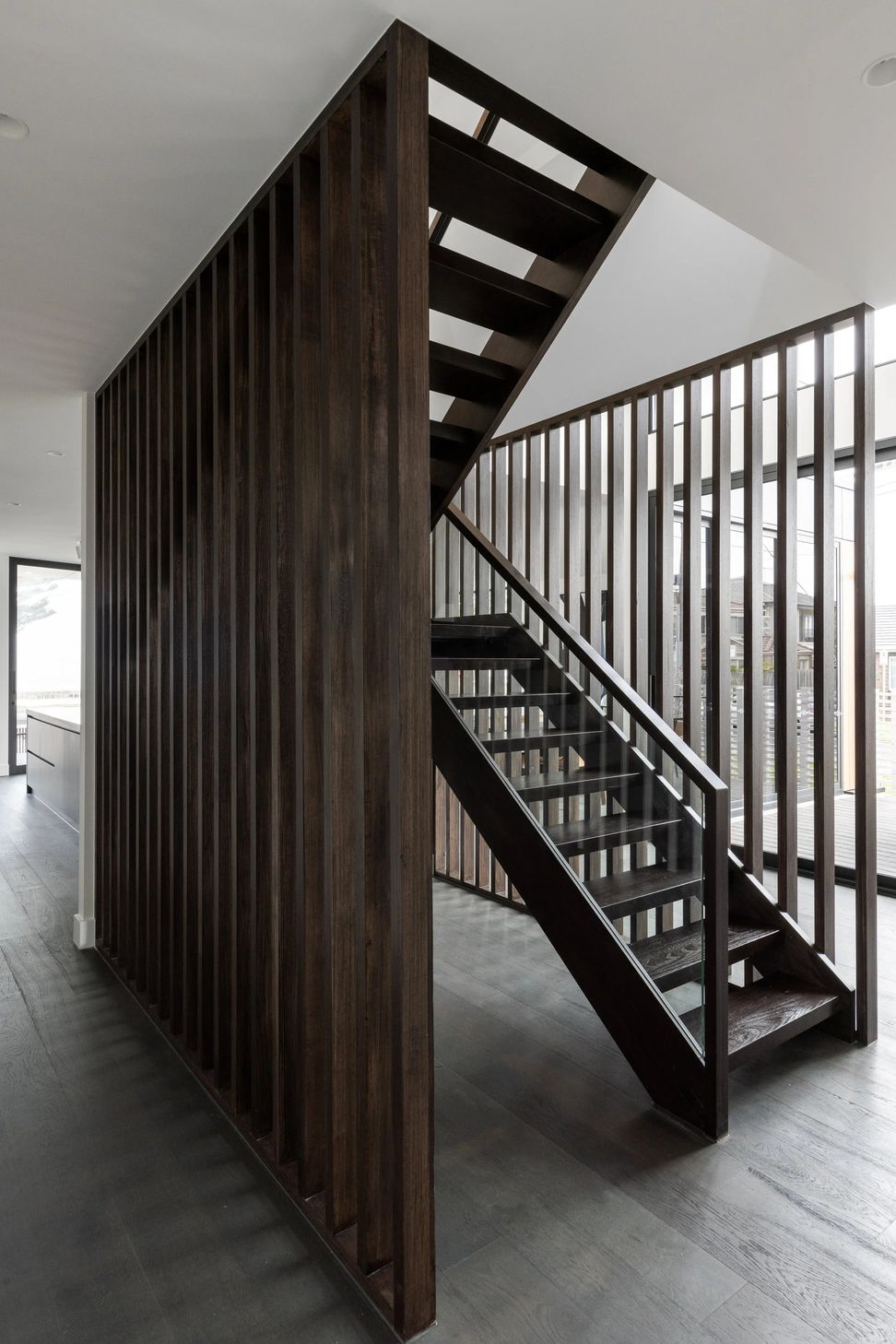
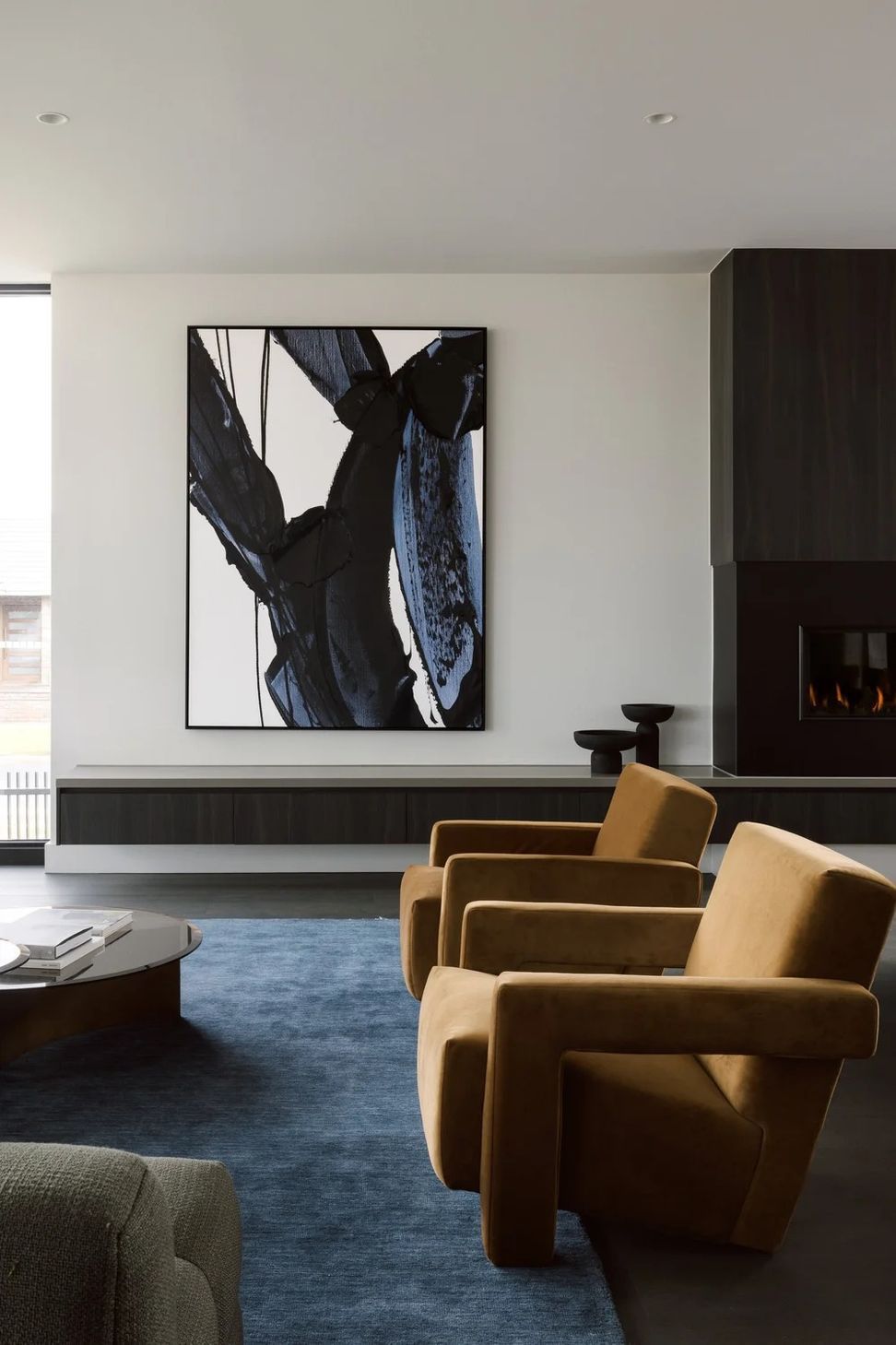
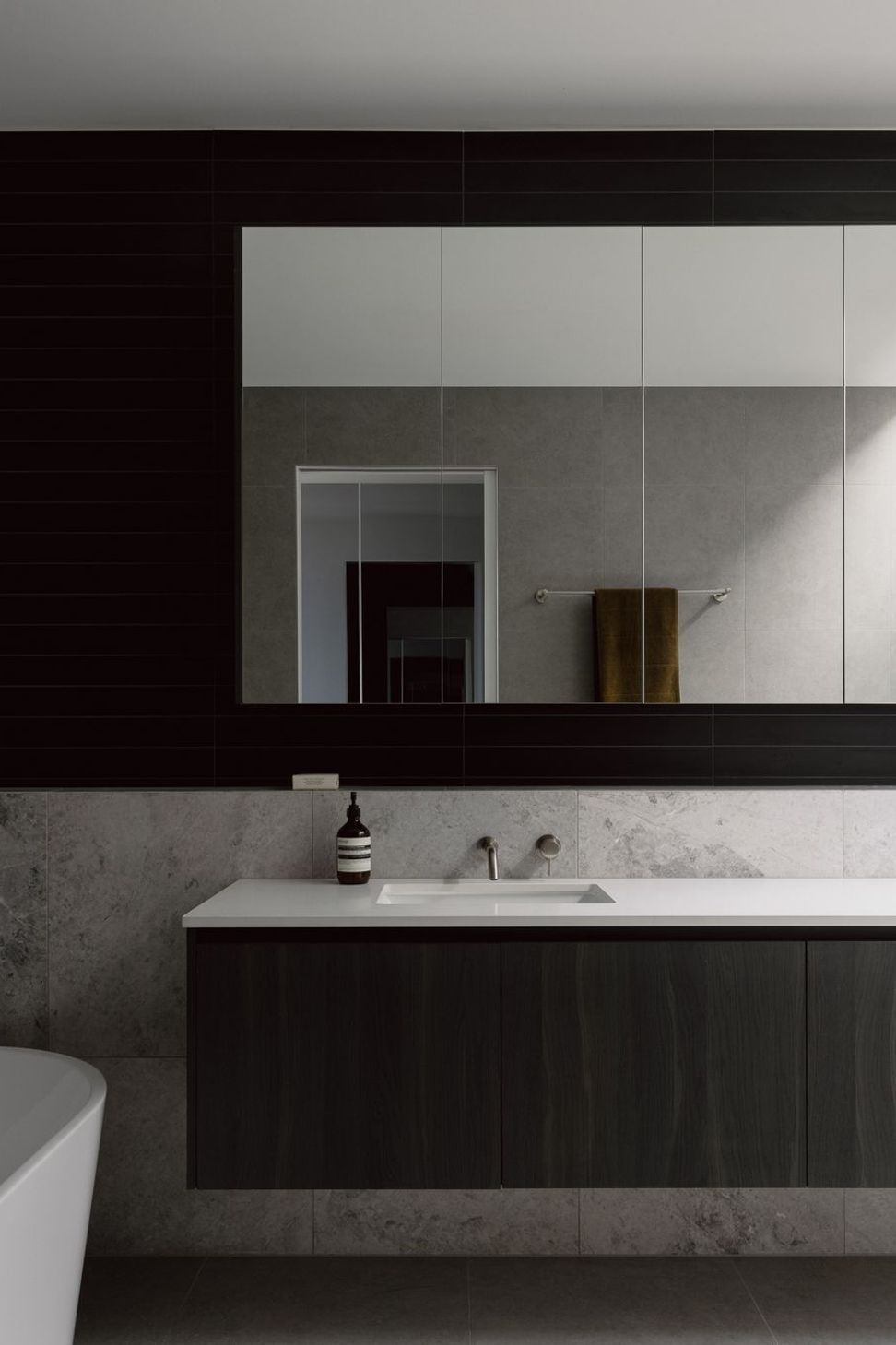
Throughout, the interior palette remains restrained yet richly layered. Dark timber veneers, timber flooring that wraps around the stairs, and a crisp interplay of blacks and whites create an atmosphere that feels both refined and grounded.
For Chan, the most memorable moment is one that only reveals itself from within.
“When you come in through the front door and you get that double-height void with the light streaming in, and then the view in the background it’s pretty amazing,” he reflects. “You don’t necessarily appreciate it from the outside, but as it reveals itself, it feels much bigger than it looks.”
The project is a clear expression of Chan Architecture’s design philosophy. “Being site responsive is a big part of what we do,” Chan says. “And the other thing is being really thoughtful about our clients’ needs.” In this case, that meant delivering a development that elevates its setting, responds intelligently to its coastal conditions, and offers a level of architectural ambition that feels elevated and enduring.
Words: Joanna Seton
Situated on a prime beachfront corner site, this project encompasses the development of two upscale townhouses in Altona. Designed to embrace the stunning views of Port Phillip Bay, the front residence features elevated living spaces facing the ocean views, alongside ancillary areas branching off from a central double-height circulation zone with an adjacent north facing courtyard. This circulation zone serves as a focal point, guiding access to the upper-level bedrooms, bathrooms, and a children’s retreat. The upstairs master bedroom that captures the panoramic view of the ocean, serves as a standout feature.
Similarly configured, the rear residence prioritizes northern exposure for its primary living areas, optimizing natural light and providing a seamless integration with the landscaped backyard.
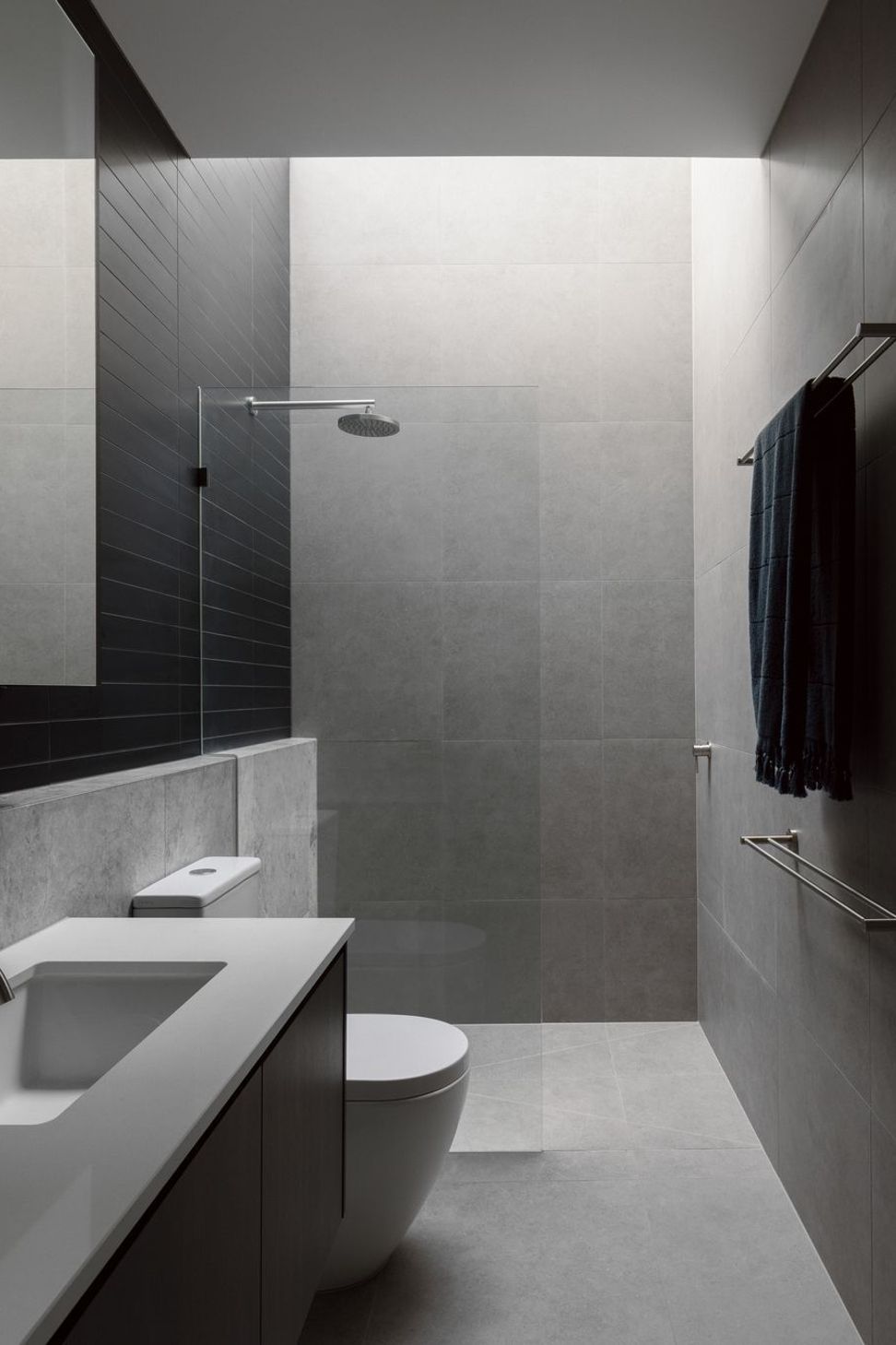
Internally, a material palette comprising charcoal-coloured engineered timber floors, warm grey stone, dark timber veneer joinery and sleek black furnishings give the spaces a modern sophisticated feel. Each bathroom is appointed with luxurious finishes including a marble feature wall, oversized porcelain tiles, dark timber veneers and contrasting long black tiles, complemented by strategically placed skylights that bring in natural light.
Externally, the facade balances clean modern lines with an interplay of textures including metal, concrete, timber and perforated white bricks, lending depth and visual interest to the composition. Curved glass windows soften the facade and frame picturesque views from the living areas.
- Completed
- 2024
- Price range
- $2m - $3m
- Building style
- Modern
- Client
- Mancini Made
Like this Project?
Hire Chan Architecture
Professional Reviews
The products behind the project
Six products specified into this build from five suppliers, verified ArchiPro members. Tap through to specifications, suppliers and lead times.


Professionals used in
this project
The practices and trades credited on this project.







More projects from
Chan Architecture
Other work by Chan Architecture, across every category they build in.


More in
Beach House
Everything else in Beach House, from every practice on ArchiPro.


Next Project
Keep scrolling