A mid-century townhouse reimagined around light and landscape
A late 1960s townhouse at the end of a long row held a rare advantage over its neighbours. While most of the development had compact front and rear courtyards, this particular home occupied the end of the terrace, giving it an unexpectedly generous side garden framed by mature trees. For its owners, two Hong Kong expats returning to Melbourne after decades abroad, it presented the opportunity to create a permanent home that embraced both landscape and light.
"They'd owned this property for some time," explains architect Rob Nerlich of McMahon Nerlich Architects. "Unlike the rest of the townhouses on the row, it benefited from a pretty substantial garden. It gave us the ability to extend the house in a way that you just can't with the others."
The clients had spent many years living in Hong Kong before returning to Melbourne, initially settling on the Mornington Peninsula. With ageing parents and family spread across Melbourne, New Zealand and London, the time eventually came to move back into the city. They wanted a home that reflected this next stage of life, while making room for the books, artworks and treasured objects they had collected over decades.
Rather than simply refurbish the existing townhouse, the architects looked closely at the opportunities presented by the site. Although the garden sat to the east, extending along the southern boundary allowed the new living spaces to face north, capturing valuable sunlight despite the heavy shade cast by neighbouring trees and an apartment building.
"We really wanted to take advantage of the garden,” Nerlich says. “There’s a beautiful borrowed landscape with all these mature trees surrounding the site, so we wanted the home to get that extended view beyond.”
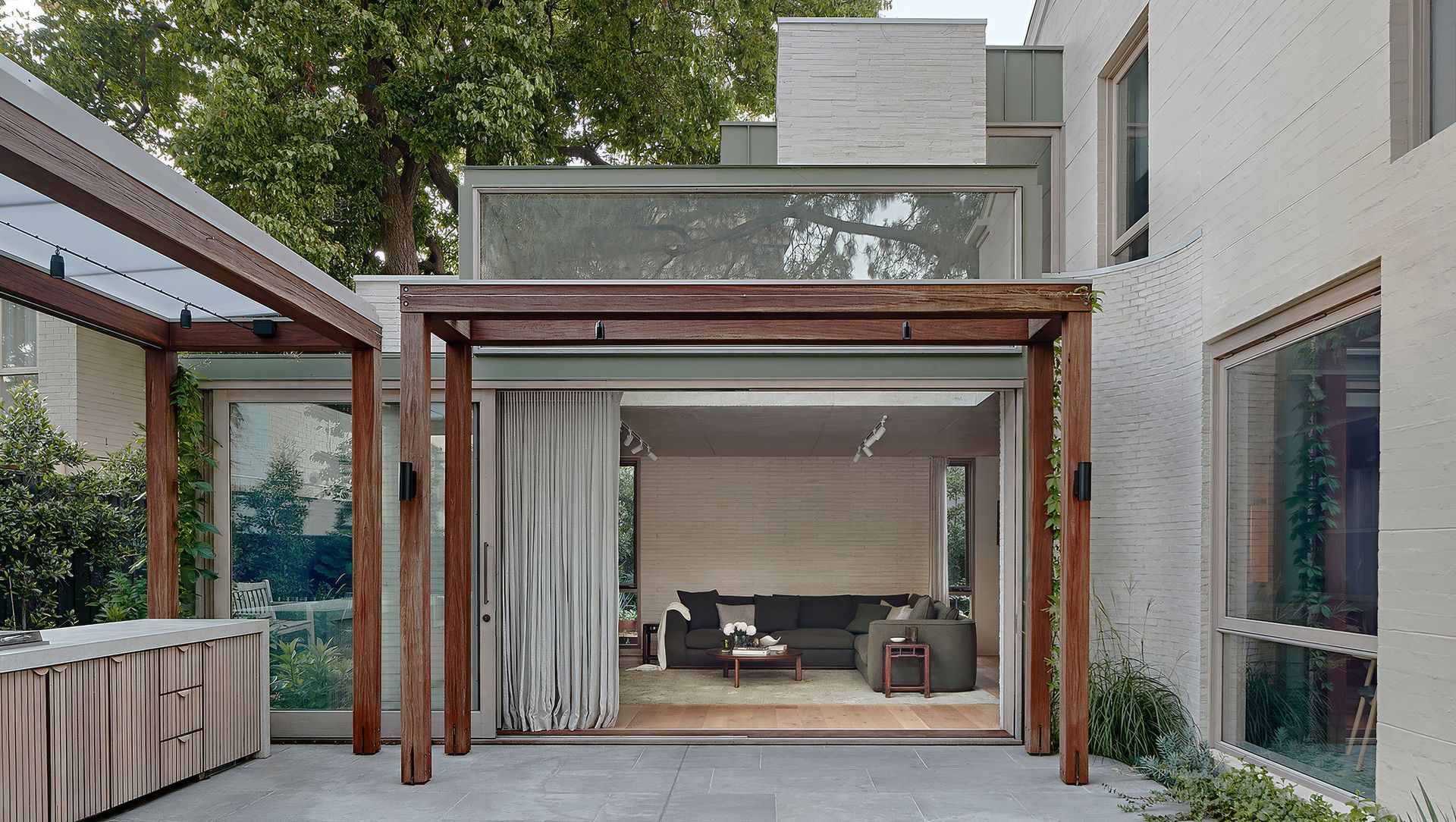
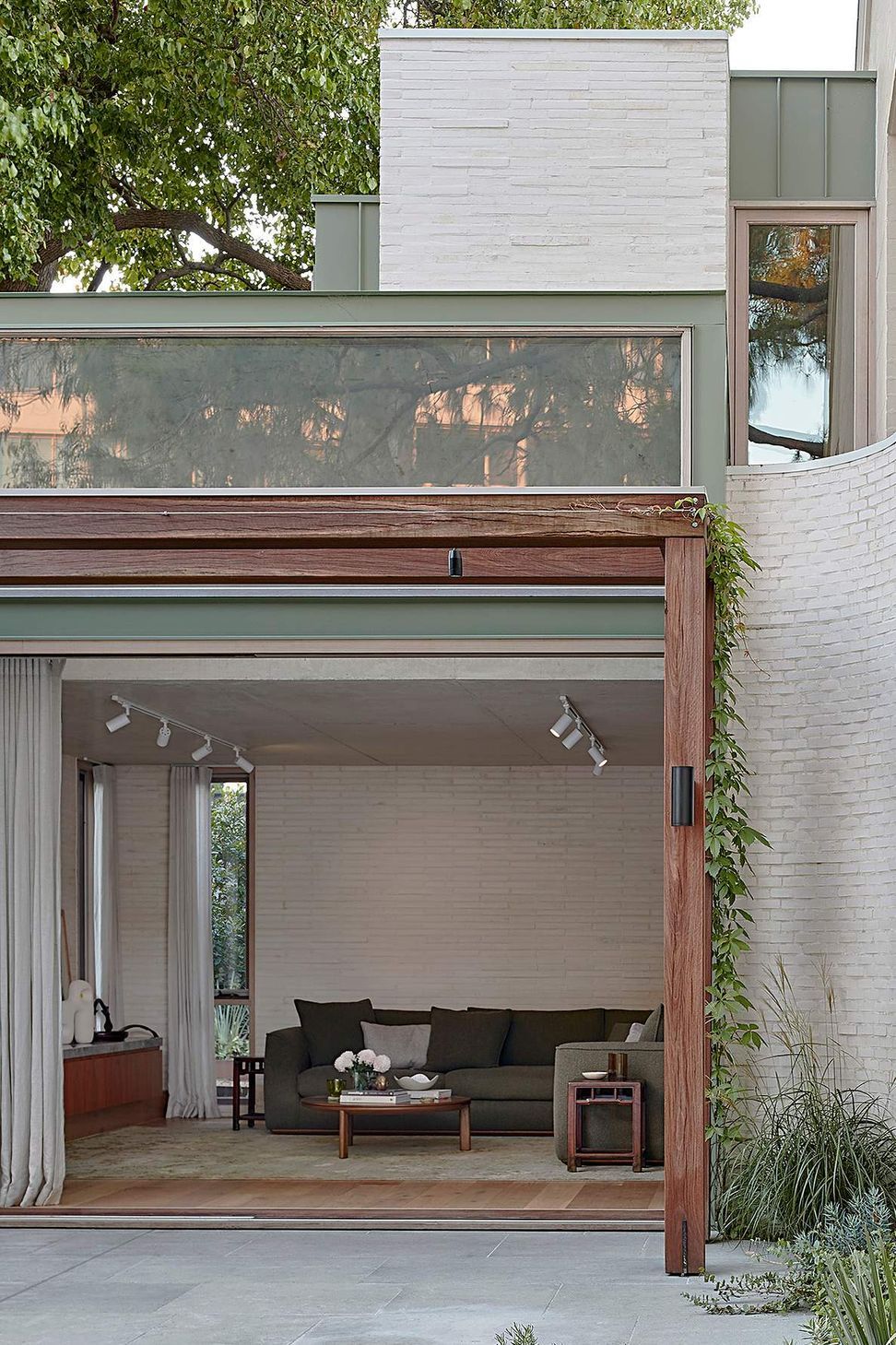
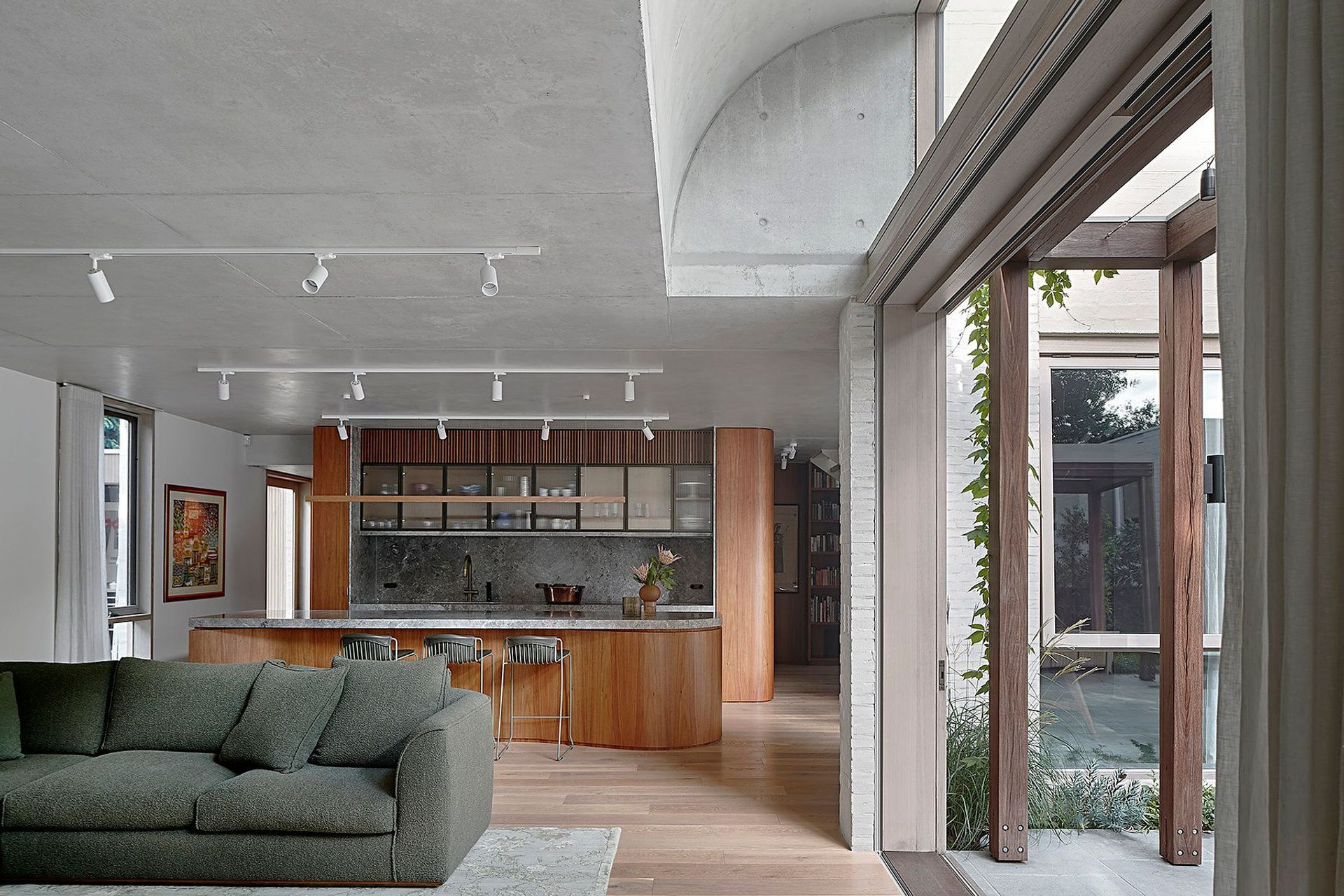
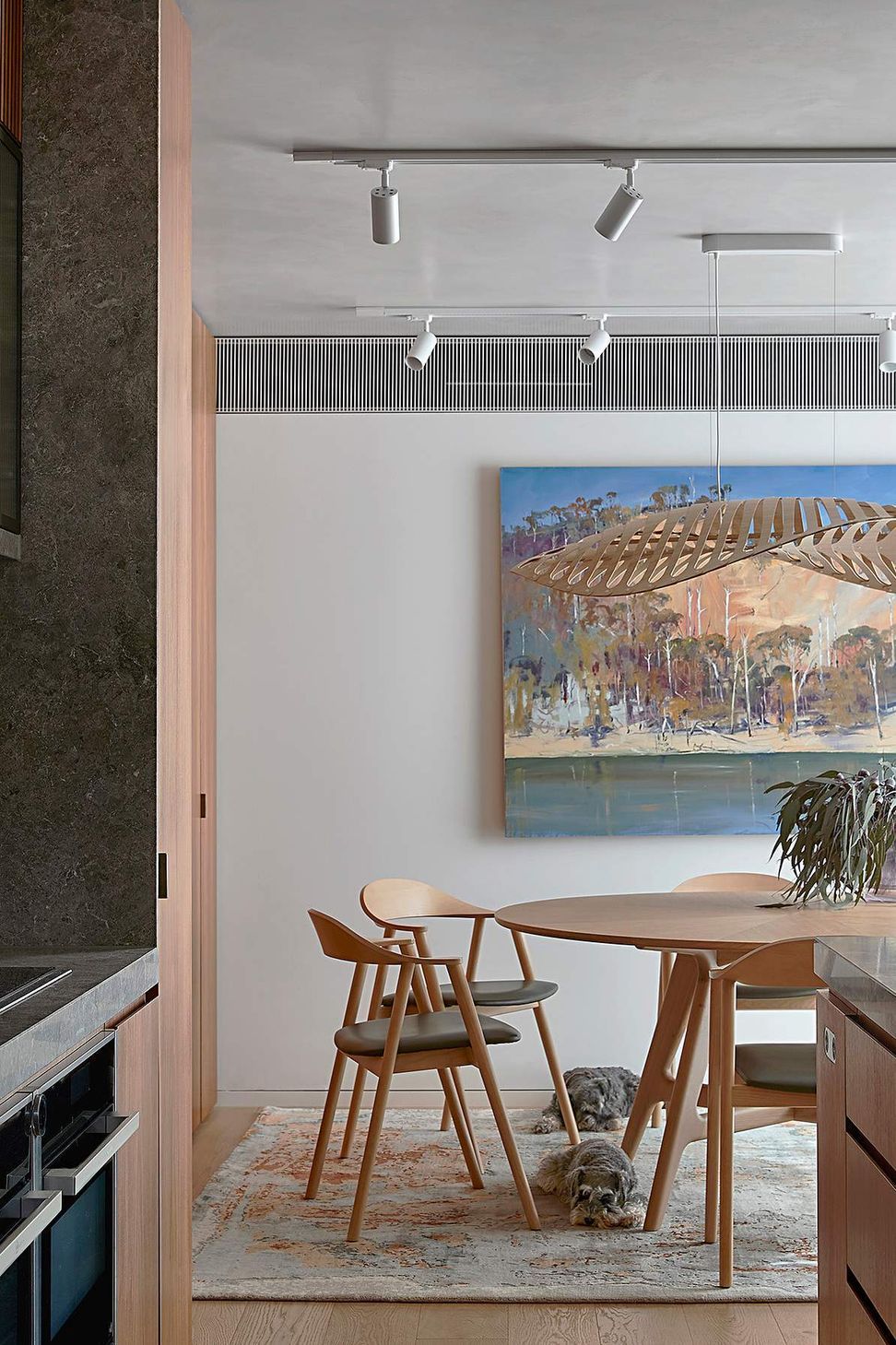
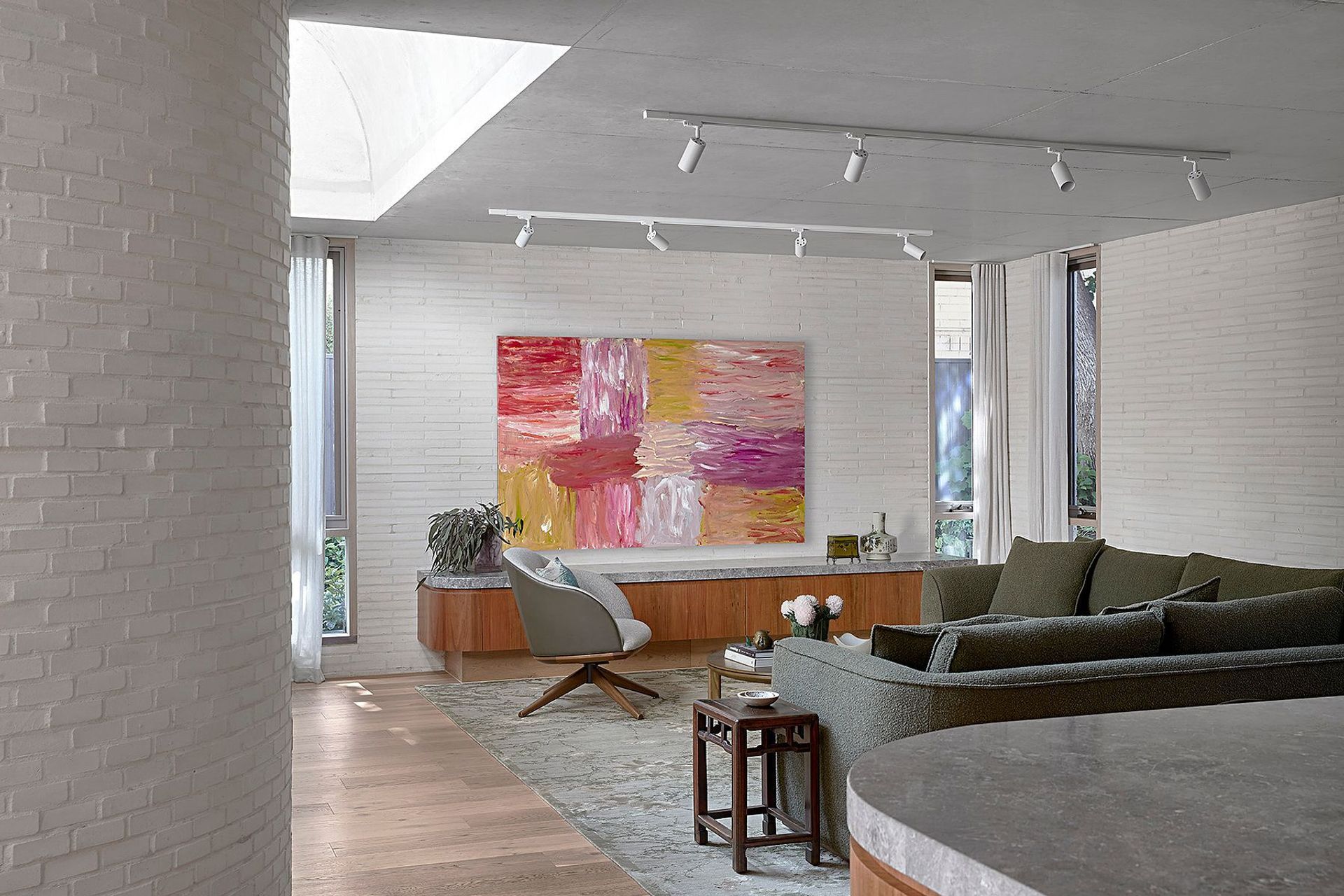
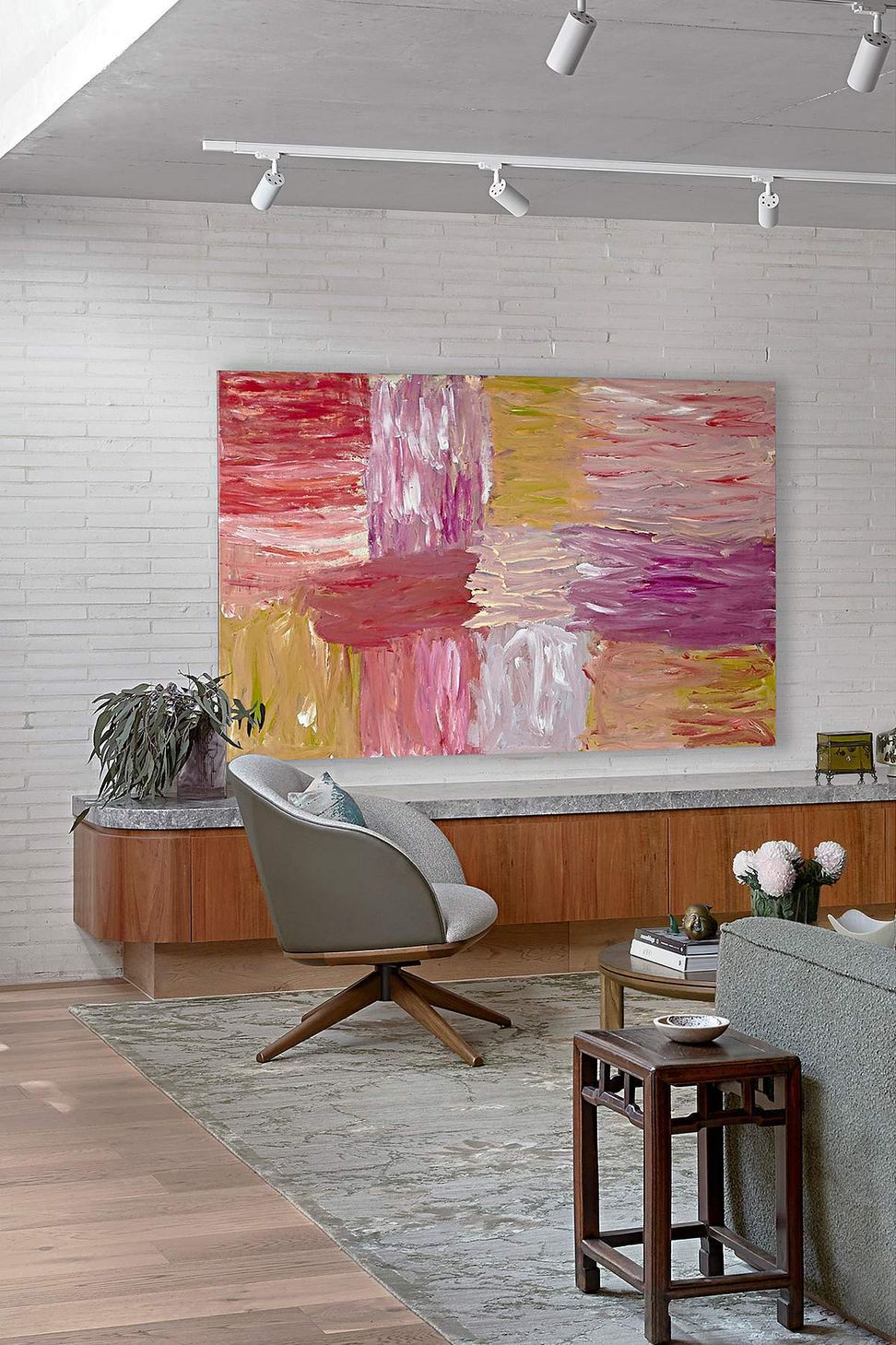
Extending the home unlocked a completely new relationship with the site. The new living room projects into the garden, while the kitchen and dining spaces were reorganised around it, creating a continuous sequence of shared spaces that all benefit from northern light.
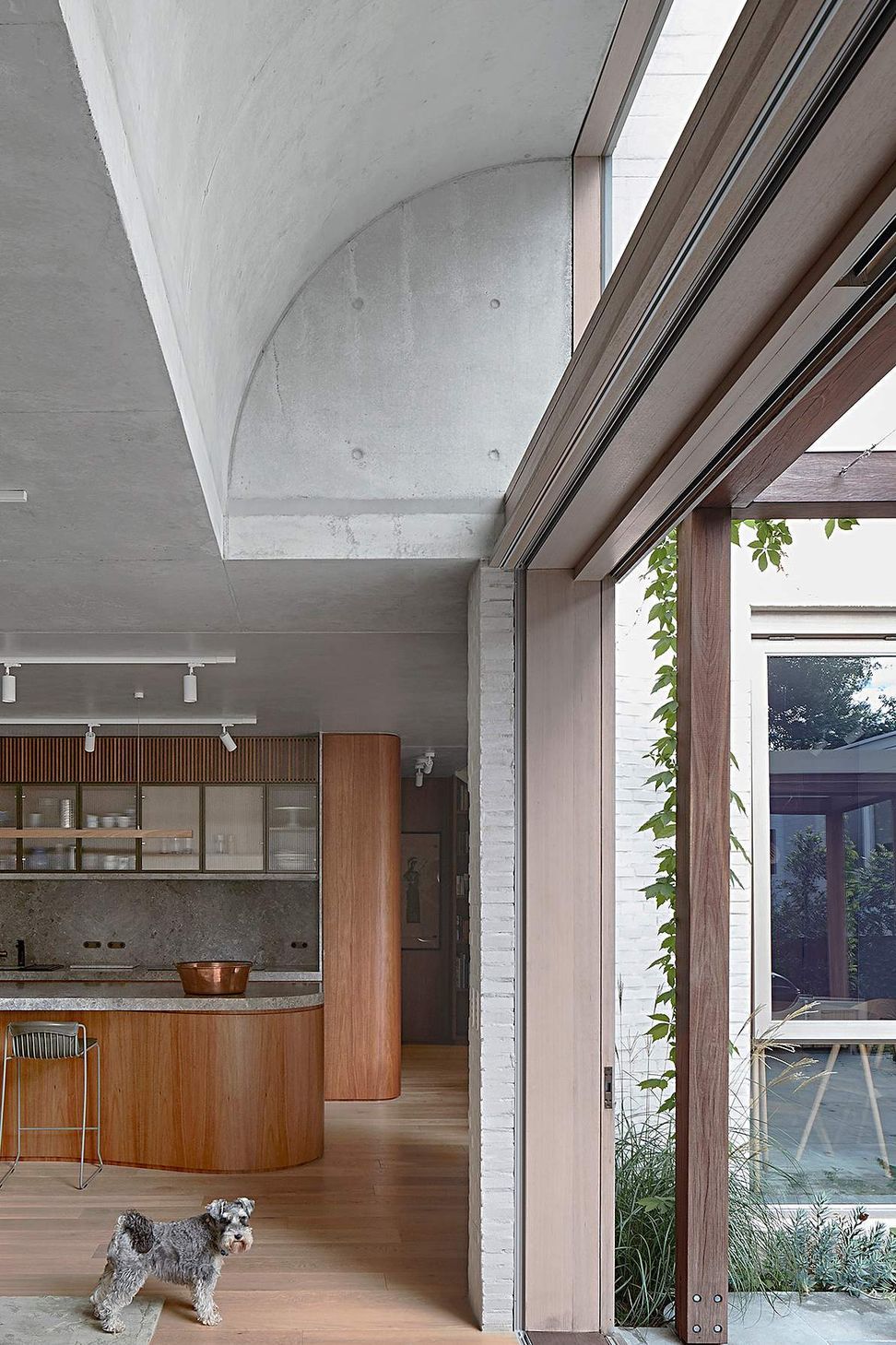
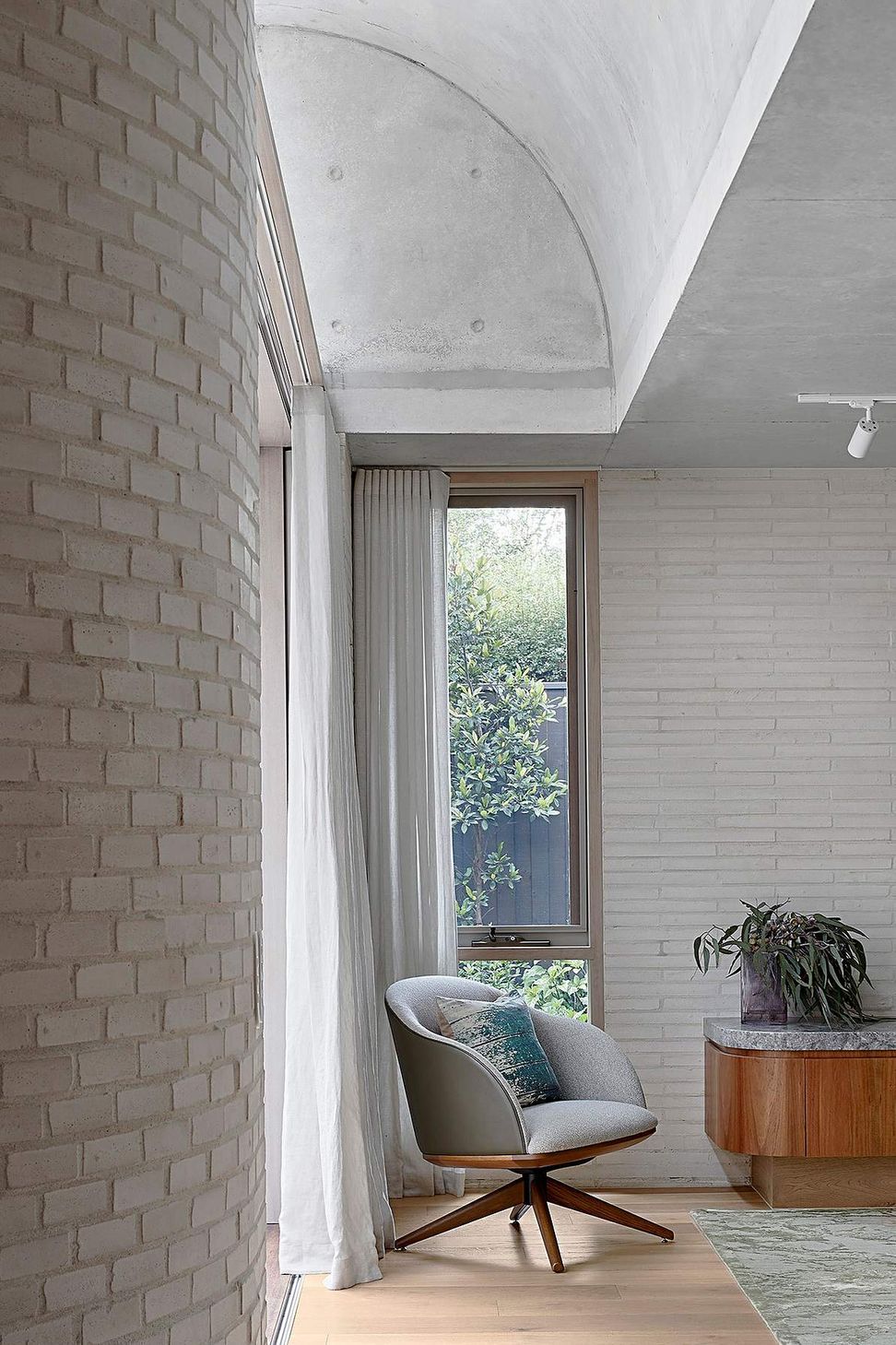
A sculptural light scoop above the living room draws additional sunlight deep into the interior, helping overcome the heavy shading from neighbouring trees and surrounding buildings.
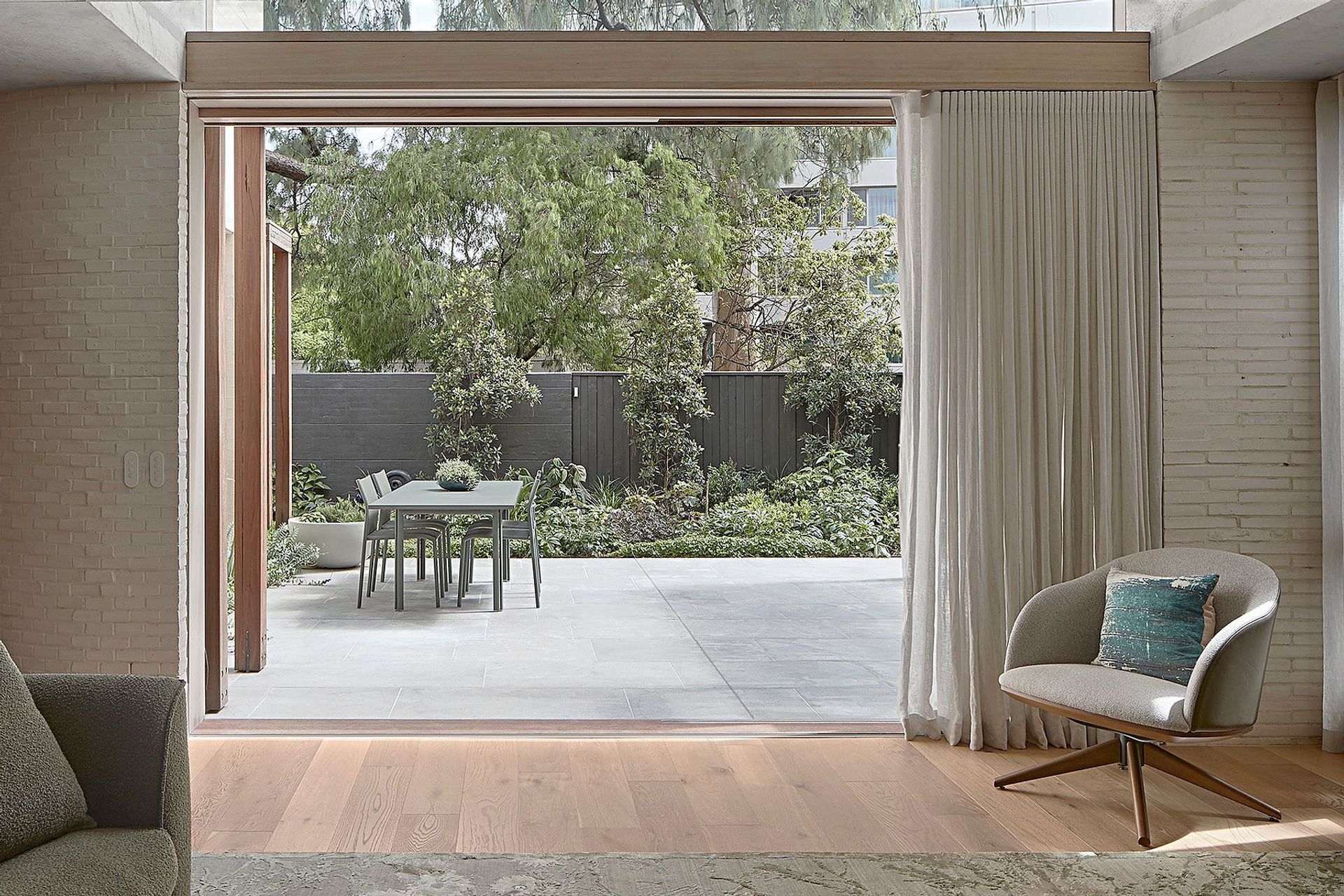
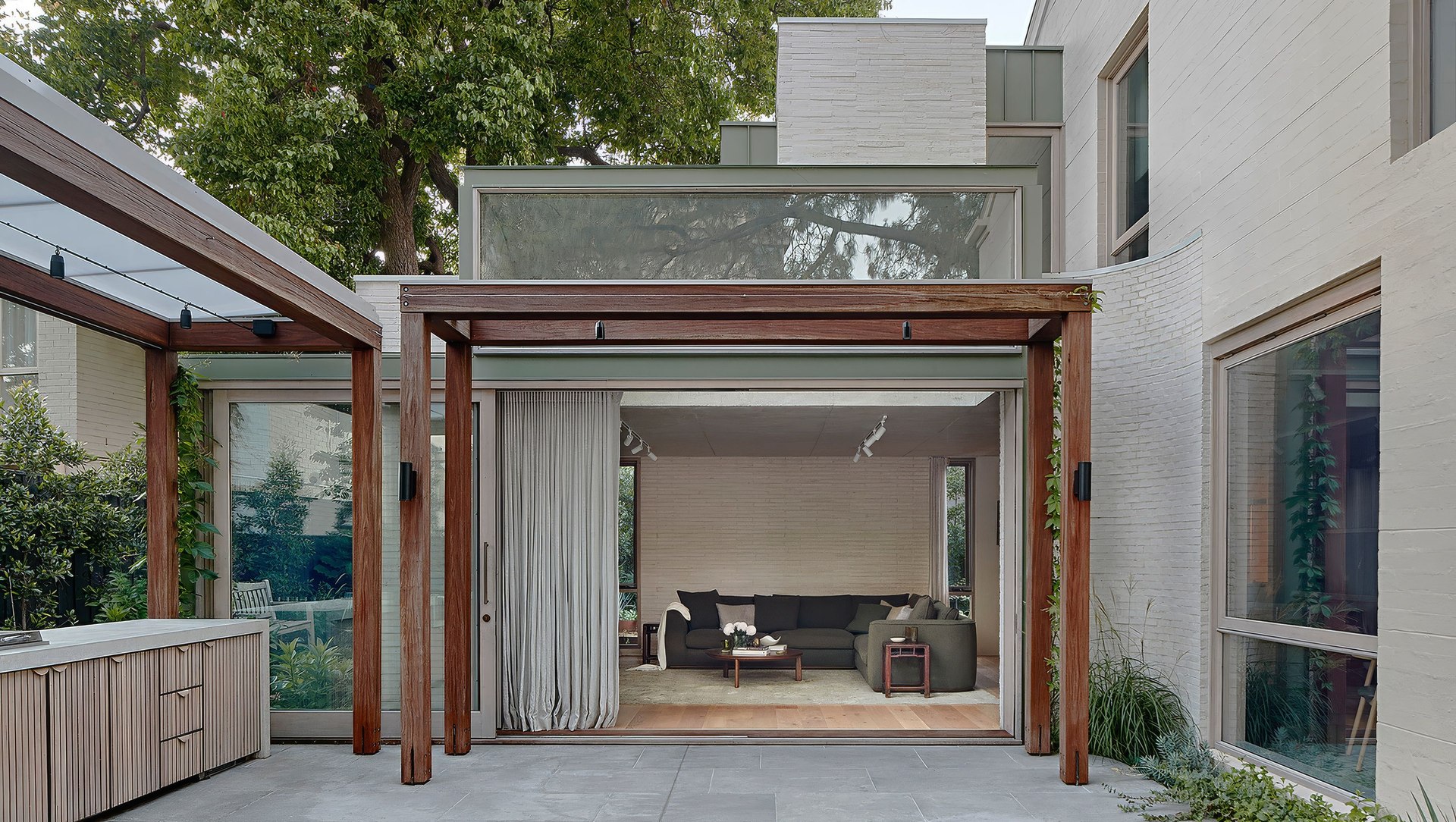
The connection to the landscape is heightened by an oversized sliding glass door that disappears completely behind the external wall when open.
"When people talk about dissolving the indoor-outdoor threshold, the doors are usually still there," Nerlich says. “But this door disappears completely."
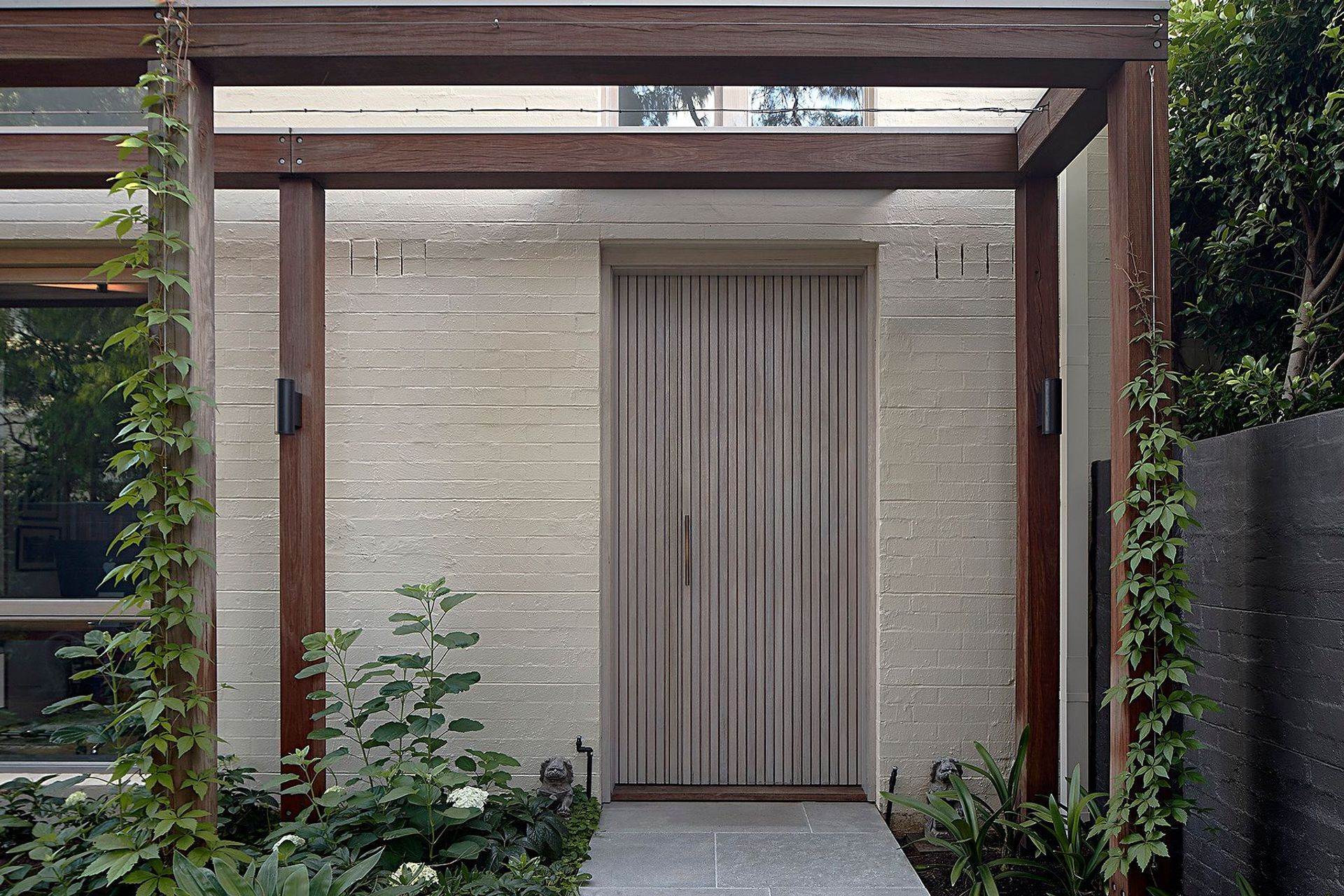
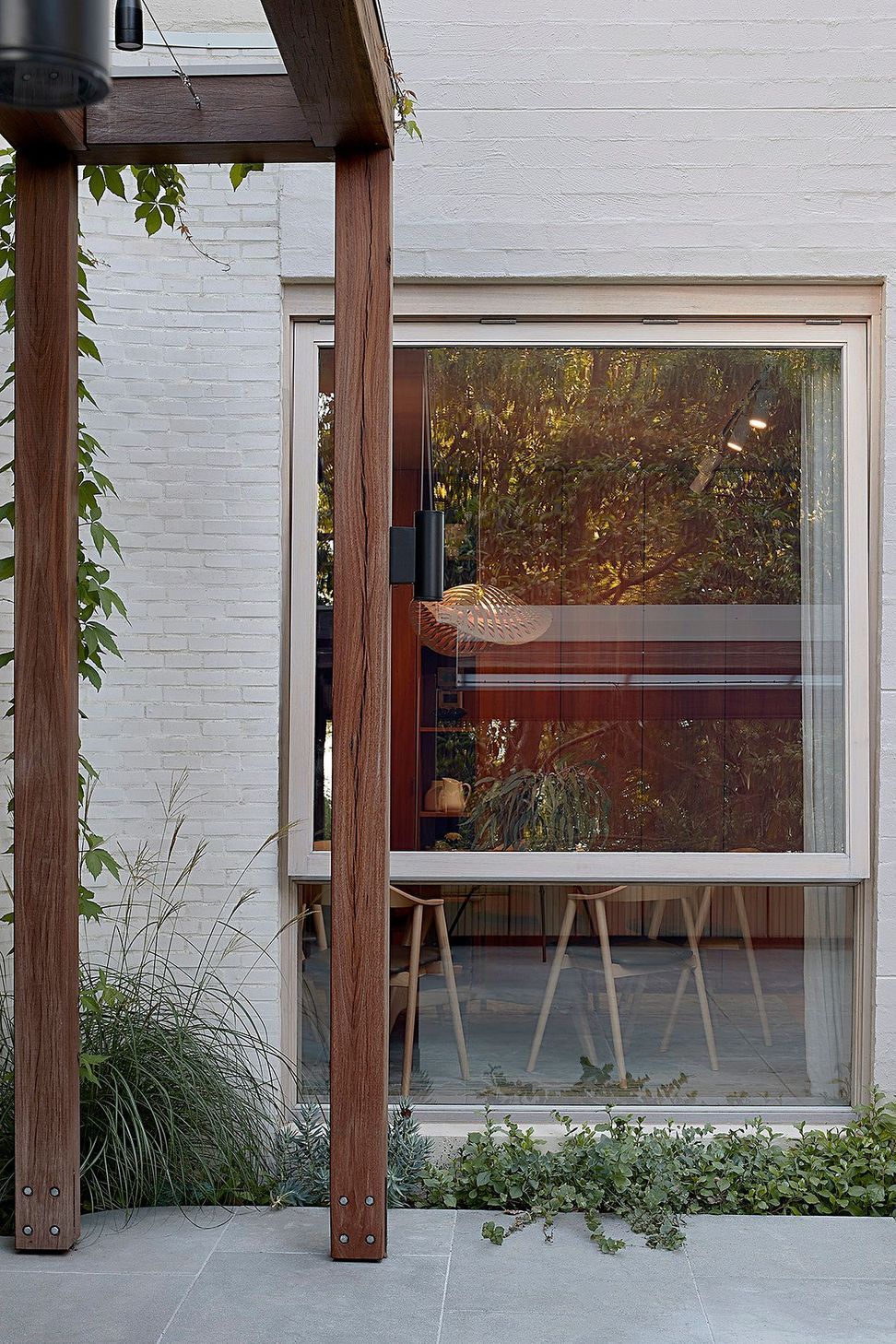
With the opening unobstructed, the living space flows directly onto a sheltered terrace where timber pergolas frame the garden without enclosing it. Rather than attaching them directly to the house, the pergolas sit as independent elements within the landscape, creating an intimate outdoor room while preserving views through the mature tree canopy beyond.
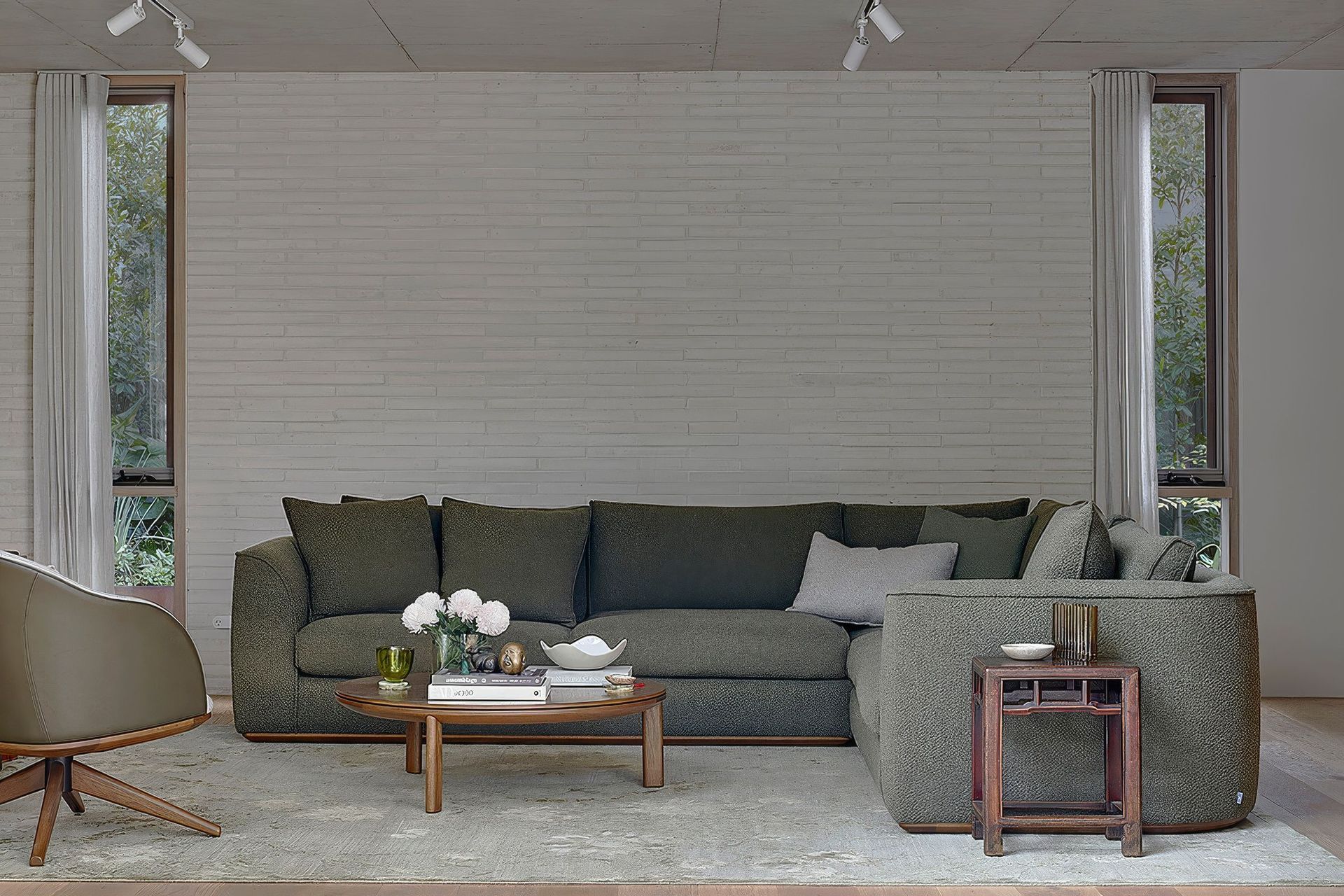
Materially, the extension responds carefully to the original townhouse. Face brick echoes the existing masonry while softening the junction between old and new, and timber-framed windows add warmth against the restrained palette. Together, the extension feels less like an addition and more like a natural evolution of the original home.
Internally, the transformation was just as significant. One of the project's defining moves was relocating the staircase from the middle of the home to the entrance. While structurally ambitious, the decision fundamentally changed the way the house functions.
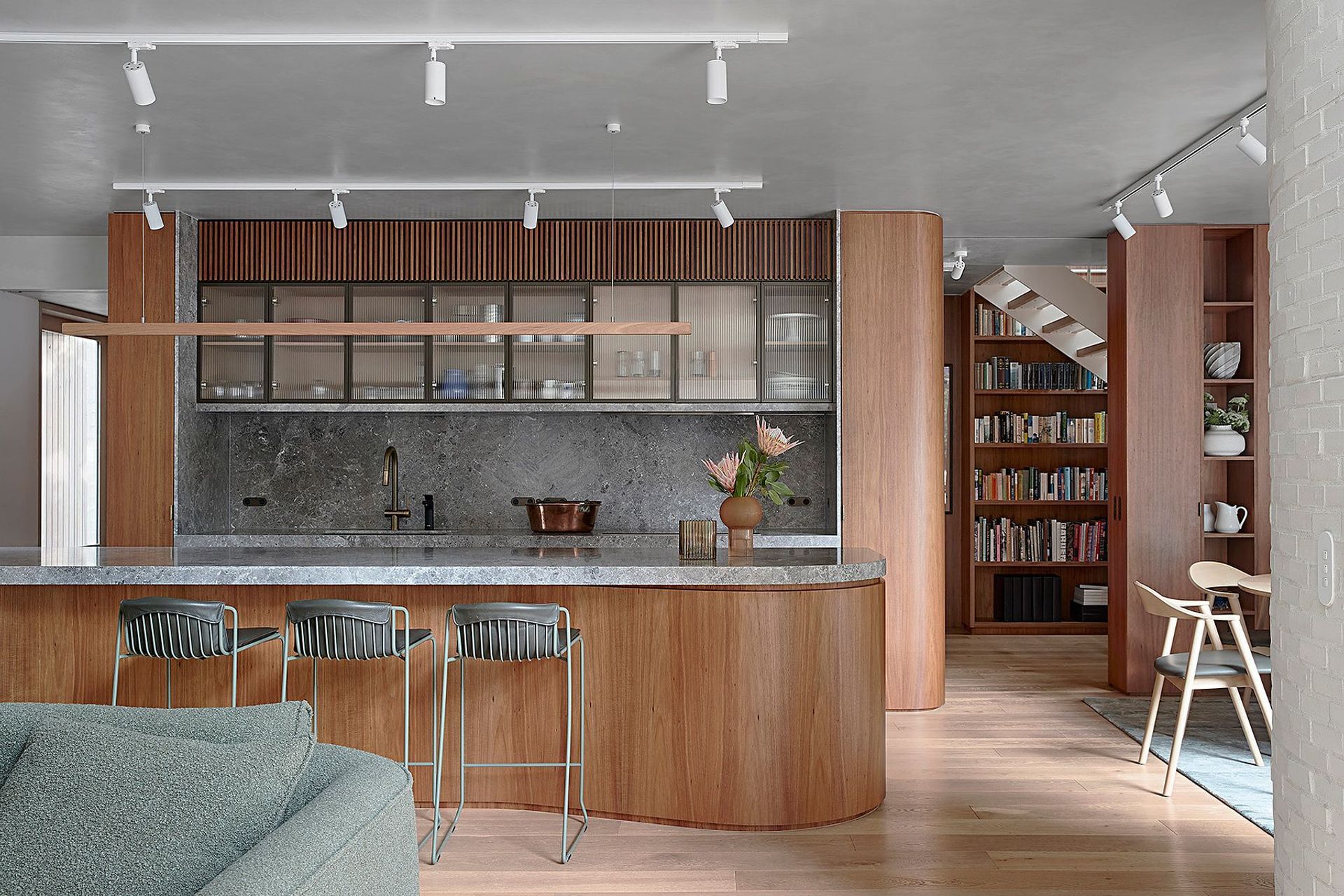
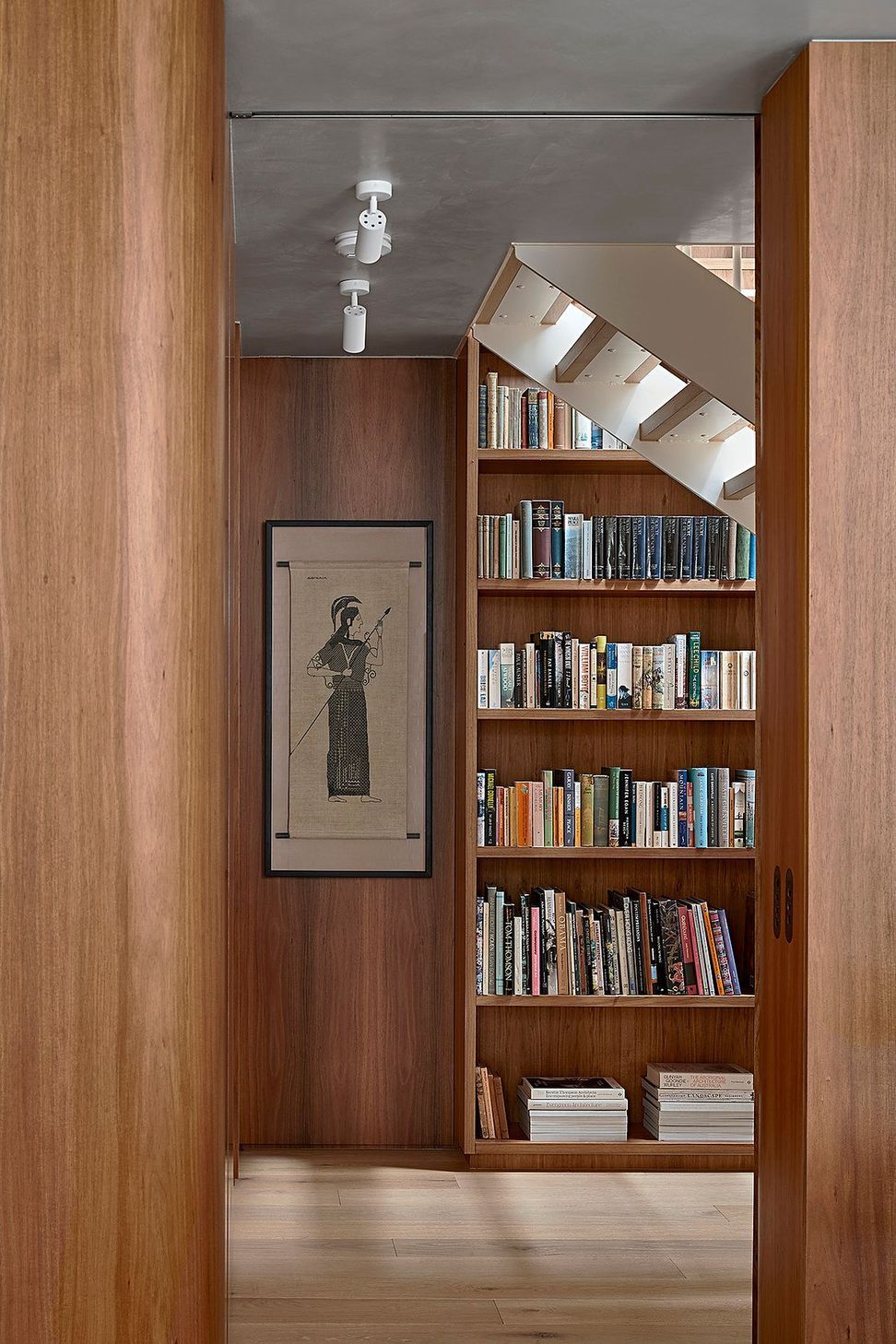
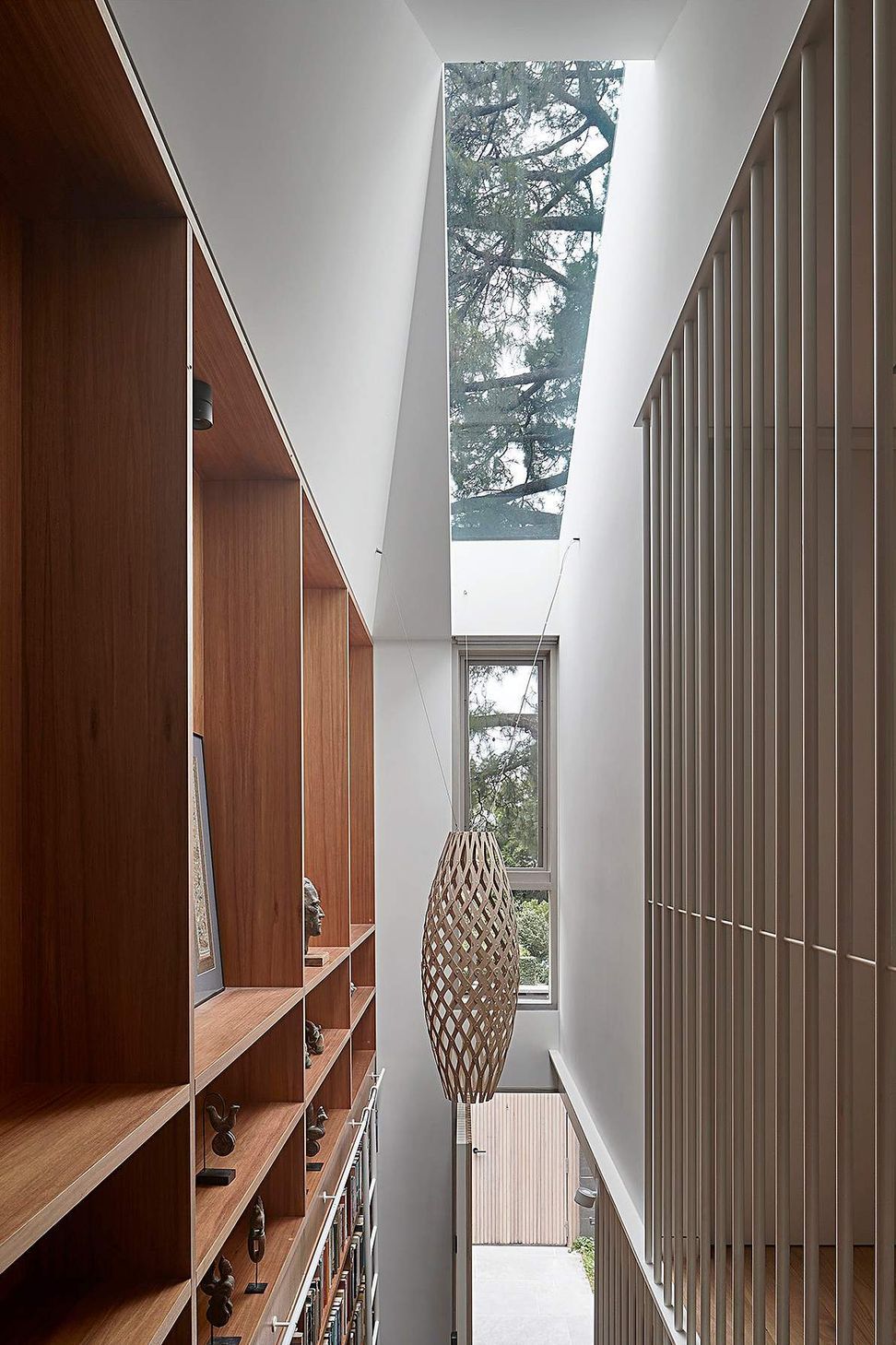
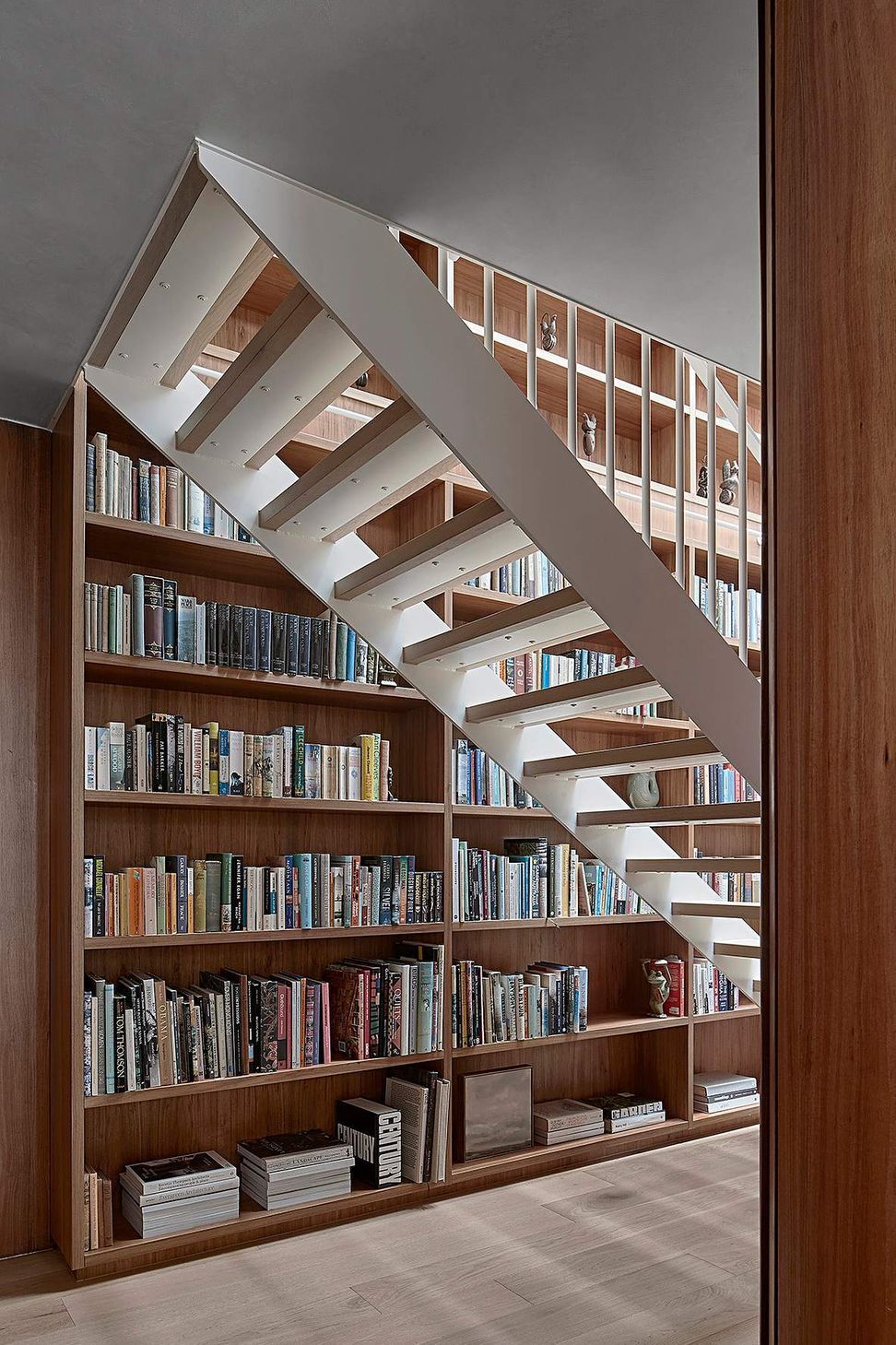
Today, visitors enter directly into a dramatic double-height space where an open timber staircase rises beside two storeys of bespoke shelving. Top lighting floods the void with natural light, creating a gallery-like arrival sequence that immediately reorients the home.
"Relocating the stair makes it feel like a different house,” says Nerlich. “You enter the house and the sculptural stair void is your first view as you open the door."
The stair also presented a unique opportunity to create a library, providing a place for the clients' extensive book collection while creating display space for artworks and treasured objects gathered over decades of travel.
"These owners have lived a rich life and have all these artefacts from their travels, so the stair library is an important part of that solution too,” shares Nerlich. “We like to work with people's cherished items and design a new home for them that places these objects of their lives to remind them of a life well lived.”
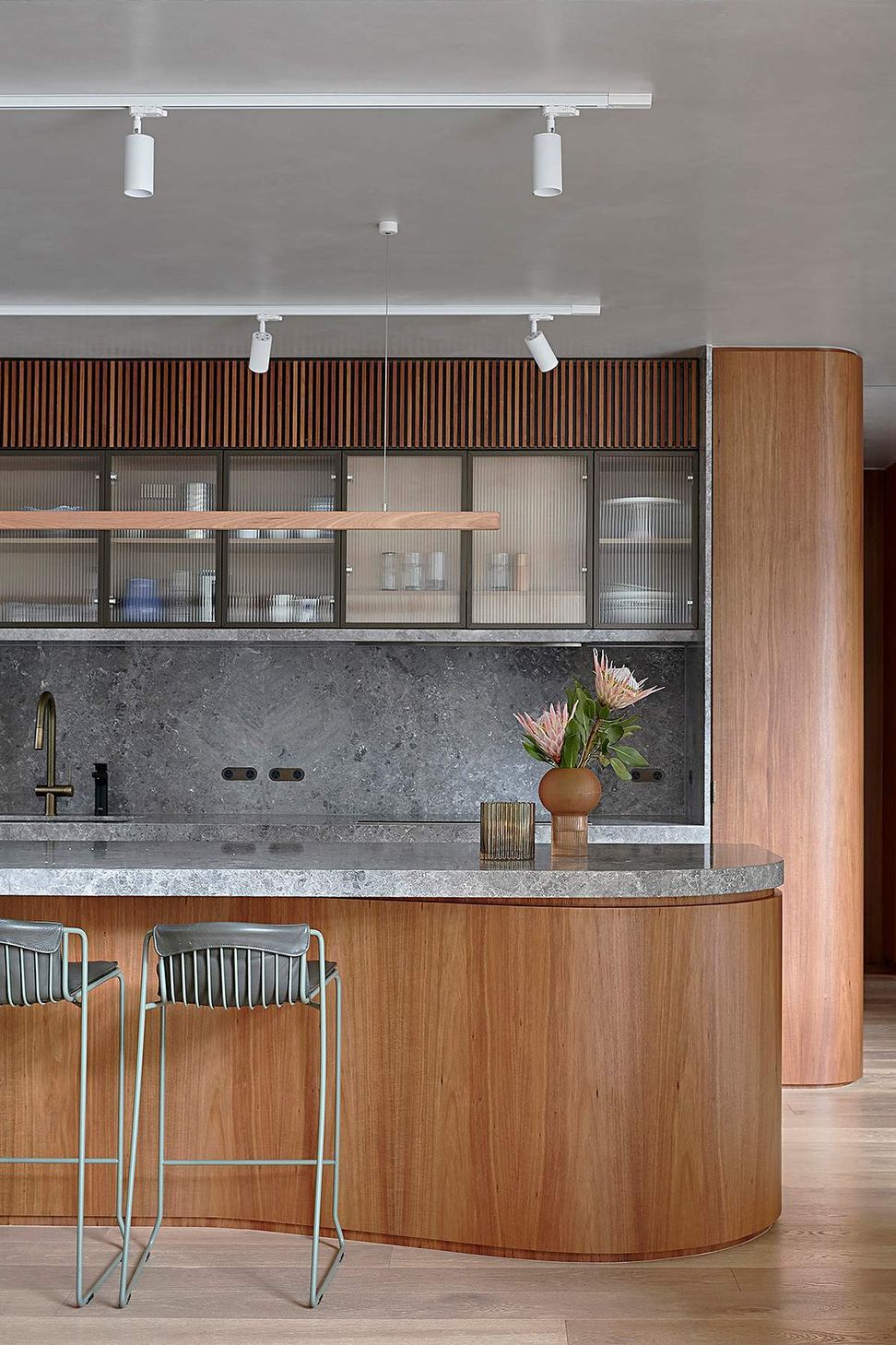
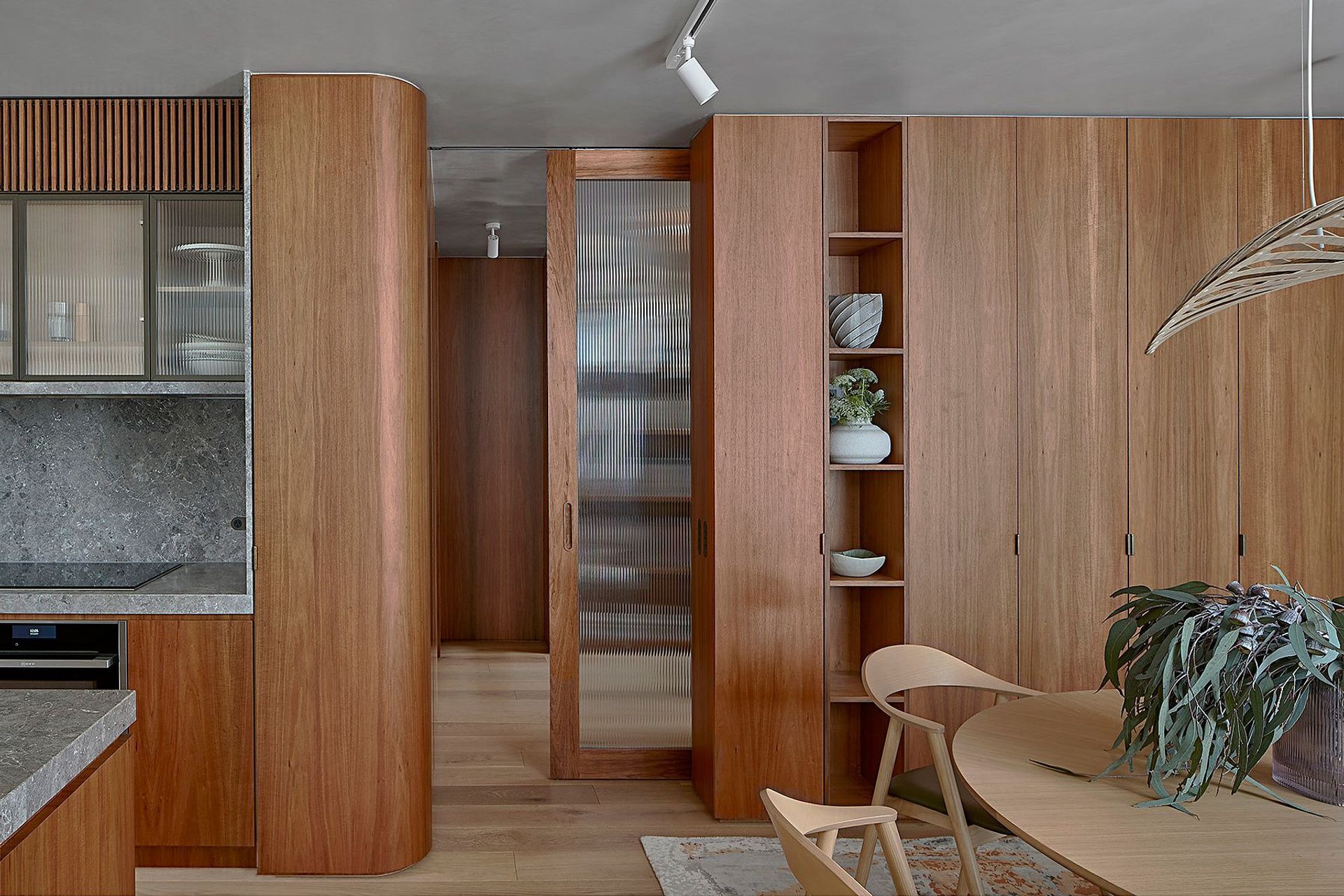
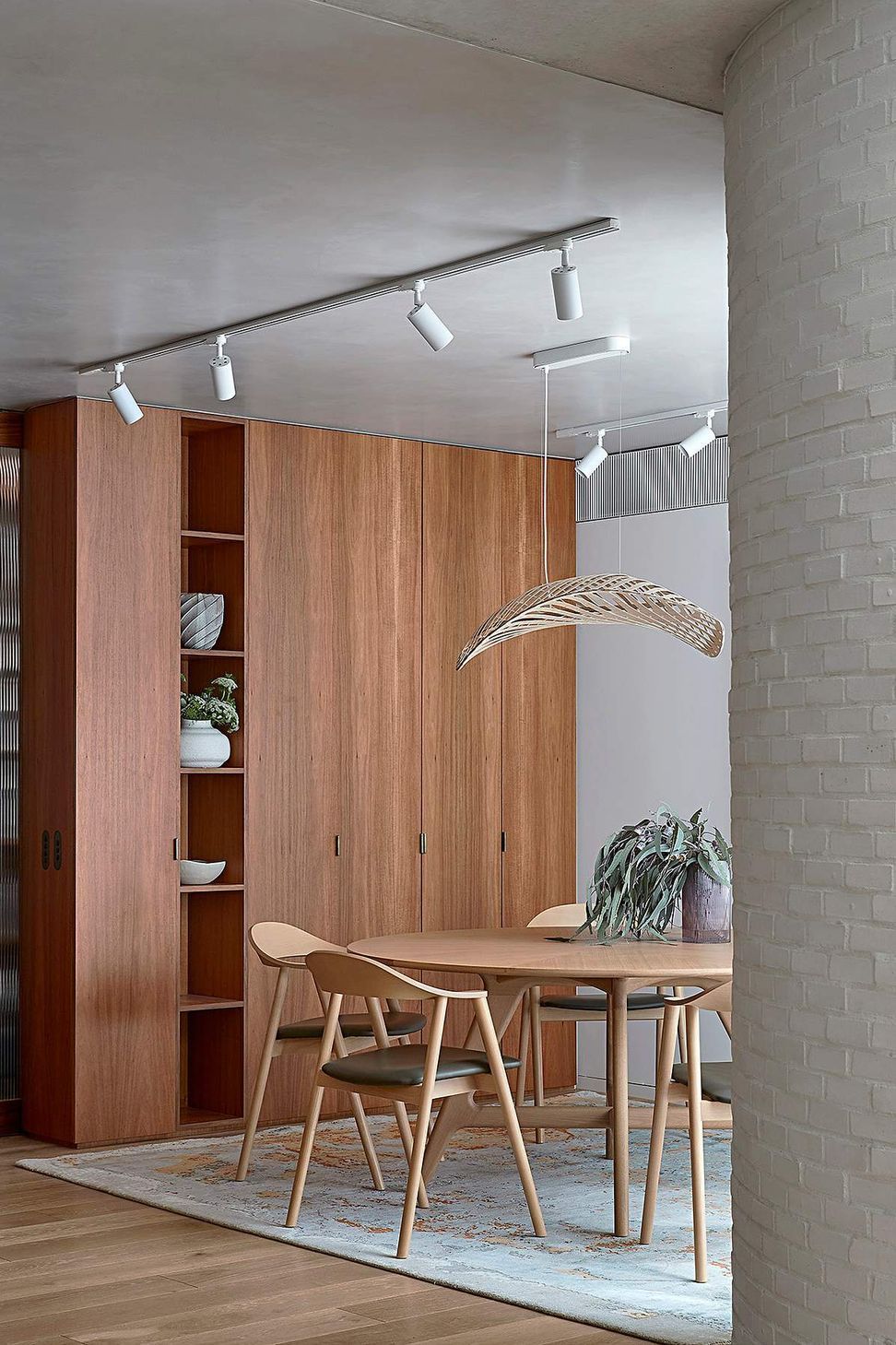
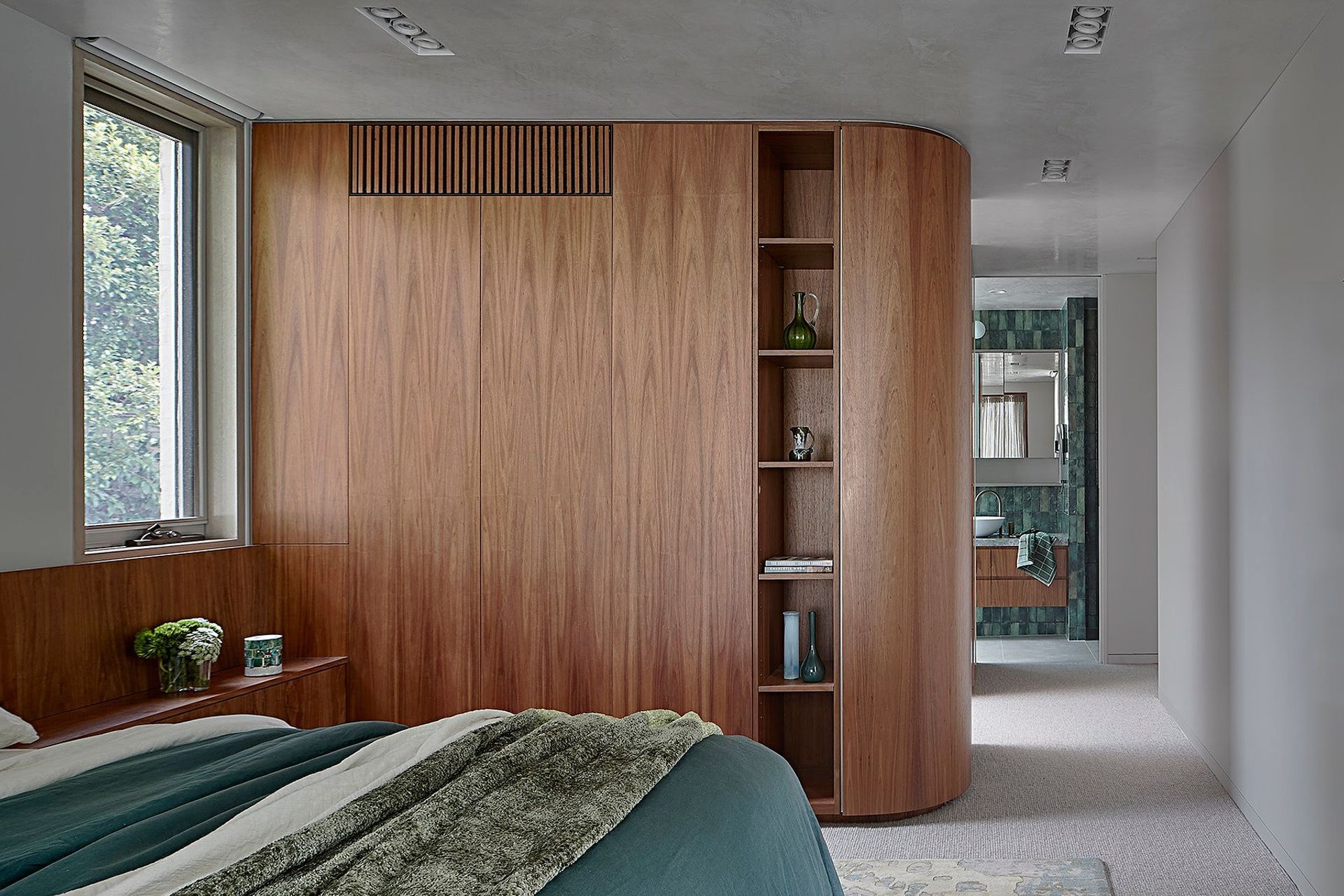
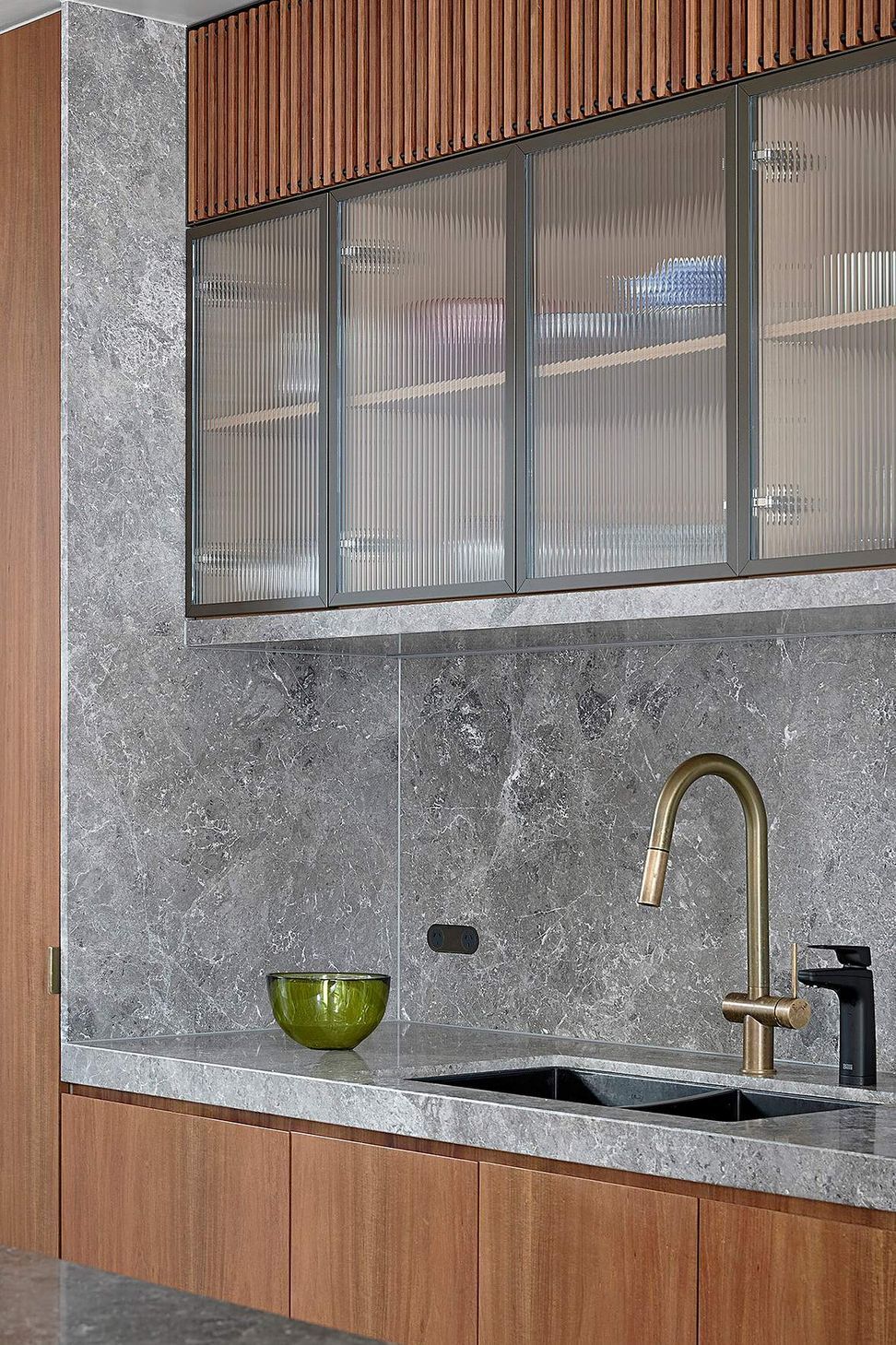
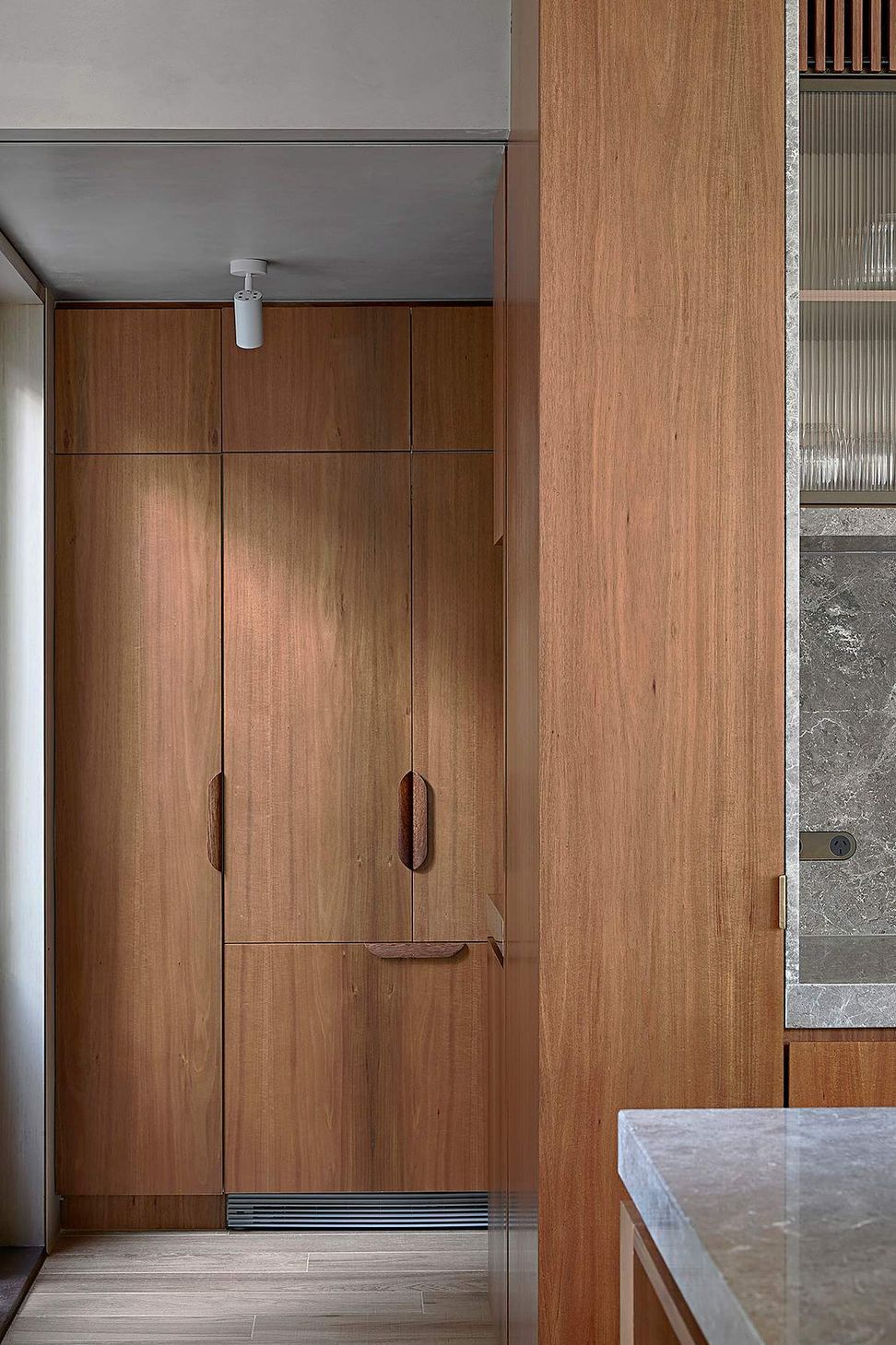
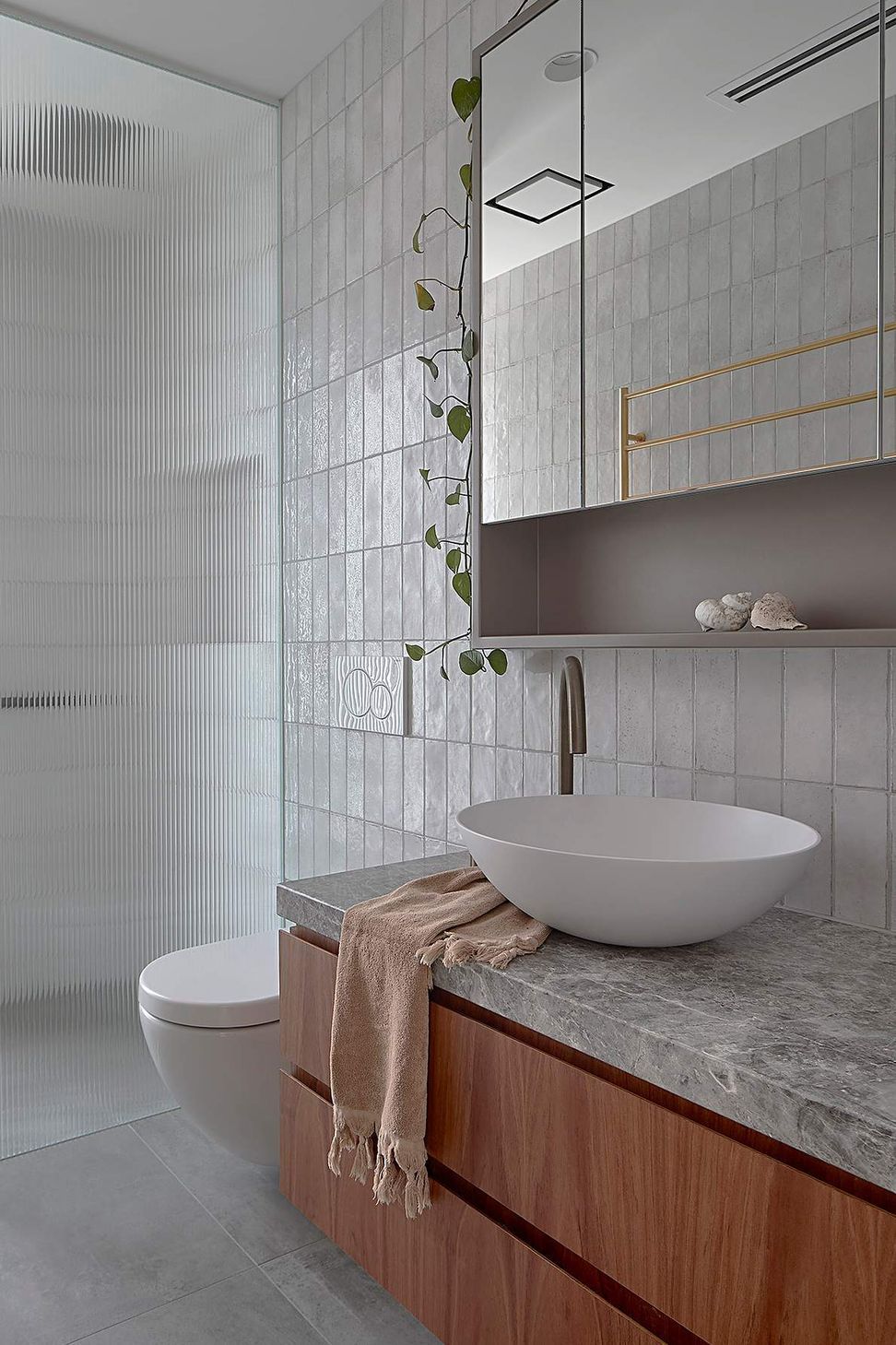
That bespoke joinery established the material language for the rest of the home. Rich Tasmanian Blackwood veneer wraps the library, cabinetry and wall linings, creating warmth and continuity as it guides movement through the interior.
"It was a very purposeful material palette," says Nerlich. "The Blackwood forms the backbone of it."
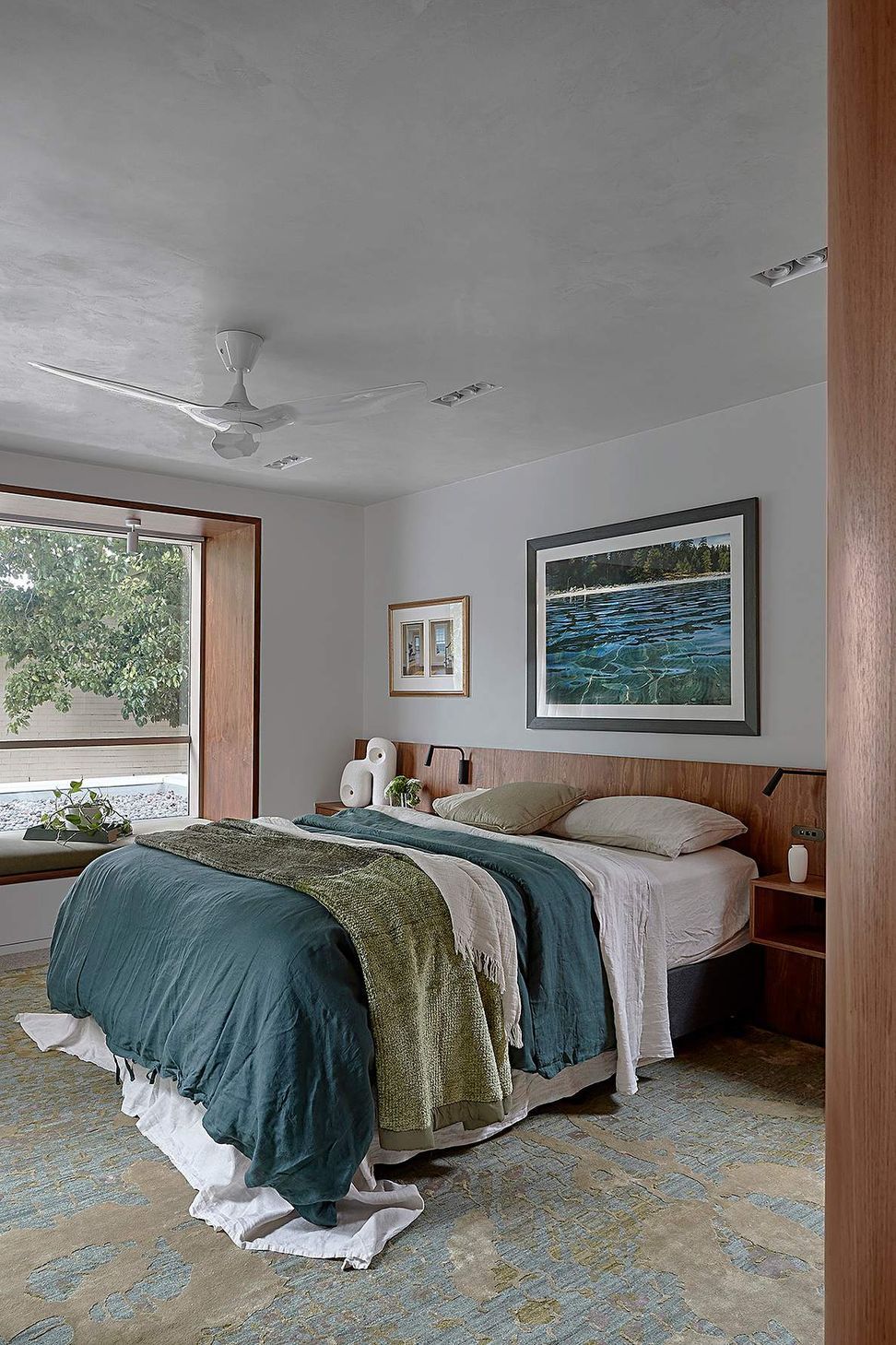
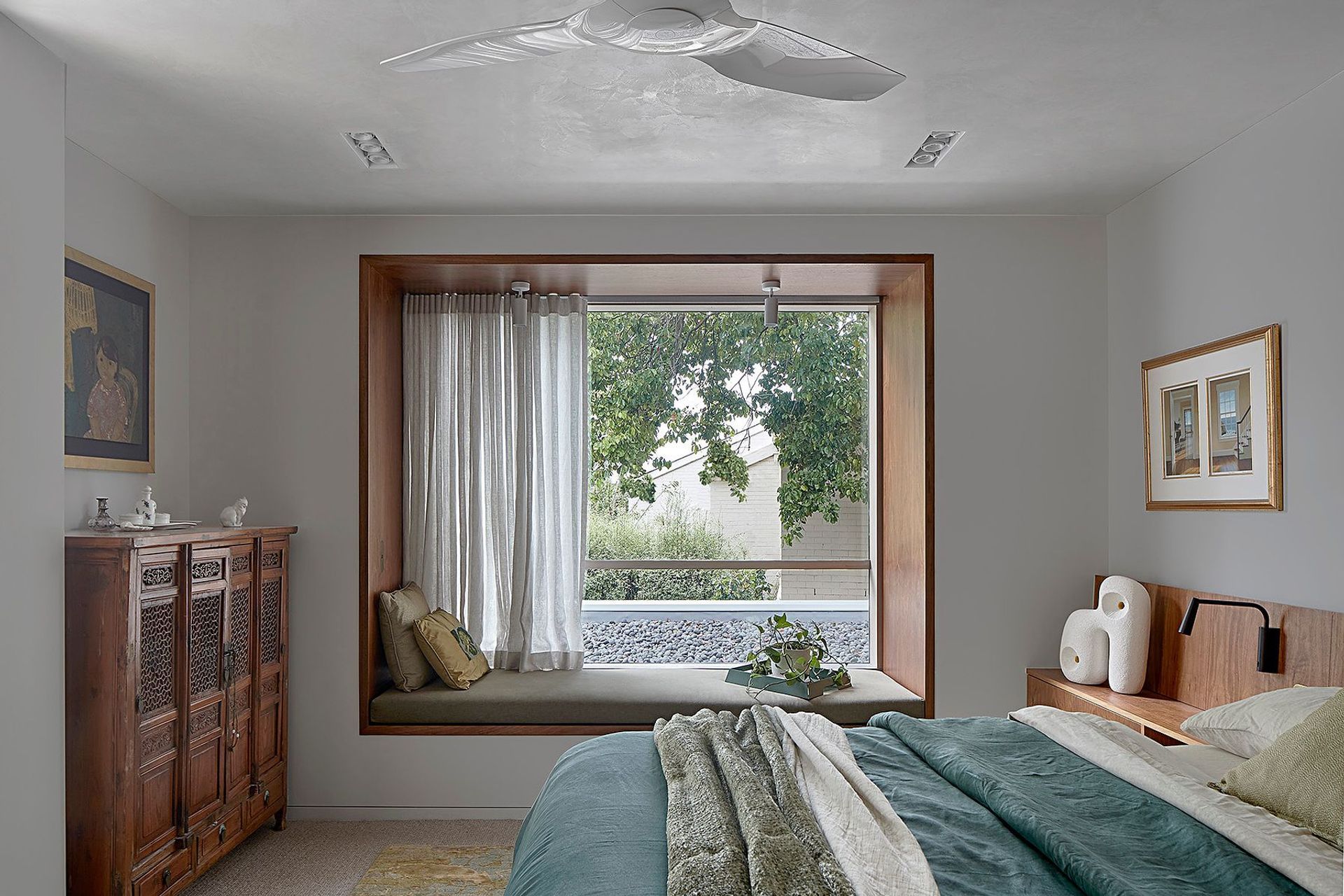
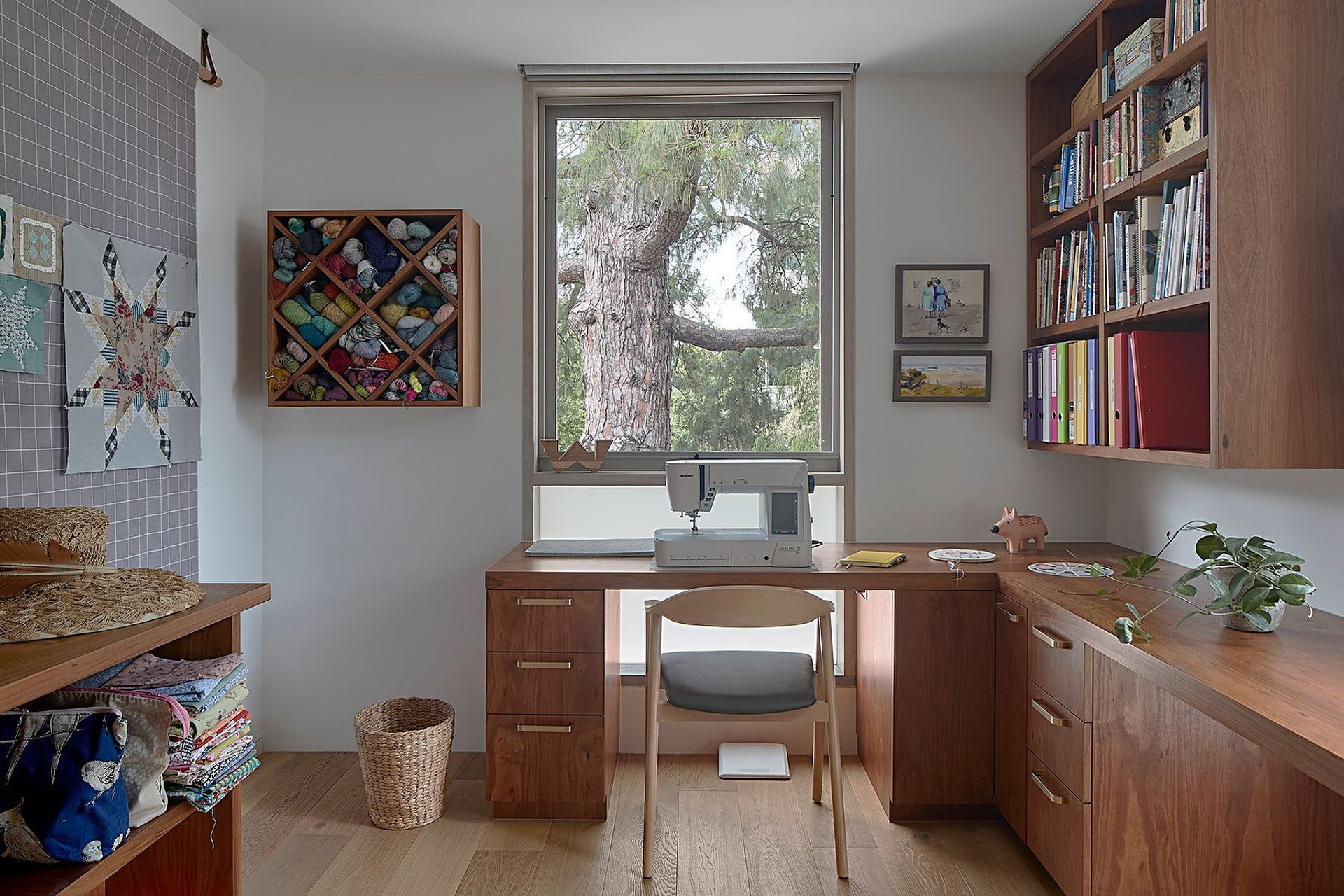
Beyond the entry, the reconfigured floor plan balances shared living with spaces for individual pursuits. A study beside the entrance provides a quiet workspace, while upstairs the primary bedroom occupies the new extension, taking advantage of northern light and elevated garden views. A third bedroom was custom-designed as a craft studio, replacing a conventional wardrobe with bespoke cabinetry and drawers tailored to the owner's quilting materials and creating a highly personal creative workspace.
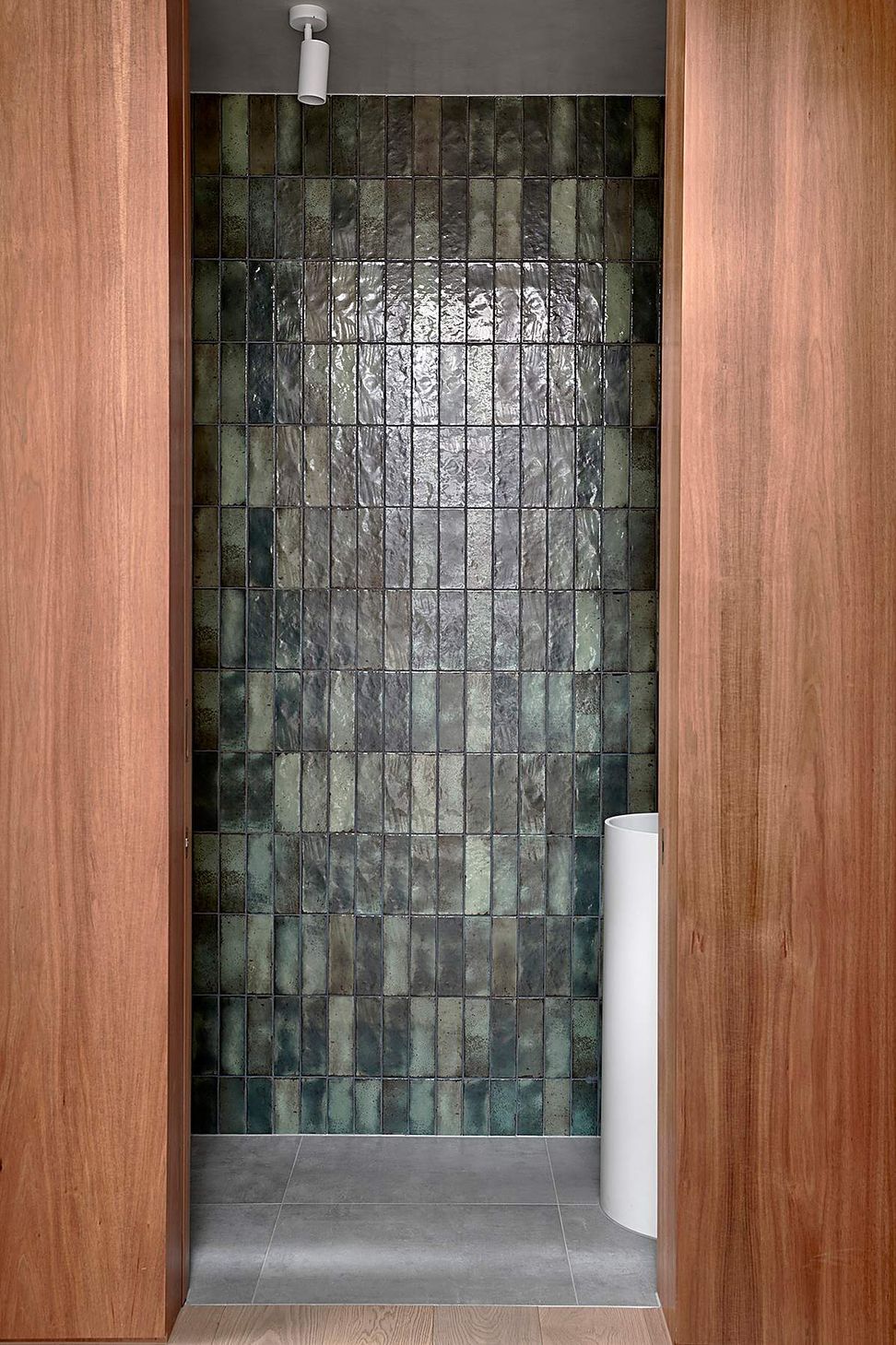
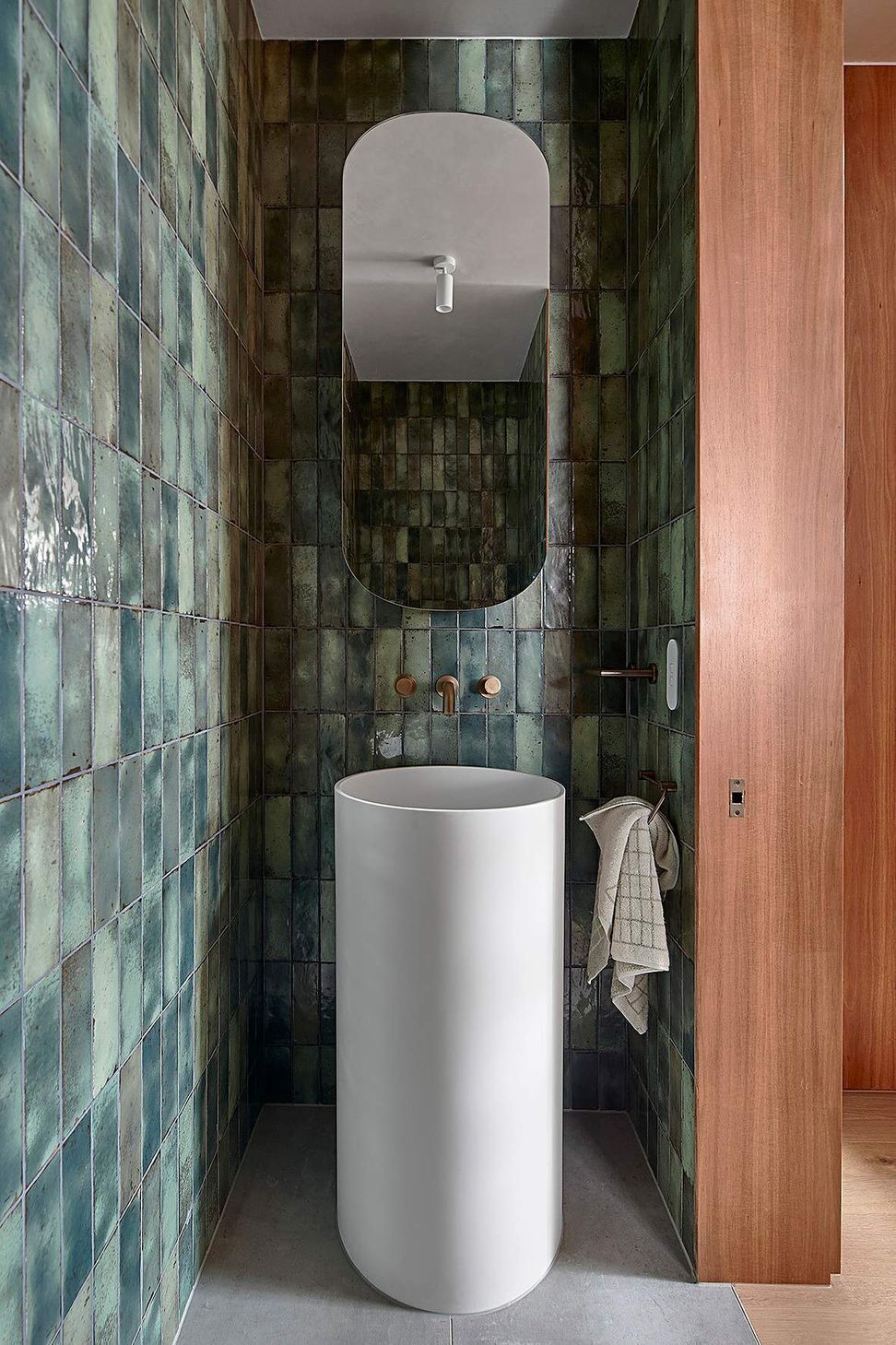
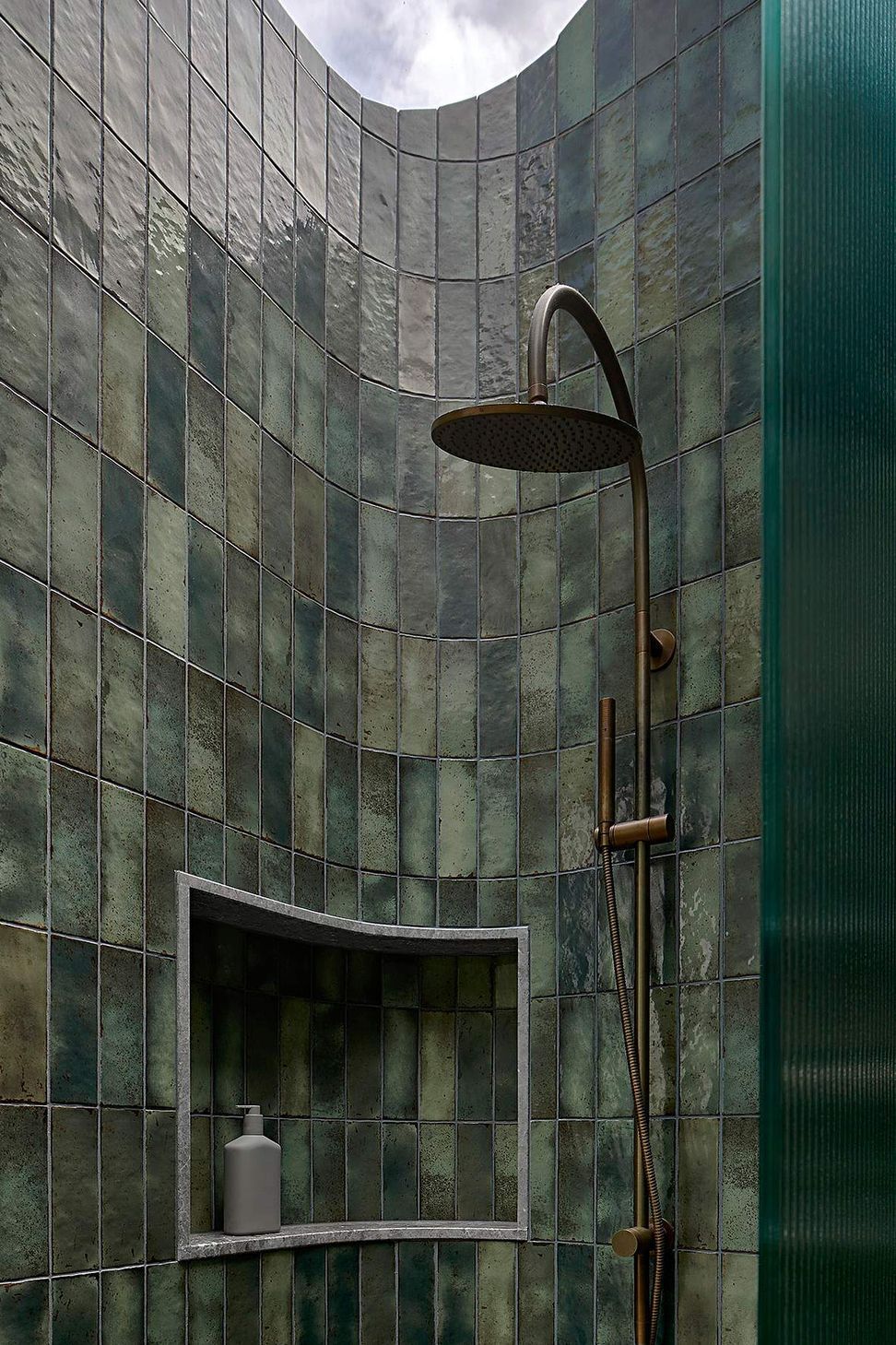
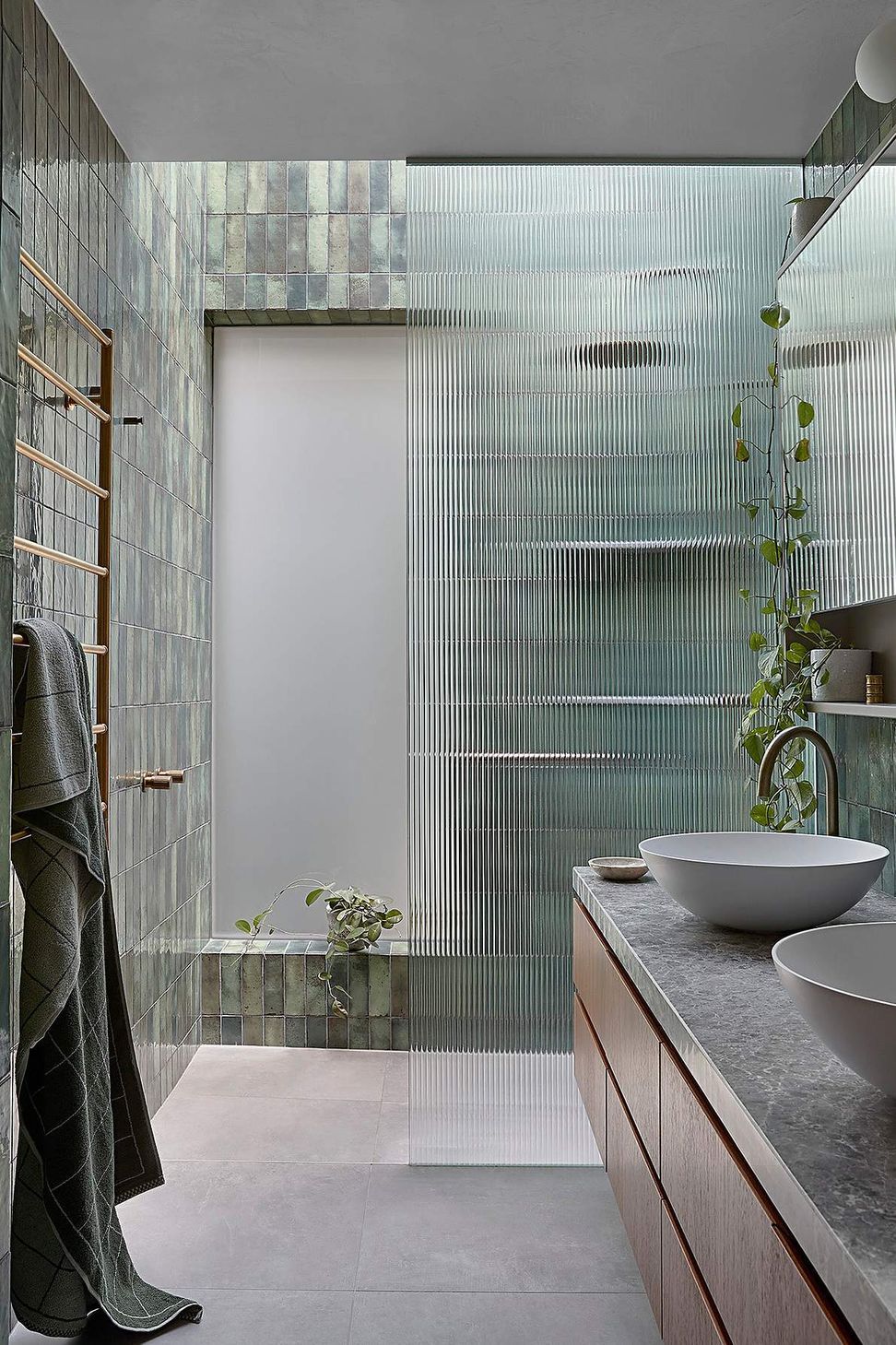
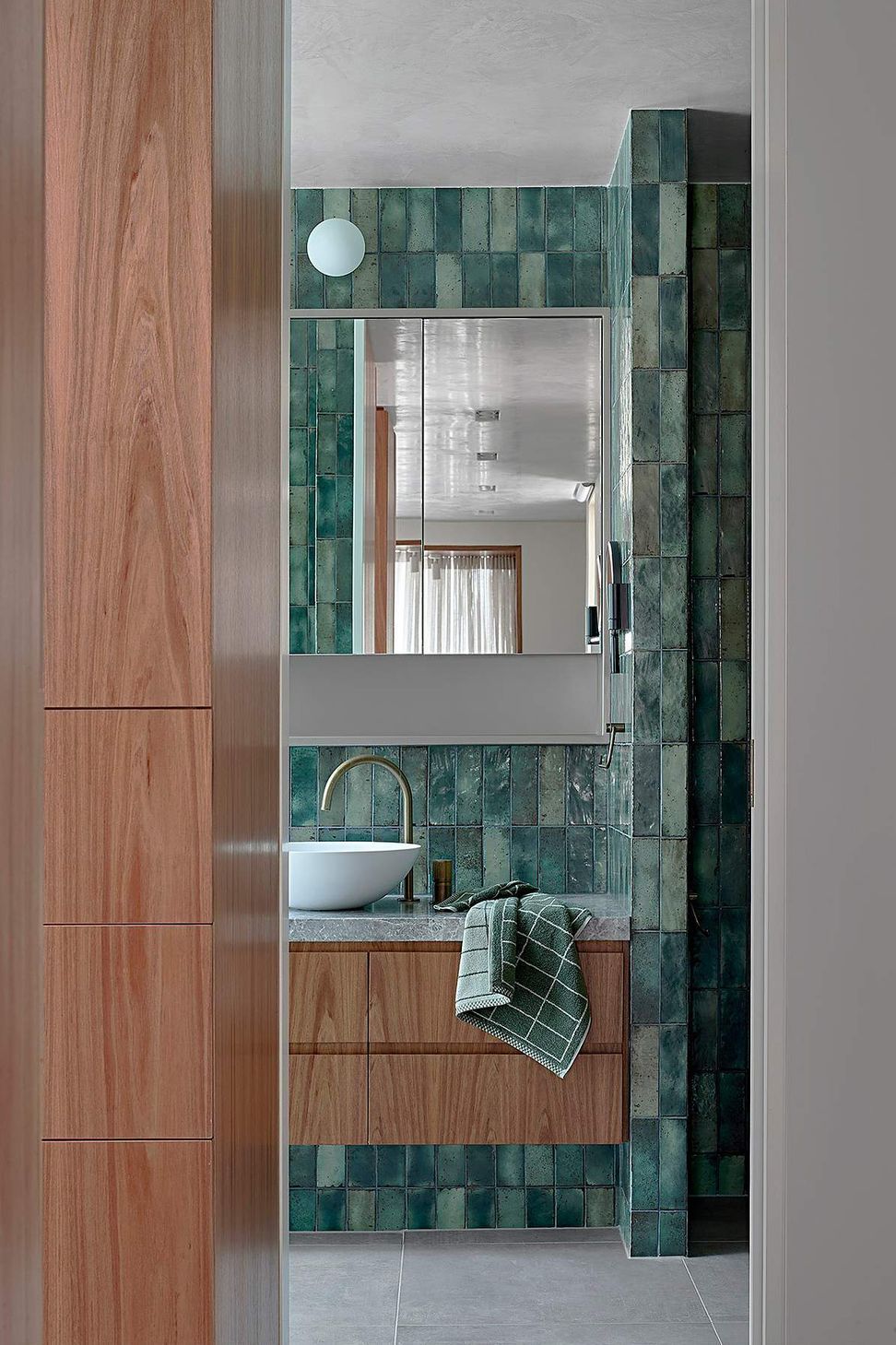
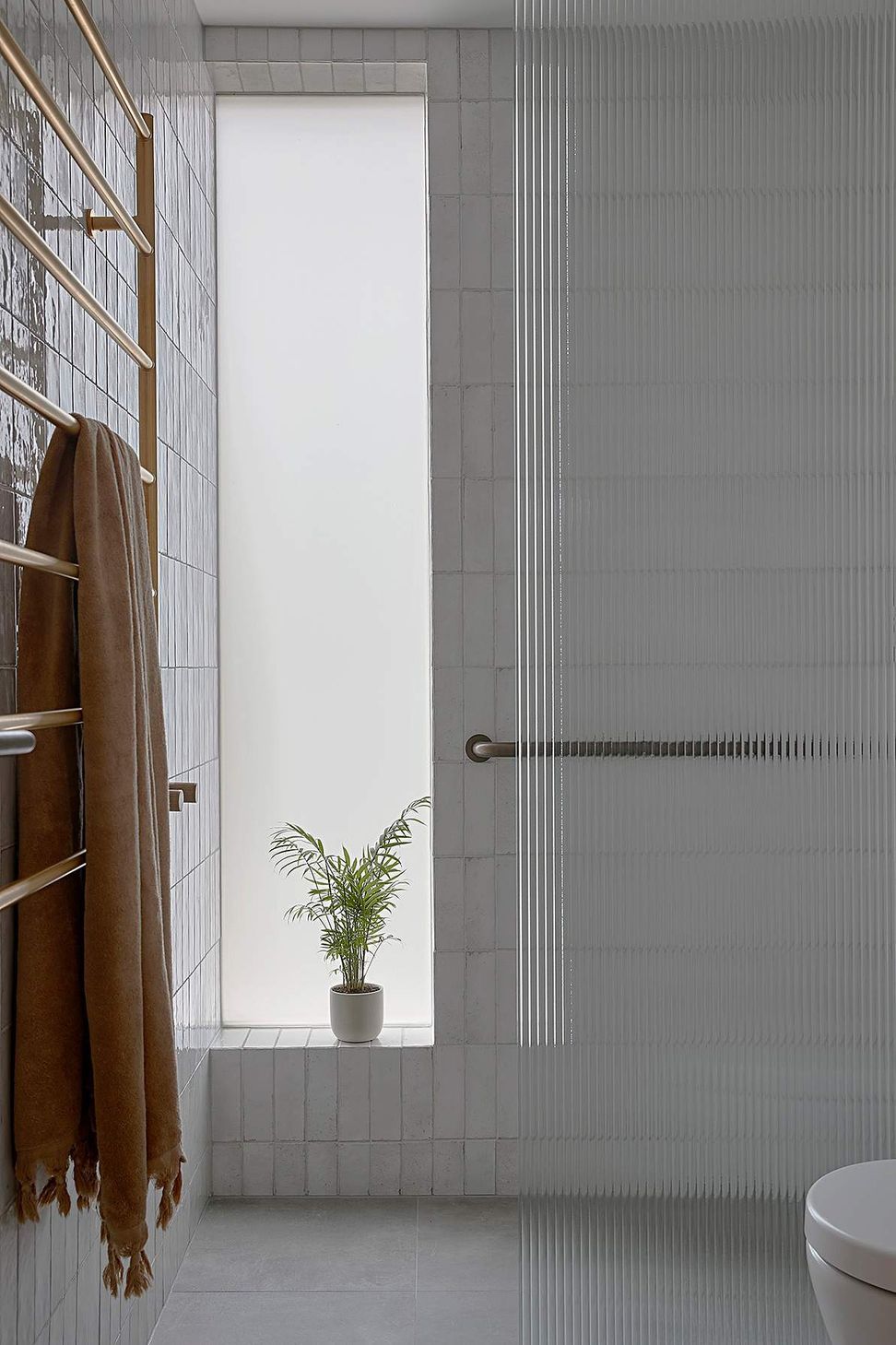
Throughout the home, the Blackwood is complemented by soft off-white face brick, exposed concrete soffits, subtle green tiles and restrained champagne-toned metal detailing. Existing construction dictated some decisions, including the use of a concrete floor structure to maintain ceiling heights and align with the original townhouse, but every material was carefully selected to reinforce the connection between house and landscape. Even secondary spaces look onto planted courtyards and greenery, ensuring nature remains present from almost every room.
For Nerlich, however, the project's greatest success lies less in individual details than in the way the spatial reorganisation transformed daily life.
"I think it's the way it’s been reorganised," he reflects. "It sets up the orientation and the way the living spaces work."
That success is reflected in the owners' response. They regularly tell the practice how much they enjoy living there, finding that the house supports both togetherness and independence, with spaces to retreat as well as gather.
"I think this house really does that," Nerlich says. "They've each got their own spaces and then they come together in the living zone and they come together in the garden. It's just lovely."