An architectural reworking of the Wānaka retreat
In Wānaka, where the landscape does much of the talking, designing a home that both responds to and elevates its setting requires a careful balance. For one retired couple, this meant creating a multi-generational retreat that could hold a growing extended family, guided by a highly considered architectural response.
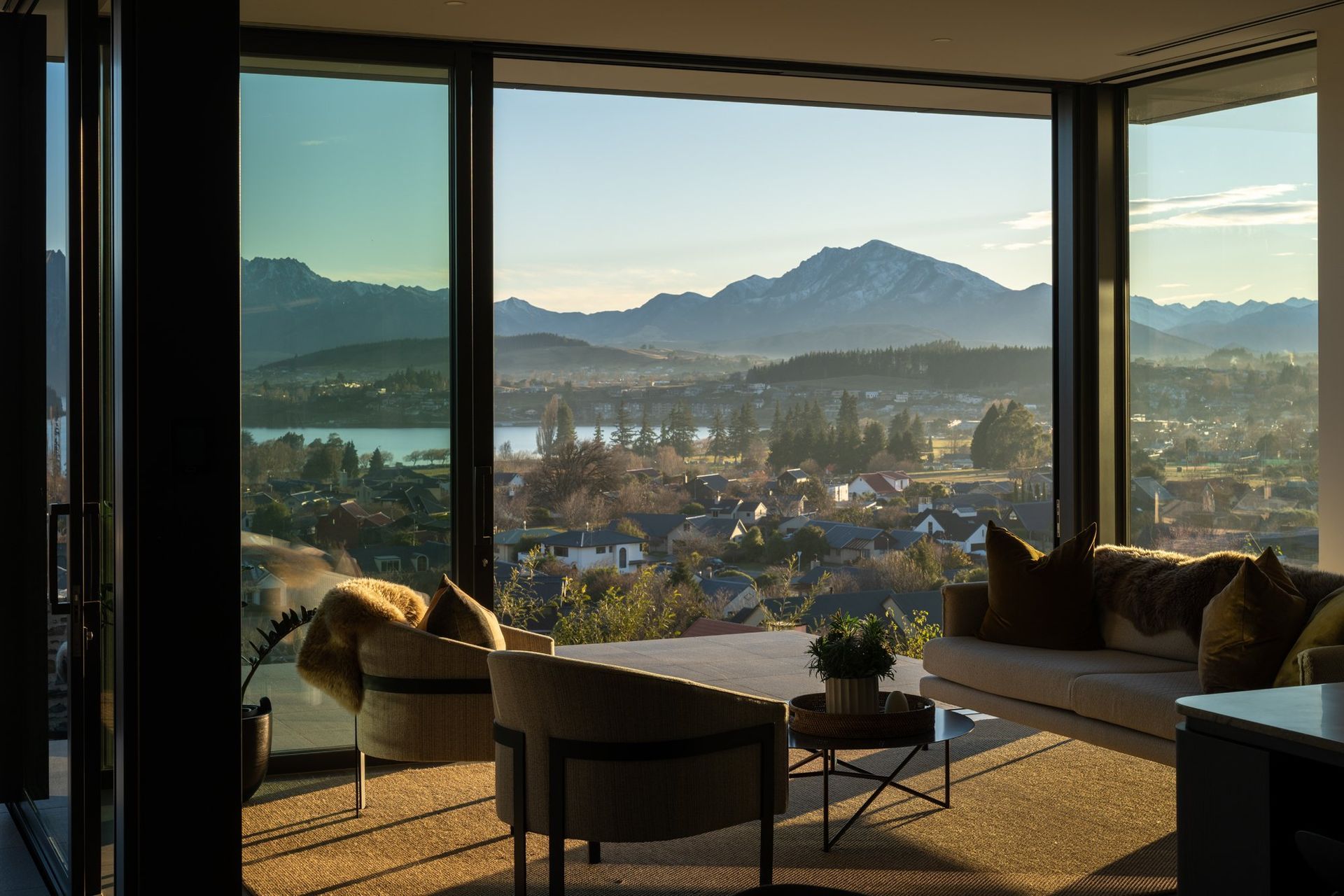
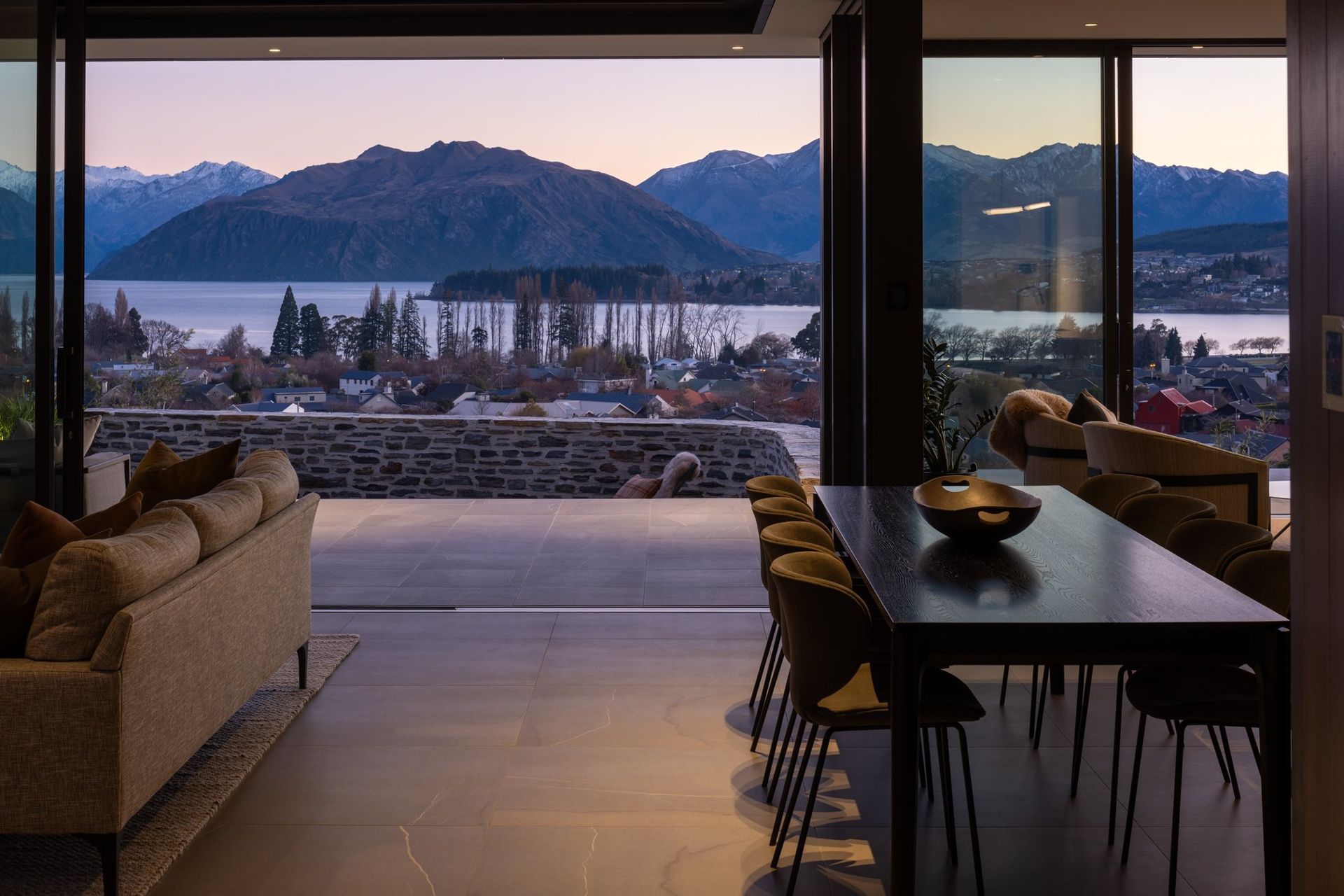
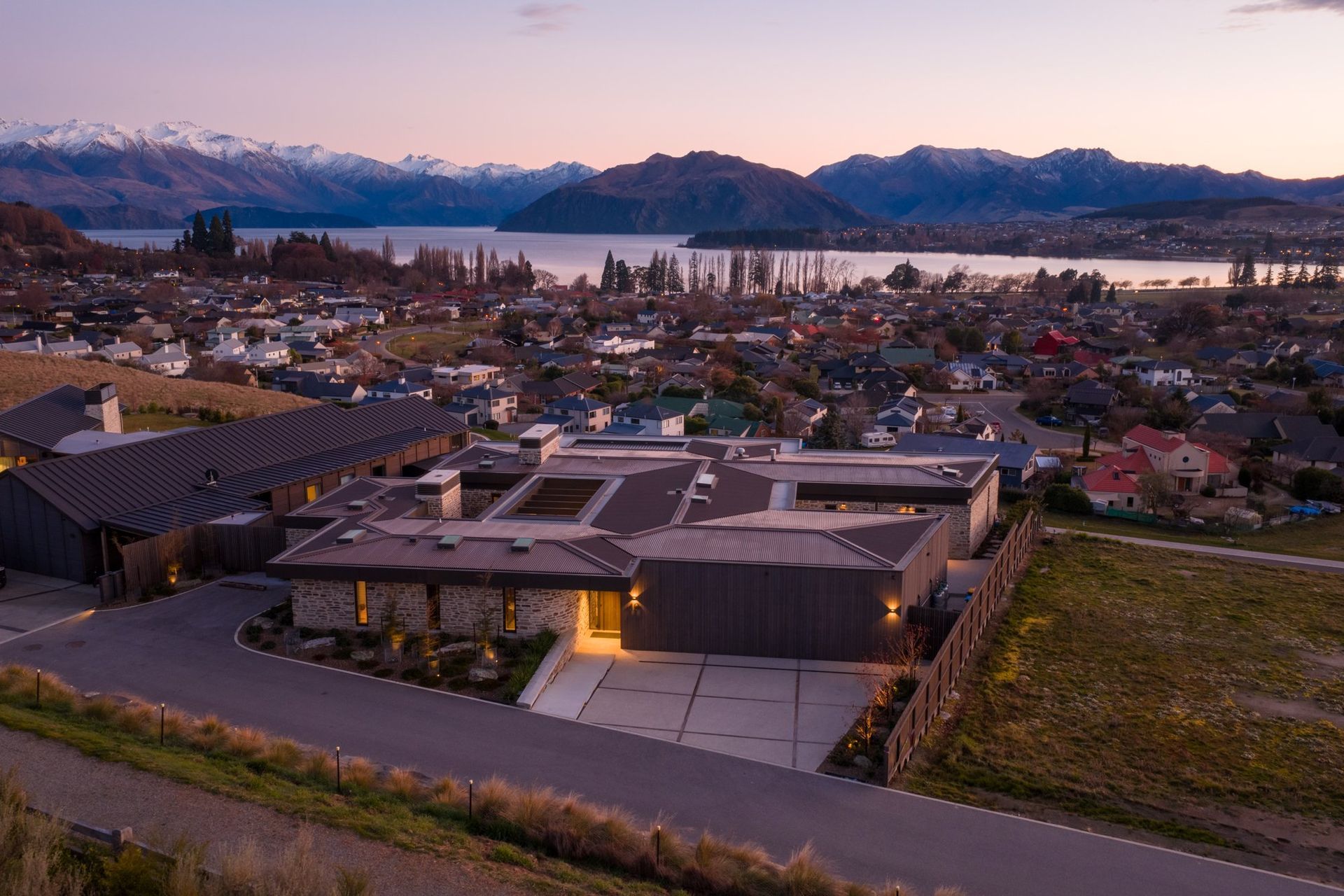
Their site, located within the premium Meadowstone Alpha Series subdivision, sits north-facing above Lake Wānaka, with expansive views stretching across the water to the surrounding ranges. It is a setting that speaks to the changing nature of Wānaka itself, where permanent residency and legacy homes are increasingly replacing the more casual holiday bach. For the architects, the brief was both simple and layered. A holiday home for a retired couple, but also one that could comfortably accommodate children, grandchildren, and the future changes that would come with extended family life.
With a background in engineering, detail mattered to the clients.
“They were quite nervous, knew what they wanted, but they were definitely out on a bit of a limb going to an architect,” says Mason & Wales architect Hamish Muir. What followed was an iterative design process, where the plan was revisited and refined again and again. “Every time they asked for something, we kept managing to make it work, not by shoehorning it into the existing plan, but by thoughtfully moving everything to suit,” he says.
That dialogue was collaborative and highly engaged.
“The clients knew what they wanted,” says architect Zach Blue. “They had specific engineered solutions to different aspects of the house, and we adopted these into the home.”
Rather than constraining the design, this level of involvement sharpened it, creating a home that is both precise and deeply personal.
From the outset, the house was conceived as a multi-generational environment. In addition to the primary suite, there is a second master positioned to capture the same lake views, a third within the family wing, and a generous bunk room designed with grandchildren in mind. It is a layout that anticipates occupation at scale, without sacrificing intimacy.
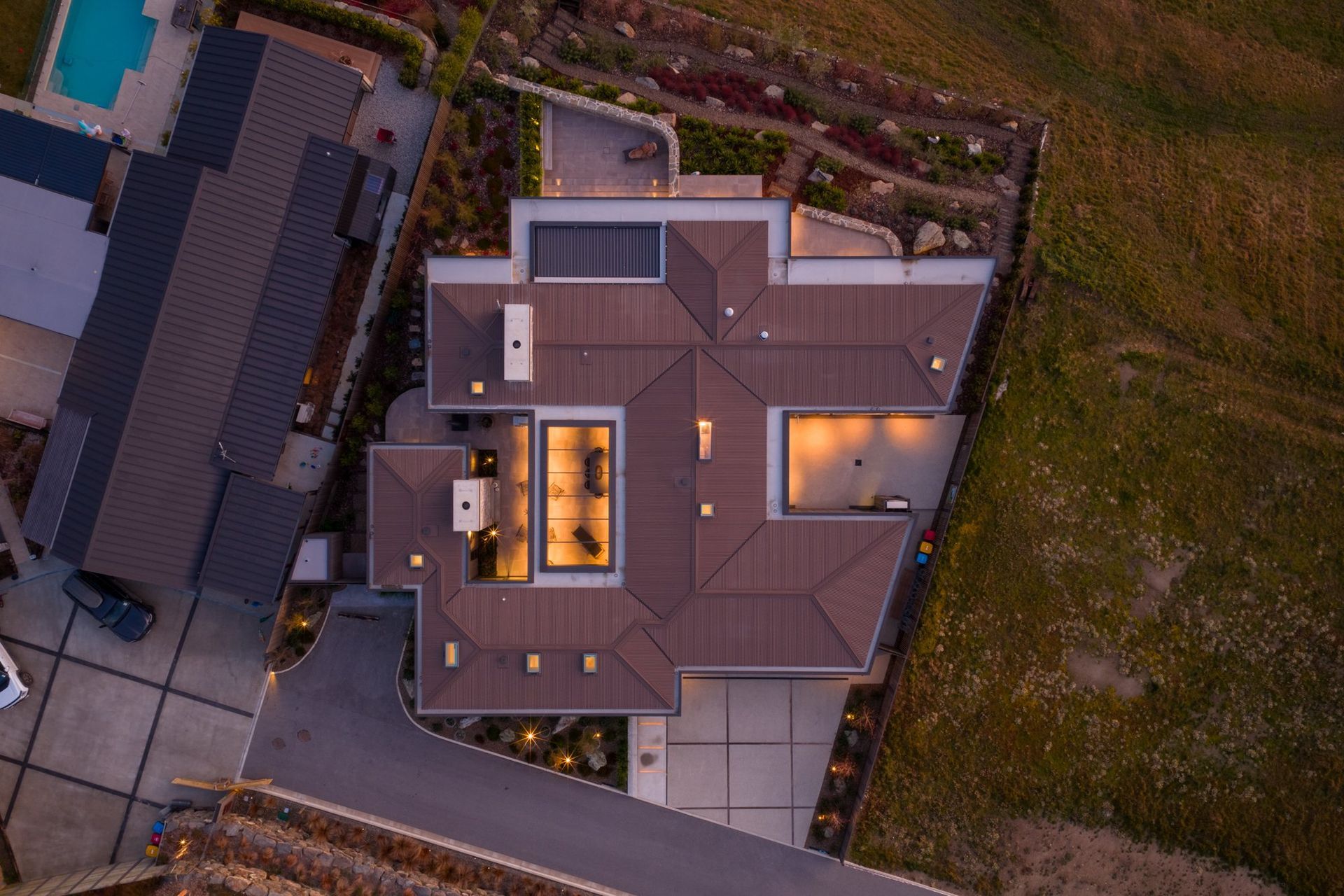
The most defining move, however, came in how the house met the land. In contrast to neighbouring homes, which largely align themselves to boundary lines, Mason & Wales chose to skew the plan.
“We’ve intentionally skewed the house almost like a parallelogram to get what we believe is the best view, and for opening up to the late sun,” says Muir.
The gesture is subtle from the street, but transformative from within, allowing the house to fully engage with both outlook and orientation.
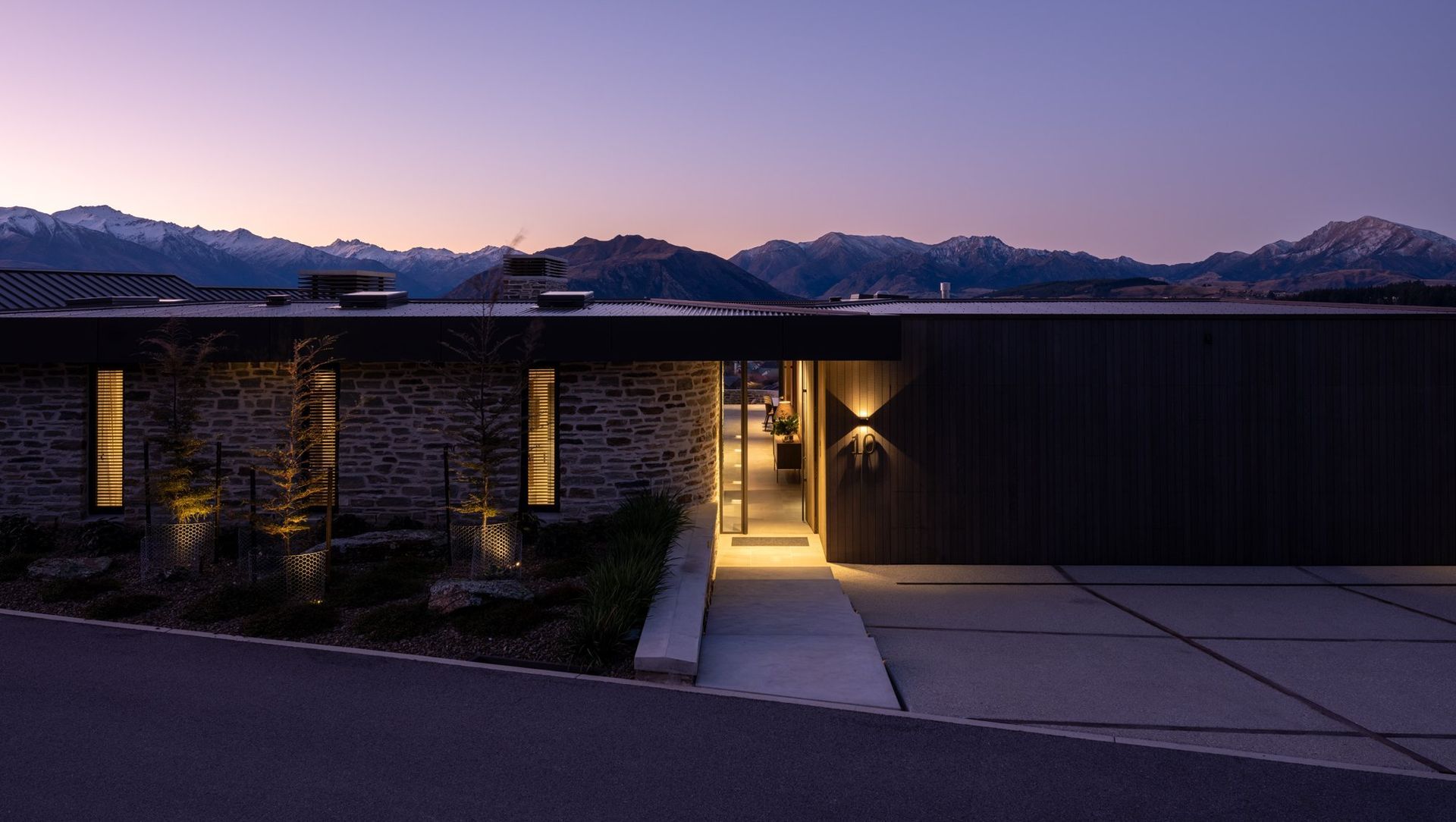
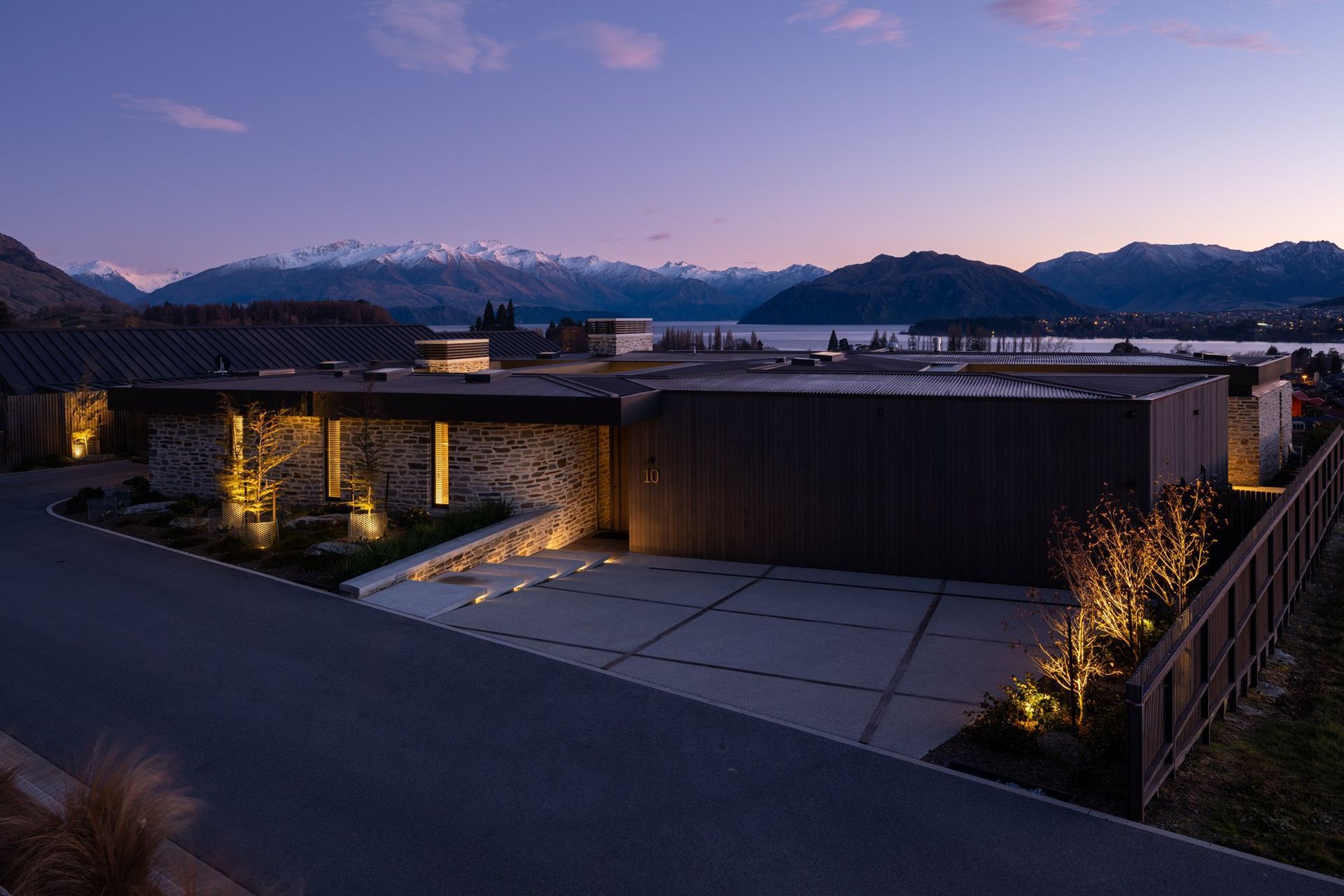
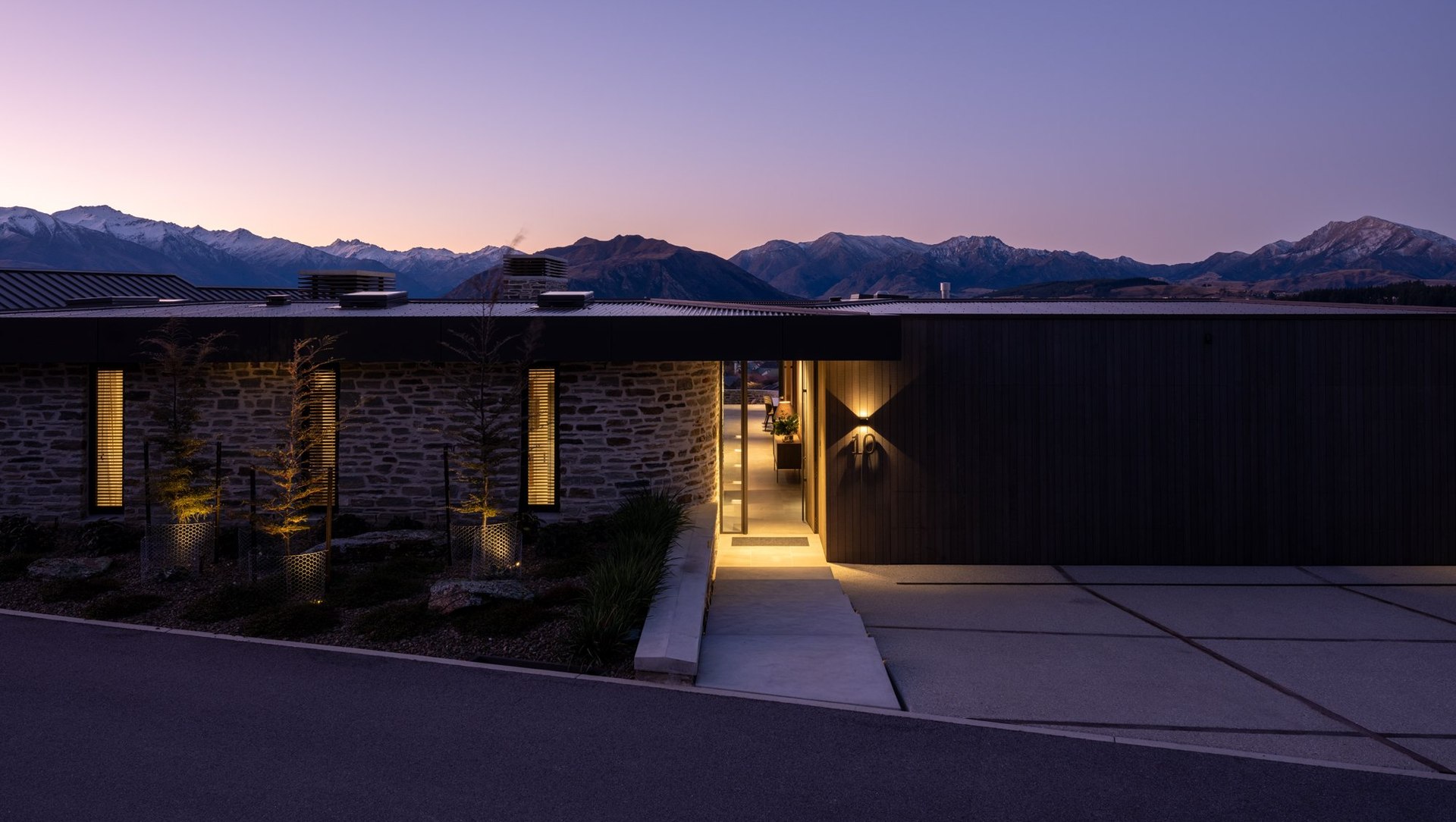
Arrival is deliberately restrained. The façade, shaped by privacy requirements and the prominence of the suite of garage doors, reveals little of the experience beyond.
“The entry is quite unassuming,” says Blue. A softened stone wall curves gently, guiding visitors toward a generous but understated threshold. As Muir explains, “The idea is that you are welcoming people and ushering them in. It is not ostentatious, but it is still clear and effortless.”
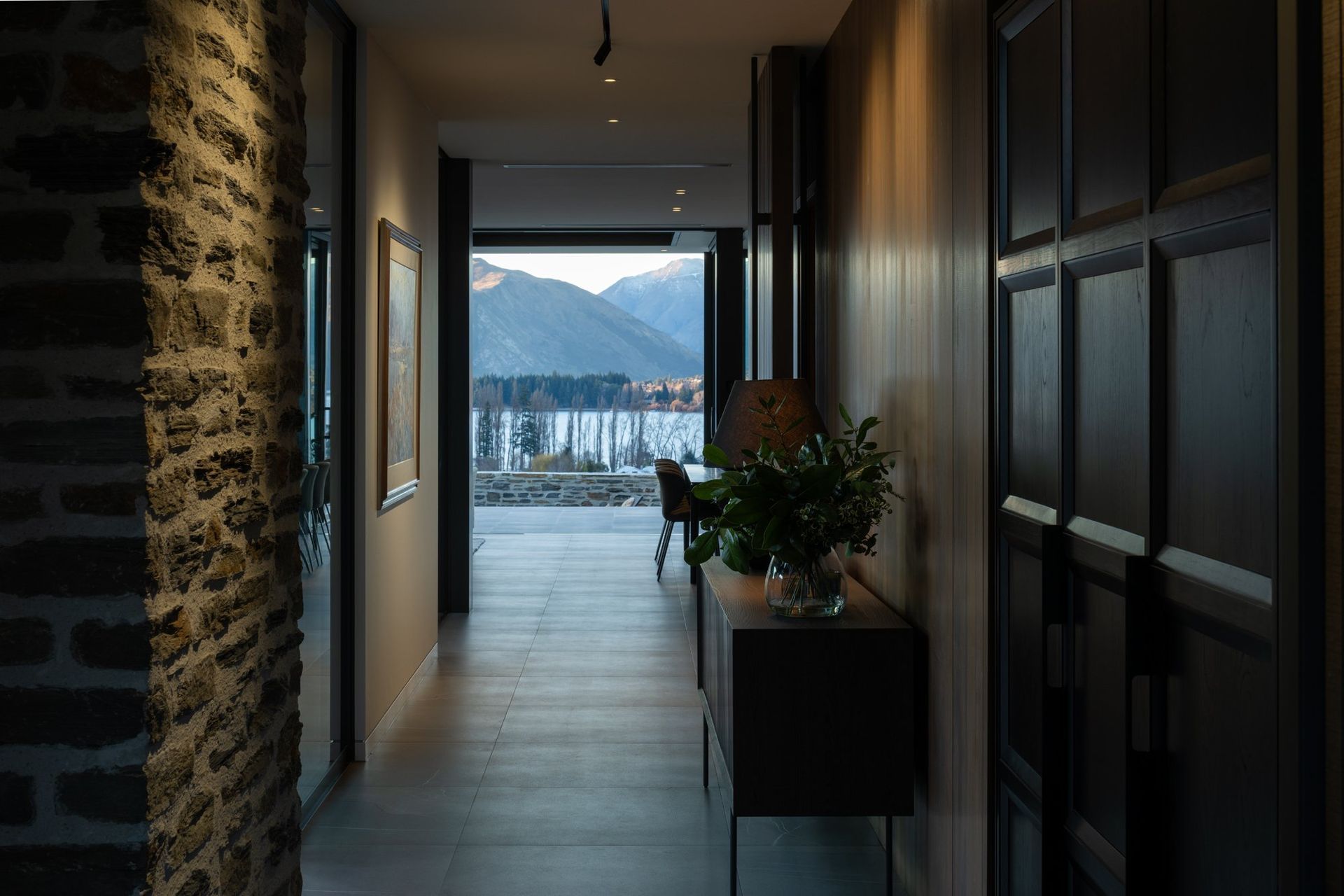
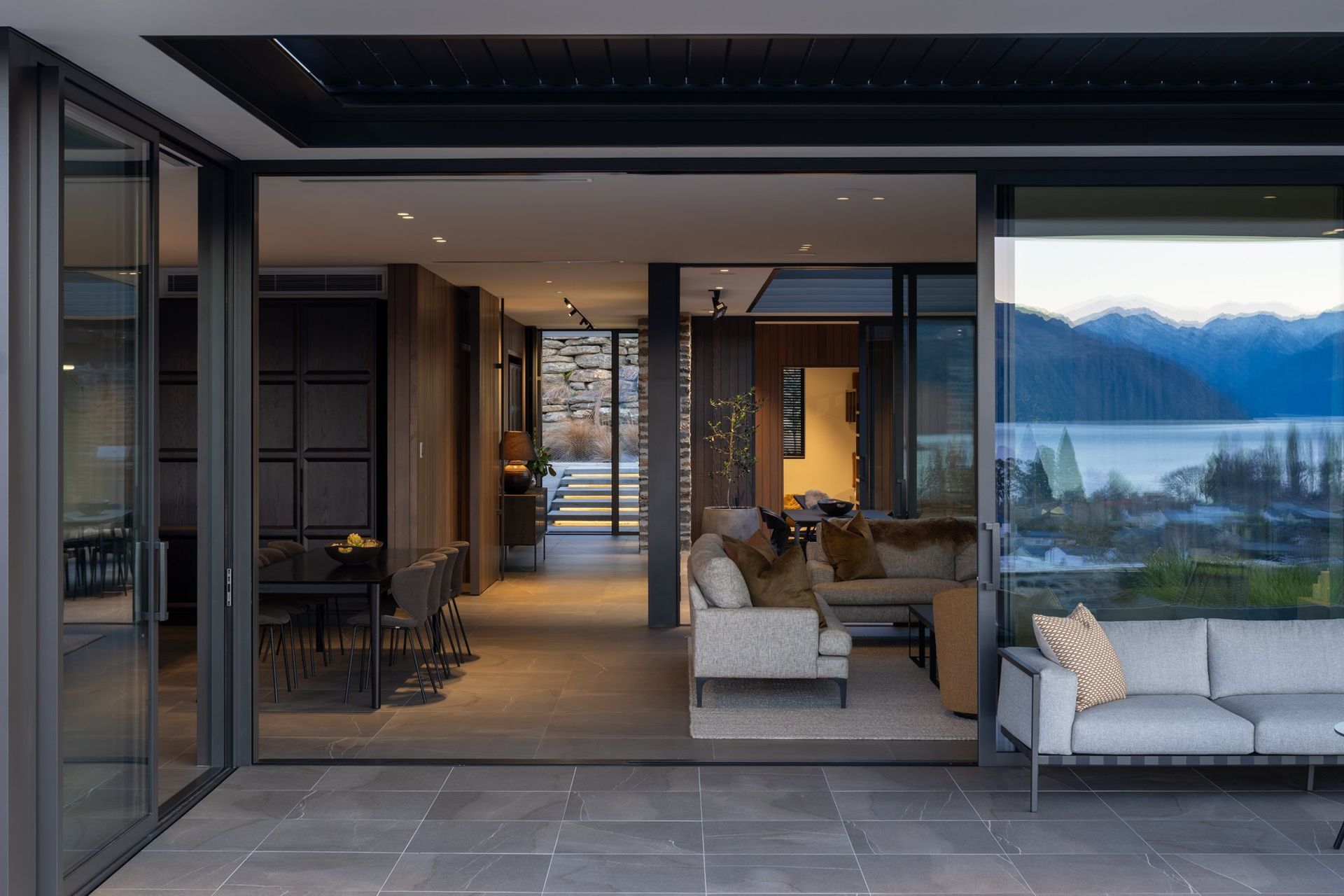
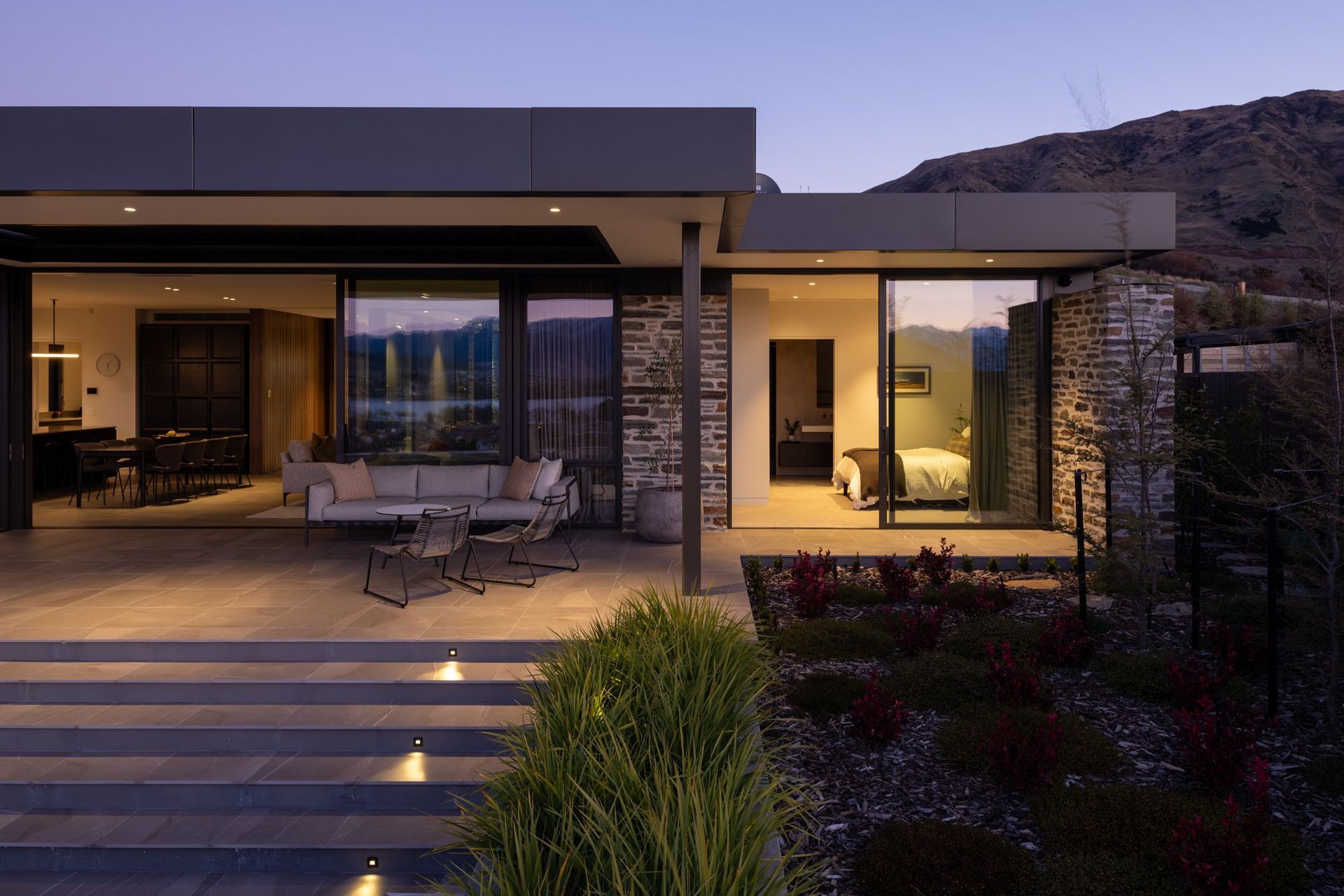
This restraint sets up a carefully choreographed sequence. The view is withheld, then gradually revealed. From the entry, glimpses of light and space draw you forward, past a sheltered internal courtyard, before the home opens fully to the lake through expansive glazing and a three-metre stud.
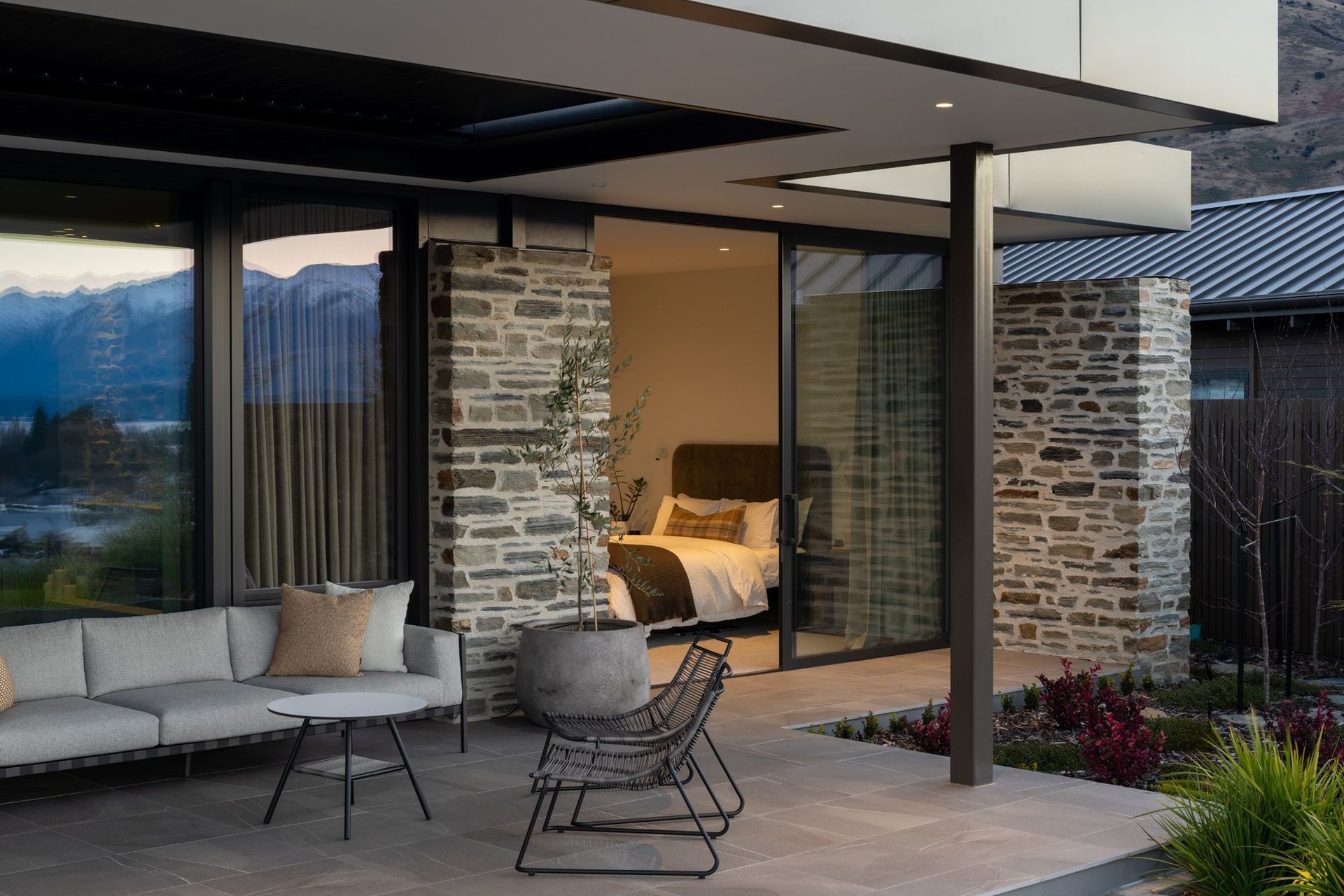
Materiality reinforces this narrative. The exterior palette is grounded in longevity, reflecting the clients’ desire for a home that will endure across generations. Locally sourced stone anchors the building to its site, while timber elements soften the street frontage and help to conceal the scale of the garage. The composition balances robustness with warmth, ensuring the house feels both permanent and approachable.
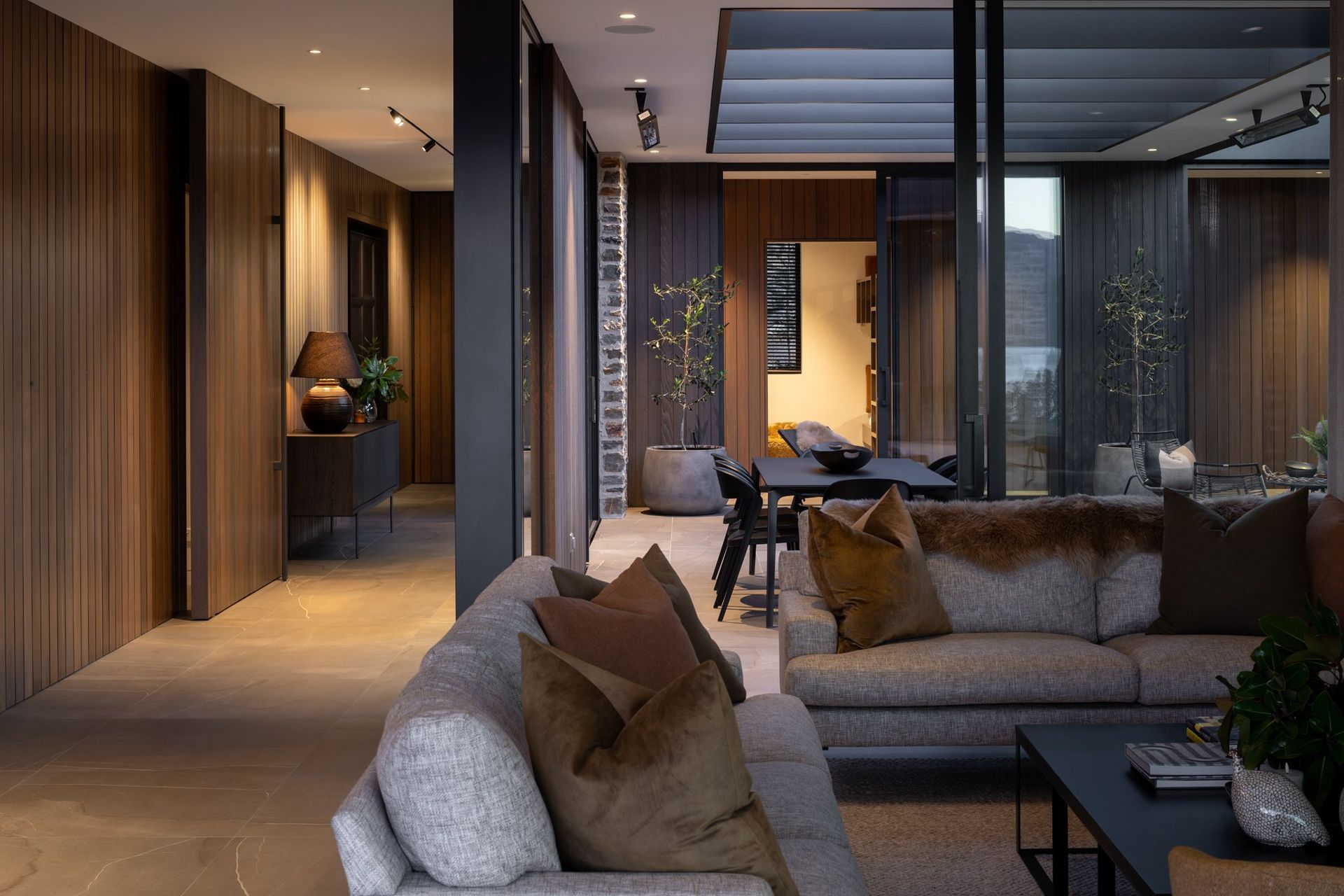
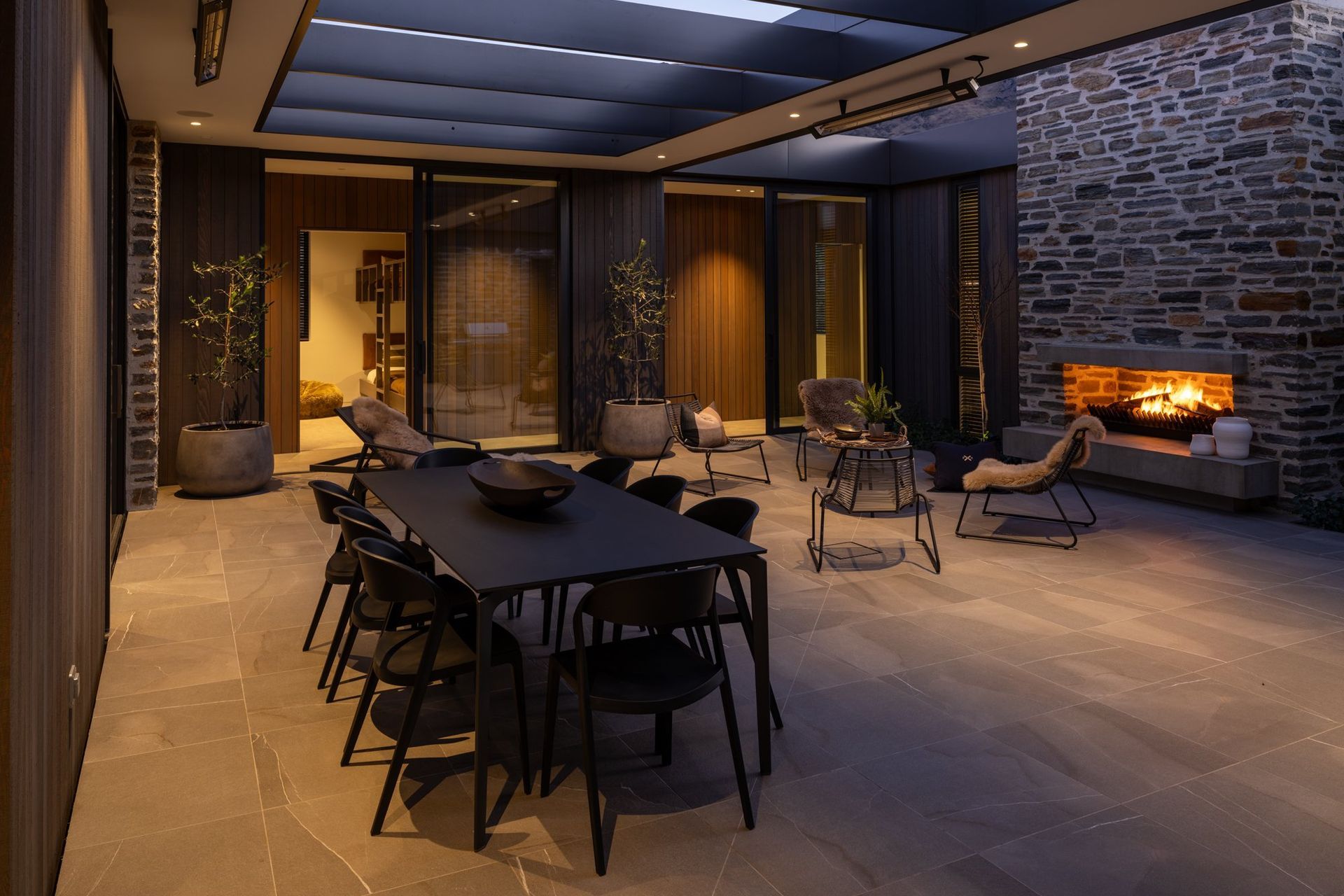
At its centre, the internal courtyard becomes the project’s anchor point. Protected from Wānaka’s prevailing winds, it offers a sheltered outdoor room that remains visually connected to the lake beyond.
“It was absolutely fundamental that you had to have a courtyard that you could see through to the view,” says Muir.
The courtyard is also an organising device. It connects living and dining spaces, allowing movement through and around it, and offering alternative ways to inhabit the home.
“As you move through into the public living spaces, it really does open up to full height glazing that takes in the view, but the courtyard gives you that sheltered place to actually live in,” says Blue.
Internally, the planning is both efficient and unconventional. Service areas are centralised, improving accessibility across the home, while bedrooms are carefully distributed to balance privacy and connection. It is a layout that anticipates both everyday living and the influx of extended family.
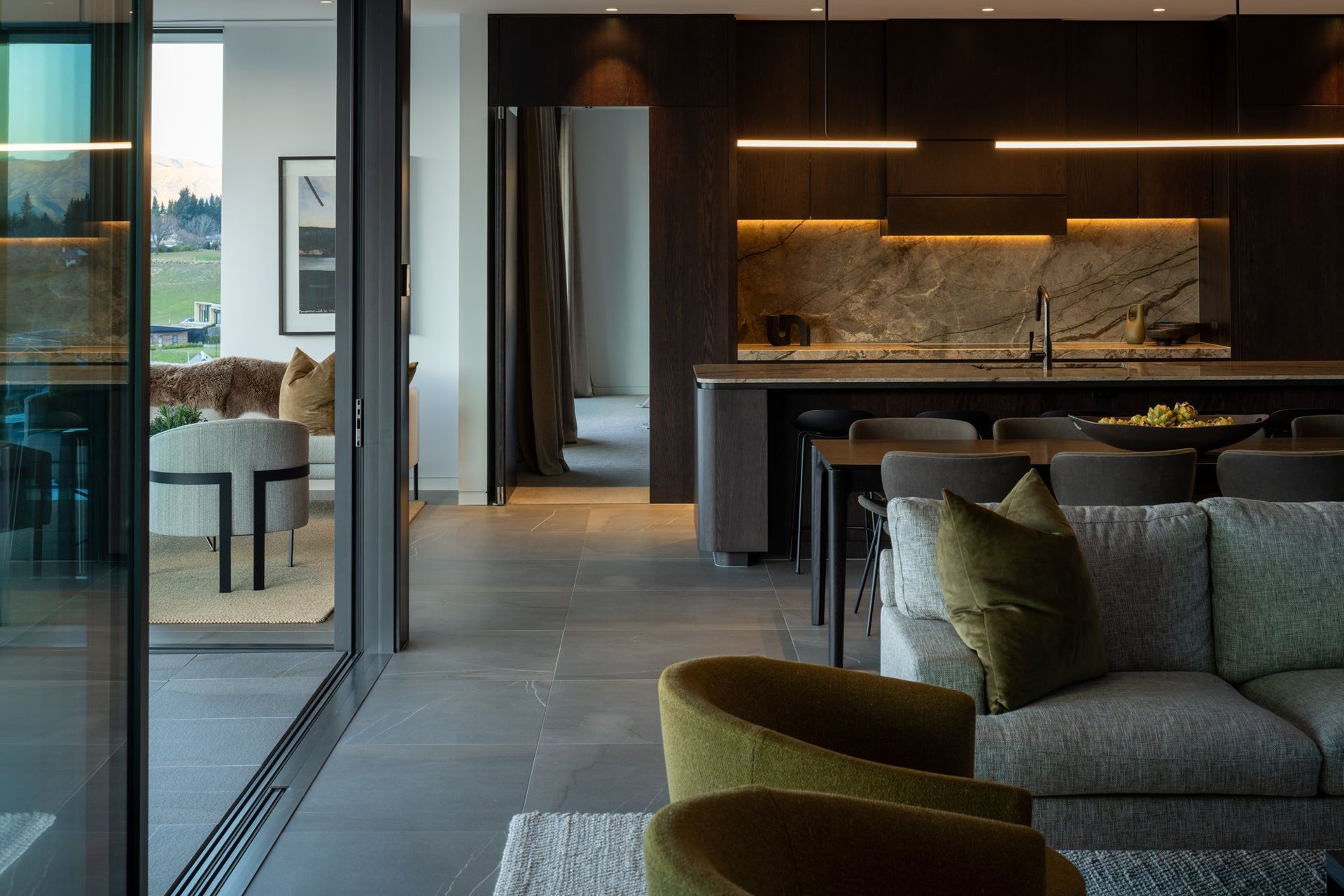
The interior material palette builds on the home’s exterior language, carrying its natural restraint indoors while introducing a greater sense of refinement suited to both everyday living and retreat. This careful balance is where the contribution of interior designer Davinia Sutton of Detail by Davinia becomes integral, shaping spaces that feel cohesive, considered, and quietly elevated.
"It was important that the interiors are closely linked to and respectful of the architectural context, while balancing refinement and comfort to create a warm, family oriented spaces that can evolve over time and seasons," shares Sutton. "The palette centres on natural materials such as timber, stone, and earthy textiles, layered to create warmth, texture, and a muted, nature-inspired aesthetic."
Together, architecture and interior design achieve a balance that feels resolved and enduring. It is a home that resists the informality often associated with holiday houses, instead offering a sense of completeness and cohesion.
Challenges within the project, including site constraints and setbacks, required careful negotiation to take advantage of the available land.
“We really optimised every square metre,” says Muir.
For the architects, the success of the home lies in its subtlety.
“When you’re in the living space, it’s not obvious from the entry, but once you get there, how it opens up to the lake and mountains is incredible,” says Blue. Muir adds, “There are moves here that most people won’t see, but they are integrated into how the house works.”
For the clients, the result is a home that not only meets their expectations, but exceeds them. In a location where architectural ambition is starting to take off, this project makes a case for bespoke architecture that speaks as much to the personal preferences of the homeowners, as to the uniquely sublime qualities of the setting.