Why wine storage is coming out of the cellar
Written by
21 September 2026
•
6 min read
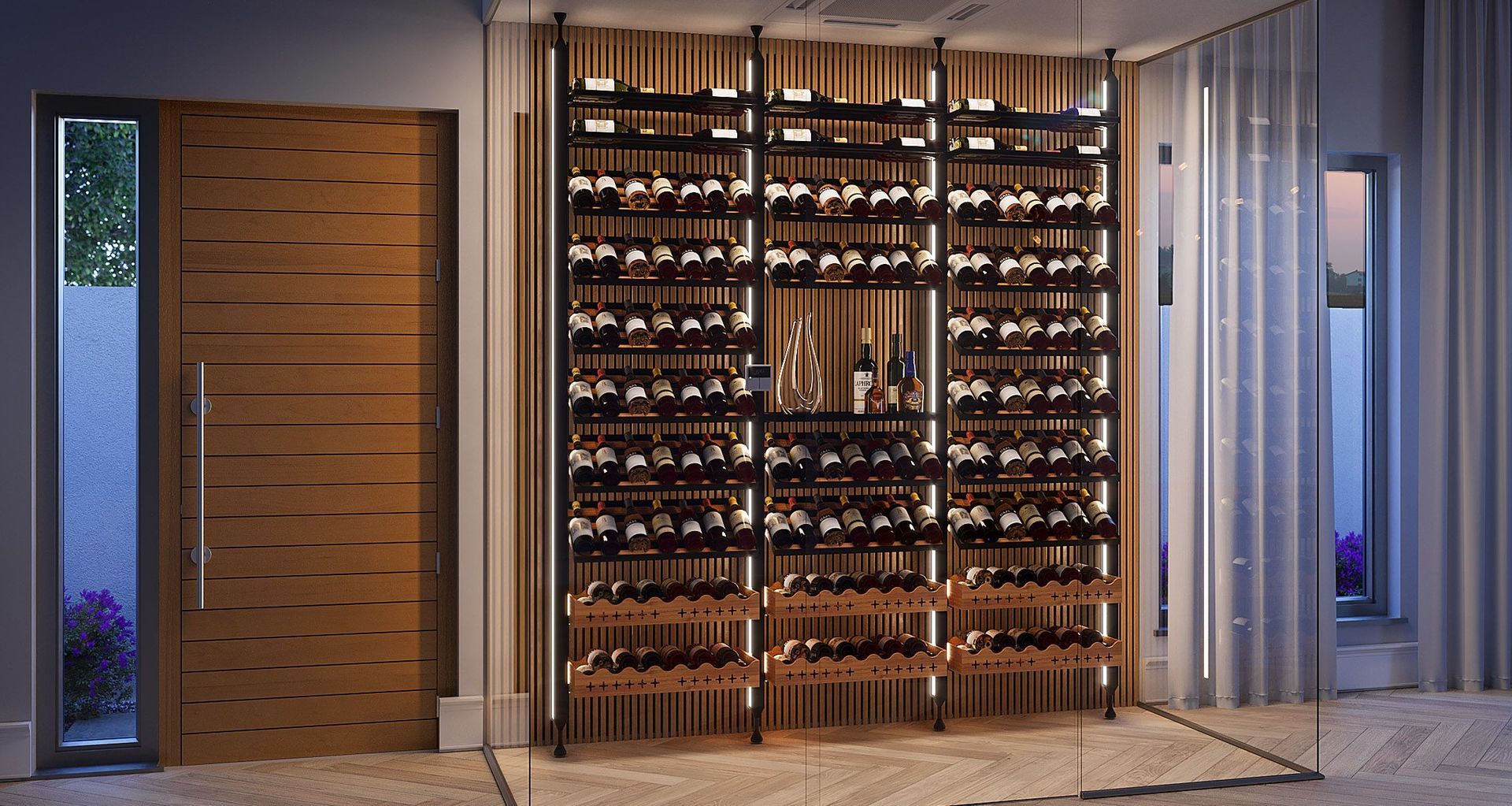
There was a time when a serious wine collection almost automatically meant a dedicated cellar, often hidden away underground or in a forgotten space.
Today, homeowners are increasingly bringing wine into their kitchens, dining rooms and entertaining spaces, making their collections part of the architecture rather than something that needs to be concealed.
“We’re seeing an awakening where wine consumers are able to bring their collections out of the old ‘hole in the ground’,” says Eric Riemann of KingsBottle. “They can actually put it on display and make it a feature in the home.”
It reflects a broader change in residential design. Kitchens and entertaining spaces have become increasingly social, and homeowners want to surround themselves with the things they enjoy.
For KingsBottle, this has created two interconnected opportunities: finding better ways to display wine and developing better ways to store and serve it.
Displaying wine as part of the architecture
One of the first considerations is how the collection will be used.
A smaller or faster-moving collection may be perfectly suited to ambient display, provided it is located away from direct sunlight, excessive heat and significant temperature fluctuations.
Wine intended to be held for many years requires greater environmental consistency, but the display system itself does not need to change.
KingsBottle’s racking systems are designed to work equally well in an ambient living space or within a temperature-controlled environment. The key is selecting the right storage conditions for the wine, while allowing the display to remain part of the architecture.
“The question is really what someone wants to do with their collection,” Eric explains. “Are these bottles being displayed and enjoyed relatively quickly, or are they part of a collection being held for the longer term?”
This allows wine storage to be approached much more flexibly than the traditional idea of simply putting every bottle into a cellar.
A modular approach to wine display
KingsBottle’s wine racking systems are designed around modularity.
Different display formats can be combined to suit the architecture of the room, the size of the collection and the way the homeowner wants the wine presented.
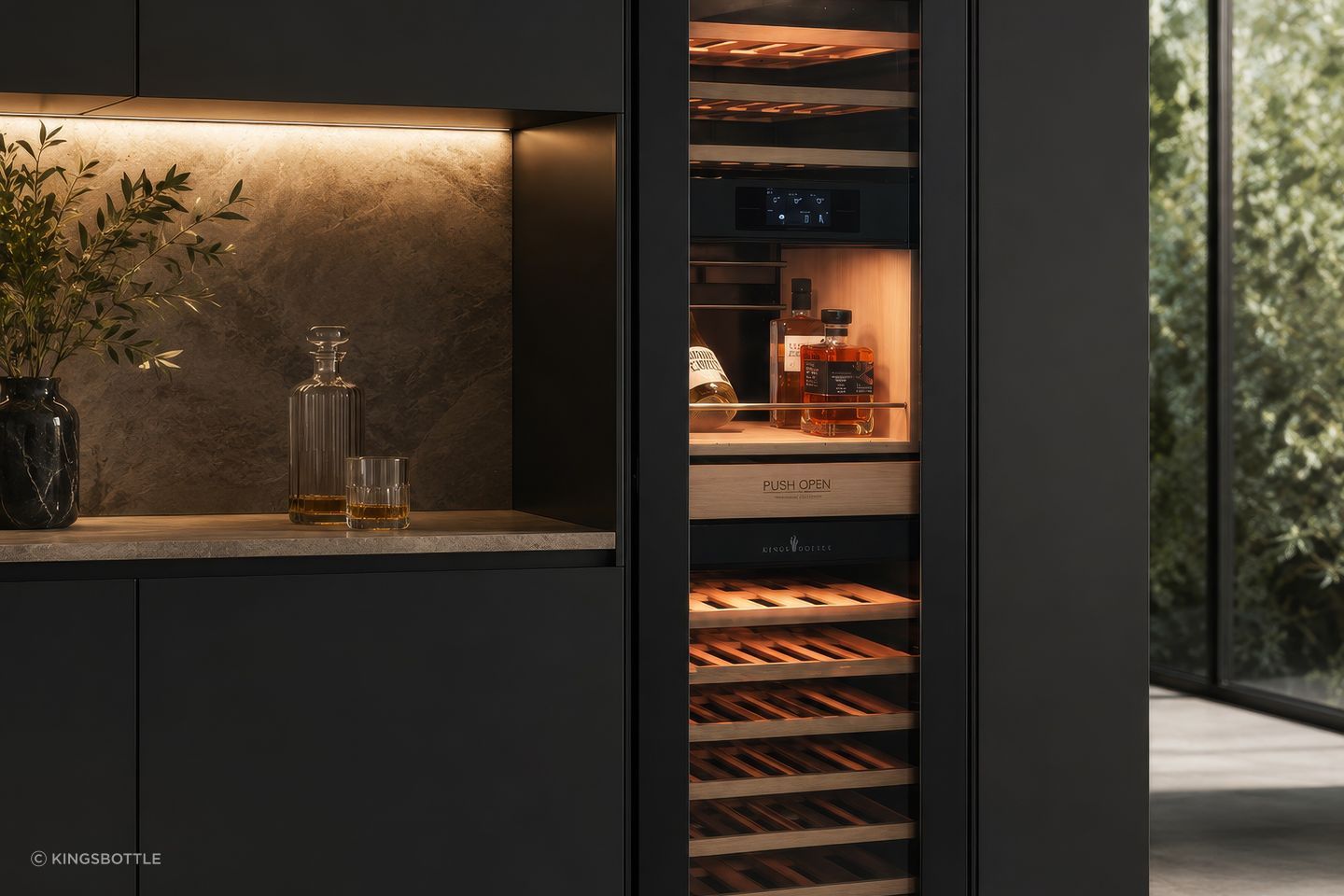
That might mean a simple wall-mounted bottle display, a floor-to-ceiling installation or a much more striking feature using the Lumi Nexus system.
Lumi Nexus combines structural posts, bottle displays, shelving and integrated lighting to create something that sits closer to architectural furniture than conventional wine racking.
The same systems can be used in kitchens, dining rooms, under staircases, entertaining spaces or dedicated wine rooms.
They can also be incorporated into climate-controlled spaces where the collection requires it.
This flexibility means designers are not restricted to a single format or aesthetic. Different systems can be combined, scaled and configured to suit each project.
For architects and interior designers, the wine display can therefore be considered as part of the overall design language of the home rather than something added after the room has been completed.
Wine fridges designed around modern living
Wine refrigeration is evolving in much the same way. Traditionally, a wine fridge had a relatively simple job: hold bottles at a set climate, but for many households today, that is no longer enough.
Customers may want to store red and white wine simultaneously, keep champagne ready to serve, accommodate different bottle sizes, store opened or decanted bottles, or simply have their wine presented beautifully within the kitchen or entertaining space.
KingsBottle’s newer refrigeration systems are designed around this broader use case.
True independently controlled dual and triple temperature zones allow different areas of the appliance to operate at different temperatures rather than relying on a single cooling system with divided airflow.
This gives customers far greater flexibility in how they use the appliance.
A single fridge could hold red wine in one zone, white wine in another and champagne in a third, while allowing each zone to be managed independently.
Adjustable shelving is equally important. Real wine collections are rarely made up entirely of standard Bordeaux bottles, so storage needs to accommodate Champagne, Burgundy, magnums and other bottle formats without forcing the customer into a rigid layout.
Veil: beyond the conventional wine fridge
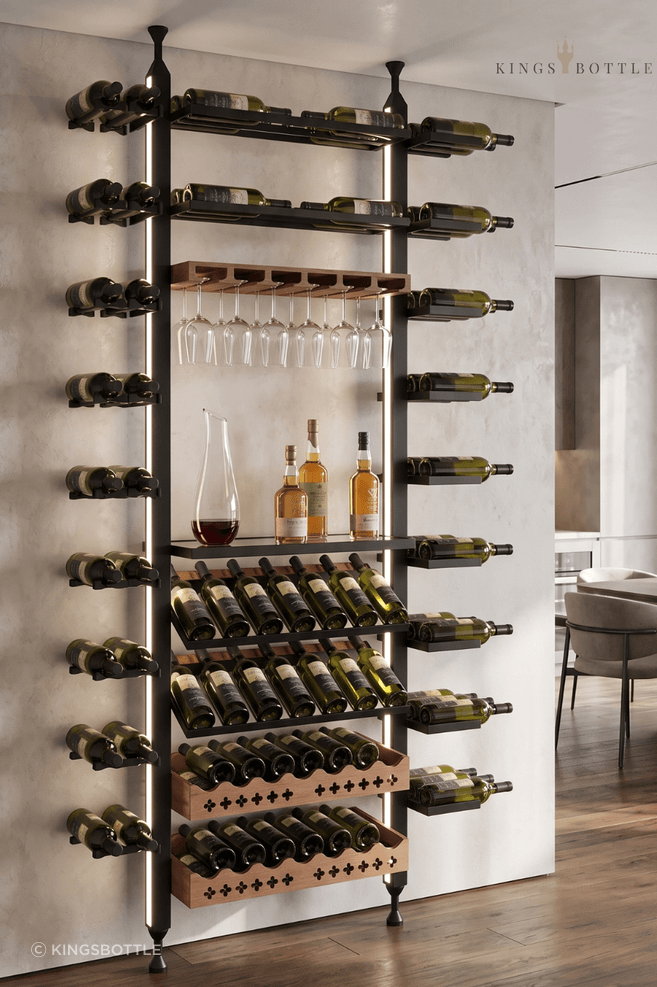
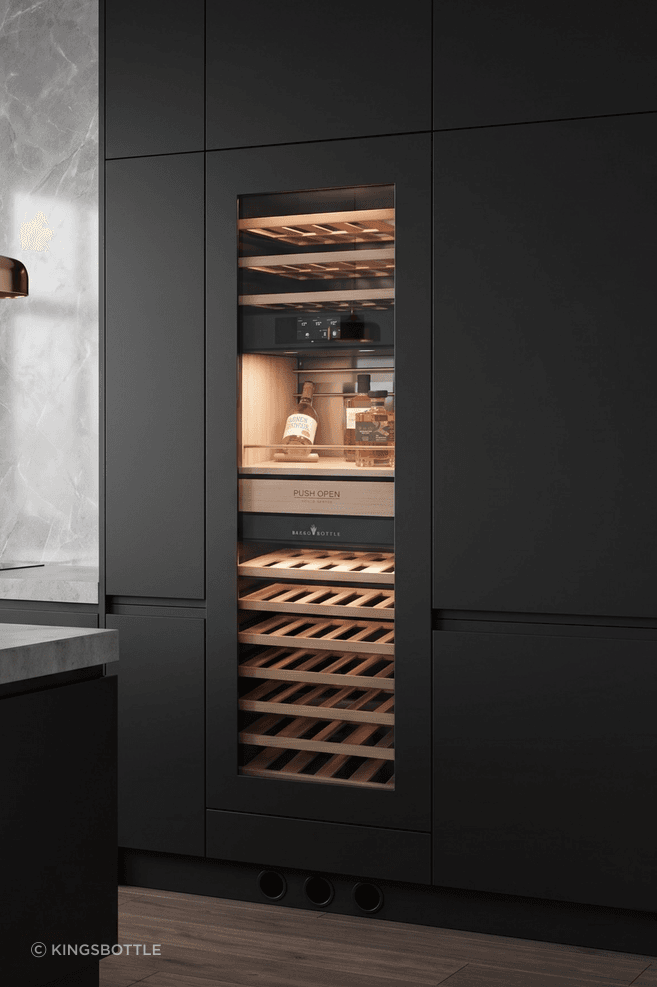
KingsBottle’s new Veil range takes this idea further.
The aim with Veil is not simply to create a more technically capable wine fridge, but to bridge the gap between refrigerated wine storage and feature display.
Its independently controlled temperature zones provide the technical flexibility expected from a high-performance wine fridge, while the interior has been designed to give customers more freedom in how their collection is presented and used.
Dedicated display areas can showcase premium bottles, hold opened or decanted wines, or accommodate bottles that do not fit neatly into conventional horizontal shelving.
Combined with smart integrated lighting, advanced glass technology and a strong visual focus, the intention is for the fridge itself to become part of the interior rather than simply an appliance hidden within cabinetry.
“We really try to design things for modern living,” says Eric. “It’s not just about keeping wine at a temperature anymore. It’s about how people store it, serve it, display it and interact with it.”
That distinction is important. Technology is valuable when it gives the customer more choice, not simply when it adds more features.
The future of wine storage
The future of home wine storage is likely to become increasingly flexible.
Some homeowners will want highly visible ambient displays for wines they regularly enjoy. Others will incorporate the same display systems into more controlled environments for longer-term collections.
Many homes will combine architectural wine displays with advanced refrigeration, allowing different parts of the collection to serve different purposes.
At the same time, refrigeration itself is likely to become more integrated with the design of the home.
Products such as Veil show that we're moving towards a future where the distinction between a wine fridge and a wine display becomes much less obvious, combining storage conditions, presentation, serving flexibility and visual design within a single product.
Digital technology will also become increasingly relevant.
Over time, wine storage systems could help customers understand what they own, where each bottle is located, how it has been stored and when they may want to drink it.
Ultimately, the goal is not to make wine storage more complicated, it is to make it easier for people to store wine appropriately, display it beautifully and enjoy it more often.
For homeowners, architects and designers, that starts with thinking about wine earlier in the design process and deciding whether the priority is display, storage, serving, or a combination of all three.
Once that is understood, wine storage can become a deliberate part of the architecture rather than something squeezed into whatever space remains.
Explore KingBottle’s wine storage solutions on ArchiPro, explore exciting projects and connect with professionals who can bring your dream kitchen to life.