Rethinking the fireplace for Passive House design

Written by
15 September 2026
•
6 min read
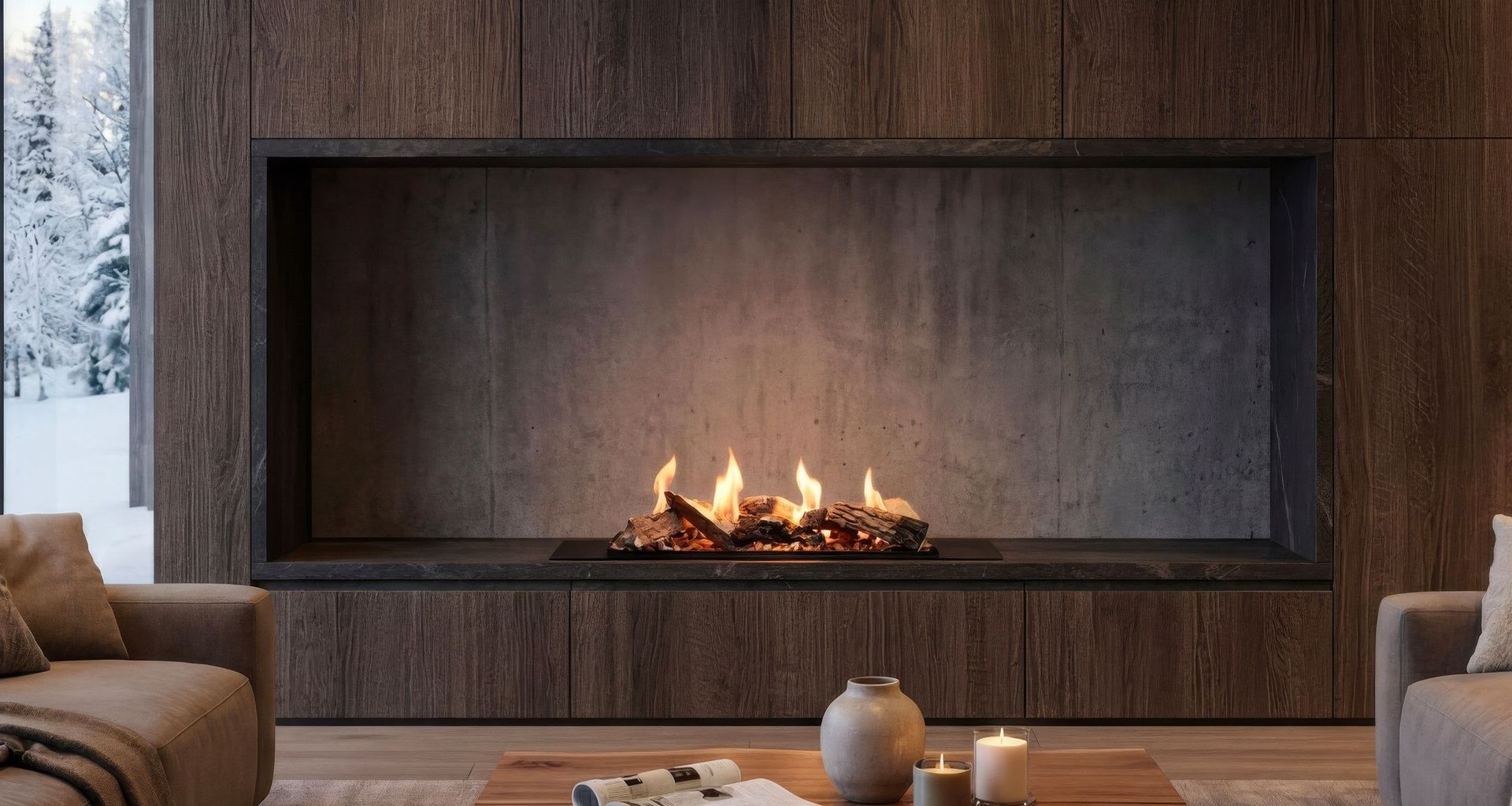
The appeal of fire has always extended beyond its functional purpose. Even in a home that requires little additional heating, a fireplace introduces movement, atmosphere and a natural point of focus. Yet, as residential architecture becomes more energy efficient, the conventional mechanics of a fireplace have begun to sit increasingly at odds with the performance of the building around it.
Passive House design relies on the building operating as a complete system. High levels of insulation, high-performance windows, thermal-bridge reduction and mechanical ventilation with heat recovery all contribute to its performance, but airtightness remains a fundamental non-negotiable.
For this reason, there is no real way to incorporate a traditional fireplace into a home that is designed to optimise performance and comfort twenty-four seven, 365 days a year. A flue must pass through the building envelope, combustion air may need to be drawn from outside, and each element must be coordinated with both the ventilation system and the home’s airtight construction, creating a cascading series of design and construction challenges.
Decoflame Sales Director, Chris George, believes the way fireplaces are specified needs to evolve alongside the buildings they occupy. “For high-performance and Passive House projects, avoiding potential complications with the building envelope is critical,” he says.
Fire without the flue
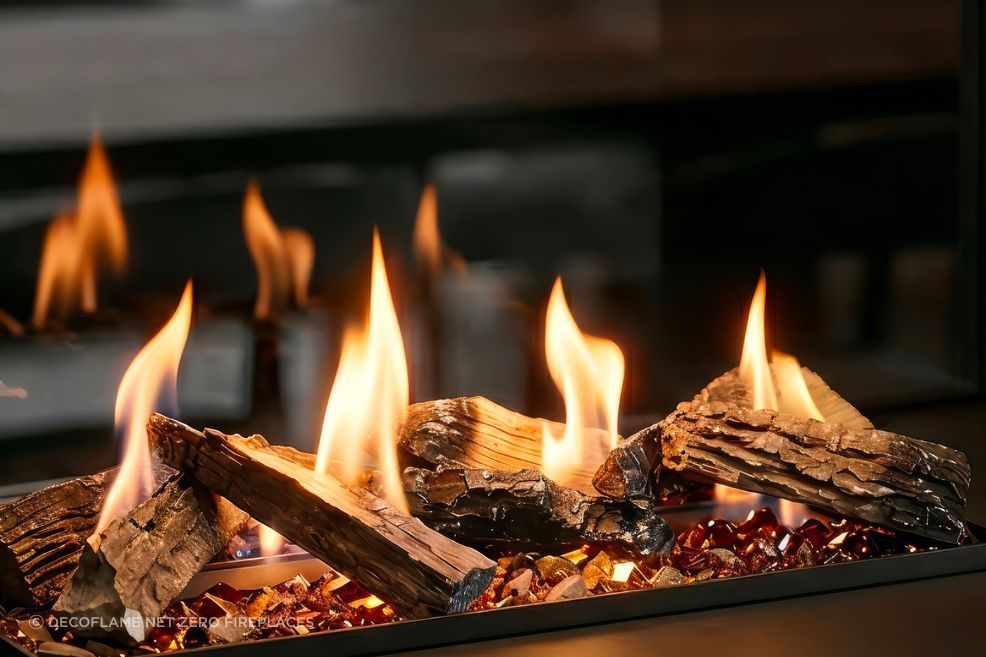
Rather than taking the risk of modifying the building envelope to accommodate a fireplace, Decoflame’s system removes the need for a conventional chimney altogether.
At its centre is patented BEV, or Burning Ethanol Vapour, technology. The innovative automated system delivers bioethanol into the appliance, where it is heated and converted into vapour. It is this vapour that burns, while the liquid fuel remains enclosed within a separate tank, away from the flame. For high-performance homes, that extended operating autonomy complements one of BEV technology’s key architectural advantages: natural flame without the traditional gas connection or chimney/flue infrastructure associated with conventional fireplaces.
While the fireplace requires an electrical connection, as Chris explains, “there’s no flue penetration or traditional chimney.” This simple fact is the all important distinction that matters most with respect to a building aiming to meet Passive House requirements. “When working with architects and designers, it’s highly relevant to Passive House construction because [our products] maintain a continuous airtight building envelope,” he says.
For architects, this does more than resolve a technical problem. It also removes one of the most prescriptive elements of conventional fireplace design, opening up a world of creative possibilities with respect to where and how real flame can be welcomed into a space.
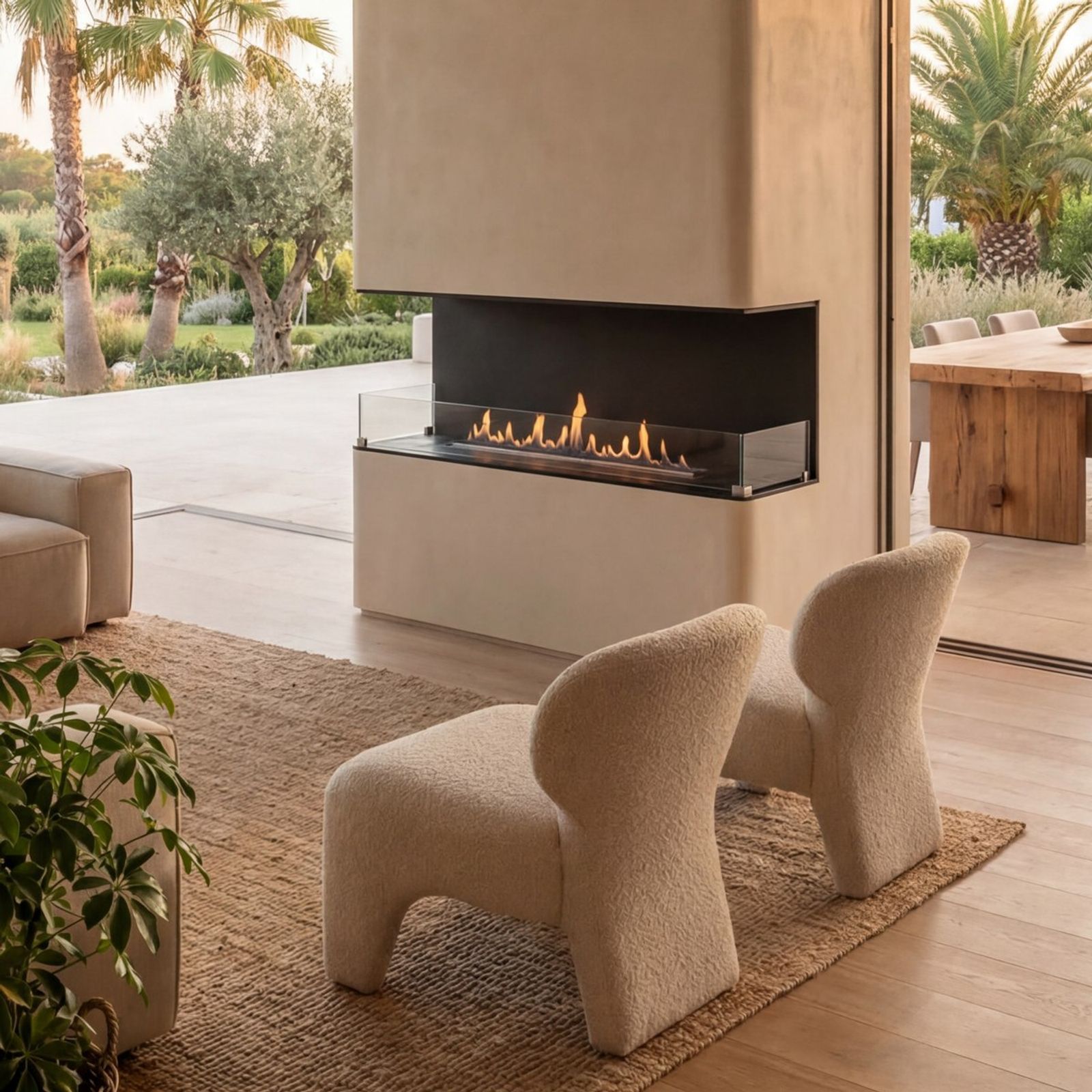
A flue or chimney influences far more than the appliance itself. Its route can determine where a fireplace is positioned, how walls and ceilings are resolved, the configuration of surrounding joinery, and ultimately, the planning of the room. Externally, it can introduce an architectural element that exists through necessity rather than design intent. Owing to the absence of these constricting factors, Decoflame’s products mean that there is no fixed route through the building, giving architects greater latitude to position the fireplace in response to the room. When put like this, it seems so obvious.
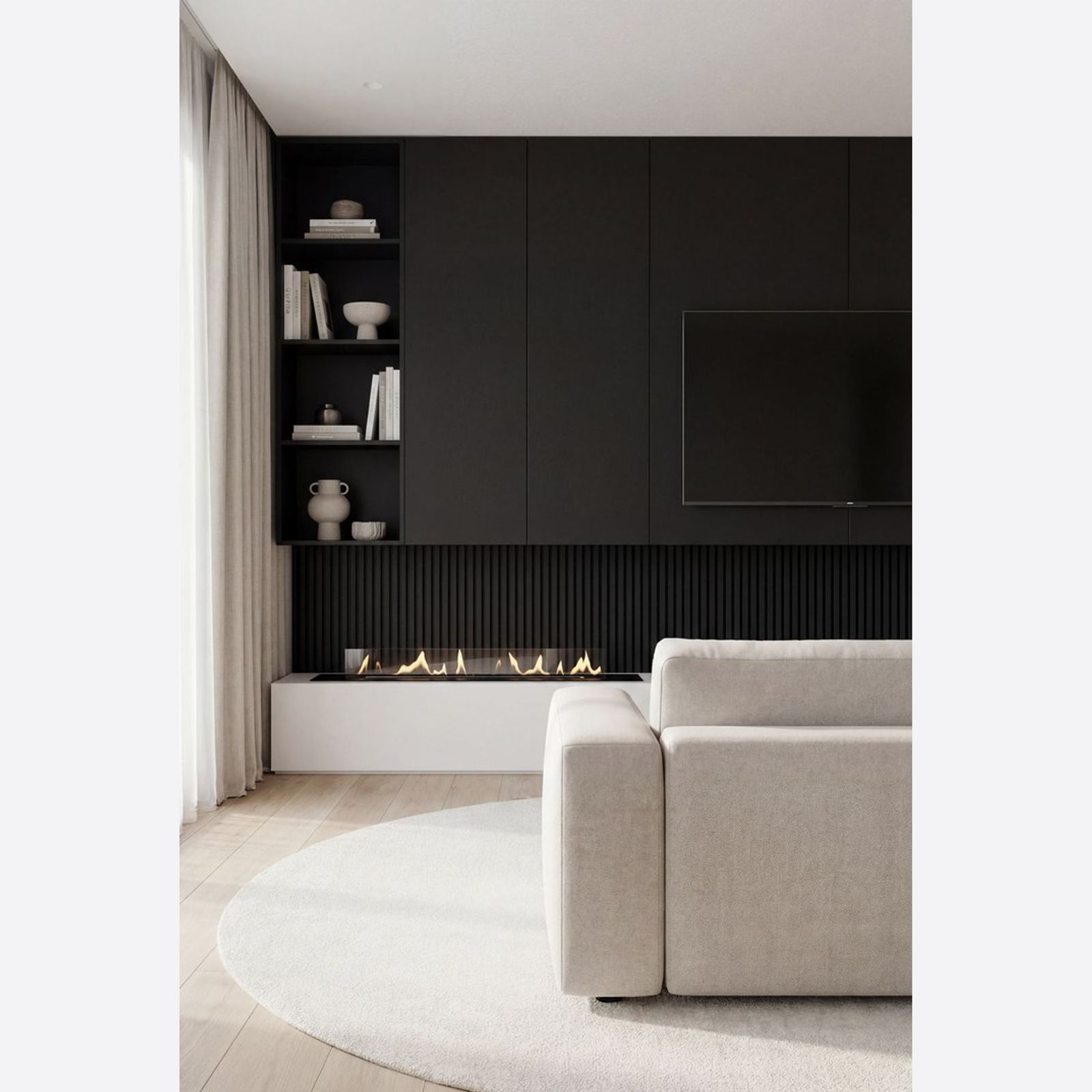
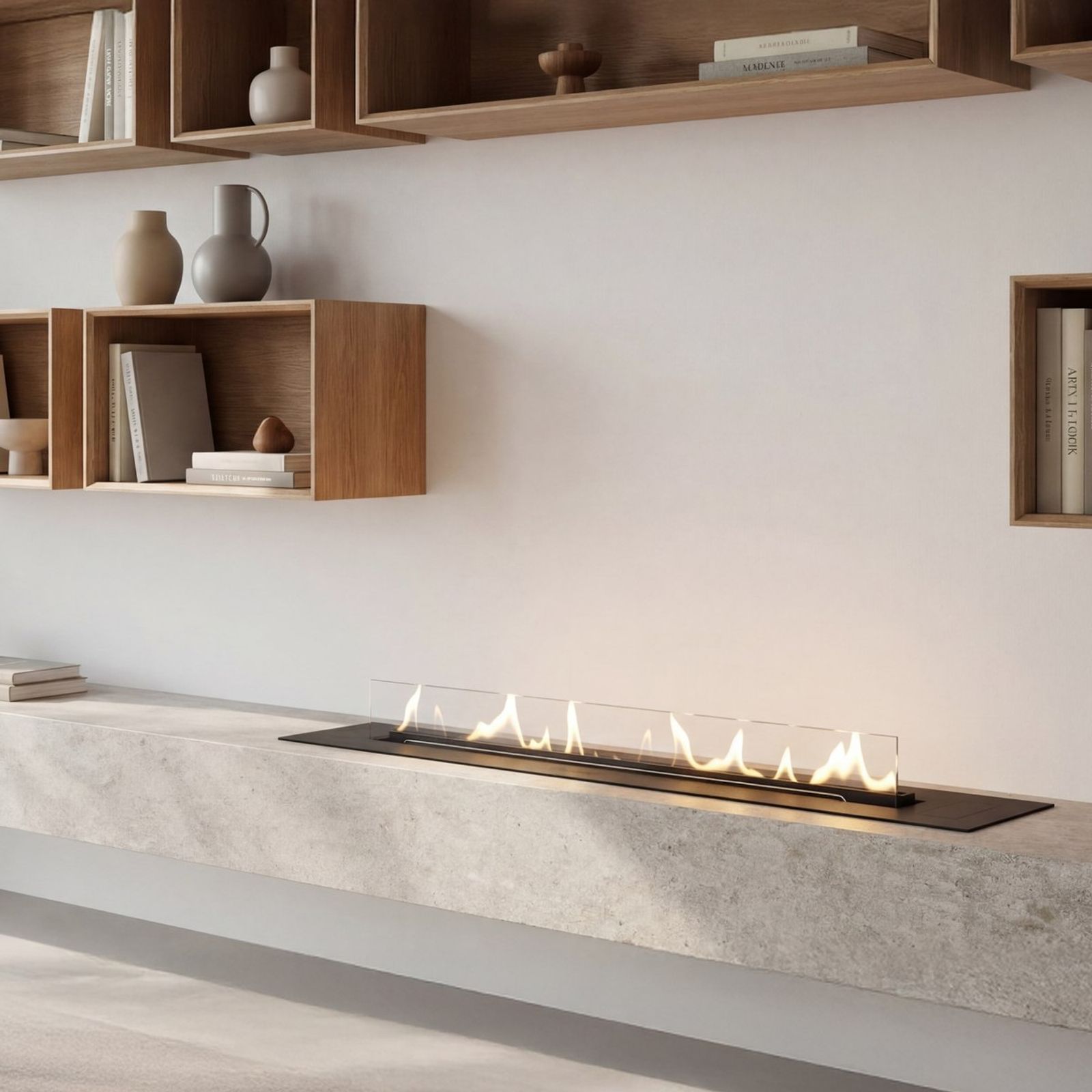
“This technology opens up more possibilities for integration into internal walls, joinery, feature walls and open-plan living spaces,” says Chris.
A changing role within the home
The days of the fireplace acting as the primary source of heat are well and truly behind us. In a well-insulated Passive House, it’s even less relevant. Nevertheless, there is something magical and mesmerising about a flickering, warm flame. Today, the decision to include a fireplace is less about heating and more about creating a multi-sensory experience and ambiance. A fireplace gathers us in, making relaxation and calm almost impossible to achieve.
The dual benefit of Decoflame’s fireplaces is that not only does it tap into this almost primal instinct, it also produces fully adjustable heat, controlled via an app. Together with integrated safety sensors and an emergency shut-off system, it’s one of the safest real flame options
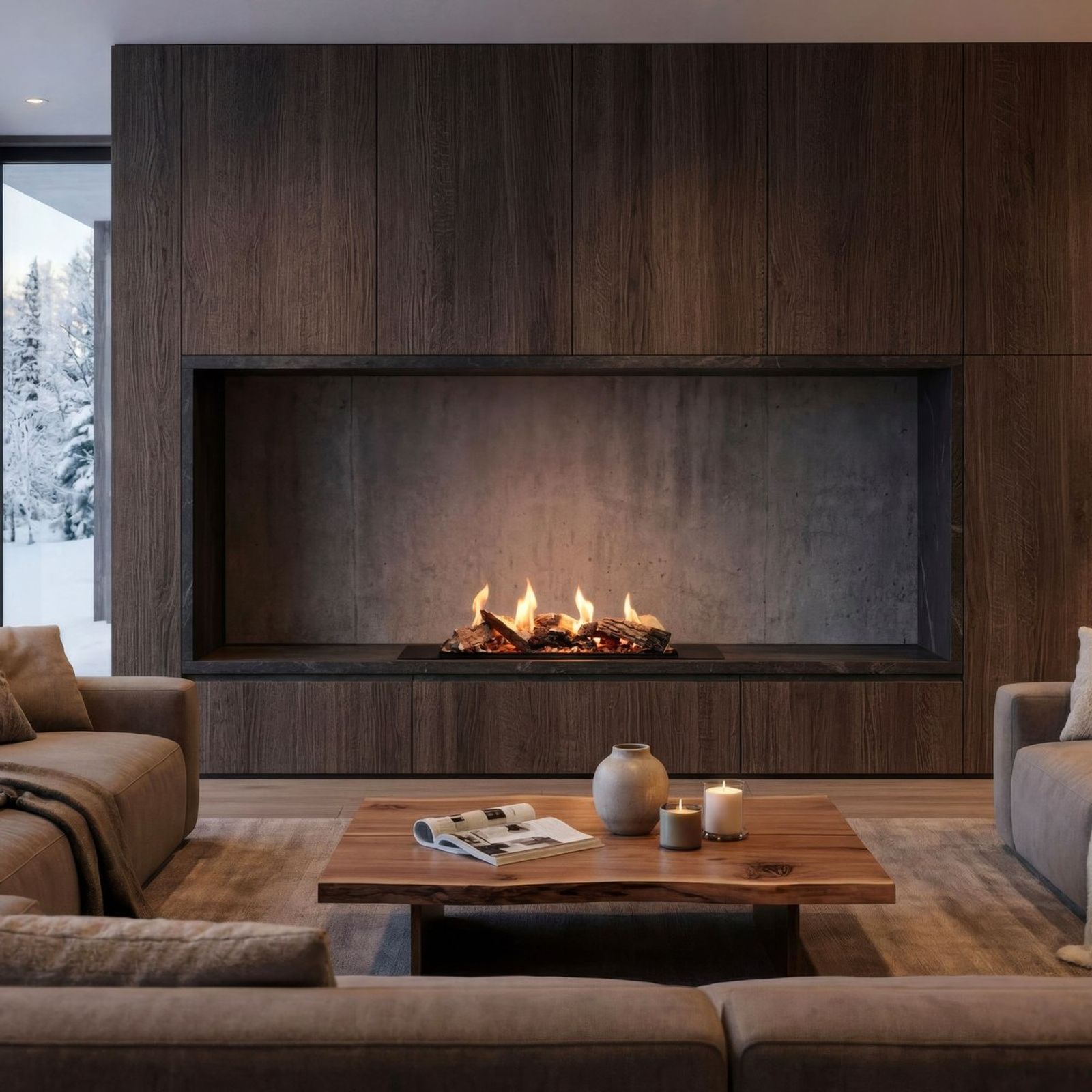
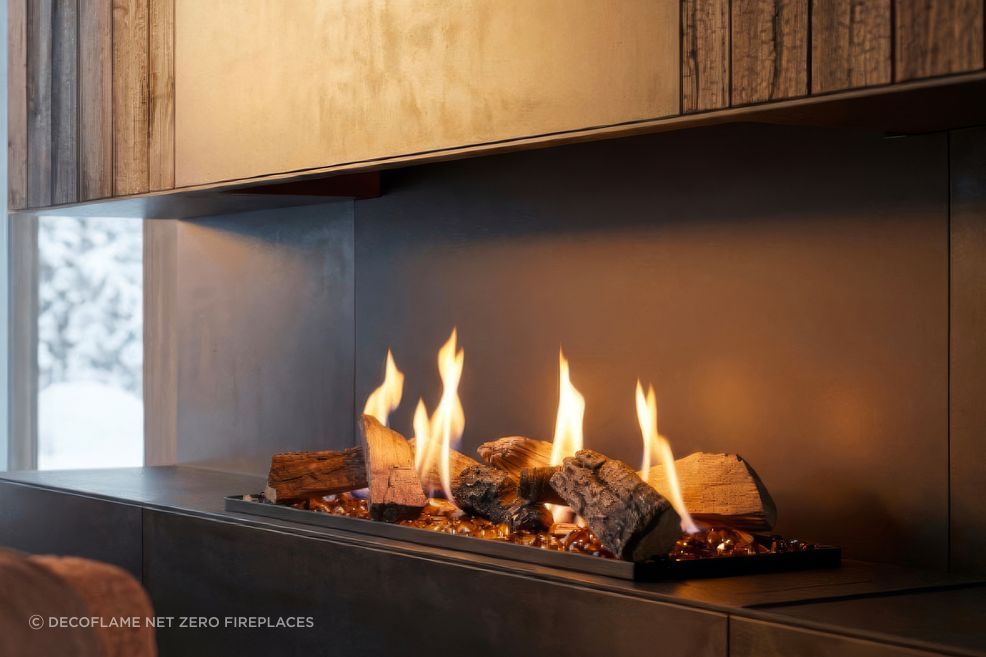
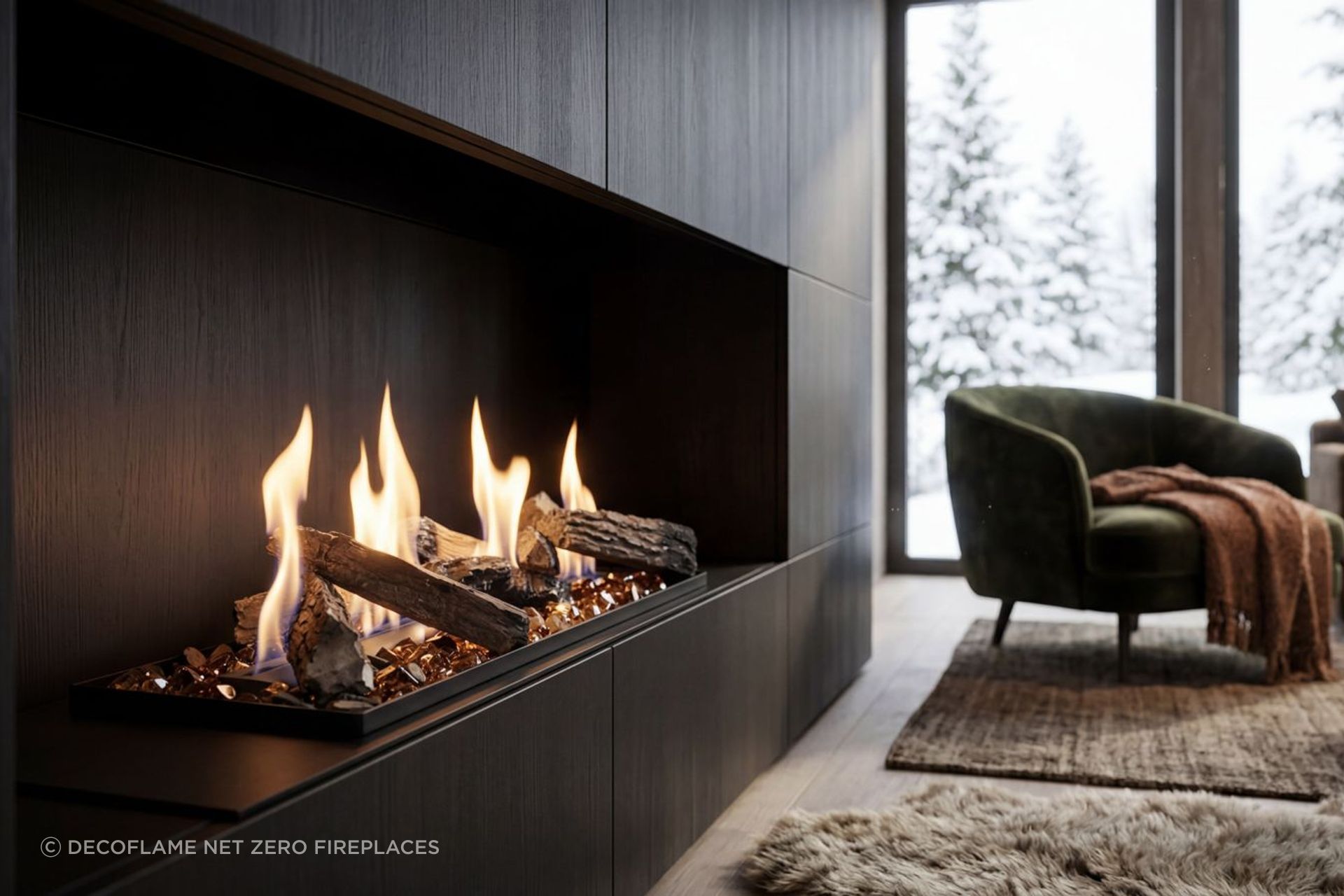
Tapping into the sensory elemental nature of the fireplace, the brand’s Logicwood model offers a more familiar interpretation of the hearth. Designed in Scandinavia, the BEV fireplace incorporates realistic, hand-painted porcelain logs, combining the visual language of a traditional wood fire with the flueless system. It’s not surprising then that it has become one of Decoflame’s most sought-after models since being introduced to the market this year.
Setting this traditional look aside, the brand still offers an extensive range of distinctly minimal fireplace designs. This breadth of expression allows architects and designers to consider how the fireplace will sit within an interior, whether the intention is a discreet line of flame or a more recognisably traditional hearth.
Considering the complete system and the sustainability factor
For Chris, the sustainability of a fireplace cannot be assessed by looking at its fuel source in isolation.
Decoflame recommends bioethanol produced from Australian sugar cane, a renewable source, and says its fireplaces produce no smoke, soot or ash during operation. The infrastructure required to accommodate an appliance, and its effect on the building envelope, forms another part of the equation.
Passive House makes this relationship particularly visible because airtightness and energy performance are so carefully measured. However, the same considerations are increasingly being extended to capture other forms of residential design including apartments and architecturally ambitious renovations that seek to push the boundaries of design, construction and sustainability.
In these contexts, the absence of a flue changes where and how a fireplace can be incorporated, while also supporting the secondary yet no less important sustainability, safety and ease of use requirements.
The solution now seems so obviously simple: remove the flue or chimney and gas connection to give designers greater freedom to respond to the architecture and the way a room will be lived in.
As a result of this general shift, Chris says Decoflame is seeing growing interest from architects and interior designers in both Australia and New Zealand. “For us, it’s about having a real fireplace solution for all types of homes. And to have one particularly well suited for these high-performance homes as well is fantastic.”
The evolution of the high-performance home does not necessarily signal the end of the fireplace. It does, however, require a reconsideration of how fuel is added to the fire, no pun intended, and how the appliance itself is designed.
The solution now seems so obviously simple: remove the flue or chimney and gas connection to give designers greater freedom to respond to the architecture and the way a room will be lived in. While the technology may be futuristic, meeting the needs of modern living, the fireplace will always be something we instinctively desire.
Explore the Decoflame range and Passive House projects on ArchiPro.