Why Secret Gardens refuses to have a signature style

Written by
12 August 2026
•
6 min read
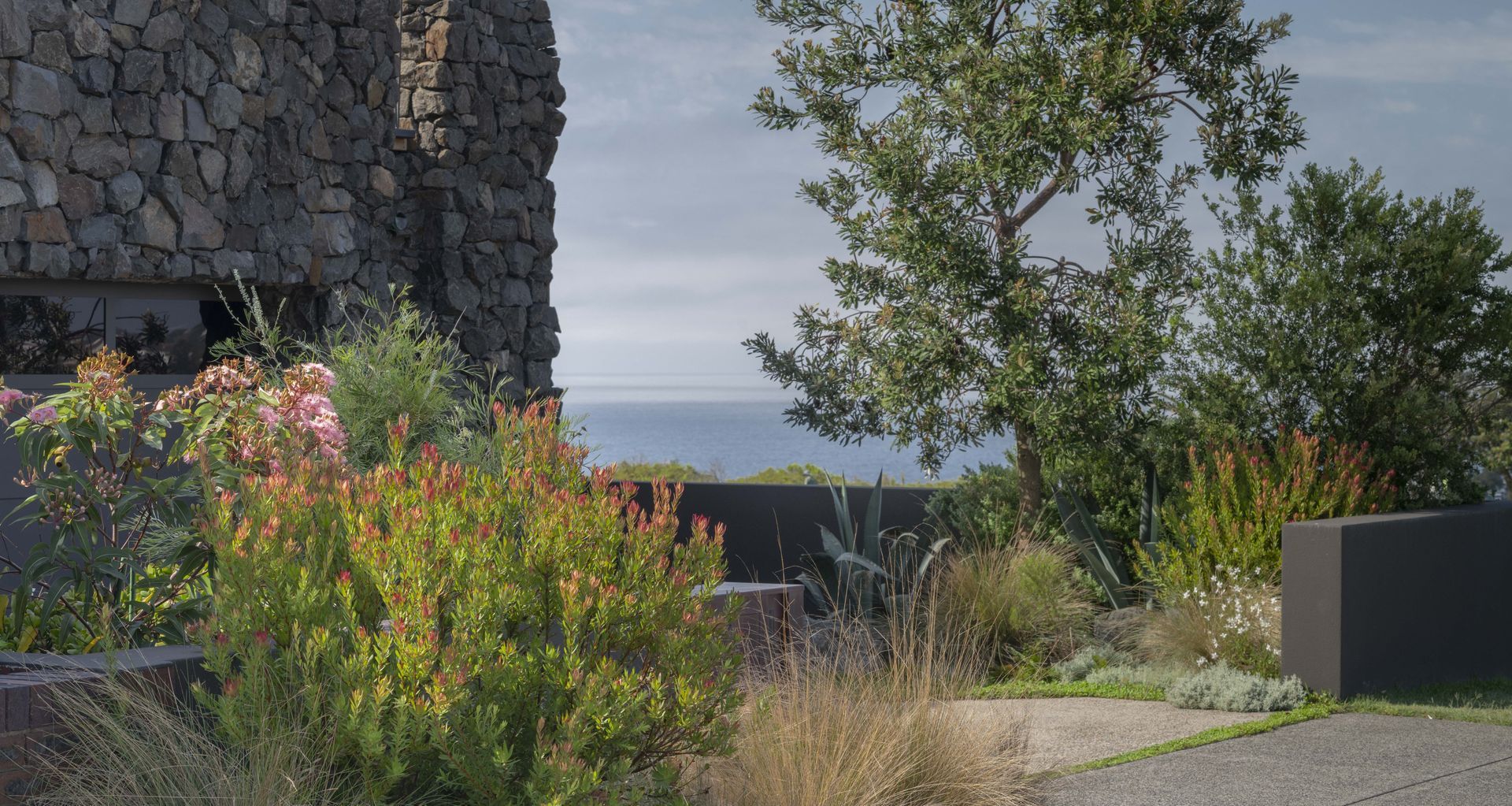

Matthew Cantwell would be concerned if every Secret Gardens project looked like a Secret Gardens project.
While a recognisable aesthetic can make a design practice easier to identify, it can also result in gardens shaped by the designer’s preferences rather than the people who will inhabit them.
"I would hate to stay in one lane," Cantwell says. "Every garden and every client is different, so the work has to respond to that rather than follow a fixed formula. Variety keeps it interesting for our team too."
Instead, the Sydney practice begins each project with a more difficult question. What should this particular garden become?
The answer is found somewhere between the architecture, the landscape and the personality of the household. It requires understanding how the clients live, what makes them feel comfortable and how the garden might support their lives years into the future.
“The garden is for our clients. It’s not about us,” Cantwell says. “We’re their conduit. They might know a little about what they want, but we help connect them with the garden.”
Designing for personality
For Cantwell, a garden is not simply an arrangement of plants and outdoor functions. At its best, it becomes an expression of the people who own it.
Some gardens are places of generous hospitality. Others are designed around quiet retreat, family life or a close connection with nature. The designer’s task is to recognise those distinctions and give them physical form.
“It is about the emotional connection,” Cantwell says. “We consider how the client wants to feel and the experiences they want to have within the garden.”
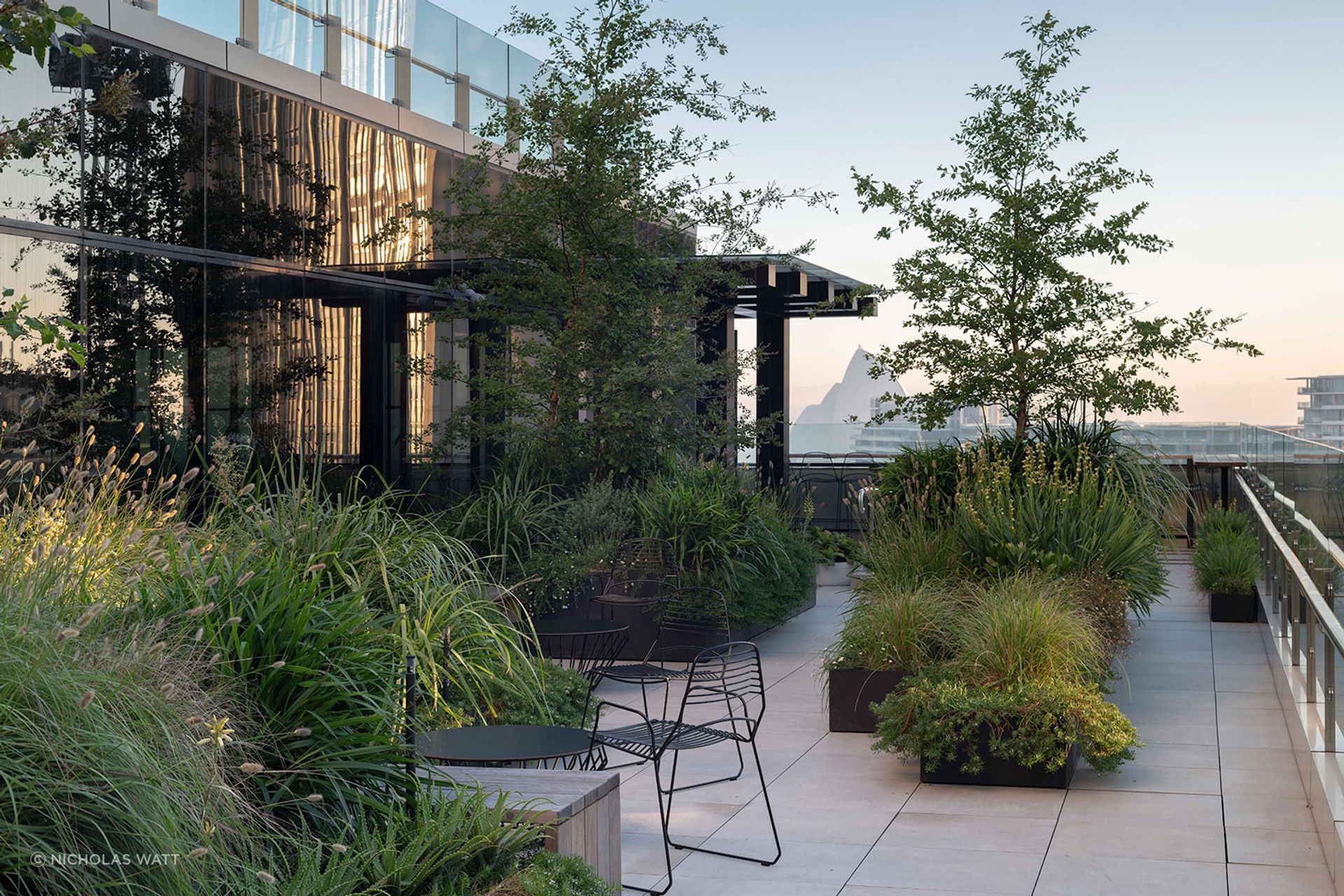
This is particularly important in compact urban properties, where the garden may effectively become the largest room in the house. It might need to accommodate dining, entertaining, children, pets, privacy and planting within a relatively small footprint.
Yet Cantwell is wary of making an outdoor space behave too much like an interior.
“We don’t need to recreate the house in the garden. We want places to dine, lounge and gather, but they still need to exist within a garden environment.”
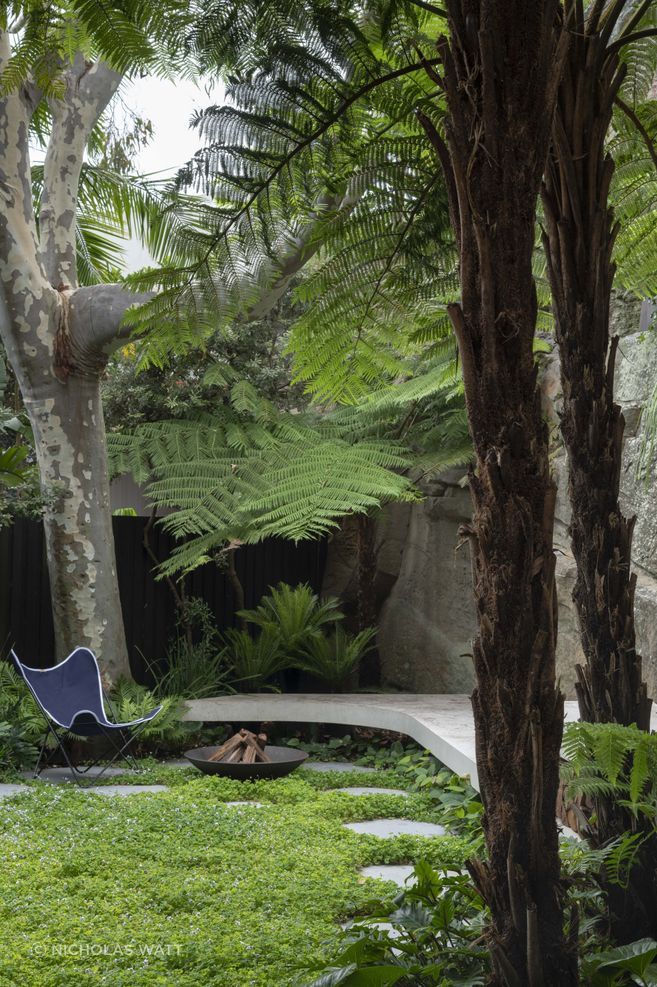
That means retaining the qualities that make being outside distinct: dappled light, moving foliage, seasonal change, scent, birds and insects. Functionality matters, but so does the feeling of being immersed in a living landscape.
Reading the site before drawing
Secret Gardens’ portfolio spans inner-city courtyards, coastal properties, balconies, rooftops and expansive rural landscapes. Some projects are predominantly planted; others require a significant architectural response.
There is no formula that can be transferred neatly between them.
Before a concept is developed, Cantwell studies the streetscape, topography, orientation, outlook and existing architecture. He also considers the clients’ age, family structure, habits and how long the property may need to serve them.
These observations begin to reveal what the garden needs to do. Planting may screen a neighbouring property, frame a distant view or soften the scale of a new building. A tree might create shade, establish privacy or guide the eye towards an entrance.
“Sometimes it’s a completed house, and sometimes it’s a house that will be demolished, but I can usually see enough to understand the client quite quickly.”
Rather than presenting several disconnected options, Secret Gardens generally develops one resolved concept and explains the reasoning behind it.
“I’ll talk clients through what we considered, why we made each decision and why we believe it is the best way forward,” Cantwell says. “It is still their home, so we listen, but I won’t let them make a mistake.”
Completing the architecture
The strongest gardens do more than surround a building. They resolve the relationship between the architecture and its wider setting.
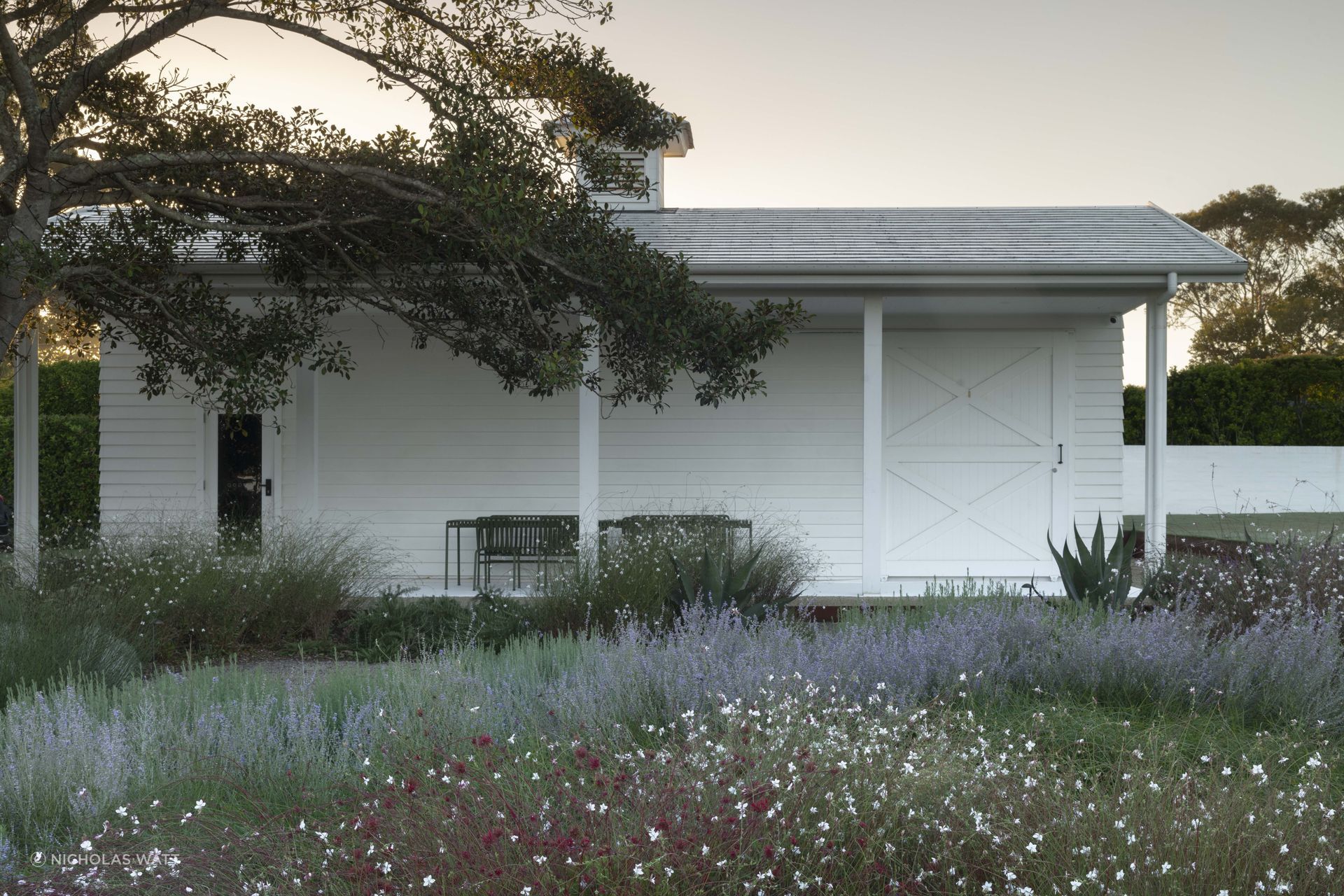
“We always take our cues from the architecture,” Cantwell says. “Durability is important, but so is longevity from a stylistic perspective. We want to choose materials that aren’t going to date.”
Concrete, steel, stone and timber are considered for the way they weather and perform, as well as their immediate appearance.
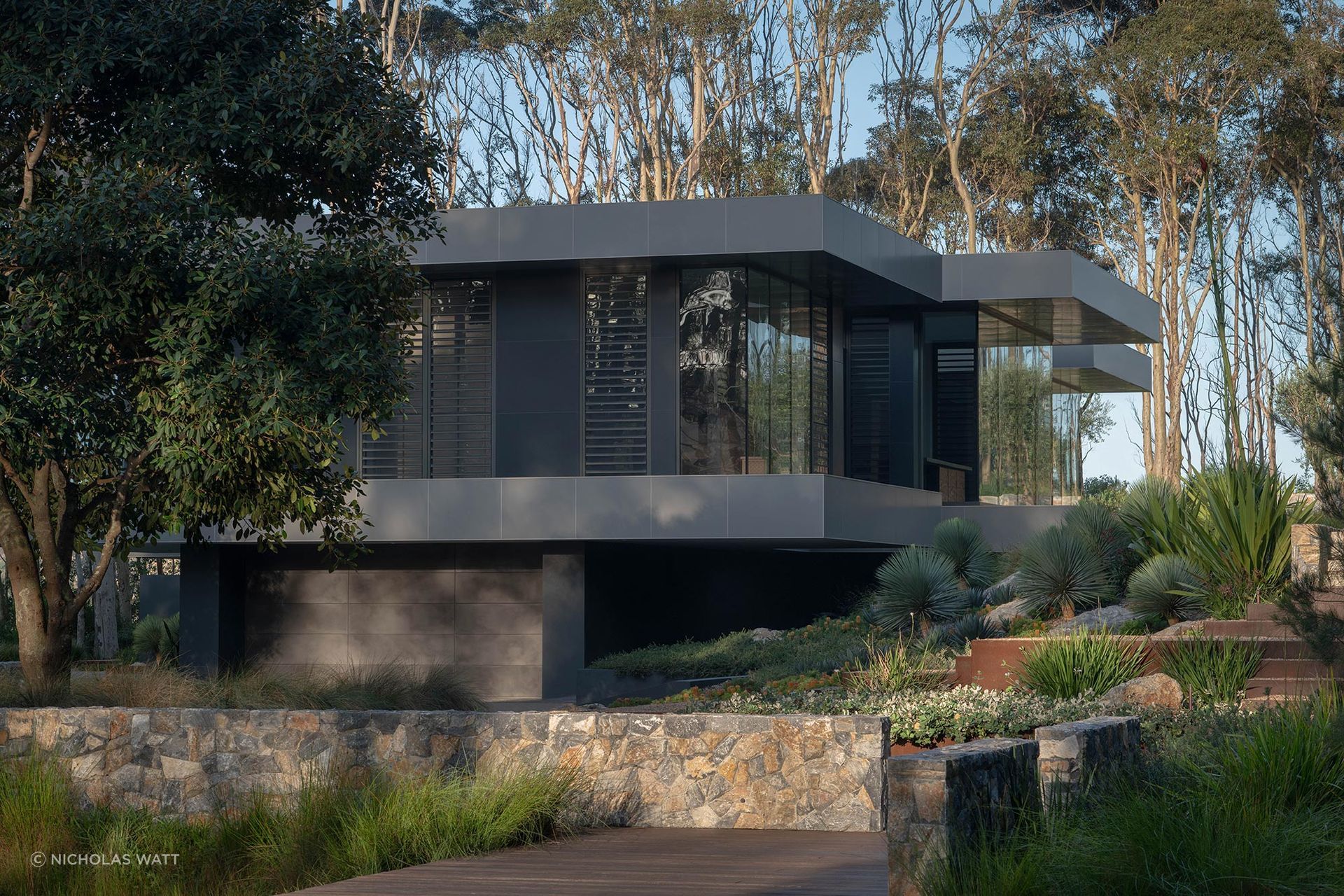
At Bracken, a coastal property four hours south of Sydney, that material thinking took on particular importance. The property had been devastated by bushfire, requiring the rebuilt landscape to respond to both its rugged setting and the possibility of future fires.
Concrete floors and steps, steel landscape elements and extensive stonework created a restrained contemporary framework around the salvaged home.
“Everything had to be fit for purpose,” Cantwell says. “The planting may be affected if fire comes through again, but the owners didn’t want to experience the same level of loss.”
A practice shaped by time
When Cantwell founded Secret Gardens at 24, professional residential landscape design was far less established than it is today. Gardens were often treated as an embellishment to the architecture rather than an essential part of the home.
“I could clearly see that the communication and level of service clients expected in relation to their houses could also be available to them with their gardens,” he says.
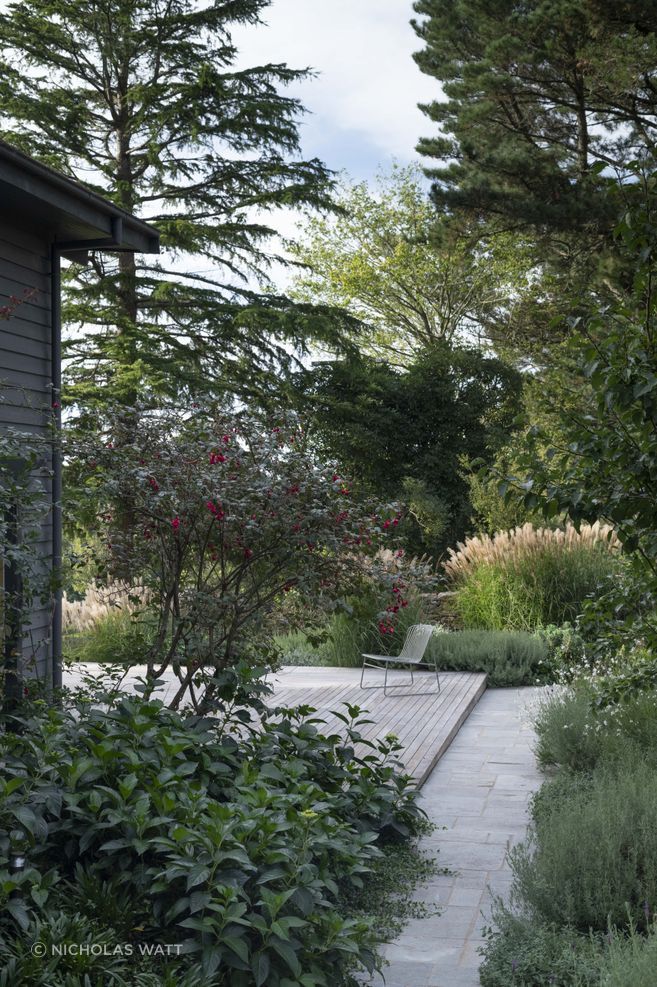
Thirty-two years later, Secret Gardens has evolved into a multidisciplinary practice spanning landscape design, construction and horticulture. Its design team includes 10 landscape designers and architects, supported by dedicated construction and horticultural divisions.
This structure allows the practice to remain involved long after a garden has been installed. Secret Gardens currently cares for approximately 250 landscapes, with some client and garden relationships extending beyond 20 years.
“First and foremost, Secret Gardens is a design firm,” Cantwell says. “The construction and horticultural sides continue to inform the design because we stay involved with many of our projects for such a long time.”
Seeing how gardens mature gives the designers something drawings alone cannot provide: direct knowledge of how plants perform, materials weather and original decisions respond to changing households.
The practice itself is now entering a period of evolution. Long-standing team members have become co-owners, while Cantwell considers how Secret Gardens can continue beyond his day-to-day leadership.
“It isn’t about Matthew Cantwell. It’s about the Secret Gardens brand,” he says. “Everyone here has different tastes, skills and strengths, and that makes us incredibly adaptable.”
That adaptability may be the practice’s most recognisable quality. Across gardens of vastly different scales and characters, Secret Gardens is not seeking to leave the same visual mark. It is creating landscapes that feel as though they could only belong to the site, the architecture and the people living there.
A garden without a signature style begins with the right conversation. Explore more of Secret Gardens’ work on ArchiPro, discover its completed landscape projects, or connect with landscape designers across Australia to begin shaping an outdoor environment that belongs to your architecture, site and way of living.
See Matthew Cantwell live on the panel at ArchiPro’s Home Design Evening in Melbourne on 16 October 2026. Register to attend.